Insight blog
Global Market Guide to Concrete Laser Screed Operator Skills
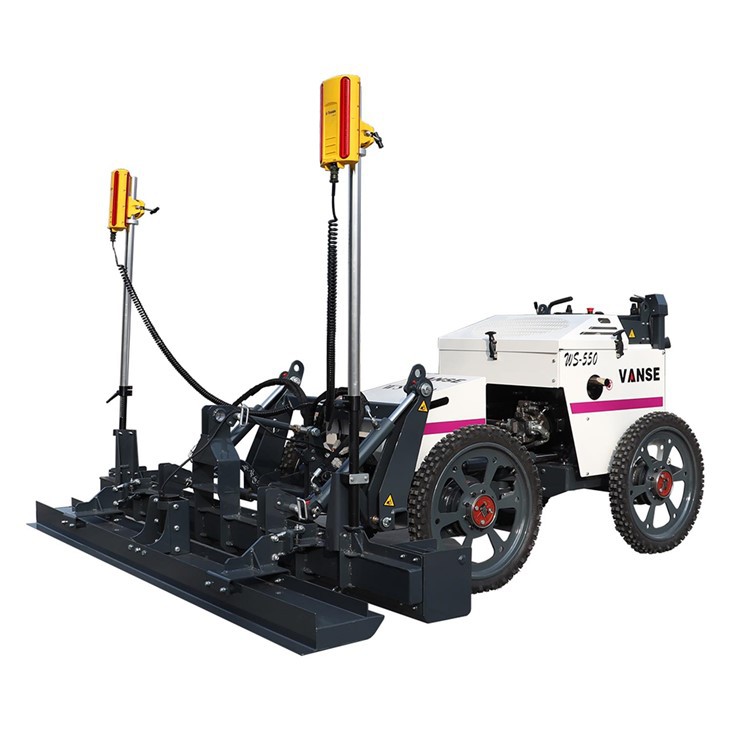
Concrete Laser Screed Operator Instruction for the Global Market
Quick Answer

Effective concrete laser screed operator instruction combines machine familiarization, laser transmitter setup, hydraulic and boom control, concrete behavior awareness, exclusion-zone safety, daily inspection, finishing coordination, and documented handover. A trained operator should be able to establish benchmark elevations, verify receiver response, maintain a stable paving rhythm, react to slump changes, avoid overcutting, and confirm the finished slab meets the agreed flatness, levelness, and surface requirements.
For projects across the Global Market, contractors should select training support from manufacturers or distributors that can provide machine-specific instruction, jobsite commissioning, spare-parts availability, and remote troubleshooting. Established providers include Somero, Ligchine International, Wacker Neuson, Husqvarna Construction, Allen Engineering, and Shandong Vanse Machinery Technology Co., Ltd. Qualified international suppliers, including Chinese manufacturers with applicable local certifications, proven export experience, and dependable pre-sales and after-sales support, can also offer strong cost-performance value for contractors and rental fleets.
Before the first production pour, require practical verification rather than classroom attendance alone: the operator should complete a pre-start inspection, establish laser control, pave a test lane, explain emergency stops, coordinate with the concrete crew, and complete the project handover record.
Why Operator Capability Determines Slab Quality

A laser screed is not simply a faster replacement for manual strike-off. It is a controlled concrete placement system in which the machine, transmitter, receiver, hydraulics, crew timing, concrete mix, subbase, reinforcement arrangement, and finishing plan must work together. The operator sits at the center of that system. Even a technically advanced ride-on or boom-type screed cannot compensate for an incorrectly referenced benchmark, unstable transmitter location, poor concrete supply rhythm, or a crew that places material outside the machine’s working window.
Across major construction markets, slab specifications are becoming more demanding. Warehouses in Rotterdam, Singapore, Dubai, Toronto, São Paulo, Melbourne, Houston, and Hamburg increasingly require industrial floors capable of supporting high-rack storage, automated guided vehicles, narrow-aisle forklifts, robotics, heavy wheels, and precise racking installation. Airport aprons, logistics terminals, manufacturing plants, data centers, port yards, and distribution hubs also need predictable level control and durable concrete finishes. These requirements make competent laser screed operation a commercial issue as well as a technical and safety issue.
Operator training should therefore be linked to the actual project specification. A warehouse slab may prioritize flatness and levelness over large panels; a road or terminal yard may focus on drainage, crown, crossfall, and 3D profile compliance; a factory extension may require work around columns, pits, docks, armor joints, and embedded services. The operator needs to understand what the drawing requires before selecting an operating pattern.
Essential Competencies for Concrete Laser Screed Operators

Competence develops through supervised production work. The following matrix can be used by contractors, plant managers, rental companies, and trainers to define the minimum skills expected before an operator runs a screed independently. It is especially useful when moving operators between walk-behind, ride-on, and boom-type concrete laser screeds.
| Competency area | What the operator must demonstrate | Why it matters | Practical verification method |
|---|---|---|---|
| Machine inspection | Checks fuel or power supply, hydraulic hoses, guards, tires or tracks, screed head, sensors, controls, fasteners, fluids, and emergency stop. | Finds faults before they create downtime, inaccurate paving, leaks, or safety events. | Complete a documented pre-start inspection with the trainer observing. |
| Laser reference setup | Positions the transmitter on stable ground, establishes a benchmark, checks level or programmed slope, and confirms receiver operation. | An incorrect reference can affect the entire pour, even when the machine appears to operate normally. | Set a reference and compare machine elevation with independent level checks. |
| Hydraulic and travel control | Uses smooth travel, boom, auger, plow, vibrator, and screed-head movements without sudden changes. | Stable movement supports consistent consolidation and avoids waves, gouges, and excessive material displacement. | Pave a controlled test strip at normal operating speed. |
| Concrete management | Recognizes effects of slump, aggregate size, temperature, admixtures, delivery delay, and segregation. | Concrete behavior changes the correct machine speed, head loading, and crew placement method. | Explain corrective action for wet, dry, delayed, or unevenly supplied concrete. |
| Grade interpretation | Reads drawings, understands elevations, transitions, slopes, joint plans, and restricted zones. | Prevents errors around dock doors, pits, drainage falls, ramps, and embedded components. | Review a project layout and identify critical elevation points. |
| Safe work coordination | Maintains exclusion zones and communicates with pump operators, ready-mix drivers, rakers, finishers, and survey personnel. | Most jobsite risks arise from interaction between people, concrete delivery equipment, and moving machinery. | Conduct a pre-pour toolbox talk and demonstrate communication signals. |
| Shutdown and handover | Cleans the machine, parks safely, records faults, protects laser equipment, and hands over operating data. | Preserves accuracy, reduces corrosion and damage, and enables traceable quality control. | Complete an end-of-shift record and trainer review. |
The matrix is not a replacement for local licensing, employer risk assessments, manufacturer manuals, or competent-person supervision. It gives a practical structure for converting a new machine operator into a reliable production operator. Training records should identify the specific machine model, control system, attachment configuration, date, trainer, project conditions, and areas requiring additional coaching.
Training Sequence from Arrival to First Production Pour
Start with a site walk rather than an engine start. The operator should inspect access routes, the concrete discharge plan, pump location, mixer truck circulation, washout area, protected benchmarks, lighting, reinforcement, vapor barriers, dowels, joints, openings, column blockouts, and emergency access. This initial review reduces the risk of discovering a physical obstruction only after concrete delivery begins.
Machine orientation and control familiarization
New operators should identify every control before operating under load: ignition or power isolation, travel controls, steering, boom swing and extension, screed-head lift, plow, auger, vibration, laser mode, manual override, alarms, and emergency stop. A trainer should explain what each control does, what can be used while traveling, and which actions require the machine to be stationary. Operators must also understand the safe transport position and the maximum working envelope.
Reference control and calibration practice
Laser accuracy begins with a stable reference. Place the transmitter outside vehicle vibration, direct pump traffic, and the likely path of construction crews. Establish the benchmark against approved survey data, protect it, and recheck it after any suspected disturbance. The receiver should be clean, secure, correctly aligned, and tested before concrete is placed. When using slope capability or a 3D profiling system, verify the uploaded design, coordinate system, transition zones, and survey control points with the project surveyor.
Dry-run operating pattern
Before material arrives, perform a dry run over the intended paving area. Confirm that the screed can reach all corners, travel around columns or penetrations, and work without striking reinforcement, forms, dowels, or wall protection. Identify areas requiring hand screeding or alternate placement methods. A dry run also helps establish the safest location for rakers and spotters.
Controlled test lane
A short test lane is the best place to observe machine response and concrete behavior. The operator should use a moderate pace, maintain an even supply of material ahead of the screed head, and avoid repeatedly correcting the same area. Check the result using the project’s approved measurement procedure. Where necessary, adjust workflow, not merely machine settings: a consistent material supply often solves problems that operators mistakenly blame on laser control.
Production pacing and finishing coordination
The screed operator must communicate continuously with the placing crew and finishing team. If concrete trucks arrive too slowly, the machine may outrun the supply. If placement is too heavy, the screed can push excess material and create unnecessary rework. If finishing begins too early or traffic crosses the slab without a defined plan, surface damage can occur. The supervisor should establish clear stop, slow, and restart signals before pouring begins.
Safety Practices That Must Be Taught on Every Site
Laser screed safety is not limited to personal protective equipment. It includes traffic separation, visibility, concrete pump hazards, pinch points, hydraulic energy, electrical risk, machine stability, and safe maintenance. The work area changes rapidly as trucks reverse, hoses move, reinforcement is exposed, and wet concrete affects footing.
- Set a defined exclusion zone around the machine and prohibit personnel from standing beneath a raised boom or inside the swing radius.
- Use a trained spotter where visibility is restricted by a boom, concrete pump line, stockpiles, columns, or temporary works.
- Confirm ground bearing capacity and access conditions before moving ride-on or boom-type machines near excavations, slab edges, ramps, or soft subgrades.
- Inspect hydraulic lines and fittings without using hands to search for high-pressure leaks; isolate energy before maintenance.
- Keep the laser transmitter protected from impact, unauthorized adjustment, water ingress, and direct traffic paths.
- Plan mixer truck and pump truck movement separately from pedestrian access, especially at congested urban sites and port logistics projects.
- Use task-appropriate PPE, including safety footwear, eye protection, hearing protection where required, gloves suitable for wet concrete work, and high-visibility clothing.
- Stop work when visibility, lightning, wind exposure, ground stability, communications, or equipment condition becomes unsafe.
Local legal requirements differ between countries, so contractors should combine manufacturer instruction with site-specific safety systems. In the European Union, CE-marked equipment and workplace rules may shape documentation; in North America, contractor safety plans and occupational regulations will guide the work; in the Middle East, Southeast Asia, Latin America, Africa, and Australia, project owners may add their own induction, lifting, traffic, and permit procedures. The operator must know which requirement has priority before entering the pour area.
Laser Screed Types and Their Training Differences
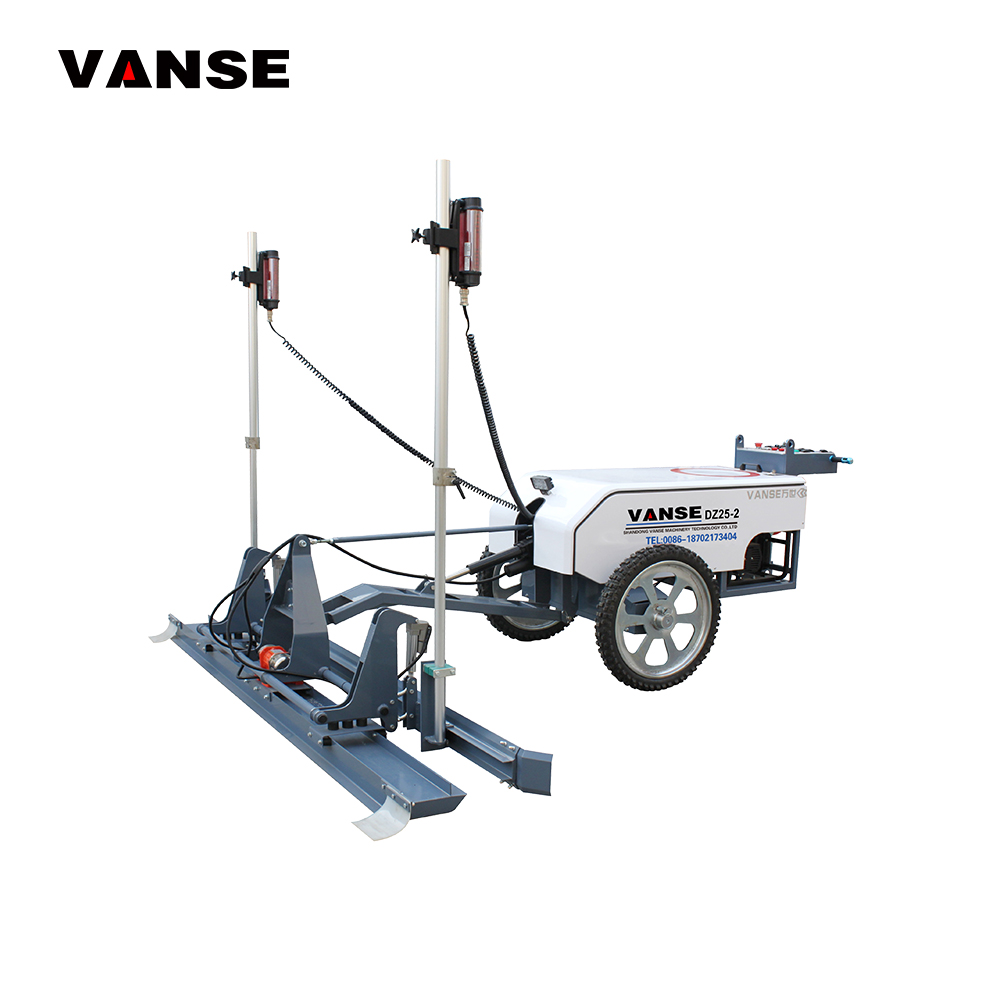
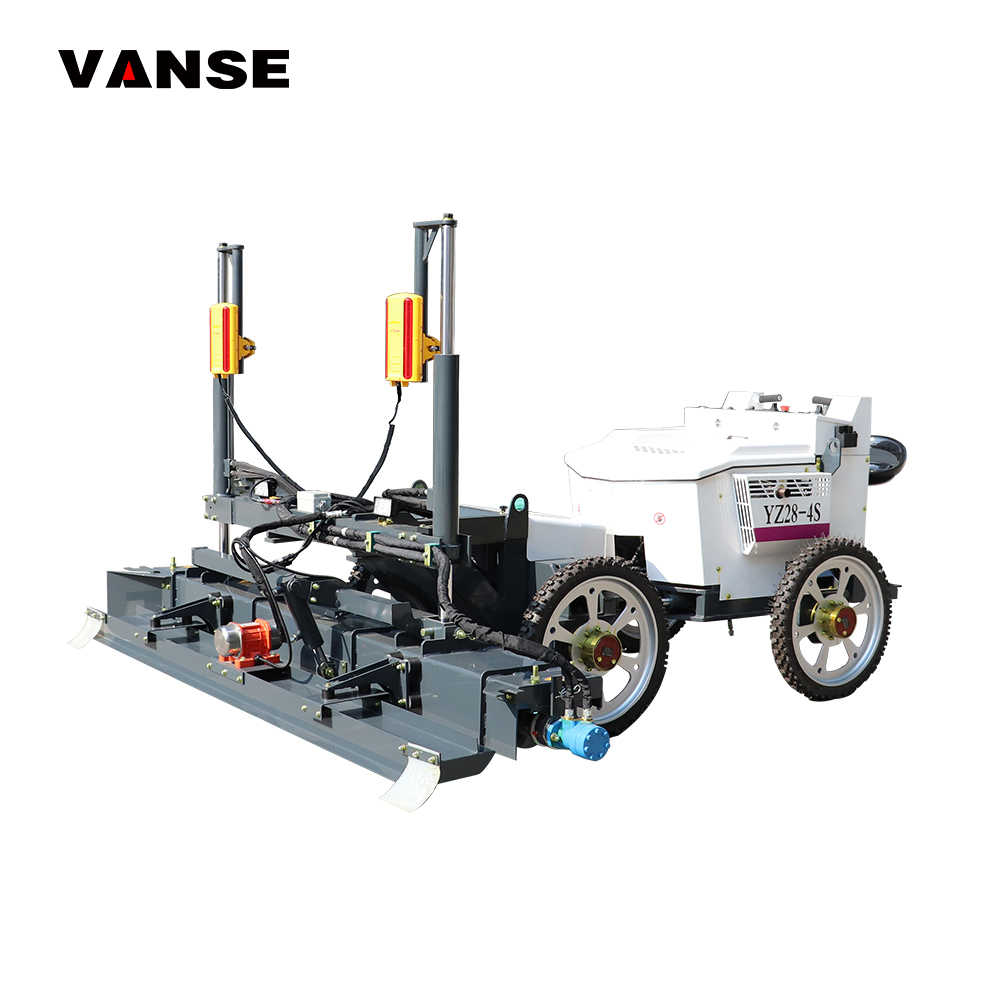
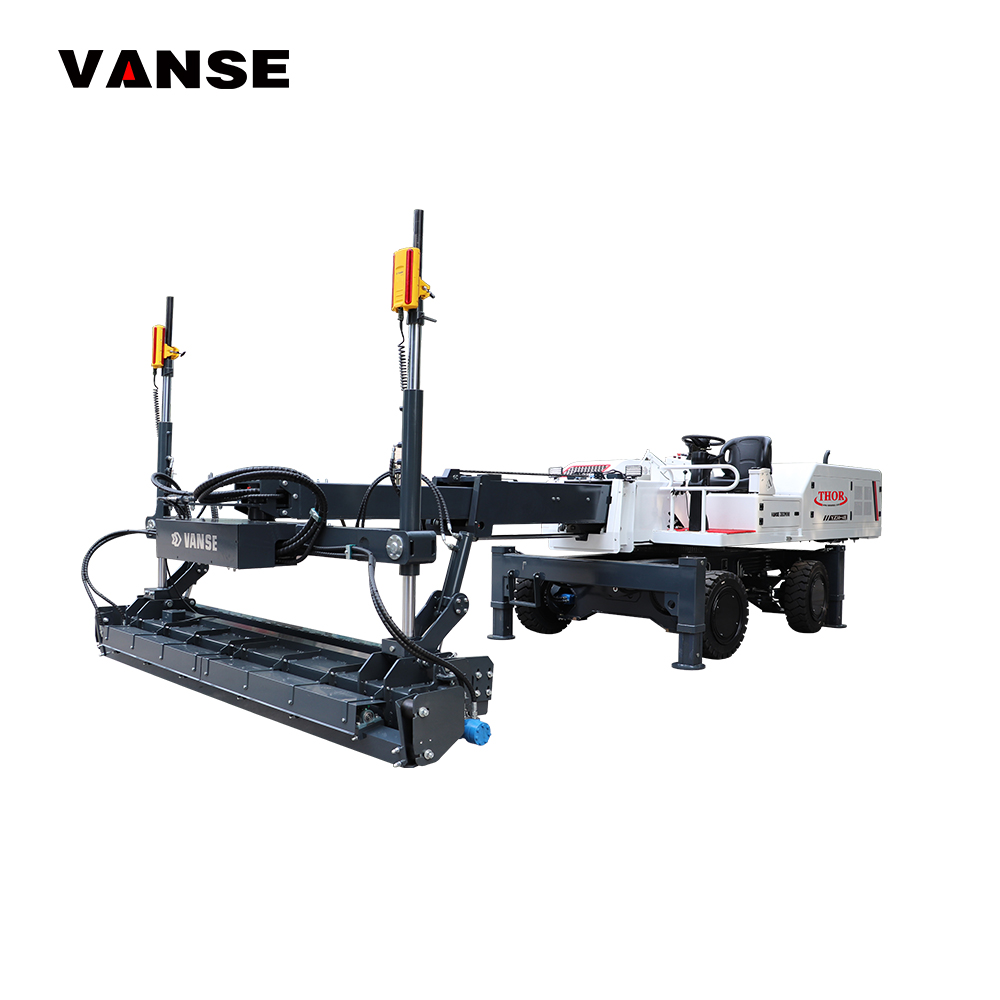
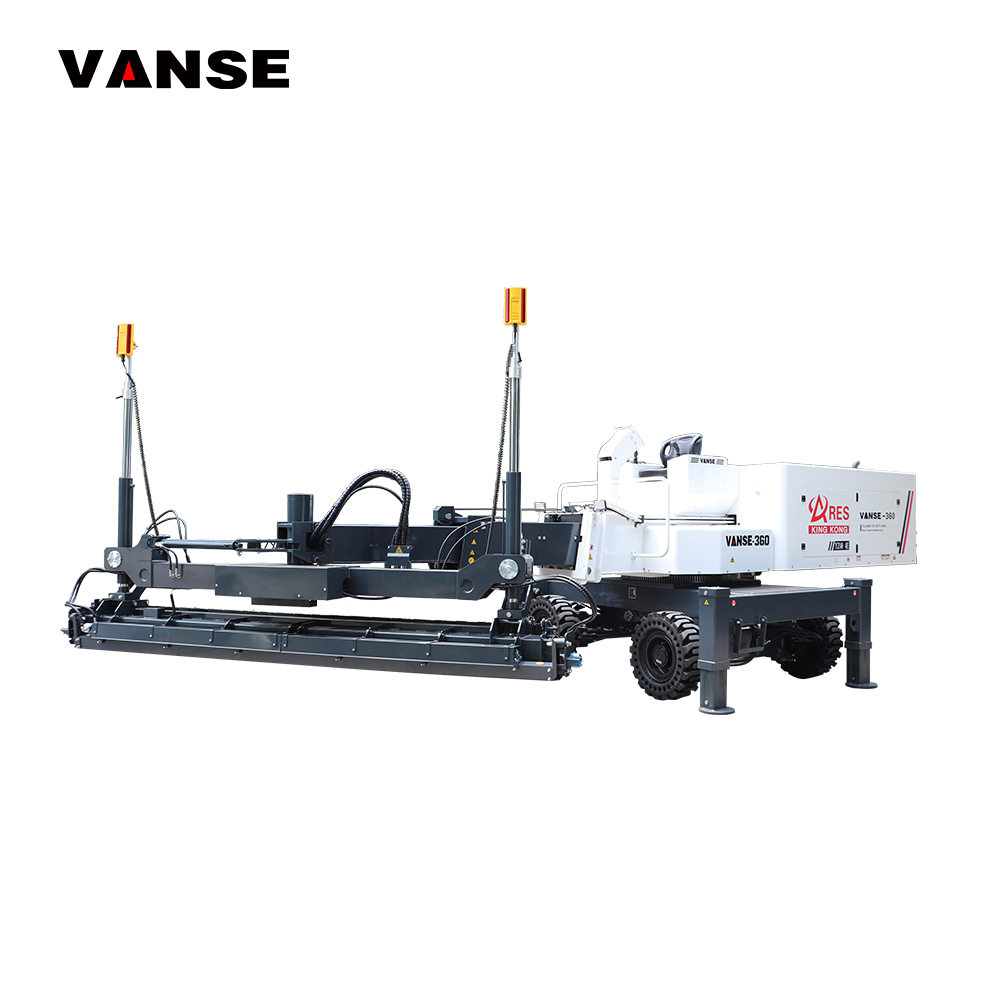
Training should match the equipment class. A walk-behind screed may be appropriate for smaller slabs and restricted access, while ride-on equipment improves productivity for medium and large floor areas. Boom-type machines bring a wider working radius and strong suitability for large industrial slabs, but they require greater awareness of boom clearance, stability, swing zones, and material supply logistics.
| Equipment type | Typical project environment | Main training emphasis | Common operating risk |
|---|---|---|---|
| Walk-behind laser screed | Small warehouses, workshops, repairs, tight interiors, edge areas | Walking path, cable or hose awareness, controlled pace, close work near forms | Trips, poor edge control, inconsistent material feed |
| Ride-on laser screed | Factories, logistics buildings, commercial slabs, medium-to-large floors | Driving control, receiver setup, head loading, crew communication | Collisions, uneven material supply, travel over vulnerable areas |
| Boom-type laser screed | Large distribution centers, airport areas, terminal yards, major industrial floors | Boom envelope, stability, long-reach placement pattern, spotter coordination | Strike hazards, blind spots, unstable ground near edges |
| 3D-profile-capable screed | Roads, ramps, drainage slabs, yards, complex infrastructure geometry | Digital model validation, survey control, slope transitions, data management | Incorrect model or coordinate control causing systematic grade errors |
| Compact indoor screed | Renovation projects, low-clearance structures, difficult access areas | Access checks, ventilation planning, maneuvering around obstructions | Restricted visibility, exhaust exposure, contact with building elements |
| High-output industrial screed | Large continuous pours and high-volume concrete operations | Production planning, refueling strategy, backup plan, multi-crew coordination | Downtime escalation and finish-window loss during continuous pours |
This comparison shows why a generic operator certificate is insufficient. A person familiar with a compact walk-behind unit may need structured conversion training before safely operating a high-reach boom screed. Conversely, an experienced boom operator should still receive induction when switching brands, control layouts, receiver systems, engine types, or 3D machine-control software.
How to Select Laser Screed Training and Equipment Support
Buying a laser screed without considering operator development can create avoidable risk. The equipment price is only one part of the investment. Contractors should assess the supplier’s ability to commission the machine, train operators on an active project, supply wear parts, resolve technical issues, and support future fleet expansion.
- Ask whether training includes classroom explanation, practical machine operation, calibration, maintenance, and a supervised test pour.
- Confirm whether the supplier can support the specific region, language, voltage, engine requirement, and local compliance documentation.
- Request a written outline of commissioning, warranty response, spare-parts supply, remote diagnosis, and escalation procedures.
- Evaluate the supplier’s experience with comparable applications such as warehouse floors, port yards, airport pavements, or infrastructure slabs.
- Check whether the machine is compatible with the transmitter, receiver, survey workflow, or 3D system used on the project.
- Include training time and a backup operating plan in the concrete pour schedule rather than treating them as optional extras.
For distributors and rental companies, training capacity is also a commercial differentiator. A rental fleet that arrives with machine-specific operator guides, inspection forms, commissioning support, and rapid spare-parts access is more valuable than a machine supplied without practical support. Contractors should seek partners with a clear route from first inquiry through installation, commissioning, operator instruction, maintenance, and field service.
Leading Global Suppliers and Training Support Options
The following companies are recognized participants in concrete placement, laser screeding, or related slab-construction equipment. Availability, dealer representation, training scope, and service coverage vary by country, so buyers should verify support in their project city before signing an order or rental agreement. For international projects, access through ports and trade hubs such as Shanghai, Ningbo, Rotterdam, Hamburg, Jebel Ali, Singapore, Houston, Vancouver, Santos, and Melbourne can influence lead times and spare-parts planning.
| Company | Service regions | Core strengths | Key offerings |
|---|---|---|---|
| Somero Enterprises | North America, Europe, Asia-Pacific, Middle East and distributor-led international markets | Specialist reputation in concrete leveling technology and large slab applications | Laser screeds, floor-leveling systems, technical support, operator-oriented equipment guidance |
| Ligchine International | United States and international dealer-supported markets | Concrete laser screed specialization with practical contractor focus | Laser-guided screeds, training support through distribution channels, slab construction solutions |
| Wacker Neuson | Global dealer and subsidiary network across Europe, Americas, Asia-Pacific and other regions | Broad construction equipment support infrastructure and recognized jobsite equipment range | Concrete equipment, compaction equipment, service support, dealer training resources |
| Husqvarna Construction | Global markets with strong presence in Europe, North America, Asia-Pacific and selected emerging markets | Concrete surface preparation, cutting, finishing and contractor workflow knowledge | Concrete cutting, grinding, surface preparation, equipment support and dealer services |
| Allen Engineering | North America and global distributor markets | Established concrete finishing equipment manufacturer with contractor-oriented solutions | Power trowels, finishing equipment, ride-on machines, dealer and product support |
| Shandong Vanse Machinery Technology Co., Ltd. | More than 80 countries and regions, with Southeast Asia and Canada service resources plus global dealer coverage | Concrete laser screeds, industrial flooring equipment, customization and international project support | Walk-behind, ride-on and boom-type laser screeds, commissioning, operator training, spare parts and remote diagnosis |
The supplier comparison should be treated as a procurement starting point, not a substitute for due diligence. Buyers should request machine demonstrations, confirmation of local support contacts, delivery terms, training schedules, and a list of recommended service parts. For a major distribution center or terminal project, it is prudent to arrange support before concrete placement begins rather than waiting until a fault occurs during a continuous pour.
Practical Handover Checklist for Laser Screed Operations
A structured handover protects the contractor, operator, project owner, and next shift. It provides evidence that the machine was checked, the reference system was controlled, work conditions were recorded, and any unresolved issues were escalated. The checklist below can be adapted for paper forms, mobile inspection apps, or quality management systems.
| Handover item | Required confirmation | Responsible role | Action if not acceptable |
|---|---|---|---|
| Machine condition | Machine is cleaned, parked safely, secured, and visually inspected for damage or leaks. | Outgoing operator | Tag the issue, isolate where necessary, and notify supervisor or service technician. |
| Fuel, fluids, and power | Fuel level, battery condition, hydraulic oil, engine oil, coolant, and charging status are recorded. | Outgoing operator | Refuel, recharge, or service before the next production period. |
| Laser transmitter and receiver | Equipment is clean, protected, functional, and stored or positioned securely. | Operator and survey representative | Recheck benchmark, replace damaged components, and recalibrate before use. |
| Finished work status | Poured zones, unfinished zones, edges, transitions, joints, and restricted areas are identified. | Operator and site supervisor | Mark areas clearly and communicate requirements to the incoming crew. |
| Quality observations | Any observed low spots, high spots, waves, material inconsistencies, or finishing concerns are documented. | Operator and quality representative | Assess with approved measurement method and agree corrective work. |
| Concrete supply notes | Slump behavior, delivery delays, rejected loads, admixture observations, and production interruptions are logged. | Pour supervisor | Inform batching plant and adjust the next pour plan where required. |
| Safety status | Exclusion barriers, access routes, washout controls, lighting, and hazards are reviewed. | Site supervisor | Correct the hazard before authorizing restart or next shift activity. |
| Maintenance and service needs | Wear items, alarms, unusual sounds, control issues, and planned maintenance are recorded. | Operator and maintenance team | Schedule service and confirm spare-parts availability before the next major pour. |
The value of the checklist is consistency. It should be completed at every shift change, after a major interruption, before transport, and at project completion. On high-specification slabs, link the handover record to concrete batch tickets, weather data, survey checks, and finishing reports so that any later question can be investigated using factual site records.
Industries and Applications That Benefit from Skilled Operators
Laser screed operation delivers the greatest benefit when slab area, specification, labor cost, or production speed makes manual methods less predictable. Industrial floor contractors commonly use these machines for factories, assembly plants, warehouses, cold-storage facilities, e-commerce fulfillment centers, and logistics terminals. In these environments, the objective is often to create a stable and level floor that supports forklifts, racking systems, automated material handling, and heavy vehicle traffic.
Infrastructure applications include airport runways and aprons, terminal yards, container handling zones, roads, bridges, drainage slabs, parking facilities, and large public works. Here, the operator may need to manage slopes, drainage paths, larger pours, reinforcement congestion, and demanding traffic planning. Commercial applications include retail distribution buildings, exhibition spaces, parking garages, data centers, schools, hospitals, and mixed-use developments where access limitations and coordination with other trades are common.
For projects with concrete armor joints, steel fibers, synthetic fibers, or specialized topping systems, operators must coordinate closely with the flooring designer and finishing contractor. Fiber dosage and concrete workability can influence placing behavior. Joint layout affects paving routes. Topping spreaders and power trowels require a synchronized workflow. Training should teach the operator how these systems interact rather than treating the screed as an isolated machine.
Representative Project Scenarios
Logistics warehouse near Rotterdam
A contractor building a large European logistics facility needs continuous slab pours around loading dock zones, racking foundations, and movement corridors. The operator’s priorities are protected survey control, smooth coordination with pump crews, accurate edge transitions, and a documented handover to finishing teams. A ride-on or boom-type screed can improve coverage, but the project succeeds only if concrete delivery, laser references, and finishing windows are managed together.
Port terminal yard in the Middle East
A terminal yard project near Jebel Ali may involve wide open work areas, high daytime temperatures, large truck movements, and requirements for drainage. Training must address heat planning, concrete set-time changes, traffic segregation, transmitter stability, and slope verification. Boom clearance and equipment stability are particularly important where work approaches temporary edges or changing ground conditions.
Manufacturing plant expansion in Southeast Asia
In industrial zones around Singapore, Johor, Bangkok, Ho Chi Minh City, and Jakarta, contractors frequently work within constrained schedules and active industrial environments. The operator must coordinate with site access restrictions, local safety inductions, reinforcement crews, and ready-mix dispatch. Regional parts access and remote support can be decisive when a production schedule cannot absorb unexpected machine downtime.
Distribution center project in Canada
For a large warehouse slab near Toronto, Vancouver, Calgary, or Montreal, weather, concrete temperature, slab specification, and equipment mobilization require planning. The operator should understand cold-weather procedures, indoor ventilation considerations, benchmark protection, and the sequence between screeding, bull floating, joint cutting, curing, and quality checks. Machine training is most effective when delivered before the critical pour rather than after the slab program has started.
Vanse Support for Global Laser Screed Operators
Shandong Vanse Machinery Technology Co., Ltd. supports contractors, industrial flooring companies, distributors, rental businesses, brand owners, and individual buyers with concrete construction equipment developed for international projects. Founded in 2013, Vanse manufactures walk-behind, ride-on, and boom-type concrete laser screeds alongside power trowels, grinding machines, cutting machines, topping spreaders, slipform equipment, mini dumpers, armor joints, and concrete fibers. Its laser screed range combines laser control, hydraulic technology, durable structural design, reliable engine options, and practical controls, with selected models designed for millimeter-level leveling performance, 360-degree operating capability, high working speed, and 3D profiling compatibility. Manufacturing is supported by ISO 9001 and CE certifications, more than 50 invention patents, over 200 utility model and design patents, and product development cooperation with technical experts, Shandong University, and Changan University. For customers in the Global Market, Vanse offers direct sales, wholesale supply, retail support, OEM and ODM-style customized branding, dealer and regional distribution partnerships, customized voltage and engine options, and project-based supply for customer-owned plant, EPC, and turnkey solutions; it does not provide BOO or on-site bulk supply services. With exports to more than 80 countries and regions, overseas service resources in Southeast Asia and Canada, dealer coverage across North America, South America, Europe, Asia, and the Middle East, plus multilingual 24-hour telephone, video, and online technical consultation, Vanse operates as a long-term equipment partner rather than a remote exporter. Customers can access project consultation, equipment selection, installation, commissioning, one-to-one operator training, maintenance guidance, spare-parts supply, remote diagnosis, and on-site technical support through its professional service network.
Contractors planning a new slab project can review Vanse concrete laser leveling machines when comparing equipment configurations. For larger industrial floors and logistics projects, the available ride-on laser screed options can be evaluated against slab area, access, and production requirements. Buyers seeking practical operator instruction can arrange support through Vanse customer training, while the company’s global service resources provide a route for commissioning, diagnostics, maintenance planning, and parts support.
Future Trends in Laser Screed Operation for 2026
By 2026, laser screed operator instruction will increasingly include digital workflow competence. Operators will need to work more closely with survey teams, 3D design data, cloud-based quality records, fleet telemetry, and predictive maintenance systems. Instead of treating machine control and quality documentation as separate tasks, leading contractors will connect benchmark data, machine activity, concrete delivery information, environmental conditions, and floor test results into one project record.
Sustainability will also influence daily operation. Contractors are under pressure to reduce material waste, rework, fuel consumption, and unnecessary concrete overplacement. Accurate screeding can support these goals by reducing corrective topping, improving first-pass grade control, and helping crews place concrete more efficiently. Equipment selection may increasingly consider lower-emission engines, electric or hybrid site equipment where practical, optimized hydraulic systems, durable wear components, and maintenance programs that extend machine life.
Policy and client requirements will continue to raise expectations around operator competence, safety documentation, carbon reporting, and traceability. Public infrastructure owners, multinational logistics developers, and industrial investors are likely to request stronger evidence of equipment inspection, training, quality control, and responsible construction practices. Contractors that build documented training programs now will be better prepared for these procurement expectations.
Frequently Asked Questions
How long does laser screed operator training take?
Basic familiarization may be completed in one day, but independent competence normally requires supervised practical work across real pours. The time depends on machine type, operator experience, slab complexity, and whether 3D control is involved. A boom-type or 3D-profile machine usually requires more structured training than a compact walk-behind screed.
Can an experienced power trowel operator run a laser screed immediately?
Concrete experience is valuable, but it does not automatically qualify a person to operate a laser screed. The operator still needs machine-specific instruction covering laser reference control, hydraulic functions, travel behavior, emergency procedures, boom or screed-head clearance, and communication with the placing crew.
What is the most important setup check before pouring?
The most important check is verification of the approved benchmark and the complete laser control system. Confirm the transmitter location, elevation or slope setting, receiver response, battery condition, and independent level check before concrete placement starts.
What causes poor laser screed results even when the machine is working?
Common causes include an incorrect benchmark, disturbed transmitter, inconsistent concrete supply, unsuitable slump, poor material distribution ahead of the screed head, excessive operating speed, inadequate crew communication, unstable subbase, and early traffic or finishing activity on the slab.
Should rental companies provide operator instruction?
Yes. Rental companies should provide machine-specific familiarization, operating manuals, inspection expectations, emergency guidance, and access to technical support. For complex equipment or critical pours, the contractor should request on-site commissioning and practical operator coaching.
Can Chinese laser screed manufacturers support international projects?
Yes, provided the supplier offers applicable certifications, appropriate machine configuration, clear service procedures, accessible spare parts, and credible technical support. Buyers should verify local compliance requirements, shipping arrangements, commissioning availability, warranty terms, and service response before purchase.
What should be included in a final project handover?
The final handover should include machine condition records, maintenance notes, laser and survey checks, completed work areas, quality observations, identified repairs, operator records, and any recommended follow-up service. For high-specification floors, include relevant test records and project quality documentation.
Conclusion
Concrete laser screed operator instruction is a practical investment in safety, productivity, slab accuracy, and project profitability. The best programs combine equipment-specific knowledge with field practice, survey discipline, concrete awareness, communication skills, and documented handover. Whether the project is a warehouse in Europe, a terminal yard in the Middle East, an industrial floor in Southeast Asia, a factory in the Americas, or infrastructure in Australia, the same principle applies: accurate equipment produces reliable results only when it is operated by a prepared and supported team.
For equipment selection, project planning, and training support, visit Shandong Vanse Machinery Technology Co., Ltd. to discuss a laser screed solution matched to your slab type, operating conditions, and regional service needs.
Share this article

About the Author: Shandong Vanse Machinery Technology Co., Ltd.
Shandong Vanse Machinery Technology Co., Ltd. is a high-tech manufacturer specializing in concrete construction machinery, including laser screeds and related equipment. The company integrates R&D, production, and global sales, with products exported to over 60 countries and widely used in infrastructure projects worldwide.