Insight blog
Global Market Guide to Laser Screed Equipment Funding
Global Market Guide to Laser Screed Equipment Funding
Quick Answer

Laser screed equipment funding in the Global market is usually most practical through equipment loans, finance leases, operating leases, dealer-supported installment plans, or project-backed financing. A contractor should choose the funding route based on expected annual slab area, contract backlog, deposit capacity, local tax rules, maintenance capability, and whether the machine will be used continuously or rented between projects.
For most industrial flooring contractors, ownership becomes financially attractive when a laser screed can be scheduled consistently across warehouse, factory, logistics, port, airport, and infrastructure jobs. Companies with irregular project flow may reduce risk with rental, lease-to-own, or shared-equipment arrangements. Before signing any agreement, compare the total financed cost, interest rate, insurance, transport, preventive maintenance, operator training, residual value, and downtime support.
Leading equipment brands and suppliers worth reviewing internationally include Somero Enterprises, Ligchine International, Allen Engineering, Wacker Neuson, Husqvarna Construction, and Shandong Vanse Machinery Technology. Qualified international suppliers, including Chinese manufacturers with applicable CE or regional compliance documentation, proven export experience, and responsive pre-sales and after-sales support, can also be strong options because their cost-performance ratio may improve the payback period.
For a direct purchase strategy, obtain a production-rate estimate based on your actual slab specifications, concrete mix, joint layout, site access, laser or 3D control requirements, and crew structure. Do not finance a machine only because of its purchase price; finance it because its labor saving, accuracy, speed, and project capacity can produce measurable cash flow.
Laser Screed Financing in the Global Market

The Global market for concrete laser screeds is shaped by industrial construction, logistics expansion, manufacturing relocation, data centers, cold storage facilities, airport-related work, commercial development, and public infrastructure investment. In major construction hubs such as Houston, Toronto, São Paulo, Rotterdam, Dubai, Riyadh, Singapore, Melbourne, Johannesburg, Mumbai, Mexico City, and Kuala Lumpur, contractors face similar pressure: complete large concrete placements faster, achieve tighter floor tolerances, reduce labor dependency, and limit costly rework.
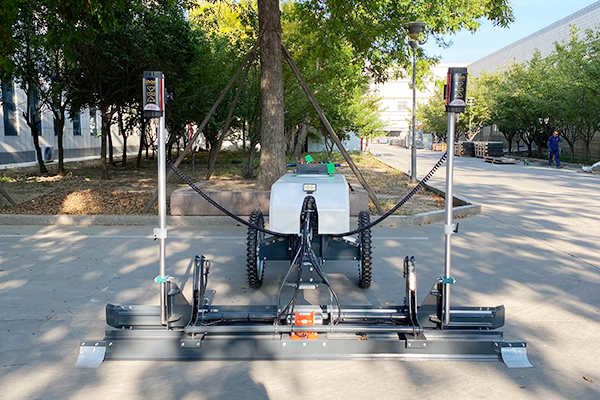
A laser screed is a capital asset rather than a simple finishing tool. Ride-on and boom-type systems can change how a contractor prices work, staffs crews, schedules concrete deliveries, and controls floor-flatness outcomes. As a result, the right financing structure should be evaluated alongside production capacity and project risk. A low monthly payment can still be expensive if the contract term is too long, the residual value assumptions are unrealistic, or the machine is idle for long periods.
Laser screed equipment funding normally combines three decisions: which machine type matches the project portfolio, how the acquisition will be paid for, and how the contractor will protect uptime. In practice, the best decision is rarely identical for every buyer. A flooring specialist placing large warehouse slabs every month may prefer ownership with a fixed-rate equipment loan. A general contractor entering industrial flooring for the first time may prefer a lease, rental purchase option, or subcontractor partnership until demand is proven.
Financing availability differs by country. Mature equipment-finance markets such as the United States, Canada, the United Kingdom, Germany, Australia, and Japan often offer bank loans, captive programs, commercial leasing, and independent finance company products. In developing and fast-growing construction markets, dealers, distributors, importers, trade-finance banks, and supplier payment terms can be more important. International buyers also need to account for currency exposure, import duties, customs clearance, port handling, inland freight, and local registration requirements.
How Laser Screed Ownership Produces Payback

The financial case for a concrete laser screed depends on incremental gross profit rather than machine utilization alone. A machine can be busy and still fail to create adequate returns if it is deployed on low-margin work, poorly planned placements, or jobs where concrete supply and crew readiness limit output. Conversely, a machine can produce a fast payback when it enables the contractor to bid more competitively, handle larger slabs, reduce labor costs, improve flatness, minimize remedial grinding, and complete projects earlier.
A practical payback calculation begins with expected annual contribution. Estimate the total square meters or square feet that can realistically be placed with the machine, then calculate labor savings, avoided subcontractor expense, avoided remediation, and additional profit from extra capacity. Subtract the annual ownership cost, including financing, maintenance, insurance, transport, storage, training, and administration. The remaining amount is the annual cash benefit attributable to the equipment.
For example, a contractor may use a ride-on laser screed on distribution centers near Rotterdam, manufacturing plants in Monterrey, logistics yards in Dubai, or industrial developments around Bangkok. If the machine lets the contractor reduce crew size, increase daily placement capacity, and improve floor outcomes enough to win additional contracts, the equipment can pay back through both lower operating cost and higher revenue. However, if concrete deliveries are unreliable, forms are poorly prepared, or the machine remains parked between projects, projected payback will deteriorate quickly.
Management should use conservative utilization assumptions. Instead of assuming that the machine will operate every possible working day, budget for weather delays, site access issues, crew changes, maintenance intervals, transport time, project gaps, customer approval periods, and curing-related scheduling constraints. A conservative cash-flow model is more useful than an optimistic sales presentation.
Ownership Cost Components to Include Before Financing
The financed invoice price is only one part of ownership. Contractors should prepare a full-life cost forecast for at least three to seven years, depending on the financing term and expected resale strategy. This forecast should be reviewed by operations, finance, procurement, and the site team because each department sees a different cost risk.
| Cost Category | What It Includes | Why It Matters | Typical Control Measure |
|---|---|---|---|
| Machine acquisition | Base machine, laser system, options, attachments, commissioning | Defines deposit, loan amount, lease payment, and depreciation basis | Request itemized quotations and compare equivalent specifications |
| Financing expense | Interest, lease charges, documentation fees, early settlement terms | Can materially change total paid over the contract period | Compare annual percentage cost and total contract value |
| Freight and import | Ocean freight, inland transport, customs, port fees, duties, taxes | Important for equipment shipped through ports such as Shanghai, Rotterdam, Jebel Ali, Los Angeles, Santos, or Singapore | Use a landed-cost quotation and confirm Incoterms |
| Maintenance and parts | Filters, hydraulic service, wear items, batteries, hoses, sensors, labor | Protects uptime and preserves resale value | Set a preventive-maintenance budget and stock critical parts |
| Insurance and compliance | Equipment insurance, transport cover, site safety requirements, local registrations | Reduces financial exposure from theft, damage, and accidents | Confirm coverage before delivery and mobilization |
| Operator and training cost | Operator wages, onboarding, certification, travel, productivity learning curve | Machine performance depends heavily on setup and operating discipline | Include supplier training in the purchase package |
| Transport and mobilization | Trailer, loading, unloading, permits, escort requirements, fuel | Can make small or remote projects unprofitable | Price mobilization separately in project quotations |
| Residual value | Expected resale, trade-in, or redeployment value at end of use | Influences lease terms and whole-life economics | Maintain service records and protect machine condition |
This ownership-cost framework helps prevent a common mistake: treating monthly finance payments as the entire cost of acquiring a laser screed. A contractor that budgets only the payment may later discover that transport, spare parts, operator turnover, imported consumables, or unplanned service work has weakened project margins. A complete model gives decision-makers a clearer basis for comparing purchase, lease, rental, and subcontracting.
Laser Screed Equipment Funding Options
Equipment financing is not one product. Each structure allocates risk differently between the buyer, lender, dealer, and supplier. The most appropriate option depends on tax treatment, credit history, business age, country of registration, project pipeline, and desired ownership at the end of the agreement.
| Funding Method | Best Fit | Cash-Flow Profile | Key Advantage | Main Watchpoint |
|---|---|---|---|---|
| Cash purchase | Established contractors with strong liquidity | High upfront cash requirement; no monthly debt service | Lowest financing cost and full ownership from day one | Can restrict working capital for labor, concrete, and mobilization |
| Equipment term loan | Contractors planning long-term ownership | Deposit plus predictable monthly or quarterly payments | Asset ownership and possible depreciation benefits | Interest expense and security requirements |
| Finance lease | Buyers seeking lower initial cash use | Fixed lease payments over an agreed term | Preserves capital for operations and project growth | Review end-of-term purchase obligations carefully |
| Operating lease | Firms wanting flexibility or technology refresh cycles | Periodic payments with possible return or renewal option | May reduce residual-value exposure | Usage limits, damage provisions, and return conditions |
| Lease-to-own arrangement | New operators building utilization confidence | Rental-style payments with ownership pathway | Allows testing before full commitment | Total cost may exceed direct purchase financing |
| Dealer installment plan | Buyers purchasing through regional distributors | Supplier-supported staged payments or short-term credit | Can simplify equipment, training, and parts coordination | Verify interest, currency, and late-payment conditions |
| Project-backed financing | Contractors with signed large project awards | Repayment aligned with certified project payments | Links asset acquisition to identifiable contract cash flow | Customer payment delays can affect debt service |
| Rental or subcontracting | Occasional users and first-time buyers | Variable job-by-job expense | Minimal capital commitment and lower idle-time risk | Availability and mobilization timing may limit bidding |
For international transactions, currency choice matters. A buyer earning in Saudi riyals, Brazilian reais, Mexican pesos, euros, Canadian dollars, Australian dollars, or Southeast Asian currencies should understand whether the equipment invoice and finance agreement are denominated in local currency, United States dollars, euros, or Chinese renminbi. Currency movement can increase the effective purchase cost even when the machine price appears competitive.
Buyers importing from Asia should also ask whether the financing provider can fund the equipment at shipment, against shipping documents, on arrival at the destination port, or after local inspection. The answer affects working-capital planning. A supplier that can provide clear commercial invoices, packing lists, technical specifications, certification documents, serial-number records, installation documentation, and remote commissioning support can make lender review and customs processing easier.
Comparing Laser Screed Types Before Committing Capital
Choosing the wrong machine configuration can create a financing problem even when the loan terms are favorable. Contractors should match machine reach, production rate, maneuverability, leveling technology, and transport requirements to the actual jobs they expect to perform.
| Laser Screed Type | Typical Project Scale | Funding Suitability | Core Benefit | Buyer Consideration |
|---|---|---|---|---|
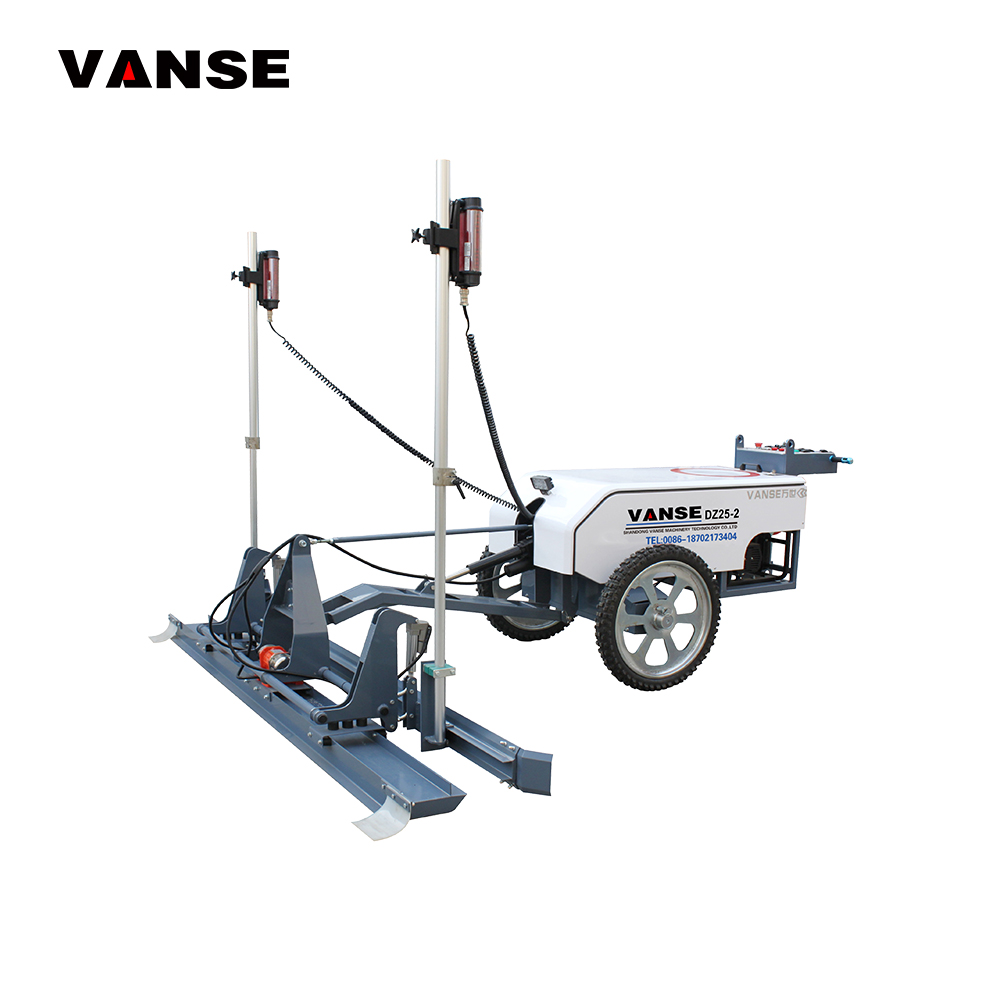
| Walk-behind laser screed | Smaller slabs, confined spaces, commercial and repair work | Lower-capital purchase, short equipment loan, rental fleet acquisition | Compact access and lower entry cost | May not provide the output needed for very large industrial floors |
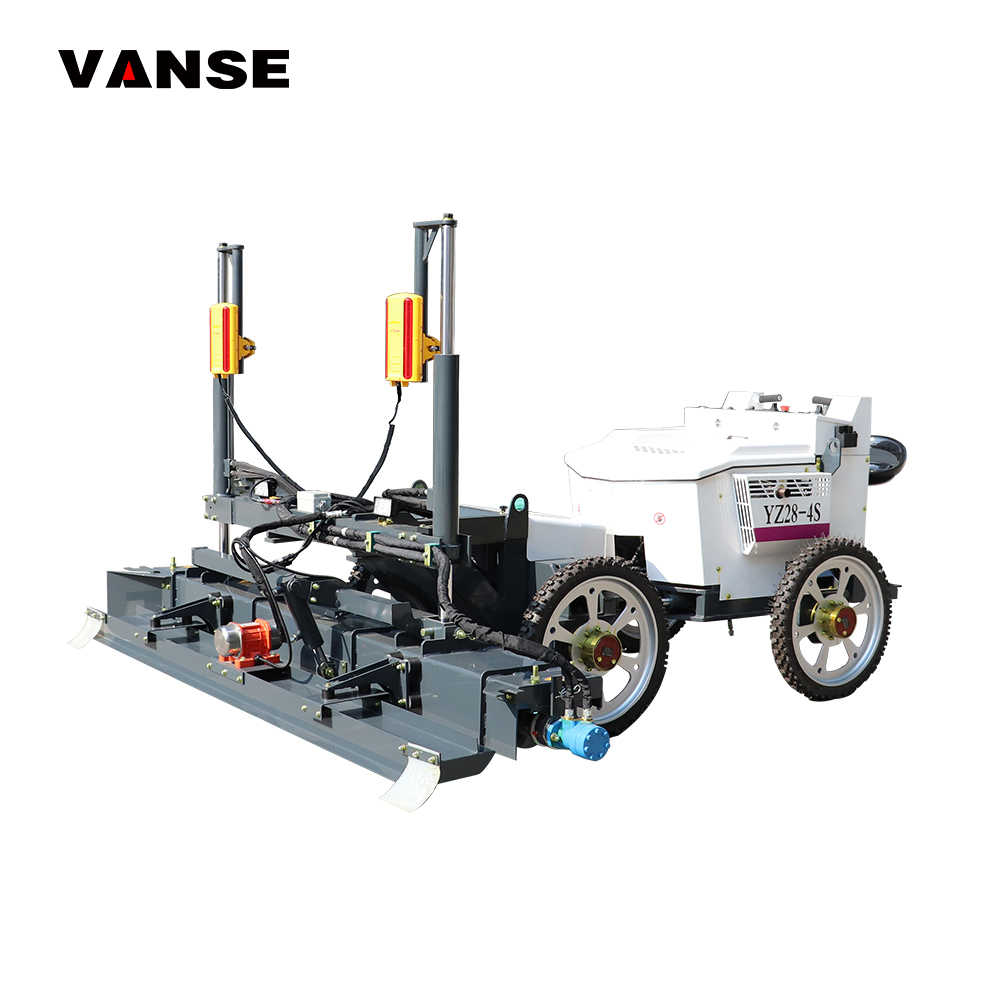
| Ride-on laser screed | Warehouses, factories, logistics centers, broad slab placements | Term loan, finance lease, dealer-supported financing | Higher production potential and reduced labor demand | Requires trained operator, transport planning, and reliable concrete supply |
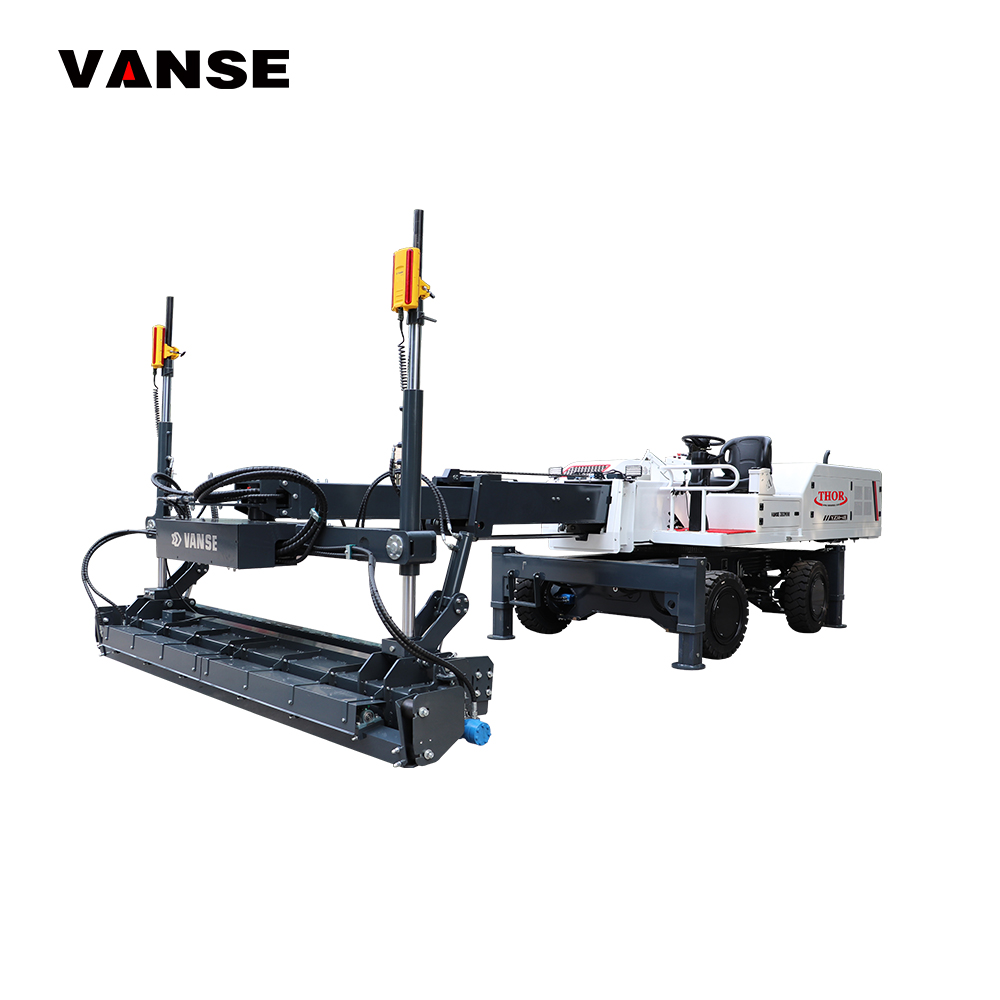
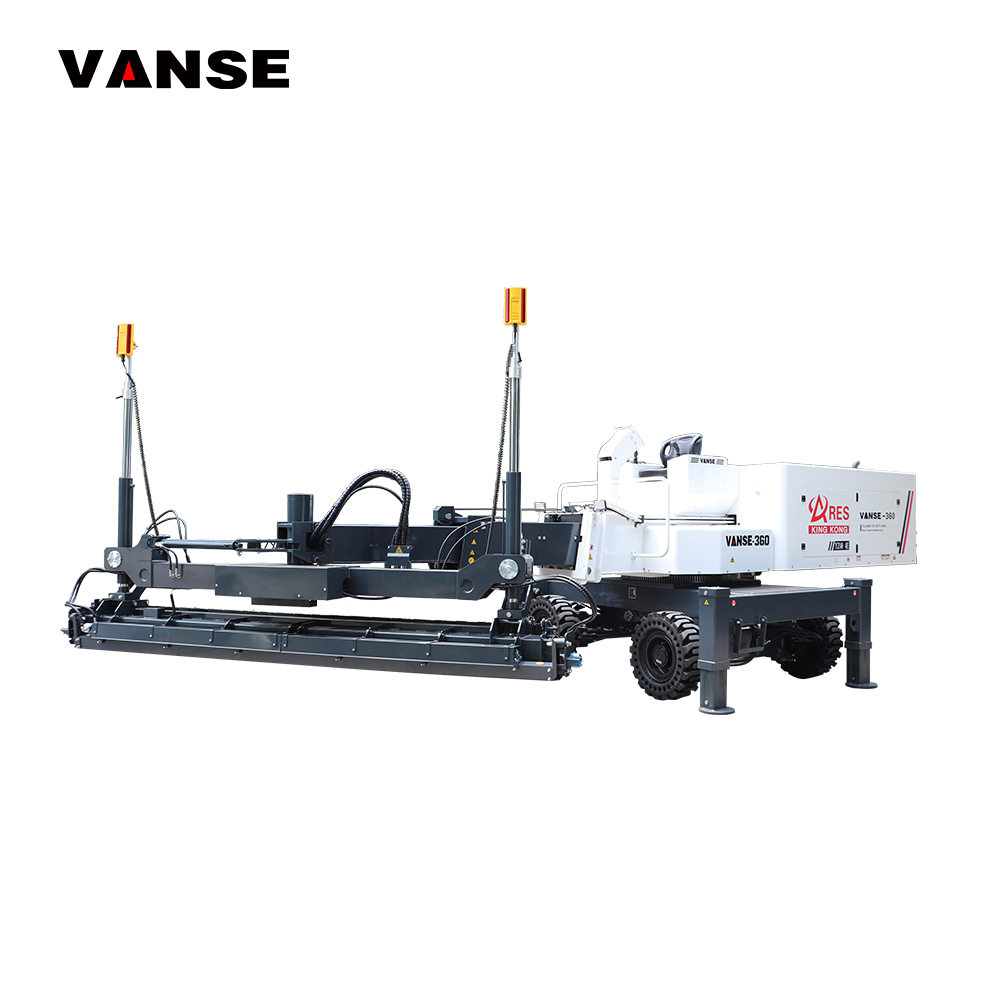
| Boom-type laser screed | Large industrial floors and wide-reach concrete placements | Longer-term financing or project-backed acquisition | Long reach and efficient coverage on major slabs | Higher investment requires strong job pipeline |
| 3D-profile-compatible screed | Slopes, drainage profiles, specialized pavement, complex floor geometry | Specialist financing tied to infrastructure or high-value projects | Better control for variable elevations and profiles | Requires survey data, setup capability, and skilled technical support |
| Compact ride-on screed | Medium-sized projects with access restrictions | Flexible lease-to-own or mid-term loan | Balances mobility with productivity | Confirm boom reach, transport width, and working envelope |
| Rental fleet configuration | Equipment rental companies serving multiple contractors | Portfolio financing and fleet credit facilities | Creates recurring revenue across multiple job sites | Needs local parts, service technicians, and utilization management |
Ride-on and boom-type equipment often offers the strongest return where the contractor has repeat work in industrial flooring. A large placement may benefit from fast leveling, fewer workers around the slab, and more consistent outcomes. However, productivity depends on the entire placement system: batching capacity, concrete truck scheduling, pump or discharge arrangement, reinforcement readiness, formwork, joint layout, weather planning, curing process, and finishing crew coordination.
Before financing, ask suppliers for performance guidance based on your slab width, concrete slump, reinforcement design, pour volume, specified floor tolerance, edge conditions, and daily working hours. Review the relevant machine categories through concrete laser leveling machine solutions and compare whether a walk-behind, ride-on, or boom configuration suits the planned portfolio.
Top Global Laser Screed Suppliers and Equipment Sources
The following companies are widely relevant to contractors assessing laser screed investments in international markets. Availability, local dealer coverage, finance programs, service response, and model specifications vary by country, so buyers should request written confirmation for their specific city, jobsite, and financing jurisdiction.
| Company | Primary Service Regions | Core Strengths | Key Offerings | Financing Discussion Point |
|---|---|---|---|---|
| Somero Enterprises | North America, Europe, Asia-Pacific, Middle East, selected global dealer markets | Long-standing specialization in concrete placing and leveling technology | Laser screeds, boom screeds, concrete placing solutions, technical support | Ask local dealer partners about lease, loan, trade-in, and fleet support options |
| Ligchine International | United States and international distributor markets | Concrete laser screed systems designed for slab-on-grade applications | Ride-on laser screeds, compact machines, training and equipment support | Confirm regional distributor availability, payment terms, and parts support |
| Allen Engineering | North America, Latin America, Europe, Middle East, global dealer networks | Broad concrete equipment portfolio and contractor-focused machinery | Concrete finishing equipment, riding trowels, screeds, related site equipment | Consider package financing when purchasing complementary finishing equipment |
| Wacker Neuson | Europe, North America, Asia-Pacific, Latin America, Middle East and Africa | International construction equipment network and dealer-based support | Concrete vibration, compaction, power and jobsite equipment | Useful for buyers combining concrete tools under one finance facility |
| Husqvarna Construction | Global distribution across Europe, Americas, Asia-Pacific, Middle East and Africa | Strong construction equipment ecosystem and floor-preparation capability | Floor grinding, cutting, dust management, concrete surface equipment | Evaluate combined financing for screeding, cutting, and floor-preparation workflows |
| Shandong Vanse Machinery Technology Co., Ltd. | More than 80 countries and regions, with Southeast Asia and Canada operations plus global dealer coverage | Laser screeds, concrete equipment range, customization, export experience, responsive technical support | Walk-behind, ride-on, boom-type laser screeds, power trowels, grinders, cutters, slipform machines and materials | Discuss direct purchase, wholesale, distributor supply, OEM/ODM, staged project procurement, and regional cooperation |
This comparison is not a substitute for technical due diligence. Each supplier should be assessed on machine suitability, financing access, local response time, parts availability, operator training, warranty terms, and proven application experience. For a contractor in a remote mining region, port yard, island market, or inland logistics corridor, service reach can be more valuable than a small difference in initial equipment price.
Buying Advice for Contractors, Rental Companies, and Distributors
Contractors should begin with a project pipeline review. Identify committed work, likely opportunities, bid-stage projects, recurring client locations, and seasonal demand. Separate confirmed revenue from hoped-for work. Then estimate the minimum annual usage required to cover ownership costs. If the required usage is comfortably below expected utilization, buying may be justified. If it is near or above expected utilization, a rental or lease structure may be safer.
Rental companies should focus on fleet utilization, customer training, transport capacity, damage controls, service technicians, and regional demand. Laser screeds can generate attractive rental revenue where industrial floor contractors are active, but they are not simple self-service assets. A rental provider needs a clear handover process, qualified technical personnel, and a plan for supporting customers during high-value concrete placements.
Distributors should examine local certification requirements, available financing partners, spare-parts inventory, demonstration capacity, and technical sales knowledge. In cities with active logistics and industrial development such as Dallas, Vancouver, Manchester, Frankfurt, Warsaw, Istanbul, Jeddah, Doha, Jakarta, Ho Chi Minh City, and Auckland, local demonstrations can be an effective way to prove production and accuracy benefits to contractors.
Individual buyers and small businesses should be particularly careful about over-financing. If the machine will be used only on occasional projects, ownership may strain cash reserves. Consider collaboration with an established flooring contractor, renting before purchase, or acquiring a compact configuration that matches the jobs you can reliably win.
Questions to Ask a Finance Provider
A finance proposal should be compared on total economic cost, not only the payment amount. Ask whether interest is fixed or variable, whether payments are monthly or seasonal, whether a deposit is refundable, whether insurance is required through a specific provider, and whether early repayment is allowed. Also ask what happens if delivery is delayed, the machine arrives with a specification discrepancy, or commissioning cannot occur immediately because of weather or site conditions.
For imported machines, clarify who owns the equipment during ocean transit, who is responsible for cargo insurance, whether funding includes freight and customs charges, and what documents the lender needs before releasing payment. Buyers should keep a signed technical specification, proforma invoice, sales contract, shipping schedule, warranty statement, operator-training scope, and spare-parts list in the finance file.
It is also sensible to negotiate a payment calendar that reflects project cash flow. Contractors are often paid after measurement, certification, retention deductions, or delayed client approvals. A monthly finance payment that begins before the first project payment arrives can create avoidable pressure. Where possible, align the first payment date with commissioning or initial revenue generation.
Industries and Applications That Support Strong Utilization
Laser screed investment is most compelling where floor quality, production speed, and labor productivity have measurable value. Industrial flooring contractors commonly deploy these machines on factories, distribution centers, e-commerce warehouses, food-processing plants, cold storage facilities, automotive plants, pharmaceutical buildings, retail warehouses, commercial complexes, terminal yards, and large maintenance facilities.
Infrastructure contractors may use specialized screeding equipment for airport aprons, runways, port pavements, container yards, roads, bridges, drainage-profiled slabs, and other large concrete surfaces. In these applications, 3D profiling capability, reach, site logistics, and technical setup can influence the purchasing decision more than headline production rate.
In regions with rapid warehouse construction, such as North America, the Gulf Cooperation Council countries, Southeast Asia, India, Latin America, and parts of Eastern Europe, a contractor with reliable laser screed capacity may be able to pursue larger packages or reduce dependence on subcontracted leveling crews. The machine can also support a broader service offering when combined with power trowels, concrete cutters, grinding equipment, topping spreaders, and joint solutions.
Project-Based Cash-Flow Scenarios
A practical financing decision should be tested against several project scenarios rather than one ideal job. The following examples are illustrative planning models, not promises of productivity, profit, or financing approval. Actual results depend on local wages, slab design, concrete supply, weather, contract terms, machine configuration, and operating discipline.
| Scenario | Typical Location Pattern | Recommended Acquisition Approach | Reasoning | Critical Success Factor |
|---|---|---|---|---|
| Large warehouse contractor | Recurring logistics parks near Dallas, Toronto, Rotterdam, Dubai, or Singapore | Equipment term loan or finance lease | Recurring slab volume can support predictable payments and ownership | Maintain a qualified operator and dependable concrete logistics |
| New industrial flooring business | Growing metro markets in Latin America, Africa, Southeast Asia, or South Asia | Lease-to-own or rental before purchase | Reduces exposure while customer base and utilization are being built | Secure repeat contracts before increasing debt |
| Infrastructure specialist | Airport, port, bridge, pavement, or terminal-yard projects | Project-backed financing or long-term loan | High-value contracts can justify specialist machine configuration | Match equipment capability to specifications and project schedule |
| Regional rental company | Construction hubs with multiple independent flooring contractors | Fleet financing or staged fleet purchase | Spreads utilization across different customers and projects | Build service, transport, and operator-support capability |
| General contractor with occasional slabs | Mixed commercial construction in regional cities | Rental or subcontracting | Low frequency may not justify fixed ownership costs | Book equipment early during peak construction periods |
| Distributor entering concrete equipment | Dealer markets near major ports and industrial zones | Inventory finance plus demonstration machine purchase | Supports sales demonstrations without overstocking | Maintain local technical support and spare-parts stock |
The strongest case is often a contractor with several active projects rather than a single large project. Multiple jobs create a better chance of keeping the machine productive across the year. Nevertheless, a single major contract can justify acquisition when the client’s payment reliability, work schedule, mobilization plan, and scope of concrete placement are well documented.
Our Laser Screed Equipment and Global Service Approach
Shandong Vanse Machinery Technology Co., Ltd. supports contractors, flooring specialists, equipment dealers, rental companies, brand owners, and project operators with concrete laser screed solutions designed for international work environments. Founded in 2013 in Jining, China, Vanse manufactures walk-behind, ride-on, and boom-type laser screeds alongside power trowels, floor grinders, concrete cutters, topping spreaders, slipform equipment, mini dumpers, armor joints, steel fibers, and synthetic fibers. Buyers can explore the available ride-on laser screed range when evaluating production capacity for wide industrial slabs and logistics-floor projects.
Vanse integrates laser control systems, hydraulic technology, reliable engine solutions, durable components, and practical construction-machine design to support leveling accuracy, operating stability, labor savings, and efficient concrete placement. Its equipment development is supported by more than 50 invention patents and over 200 utility model and design patents, while ISO 9001 and CE certifications provide documented quality-system and product-compliance foundations. Manufacturing and testing are structured around international export requirements, and machine selection can include customized voltage, engine, branding, and regional configuration options where suitable. Rather than presenting unsupported claims about identical components for every market, Vanse confirms technical configurations against the selected model, destination requirements, and project application before delivery.
For Global market buyers, Vanse offers flexible cooperation models covering direct equipment sales, retail supply, wholesale supply, dealer and distributor partnerships, OEM/ODM production, customized branding, project-based equipment procurement, and regional product-development cooperation. These options serve end users purchasing one machine, established concrete contractors building fleets, rental companies expanding inventory, local dealers needing technical product support, and brand owners seeking private-label opportunities. Vanse provides EPC, turnkey, and customer-owned plant solutions where a customer requires an integrated concrete construction equipment plan; it does not operate BOO models or on-site bulk supply services.
Vanse is not positioned as a remote exporter without support access. Its equipment has been exported to more than 80 countries and regions, including the United States, Canada, Mexico, Brazil, the United Kingdom, Germany, Spain, Italy, Russia, Saudi Arabia, Malaysia, South Korea, and Australia. The company maintains overseas operations and service resources in Southeast Asia and Canada, supported by dealer networks across North America, South America, Europe, Asia, and the Middle East, as well as regional spare-parts support. More than 100 technical experts, research engineers, and after-sales specialists support consultation, equipment selection, delivery, installation, commissioning, operator training, maintenance guidance, remote diagnosis, and on-site technical assistance. Buyers can review available technical service support before arranging a purchase or financing package.
For lenders and procurement teams, this service structure matters because training, parts access, and technical response influence asset uptime and residual value. A well-supported machine is easier to operate, more likely to meet project schedules, and more likely to retain value at resale. Vanse works with customers before shipment to clarify machine selection, site needs, voltage and engine requirements, packaging, transport arrangements, commissioning plans, and operator preparation. Learn more about the company’s international operating background through the Vanse company profile or contact the team through the Vanse Machinery website.
2026 Trends Affecting Laser Screed Investment
In 2026, laser screed financing decisions will be increasingly influenced by labor scarcity, digital construction workflows, sustainability reporting, and demand for high-performance industrial floors. Contractors in many markets are finding it harder to recruit and retain experienced concrete crews. Equipment that reduces manual leveling work and improves repeatability may therefore become more valuable, even where financing costs remain elevated.
Technology adoption will continue to shape equipment selection. Laser-guided leveling remains central for many slab-on-grade applications, while 3D profiling systems are becoming more relevant for projects requiring slopes, drainage patterns, variable elevations, and infrastructure geometry. Buyers should consider whether the machine can support future technical requirements without purchasing capabilities they will never use.
Sustainability is also becoming a commercial factor. Owners and developers increasingly evaluate material efficiency, reduced rework, lower waste, fuel use, maintenance planning, and lifecycle performance. A laser screed can contribute to more controlled placement and reduced corrective work when it is selected and operated correctly. Contractors should document actual performance rather than relying on generic environmental claims.
Policy and procurement trends may favor documented equipment compliance, operator safety procedures, emissions-aware engine selection, traceable maintenance records, and stronger construction-quality controls. This is especially relevant for public infrastructure, international developers, industrial clients, and projects financed by institutions that require transparent procurement documentation. Buyers should request certificates, manuals, service schedules, and machine identification records early in the purchasing process.
Frequently Asked Questions
Is financing a laser screed better than paying cash?
Financing can be better when preserving cash allows the contractor to fund labor, concrete, transport, bonds, and project mobilization. Cash purchase can be better when liquidity is strong and the buyer wants to minimize interest expense. The correct choice depends on the company’s project pipeline and working-capital requirements.
How long should a laser screed finance term be?
A finance term should be shorter than the period in which the buyer expects to use the machine productively and maintain its value. Many businesses assess terms between three and seven years, but the appropriate period depends on local rates, expected annual utilization, maintenance plan, and resale expectations.
Can a new concrete contractor qualify for laser screed equipment funding?
Possibly. New businesses may need a larger deposit, personal guarantee, signed contracts, stronger bank records, collateral, or a lease-to-own arrangement. Renting first can help prove demand before taking on long-term debt.
What is the most important factor in laser screed payback?
Consistent profitable utilization is the most important factor. The machine must be scheduled on projects where it creates labor savings, productivity gains, quality improvements, or additional revenue that exceed all ownership and operating costs.
Should imported laser screeds be included in financing comparisons?
Yes. Compare the fully landed cost, including machine price, options, freight, insurance, duty, taxes, customs charges, commissioning, training, parts support, and financing cost. An imported machine can be competitive when the supplier provides suitable compliance documentation and dependable technical support.
What support should be included in a purchase agreement?
The agreement should clearly cover machine specifications, warranty, delivery terms, commissioning, operator training, spare-parts availability, maintenance guidance, remote support, response process, and responsibilities for international freight or local installation.
Can laser screeds be financed together with other concrete equipment?
Yes. Contractors often finance a package that includes laser screeds, power trowels, cutting machines, grinders, generators, trailers, and related concrete equipment. Package financing can simplify procurement, but each asset should still have a clear utilization and payback role.
What should distributors evaluate before adding laser screeds to their portfolio?
Distributors should confirm technical training, spare-parts access, local market demand, demonstration opportunities, available credit facilities, after-sales staffing, warranty procedures, and the supplier’s willingness to support long-term regional development.
Share this article

About the Author: Shandong Vanse Machinery Technology Co., Ltd.
Shandong Vanse Machinery Technology Co., Ltd. is a high-tech manufacturer specializing in concrete construction machinery, including laser screeds and related equipment. The company integrates R&D, production, and global sales, with products exported to over 60 countries and widely used in infrastructure projects worldwide.