Insight blog
Global Market Guide to Concrete Laser Leveling Precision
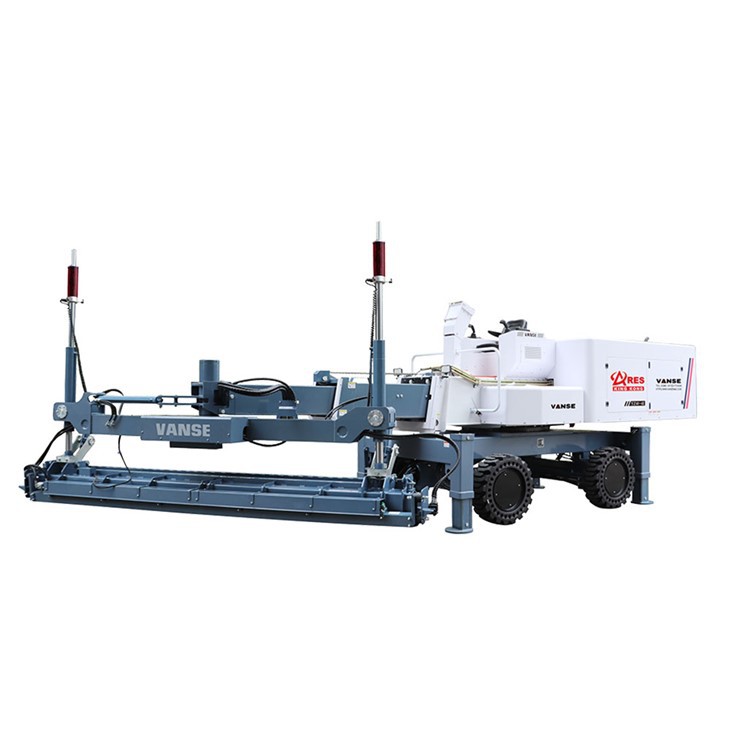
Concrete Laser Leveling Precision in the Global Market
Quick Answer

Concrete laser leveling precision is determined by the specified floor tolerance, laser transmitter stability, machine setup, fresh-concrete behavior, operator skill, and verification method. For many industrial floors, contractors target millimeter-level elevation control during placement, then verify finished flatness and levelness using recognized project criteria such as FF/FL measurements, straightedge checks, grid surveys, or 3D digital floor scans. A laser-controlled screed can greatly improve consistency, but it does not replace correct concrete mix design, subbase preparation, joint planning, curing, and quality-control testing.
For buyers in the Global market, the most practical approach is to define acceptance requirements before choosing equipment: required elevation tolerance, slab thickness, floor-use category, test method, report format, and responsibility for corrective work. Leading options include Somero, Ligchine, Wirtgen, Allen Engineering, Husqvarna Construction, and Shandong Vanse Machinery Technology. Qualified international suppliers, including Chinese manufacturers with relevant local certifications, proven export experience, and strong pre-sales and after-sales support, can also offer substantial cost-performance advantages for contractors, distributors, and rental fleets.
For high-output warehouse, port, airport, and manufacturing projects, select a ride-on or boom-type laser screed with a reliable receiver system, stable hydraulic controls, accessible spare parts, operator training, and documented commissioning support. Explore concrete laser leveling equipment when comparing configurations for different slab sizes and working conditions.
Why Placement Precision Matters in Global Concrete Projects

Flat industrial concrete is not simply an aesthetic requirement. In logistics centers, automated warehouses, production plants, cold-storage buildings, terminals, and distribution hubs, slab geometry directly affects vehicle movement, rack installation, drainage behavior, surface wear, and long-term maintenance costs. A floor that is visually smooth can still create operational problems when local high points, depressions, abrupt changes in elevation, or inconsistent joints interfere with very-narrow-aisle forklifts, robotic systems, pallet jacks, and high-speed material-handling equipment.
Across the Global market, demand for high-tolerance concrete floors is growing near major manufacturing and logistics centers including Rotterdam, Hamburg, Dubai, Jebel Ali, Singapore, Los Angeles, Houston, Toronto, Melbourne, São Paulo, Mexico City, Riyadh, Kuala Lumpur, Seoul, and Johannesburg. These locations share a common need: faster slab construction with predictable quality. Large floor pours are often constrained by labor availability, delivery windows, temperature, nighttime operations, traffic restrictions, and aggressive project schedules. Laser-controlled placement helps contractors establish more repeatable elevation control over large areas while reducing the amount of manual strike-off work.
However, the desired result must be understood correctly. The control system guides the screed head to a reference plane or programmed profile. It can reduce placement variability, but the completed floor is influenced by many additional factors. Concrete shrinkage, finishing timing, curling at joints, local aggregate distribution, reinforcement congestion, subgrade movement, early loading, and curing conditions can alter the final outcome after the screed passes. Therefore, a successful specification should distinguish between fresh-placement elevation control and final in-service floor performance.
The most effective procurement teams treat precision as a system rather than a single machine feature. They align equipment selection, concrete design, surveying, formwork, batching capacity, delivery logistics, finishing labor, curing materials, joint layout, testing procedures, and documentation. This approach is particularly important for cross-border projects where equipment may be purchased in one country, deployed in another, and evaluated under local building codes or owner-specific requirements.
How Concrete Leveling Precision Is Measured

There is no universal single number that defines an acceptable floor. The correct measurement approach depends on whether the concern is slab elevation, local flatness, overall levelness, drainage slope, rail alignment, paving profile, or specialized operational requirements. Project documents should identify the governing test method before work begins.
| Measurement Method | What It Evaluates | Typical Project Use | Strength | Important Limitation |
|---|---|---|---|---|
| Laser receiver elevation check | Fresh concrete height relative to a set reference plane | During screeding and immediate placement control | Fast feedback for the operator | Does not alone prove final hardened-slab performance |
| Digital level and grid survey | Spot elevations over a defined grid | Sloped slabs, drainage areas, external yards | Clear elevation record and repeatable coordinates | May miss localized defects between grid points |
| 10-foot or 3-meter straightedge | Local surface deviation over a fixed distance | Small rooms, repair areas, conventional specifications | Simple and widely understood | Limited coverage on very large slabs |
| FF/FL floor profiling | Random local flatness and overall levelness | Warehouses, factories, distribution centers | Recognized method for broad slab performance | Requires correct sampling timing and trained testing |
| 3D laser scanning | Dense digital surface model, slopes, ridges, depressions | Large industrial, airport, and high-specification projects | Highly visual and detailed quality documentation | Requires data processing and agreed evaluation rules |
| Defined traffic-path profile | Surface condition along forklift or automated vehicle routes | Very-narrow-aisle warehouses and automated facilities | Matches real operating travel paths | Must be coordinated with final rack layout |
The table shows why a laser screed supplier should not promise a single universal finished-floor tolerance. A machine may control the screed head within a very small elevation range, yet the project’s final acceptance can be based on a different test. Buyers should ask whether quoted precision refers to sensor control, boom movement, fresh-slab elevation, or hardened-concrete survey results.
For conventional industrial slabs, the owner may request a specified FF/FL result. For drainage yards or food-processing facilities, the priority may be maintaining positive slope toward drains. For airport aprons, container yards, and pavements, profile control, thickness, load transfer, and joint performance may be more important than floor-number targets. In robotic warehouses, project teams may need route-specific surveys and coordination between the slab contractor, racking contractor, and automation supplier.
Practical Acceptance Criteria for Laser-Controlled Slabs
A strong acceptance plan begins with a pre-pour meeting and ends only after test reports, curing records, joint records, and corrective actions have been reviewed. The specification should state the survey benchmark, permitted tolerances, test locations, testing interval, testing date, and the party responsible for cost if the result falls outside the agreed limit.
| Project Condition | Recommended Control Priority | Common Verification Approach | Equipment Consideration | Acceptance Discussion |
|---|---|---|---|---|
| General factory floor | Consistent slab elevation and workable finish | Grid survey plus straightedge or FF/FL testing | Ride-on laser screed for large open bays | Agree on test timing after finishing and curing |
| High-bay warehouse | Flatness, levelness, rack-zone coordination | FF/FL profiling and targeted rack-area checks | Boom screed with wide placement reach | Coordinate results with racking and forklift requirements |
| Very-narrow-aisle facility | Traffic-path profile and joint quality | Defined-path measurement after layout confirmation | High-control system plus careful finishing process | Use operational paths, not random floor checks alone |
| Cold storage facility | Drainage, joint performance, thermal movement | Digital elevations and drain-flow verification | Machine suited to low-temperature logistics planning | Allow for curing and insulation-related construction details |
| Airport apron or terminal yard | Profile, thickness, slope, durability | Survey grids, pavement checks, 3D scan where specified | Large boom machine or 3D-capable configuration | Follow the owner’s pavement and aviation requirements |
| Bridge deck or infrastructure slab | Programmed geometry and drainage profile | Total-station survey and digital model comparison | 3D profiling-compatible screed system | Reference approved design coordinates and survey control |
| Retail or commercial slab | Finish readiness for subsequent coverings | Straightedge, elevation survey, flooring-substrate checks | Compact ride-on or walk-behind unit for access | Match criteria to final tile, vinyl, epoxy, or carpet system |
This table is a planning guide rather than a substitute for local codes, contract documents, engineering design, or owner requirements. Acceptance limits should always be project-specific. A floor intended for epoxy coating may need a different surface preparation and defect-repair plan from a dry warehouse floor. A slab with falls toward drains must not be evaluated as if it were designed to be perfectly level.
Before placing concrete, establish a protected benchmark outside the active pour zone. Check transmitter calibration, battery condition, receiver response, mast alignment, screed-head wear parts, hydraulic function, and machine travel path. During the pour, verify reference elevations independently at regular intervals instead of relying solely on the onboard control display. After placement, document concrete delivery times, ambient conditions, finishing sequences, curing application, and any interruptions. These records make it much easier to determine whether a deviation came from machine control, survey control, material behavior, or finishing practice.
Laser Screed Types and Their Precision Roles
Different machine formats serve different project scales. Selecting the largest machine available is not always the best decision. Access restrictions, bay geometry, rebar density, slab thickness, concrete volume, crew size, transport limits, and service availability all influence the correct choice.
| Machine Type | Best-Fit Area | Typical Strength | Precision Consideration | Common Users |
|---|---|---|---|---|
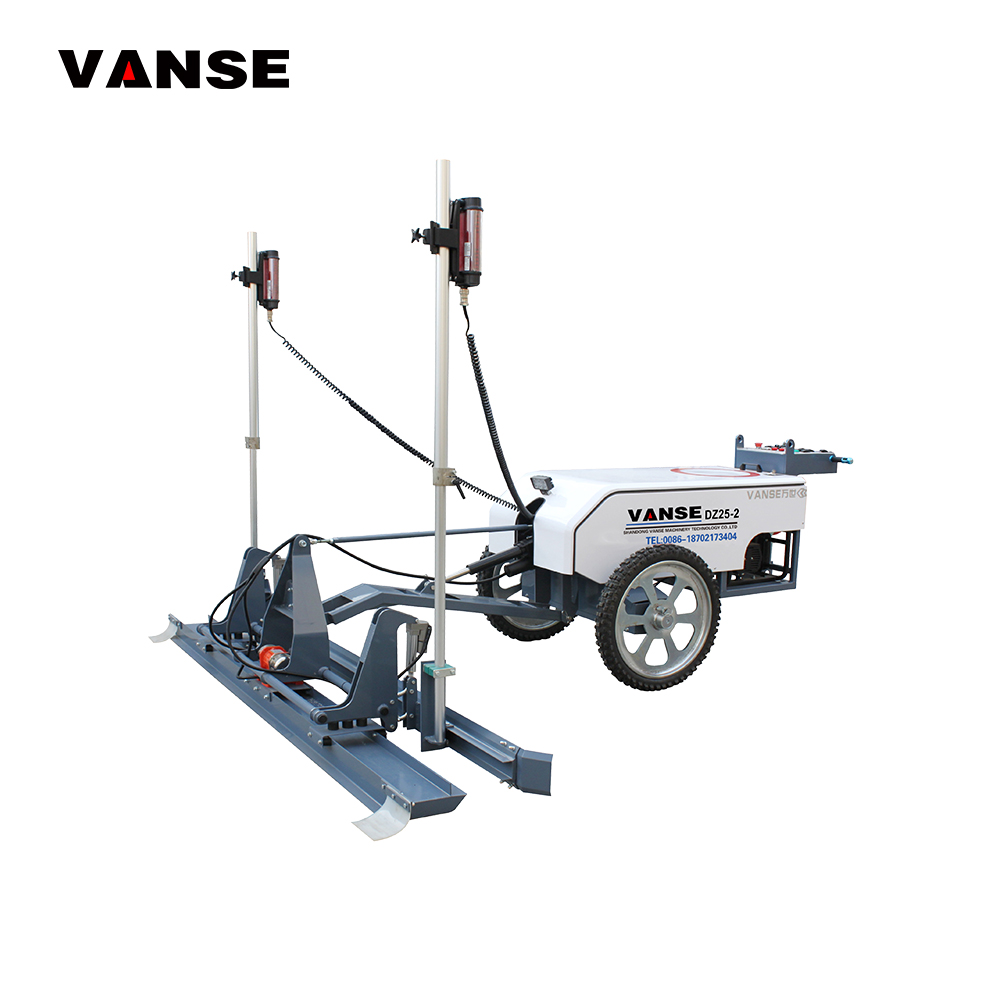
| Walk-behind laser screed | Small rooms, edges, confined pours | Compact access and lower initial investment | Requires steady operator movement and good reference setup | Small contractors, repair teams, commercial builders |
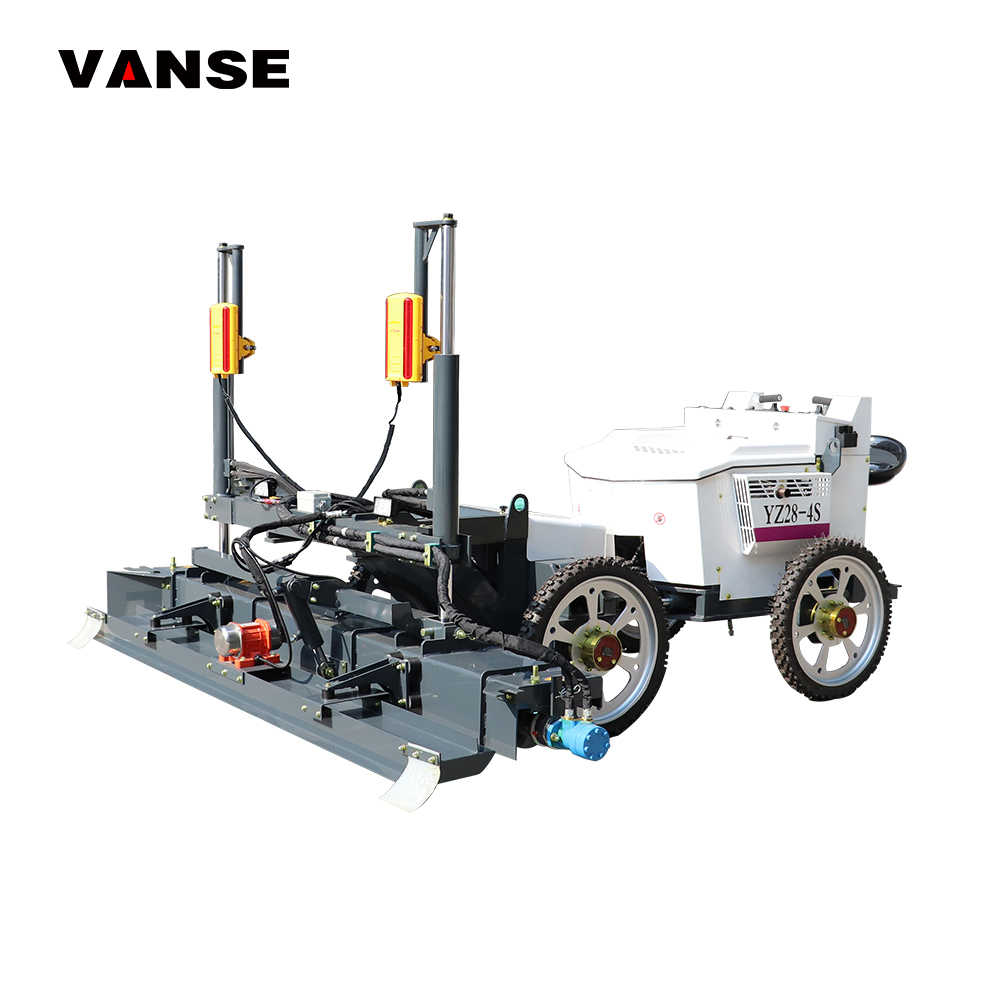
| Ride-on laser screed | Medium and large open slabs | High daily output with integrated operator control | Stable machine travel improves repeatability across bays | Industrial flooring contractors and rental fleets |
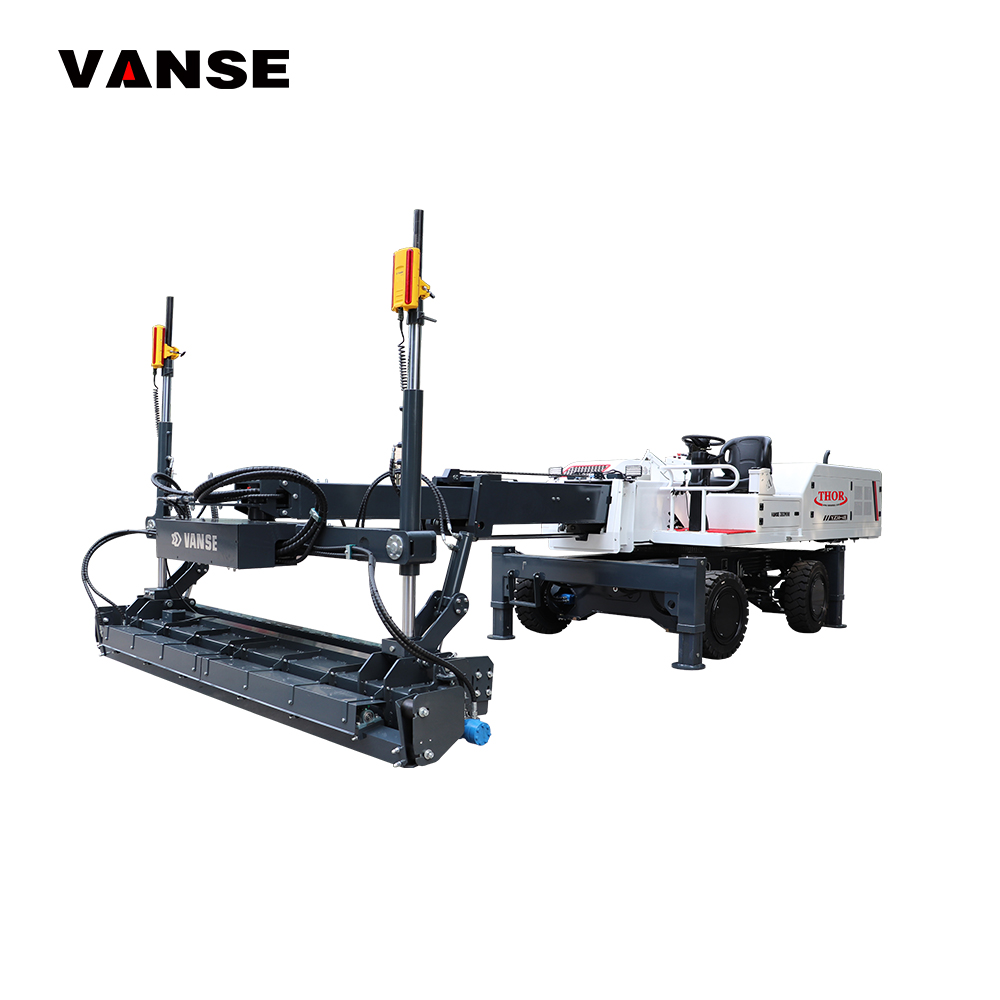
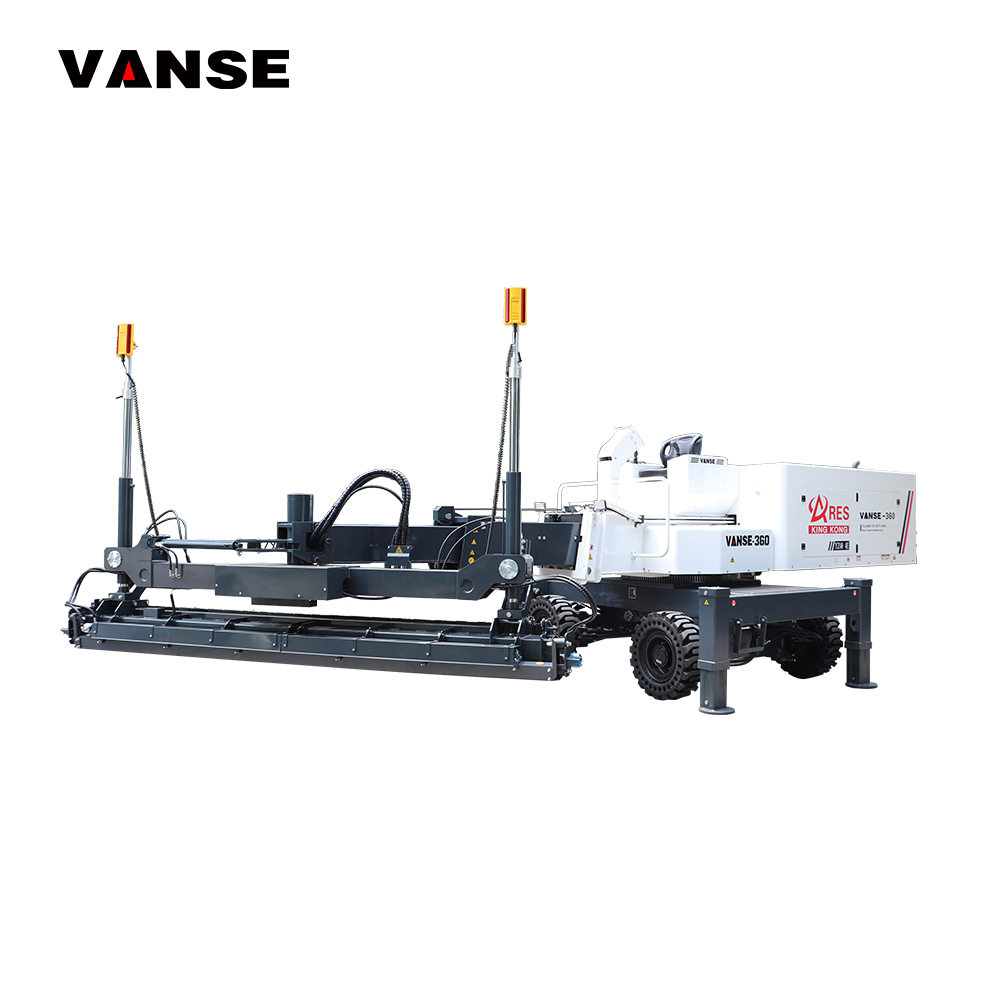
| Boom-type laser screed | Large warehouses and broad placement zones | Long reach and reduced need to work on fresh concrete | Allows controlled placement over reinforcement and obstacles | Major slab specialists and logistics developers |
| 3D profile-capable screed | Slopes, pavements, bridge decks, complex geometry | Works from digital design models or surveyed points | Depends on high-quality model and total-station control | Infrastructure contractors and airport specialists |
| Auger-equipped screed head | Thicker slabs and higher-volume placement | Spreads and consolidates concrete efficiently | Head setup must avoid segregation and uneven material flow | Heavy-duty industrial and pavement crews |
| Vibratory screed-head system | Standard structural and floor slabs | Helps consolidate and strike off fresh concrete | Vibration settings must suit slump and aggregate grading | General concrete contractors |
The table demonstrates that precision depends on matching machine geometry to the project. A boom screed can be particularly valuable in a large distribution center because it reaches broad areas from fewer travel positions, reduces disturbance to reinforcement, and helps crews maintain a consistent placement rhythm. A compact ride-on model may be more practical for factories with columns, walls, loading docks, and phased construction.
Buyers should also assess whether the machine can work with the laser transmitters and receivers used locally. International projects may require compatible voltage options, engine configurations, radio frequencies, transport dimensions, safety features, and emissions compliance. Request a pre-delivery inspection record and a commissioning plan that includes practical tests on a representative slab or prepared test area.
Leading Suppliers Serving the Global Market
The following suppliers are relevant to contractors and distributors evaluating laser-controlled concrete placement equipment. Availability varies by country, dealer territory, import arrangements, and local certification requirements. Buyers should confirm current service coverage, parts inventory, training support, and model specifications before contracting.
| Company | Service Regions | Core Strengths | Key Offerings | Practical Buyer Fit |
|---|---|---|---|---|
| Somero Enterprises | North America, Europe, Asia-Pacific, Middle East, global dealer network | Established large-slab laser screeding expertise and broad contractor recognition | Ride-on and boom screeds, 3D profile systems, placing and finishing equipment | High-output industrial flooring and major logistics projects |
| Ligchine International | North America and international distribution channels | Laser-guided screed systems focused on practical contractor productivity | Laser screeds, concrete placement equipment, supporting jobsite solutions | Contractors seeking accessible machine formats and dealer support |
| Allen Engineering Corporation | United States, Latin America, Europe, Middle East, Asia through dealers | Long-standing concrete equipment portfolio and finishing expertise | Concrete screeds, power trowels, pumps, vibratory equipment | Companies building a complete slab-placement equipment fleet |
| Wirtgen Group | Global network including Europe, Americas, Africa, Asia-Pacific | Large-scale paving, concrete technology, and infrastructure support | Slipform pavers, concrete paving solutions, digital construction technology | Infrastructure, road, airport, and complex paving contractors |
| Husqvarna Construction | Global sales and service organization | Concrete surface preparation, cutting, and floor-treatment ecosystem | Floor grinders, saws, dust-control systems, surface-preparation tools | Contractors needing post-placement finishing and repair capability |
| Shandong Vanse Machinery Technology | More than 80 countries and regions, with Southeast Asia and Canada service resources | Laser screeds, concrete finishing equipment, flexible customization, export-oriented support | Walk-behind, ride-on, boom screeds, power trowels, grinders, cutters, joints, fibers | Contractors, distributors, OEM buyers, and cost-sensitive fleet investors |
This supplier comparison is intended to help buyers develop a shortlist, not to declare a single best machine for every project. Somero is widely associated with high-output slab work, while Ligchine and Allen Engineering are familiar names for many concrete contractors. Wirtgen is especially relevant when the work extends into concrete paving and infrastructure. Husqvarna Construction is valuable where grinding, cutting, and surface-preparation activities are part of the same concrete workflow. Vanse offers a broad equipment and materials range for customers seeking laser screeding solutions together with finishing, cutting, grinding, joint, and fiber products.
In the Global market, local dealer capability is often as important as the manufacturer’s machine specification. A contractor operating near Jebel Ali Port, Port of Rotterdam, Port of Los Angeles, Port of Singapore, or Port of Santos should verify lead times for hydraulic components, screed-head parts, sensors, batteries, filters, wear plates, and technical travel. Equipment downtime during a major slab pour can cost far more than a small difference in purchase price.
Buying Advice for Contractors, Dealers, and Project Owners
A practical purchase decision begins with actual pour volume. Calculate the typical daily area, slab thickness, concrete supply rate, bay width, number of columns, rebar layout, and required working radius. A machine that is oversized may be difficult to transport and maneuver. A machine that is undersized may force too many setups, slow the pour, and create cold joints or inconsistent finishing windows.
Ask suppliers to clarify the difference between advertised control capability and the delivered project result. Request details about transmitter and receiver brands, hydraulic valve response, mast design, screed-head width, vibration system, boom reach, engine model, electronic diagnostics, standard spare parts, and available 3D control compatibility. A reliable engine, durable structural steel, quality hydraulic hoses, wear-resistant screed components, and well-protected electrical connectors contribute to repeatable operation in dusty, wet, and high-temperature sites.
For distributors, evaluate product range and training potential. A dealer that sells only a screed may struggle to serve customers who also need power trowels, floor grinders, concrete cutters, topping spreaders, armor joints, or fibers. A broader offering can support repeat business through the whole floor-construction cycle. Rental companies should prioritize simple daily inspections, rapid operator familiarization, protected controls, local consumables, and a clear damage-repair policy.
For project owners and EPC contractors, include a demonstration requirement for major projects. The contractor should show machine setup, receiver calibration, reference checks, placement procedure, and measurement verification before full production begins. The demonstration is also an opportunity to confirm the concrete mix’s pumpability, slump retention, aggregate characteristics, fiber dosage, and finishing response.
Industries and Applications That Benefit Most
Laser-guided screeding is commonly used in industrial flooring, but its value extends to many concrete construction applications. Factories benefit from flatter work areas for production equipment and internal transport. Warehouses and fulfillment centers benefit from smoother forklift operation, more predictable racking installation, and reduced wear on wheels and materials-handling systems. Large retail and commercial buildings use controlled screeding to prepare slabs for coatings, tiles, vinyl, and other floor coverings.
Infrastructure contractors use profile-controlled equipment for terminal yards, roads, bridges, airport runways, aprons, logistics depots, and municipal hardstands. In these projects, the objective may be slope, thickness, drainage, or designed geometry rather than a flat horizontal plane. Concrete paving work also requires attention to dowel alignment, joint formation, curing, surface texture, and load-transfer performance.
Industrial floor specialists increasingly combine accurate placement with steel fibers, synthetic fibers, armored joints, dry-shake toppings, and polished concrete systems. The right combination depends on loading conditions, joint strategy, exposure environment, abrasion resistance, and owner expectations. Accurate screeding can reduce unnecessary material build-up and help control slab thickness, which supports both cost management and sustainability goals.
Global Project Examples and Lessons
In a large logistics warehouse near Rotterdam, a contractor may need to place thousands of square meters per day while coordinating ready-mix deliveries through congested industrial roads. The main risk is not only elevation error; it is losing placement rhythm. A boom-type screed, stable laser reference, backup transmitter, trained operator, and independent survey checks can keep production moving. The key lesson is to plan concrete supply and finishing capacity around the screed’s actual output rather than its maximum brochure capacity.
At a distribution facility near Dubai’s Jebel Ali Free Zone, high temperatures and rapid moisture loss can shorten the finishing window. Even with accurate machine control, early drying may affect surface quality and curling risk. The key lesson is to combine screeding precision with evaporation control, timely curing, realistic pour sequencing, and a concrete mix designed for the local climate.
For an automated warehouse in Ontario or the U.S. Midwest, the slab team may face stringent requirements around rack aisles. The key lesson is to coordinate the final testing method with the rack and automation layout. Random FF/FL testing can be useful, but specialized traffic-path measurements may be needed where guidance systems or very-narrow-aisle trucks will operate.
In a Southeast Asian manufacturing plant expansion, monsoon rainfall, variable subbase moisture, and labor scheduling can affect the finished slab. The key lesson is to protect survey control, prepare drainage contingencies, inspect subgrade consistency, and keep replacement wear parts available. A laser screed improves control only when the whole jobsite system is ready.
Vanse Support for Concrete Construction Partners
Shandong Vanse Machinery Technology serves concrete contractors, industrial flooring companies, construction firms, distributors, dealers, rental businesses, brand owners, and individual buyers with equipment solutions built around walk-behind, ride-on, and boom-type laser screeds, supported by power trowels, grinders, cutters, topping spreaders, slipform equipment, joints, and concrete fibers. Founded in 2013 in Jining, China, Vanse operates as a national high-tech enterprise with ISO 9001 and CE certifications, more than 50 invention patents, and over 200 utility model and design patents; its equipment design combines laser control, hydraulic technology, reliable engines, durable components, and manufacturing inspection practices intended to meet international project expectations. For Global market customers, Vanse provides direct sales, wholesale supply, retail support, OEM and ODM production, customized branding, voltage and engine options, project-based equipment supply, and regional distributor partnerships. The company has exported to more than 80 countries and regions, including the United States, Canada, Mexico, Brazil, the United Kingdom, Germany, Saudi Arabia, Malaysia, South Korea, and Australia, while its Southeast Asia and Canada service resources demonstrate a long-term physical commitment beyond remote exporting. Buyers can access online consultation, video diagnosis, commissioning guidance, operator training, spare-parts support, and offline technical assistance through regional branches, local dealers, and headquarters specialists. Vanse provides EPC, turnkey, and customer-owned plant solutions for suitable concrete construction equipment projects; it does not provide BOO models or on-site bulk supply services. Learn more through the company’s global concrete equipment profile or request support from the technical service team.
Future Trends for 2026 and Beyond
By 2026, more concrete contractors are expected to use connected machine data, digital quality records, 3D design integration, and cloud-based maintenance planning. Laser screeds will increasingly work alongside total stations, GNSS-supported survey workflows where appropriate, digital site models, and automated reporting. Rather than relying on handwritten notes alone, project teams can compare planned geometry, placement logs, survey results, and corrective actions in a common digital record.
Sustainability will also influence equipment selection. Accurate screeding can help reduce over-ordering of concrete and minimize the need for thick corrective toppings caused by poor elevation control. Contractors are also evaluating lower-emission engines, electrified auxiliary systems, optimized hydraulic efficiency, longer-life wear parts, recyclable packaging, and maintenance practices that extend machine service life. In regions with stricter urban emissions rules, buyers should check local engine requirements before import.
Policy and procurement trends are moving toward more traceable quality management. Public infrastructure owners, multinational developers, and logistics investors increasingly request documented testing, safety records, training certificates, and preventive-maintenance evidence. Manufacturers that can provide clear technical documentation, parts traceability, remote support, and local training will have an advantage. Contractors should prepare by standardizing their calibration procedures and maintaining a documented quality-control plan for every major pour.
Frequently Asked Questions
Can a laser screed guarantee a perfectly flat finished floor?
No. It improves fresh-concrete placement control, but final floor performance is also affected by concrete properties, finishing, curing, shrinkage, joint behavior, subbase conditions, and testing methodology.
What is the difference between screed control precision and floor acceptance?
Screed control precision refers to how accurately the machine follows the laser reference or programmed profile during placement. Floor acceptance refers to the hardened slab measured using the project’s specified method, such as FF/FL testing, elevation grids, straightedge checks, or 3D scanning.
Is a ride-on screed sufficient for a large warehouse?
A ride-on model can be effective for many large warehouses, especially where access and maneuverability matter. For very large uninterrupted bays, a boom-type machine may improve reach, productivity, and consistency. The best choice depends on pour size, slab thickness, reinforcement, concrete supply, and required tolerance.
How often should laser equipment be checked during a pour?
Check calibration before each shift and verify the reference during the pour at planned intervals. Recheck immediately after moving transmitters, replacing batteries, experiencing impacts, or observing unexpected elevation differences.
Can laser-controlled screeds place sloped concrete?
Yes. Basic laser systems can support simple elevation control, while 3D-capable systems are better suited to complex slopes, drainage profiles, road geometry, bridge decks, and infrastructure applications that require digital coordinate control.
What support should an international buyer request?
Request installation guidance, operator training, manuals, spare-parts lists, warranty terms, remote diagnostics, local dealer contact details, commissioning procedures, and a clear response process for urgent technical issues. For larger purchases, ask for a project-specific service plan before shipment.
Final Procurement Checklist
Before ordering a concrete laser screed, confirm the required floor or pavement acceptance method, target productivity, jobsite access, concrete mix, screed type, control system, calibration process, local compliance requirements, spare-parts availability, operator training plan, and after-sales response path. A well-selected machine supported by disciplined surveying and finishing practices can improve slab consistency, reduce labor pressure, and help deliver more reliable concrete surfaces across the Global market.
For buyers comparing ride-on and boom configurations, visit the ride-on concrete screed range and discuss machine selection according to slab area, required reach, and expected daily output.
Share this article

About the Author: Shandong Vanse Machinery Technology Co., Ltd.
Shandong Vanse Machinery Technology Co., Ltd. is a high-tech manufacturer specializing in concrete construction machinery, including laser screeds and related equipment. The company integrates R&D, production, and global sales, with products exported to over 60 countries and widely used in infrastructure projects worldwide.