Technical Knowledge
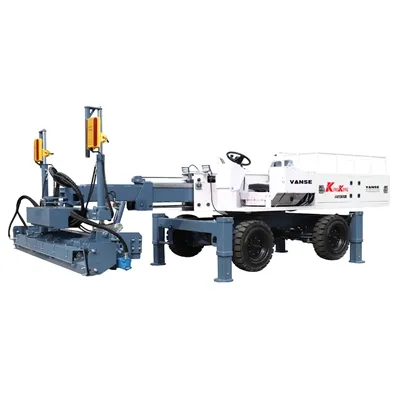
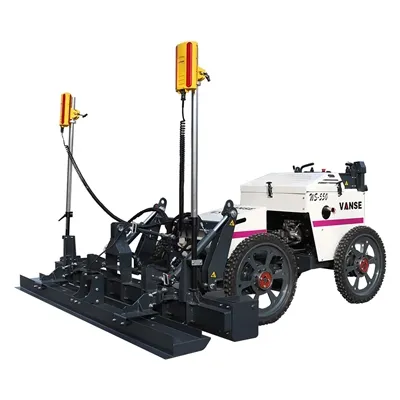
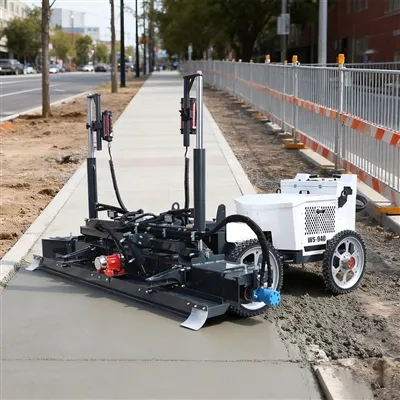
What are the precautions for using concrete leveling machine?

Precautions for using concrete laser leveling machine are as follows:
1. Preparation before operation:
Before operating the concrete laser leveling machine, you must first check whether the power supply is safe and reliable. It is strictly prohibited to use damaged or leaking power cords.
2. Wear protective gear:
When operating the concrete laser leveling machine, you must wear personal protective equipment, such as safety helmets, protective glasses, gloves, etc., to avoid safety accidents.
3. Ensure the machine is stable:
When operating the concrete laser leveling, the machine must be kept stable to avoid operating errors or damage to the machine due to machine tilt or vibration.
4. Operate the machine according to regulations:
When operating the concrete laser leveling, you must follow the prescribed operating steps to avoid safety accidents or damage to the machine due to improper operation.
5. Avoid crowds and other obstacles:
When operating the concrete laser leveling machine, you must pay attention to the surrounding environment and avoid operating near crowds, vehicles, buildings, etc. to avoid safety accidents.
6. Pay attention to the operating conditions of the machine:
When operating the concrete laser leveling machine, you must pay attention to the operating conditions of the machine. If any abnormal conditions are found, stop the machine for inspection in time to avoid causing greater damage or safety accidents.
7. Keep the machine clean:
When operating the concrete laser leveling, the machine must be kept clean to avoid dust, debris, etc. from affecting the normal operation of the machine.
8. Regular maintenance of the machine:
When using the concrete laser leveling, maintenance and repairs must be carried out according to the prescribed time to ensure the normal operation of the machine and extend its service life.
9. Always maintain a clear sense of safety:
When using a concrete laser leveling, you must pay attention to safety awareness and do not take risks or force work to avoid safety accidents.
10. Always standardize the operating procedures:
When using the concrete laser leveling, the operator needs to carefully abide by the relevant regulations and operating procedures to ensure the normal operation of the machine and their own safety. The operator must pay attention to self-protection awareness and do not operate at high or low temperatures. Operate in harsh environments such as humidity, dryness, etc. to avoid any impact on your health.
Thanks to All the Friends Who Support and Trust Shandong Vanse Machinery Technology Co., Ltd.
If you want to know more about Shandong Vanse Machinery Technology Co., Ltd. or have any questions, please feel free to contact us:
Our Factory
Shandong Vanse Machinery Technology Co., Ltd.








Share this article

About the Author: Shandong Vanse Machinery Technology Co., Ltd.
Shandong Vanse Machinery Technology Co., Ltd. is a high-tech manufacturer specializing in concrete construction machinery, including laser screeds and related equipment. The company integrates R&D, production, and global sales, with products exported to over 60 countries and widely used in infrastructure projects worldwide.
Previous Post
Next Post
Related Articles
You Might Also Like
What are the precautions for daily maintenance and care of concrete laser leveling machines?
– Cleaning and inspection: Regularly clean the dust in the electrical control cabinet to prevent dust accumulation from affecting heat dissipation and causing circuit failures. Check whether the connections of each electrical component are loose, whether the wires are damaged or aged, and replace or repair them in time if there are any problems. – Battery maintenance: For laser leveling machines equipped with batteries, charge and maintain them according to the battery manual. Check the electrolyte level of the battery regularly, and add distilled water in time if it is insufficient. When not in use for a long time, the battery should be charged and discharged at regular intervals to prevent the battery plates from vulcanizing. – Sensor inspection: Laser receivers, inclination sensors, etc. are key components of laser leveling machines, and their sensitivity and accuracy should be checked regularly. Avoid collision and damage to the sensor. If there are stains, clean them in time to ensure that they can receive and transmit signals normally. – Lubrication and maintenance: Lubricate each lubrication point regularly according to the requirements of the equipment's manual. Generally speaking, chains, gears, drive shafts and other parts need to be lubricated at least once a week, using appropriate lubricants to ensure lubrication effect. – Tighten connections: Check whether the connecting bolts of each component are loose, especially the connection parts of key components such as scrapers, leveling beams, and travel wheels. During the operation of the equipment, vibration may cause the bolts to loosen. Regular tightening can prevent the parts from falling off and ensure the stability and safety of the equipment. – Wear inspection: Pay attention to the wear of parts such as scrapers and leveling beams that are in direct contact with concrete. Severe wear of the scraper will affect the leveling effect, and deformation or wear of the leveling beam will cause flatness deviation. Repair or replace in time according to the degree of wear. – Oil inspection: Regularly check the oil level and oil quality of the hydraulic oil. The oil level should be kept within the specified range. If it is insufficient, add hydraulic oil of the same model in time. Observe whether the oil is turbid, has impurities or discoloration. If there is any abnormality, the hydraulic oil should be replaced in time to prevent the hydraulic system from malfunctioning. – Filter replacement: The filter element in the hydraulic system plays an important role in filtering impurities. The filter element should be replaced according to the specified time or working hours. Generally, it should be replaced every 500-1000 working hours, or in advance according to the oil quality, to ensure the cleanliness of the hydraulic oil. – Pipeline inspection: Check whether the hydraulic pipeline has leakage or damage. If there is a leak, the leak point should be found in time, and the seal should be replaced or the pipeline should be repaired. Pipeline damage will cause hydraulic oil leakage, affecting system pressure and normal operation, and may also cause environmental pollution. – Transmitter maintenance: The laser transmitter is the core component of the laser leveling machine. It should be kept clean to prevent dust, water vapor, etc. from entering the transmitter. Regularly check the laser beam intensity and accuracy of the transmitter, and calibrate it in time if there is any deviation. – Receiver cleaning: The surface of the laser receiver should be kept clean to ensure that the laser signal can be received clearly. Avoid interference from direct sunlight, strong magnetic fields, etc. to the receiver, and the installation position should be firm to prevent vibration and displacement. – Signal transmission check: Check whether the signal transmission between the laser transmitter and the receiver is normal, and whether there is any signal interruption or instability. If there is a problem, check whether the signal transmission line and interface are loose, or whether there are any obstructions, etc. – Surface cleaning: After each use, the concrete residue, dust and oil stains on the surface of the equipment should be cleaned in time. You can use a high-pressure water gun or a special cleaning agent for cleaning, but be careful to avoid water entering the electrical system and hydraulic system. – Internal cleaning: Open the protective cover of the equipment regularly to clean the internal debris and dust. Especially in the engine compartment, electrical control cabinet and other parts, ensure good ventilation and no accumulation of debris to prevent malfunctions due to poor heat dissipation.How to reduce the safety risks of concrete laser levelers and pavers during equipment operation?
How to reduce the safety risks of concrete laser levelers and pavers during equipment operation? With the continuous advancement of modern construction technology, concrete laser levelers and pavers, as efficient and precise construction equipment, play an increasingly important role in various construction projects. However, the efficient operation of equipment is often accompanied by safety risks. How to effectively reduce these risks in equipment operation and ensure construction safety has become an important issue we face. This article will discuss in depth how to reduce the safety risks of concrete laser levelers and pavers during equipment operation from the aspects of establishing safe operation specifications, professional training of operators for regular equipment maintenance, safety protection at construction sites, risk identification and early warning mechanisms, emergency plans and drills, as well as supervision and management and responsibility implementation. 01 Establishment of safe operation specifications Safety operation specifications are the cornerstone for ensuring the safe operation of equipment. For concrete laser levelers and pavers, we should formulate detailed and practical safety operation procedures based on the equipment characteristics, usage scenarios and engineering requirements. The specifications should include the operating steps of each link of the equipment, such as startup, shutdown, adjustment, maintenance, as well as prohibited behaviors and safety precautions. At the same time, the specifications should be concise and clear, and easy for operators to understand and implement. In order to ensure the implementation of safe operation specifications, we should also establish a corresponding assessment mechanism to regularly check and evaluate the implementation of operators. Any violation of the specifications should be corrected and punished in a timely manner to form good safe operation habits. 02 Regular maintenance of equipment The normal operation of equipment is inseparable from regular maintenance. For concrete laser levelers and pavers, regular maintenance can not only extend the service life of the equipment, but also effectively prevent the occurrence of failures and accidents. We should establish an equipment maintenance system to clarify the maintenance cycle, content and responsible persons. Maintenance work should include inspection, tightening, lubrication, cleaning, etc. of key components of the equipment, as well as safety performance testing of electrical systems, hydraulic systems, etc. At the same time, maintenance records should be kept to track and evaluate the operating status of the equipment. In addition, we should also formulate targeted preventive maintenance measures based on the use of equipment and maintenance records to promptly discover and resolve potential safety hazards. 03 Professional training of operators The skill level and safety awareness of operators directly affect the safe operation of equipment. Therefore, strengthening professional training of operators is an important way to reduce equipment safety risks. We should establish an operator training system, including induction training, regular training and skills improvement training. The training content should cover equipment operation specifications, safety knowledge, maintenance skills, etc., so that operators can master the equipment operation skills and safety knowledge. At the same time, we should also focus on the combination of theory and practice, and improve the actual operation ability and ability to deal with emergencies of operators through simulation operation, case analysis and other methods. During the training process, we should also strengthen safety awareness education, so that operators can fully realize the importance of safe operation, consciously abide by the safety operation procedures, and achieve "safety first, prevention first" 04 Construction site safety protection The safety protection of the construction site is an important guarantee to reduce the safety risk of equipment. During the operation of the equipment, we should strengthen the safety management of the construction site to ensure the safety of operators and equipment:. First, the layout of the construction site should be reasonably planned to ensure that there is enough space and safe distance in the equipment operation area to avoid interference with other construction activities. At the same time, obvious safety warning signs and isolation facilities should be set up to remind personnel to pay attention to safety and prevent misoperation and non-operating personnel from entering the dangerous area. Secondly, the monitoring and management of the construction site should be strengthened to promptly discover and deal with factors that may cause safety accidents. For example, regularly check whether the electrical lines and fire-fighting facilities at the construction site meet the safety requirements, and deal with the existing safety hazards in a timely manner. In addition, communication and coordination with other construction personnel on site should be strengthened to ensure that all parties can abide by the safety regulations together, form a joint force, and jointly maintain the safety and stability of the construction site. 05 Risk identification and early warning mechanism Risk identification and early warning mechanism is an important means to reduce equipment safety risks. By timely identifying and analyzing the potential risks in the equipment operation process, we can take targeted measures to prevent and respond. We should establish a risk identification mechanism, regularly conduct risk assessments on the equipment operation process, and identify possible safety risk points. At the same time, a risk early warning system should be established to monitor the operating status of the equipment, working environment and other parameters, and timely detect abnormal situations and issue early warnings. On the basis of risk identification and early warning, we should also formulate corresponding risk response measures and emergency plans. For risk points that may cause serious safety accidents, a detailed emergency plan should be formulated to clarify the emergency handling procedures and responsible persons to ensure that they can be handled in a timely and effective manner in emergencies. 06 Emergency plans and drills Emergency plans and drills are effective means to deal with emergencies and reduce safety risks. In view of the emergencies that may occur during the operation of concrete laser levelers and push pavers, we should formulate detailed emergency plans and conduct drills regularly. The emergency plan should include various links such as identification, reporting, disposal and recovery of emergencies, and clarify the responsibilities and collaboration methods of each position. At the same time, targeted emergency disposal measures should be formulated according to the characteristics and usage scenarios of the equipment to ensure that they can be handled quickly and effectively in emergencies. In order to improve emergency disposal capabilities, we should also organize emergency plan drills regularly. By simulating actual scenarios, operators can be familiar with emergency disposal procedures and operating points, and improve their response capabilities and collaboration levels in emergency situations. 07 Supervision and management and responsibility implementation Supervision and management and responsibility implementation are key links to ensure that safety measures are effectively implemented. In equipment operation, we should strengthen the supervision and management of safety work to ensure that various safety measures are effectively implemented. First, a safety management responsibility system should be established to clarify the responsibilities and powers of managers and operators at all levels in safety work. By consolidating responsibilities layer by layer, ensure that there are people responsible and supervised in each link. Secondly, supervision and inspection of safety work should be strengthened, and safety inspections should be conducted regularly on the equipment operation site, and problems should be rectified in a timely manner. At the same time, a safety reward and punishment mechanism should be established to commend and reward individuals or teams that strictly abide by safety regulations and perform outstandingly in equipment operation, and severely deal with individuals or teams that violate safety regulations and cause safety accidents. In addition, the information management of safety work should be strengthened, and modern scientific and technological means should be used to improve the efficiency of safety management. For example, a safety management information system can be established to achieve real-time collection, analysis and sharing of safety data, providing strong support for safety management decisions. 08 Continuous Improvement and Innovation Reducing equipment safety risks is an ongoing process that requires us to continuously improve and innovate. We should actively pay attention to the development of new technologies, new processes and new equipment, introduce and apply advanced technologies and equipment in a timely manner, and improve the safety performance and use efficiency of equipment. At the same time, we should also focus on summarizing experience and lessons, analyzing the causes and lessons of safety accidents, identifying weak links and deficiencies in safety management, formulating improvement measures and implementing them. Through continuous improvement and innovation, we can continuously improve the safety level of equipment operation and reduce safety risks. In summary, reducing the safety risks of concrete laser levelers and pavers requires multiple aspects, including establishing safe operating specifications, strengthening equipment maintenance, improving the professional quality of operators, strengthening safety protection at the construction site, establishing risk identification and pre-management mechanisms, formulating emergency plans and strengthening drills, and strengthening supervision and management and responsibility implementation. Through the comprehensive application of these measures, we can effectively reduce the safety risks in equipment operation, ensure the smooth progress of the construction process and the safety and health of personnel. However, we should also be aware that reducing safety risks is not something that can be achieved overnight, but a long-term and arduous task. In future work, we should continue to explore and study new safety management methods and technical means, strengthen exchanges and cooperation with other fields, and jointly promote the improvement of construction safety levels. Only in this way can we better cope with various challenges and risks and ensure the safety, efficiency and sustainable development of construction.Experience sharing on the daily maintenance and calibration of precision components such as laser transmitters and receivers of concrete laser leveling
The core of daily maintenance lies in "cleanliness, stability, power supply and inspection", with the aim of minimizing the occurrence of faults and extending the service life of equipment. Lens/glass cover: After the daily construction is completed, the dust and cement slurry mist on the surface must be gently wiped or blown off with special lens paper or a blowing balloon. It is strictly prohibited to wipe directly with rough items such as clothes or ordinary tissues to avoid scratching the coating. Body: After use, promptly remove the mud and dust on the surface of the body with a dry cloth. If there are stubborn stains, you can wipe them with a slightly damp cloth, but make sure that the moisture does not enter the gaps of the machine body. Tripod/stand: Keep the outrigger clean to prevent sand and mud from entering the telescopic joint, which may affect stability and height adjustment. Handling is crucial: During transportation, it must be placed back in a dedicated carrying box, which should be filled with shockproof foam. It is strictly prohibited to throw it randomly in the vehicle toolbox and let it collide with other tools. When setting up, ensure stability: When setting up on the construction site, make sure the tripod is supported on a solid and stable ground, away from vehicle passage channels and sources of severe vibration. Storage environment: For long-term storage, it should be placed in a cool, dry and dust-free environment, avoiding high temperature and high humidity to prevent aging of internal electronic components and lasers. Battery management Avoid over-discharging. When the battery level indicator light goes off, charge it in time. When not in use for a long time, a charge and discharge maintenance should be carried out every 1 to 2 months to maintain the battery's activity. It is also necessary to keep the surface of the sensor clean and free from mud coverage. Check whether the fixed seat is secure to prevent loosening due to vibration during the operation of the leveling. Be careful when retracting and lowering the receiver rod to avoid bending or hitting it. Daily inspection: Before construction, check all the cables connecting the laser receiver to the control box for any damage, indentations, breaks or loose joints. Damaged circuits can cause intermittent signals, which is a common reason for the leveling machine to "go crazy". Waterproof and oil-proof: Ensure that the connectors are clean and dry, and avoid immersion in cement slurry or oil stains. Keep the exterior of the control box clean to prevent dust from entering through the heat dissipation holes. Clean after turning off the machine to avoid short circuits. Calibration is the soul that ensures the accuracy of construction. It is recommended that calibration be carried out before each shift and before the commencement of key projects. Preparations before calibration Choose a relatively flat, stable area without strong vibration. Make sure the laser emitter is fully charged. Clean all related components. Step 1: Self-calibration (leveling) of the laser emitter This is the most crucial step, ensuring that the laser beam itself is a perfect horizontal reference plane. Rough leveling: Set up the tripod and use the bubble level on the tripod to roughly level the transmitter. Power-on self-check: Turn on the transmitter to enter the automatic leveling mode. Most modern lasers have this function. Wait for stability: Patiently wait for the device to automatically level itself (usually accompanied by a prompt sound or the indicator light stopping flashing). During this period, it is strictly forbidden to touch or move the tripod. Verify self-inspection results (Important!)" After the self-check is completed, manual verification is required. At about 5 meters and 15 meters away from the transmitter, set up a laser measuring rod or a receiving rod with scales. Rotate the laser emitter and record the height readings A1, A2 (at 5 meters) and B1, B2 (at 15 meters) of the laser beam on the measuring rod at two distance points respectively. Calculation and judgment: The difference between (A1-A2) and (B1-B2) should approach zero. According to the precision requirements of the equipment, the error is usually less than ±1mm. If the error is too large, it indicates that the self-check may be disturbed or there is a potential fault with the equipment. It is necessary to restart or contact after-sales service. Step Two: Linkage calibration of the leveling machine system This step is to ensure that the leveling machine can correctly identify and strictly implement the laser reference surface. Install the receiver: Install the laser receiver at the specified position on the mast of the leveler. Establish a reference: Let the laser beam shine on the middle position of the receiving rod. At this point, the elevation display on the control panel should be the "0" point or the middle value. High point and "low point" calibration: High point calibration: Slowly raise the receiving rod. When the laser beam moves to the very top of the receiver (the position where the signal is about to be lost), press the "High Point" or "+" calibration key on the control panel. The machine will record this position as the maximum height that "requires a shovel". Low point calibration: Slowly lower the receiving rod. When the laser beam moves to the bottom of the receiver, press the "Low point" or "-" calibration key. The machine will record this position as the limit depth that "requires lifting and shoveling". Verify the linkage accuracy Move the receiving rod back to the reference "0" position, and then move it up and down a few millimeters respectively (for example, +3mm, -3mm). Observe whether the display on the control panel changes accordingly and linearly, and at the same time listen to whether the response of the hydraulic system of the leveling machine is timely and accurate. Field test: Conduct a short-distance trial scrape on the prepared sand or low-grade concrete, and use a level or straightedge to check whether the flatness of the scrape meets the requirements. Troubleshooting: ① Check if the receiver is clean. ② Check all cable connection lines. ③ Check the battery power of the transmitter. ④ Is there any strong interference around (such as other laser equipment, direct strong sunlight)? Troubleshooting: The "high point" and "low point" Settings during calibration were reversed. Re-perform the linkage calibration. Investigation: ① The laser emitter was touched during the construction period. ② The self-check of the laser was not completed or inaccurate. ③ The tracks of the leveling machine were moving on a soft foundation, causing the machine body to tip over. ④ The calibration accuracy is insufficient and needs to be recalibrated. Troubleshooting: ① The ground where the equipment is set up is too soft or has excessive vibration. ② If the equipment exceeds the automatic compensation range, it needs to be roughly leveled again. ③ Internal equipment failure requires reporting for repair. Form a habit: Make "calibrate before work starts and clean after work ends" an unbreakable rule. Handle with care: Treat these precision components as you would a camera lens. Trust but not blindly believe: Even if the equipment has automatic functions, manual verification should be carried out regularly. Record file: Make simple records of the calibration records of the equipment and the problems that occur, which is convenient for tracking and analysis. Professional matters should be handled professionally: When encountering internal faults that cannot be resolved, do not disassemble them by yourself. Instead, contact professional maintenance personnel promptly. Through meticulous daily maintenance and meticulous precise calibration, your concrete laser leveling will surely become your most reliable "divine weapon" on the battlefield, creating an impeccable premium floor for you. Note: The parameters provided in this document are for reference only and are not mandatory. Due to differences in technical characteristics between different brands and models of laser levelers, please consult the manufacturer for a suitable solution before actual operation. This reference document assumes no responsibility for any issues arising from failure to follow the manufacturer's instructions.