Technical Knowledge
Can the bathroom floor be leveled with self-leveling cement?
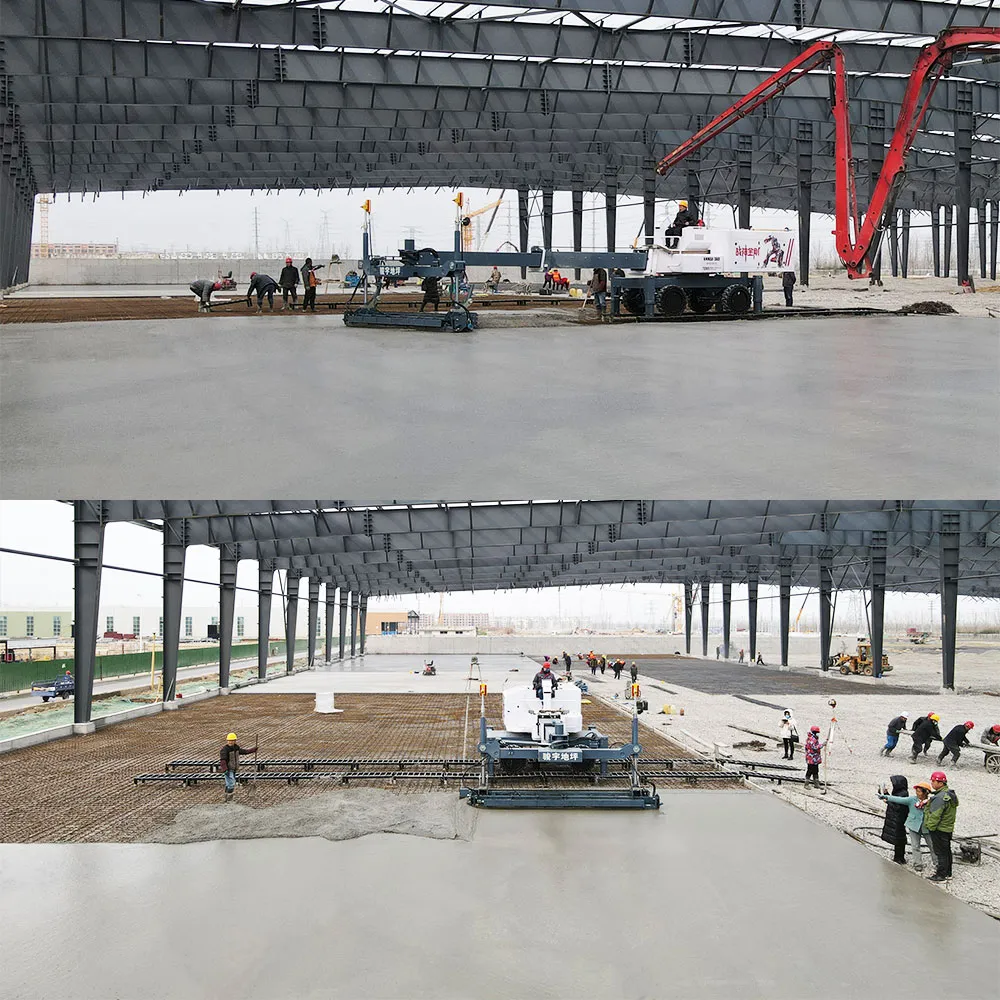
It is feasible to use self-leveling cement to level the bathroom floor, but some details and construction steps need to be paid attention to. Below are detailed answers to the use of self-leveling cement for bathroom floor leveling.
1. Characteristics of self-leveling cement
Self-leveling cement is a special cement material with strong fluidity, small shrinkage, high strength, wear resistance, and anti-skid properties. It is a pre-mixed dry powdery material that, when mixed with water, can automatically level and form a smooth, flat ground.
2. Advantages of using self-leveling cement on bathroom floor
♦Good leveling effect:
Self-leveling cement can automatically level, reducing manual operations and avoiding uneven ground problems.
♦Smooth surface:
The floor formed by self-leveling cement is very smooth, difficult to accumulate dirt and moisture, and easy to clean.
♦Wear-resistant and anti-skid:
Self-leveling cement has high wear-resistant and anti-skid properties, which can ensure the safety and service life of the bathroom.
♦Environmental protection:
Self-leveling cement produces relatively little pollution and noise during the construction process, which complies with environmental protection requirements.
3. Construction steps for using self-leveling cement on bathroom floor
♦Preparation:
Clean the bathroom floor to ensure there is no oil, moisture and debris. Make simple repairs to the ground, such as filling cracks and local leveling.
♦Measure the area:
Measure the bathroom floor to determine the amount of self-leveling cement required.
♦Mixing materials:
Mix self-leveling cement and water according to the proportion required in the instruction manual, and stir evenly.
♦Pour grout laying:
Pour the mixed self-leveling cement slurry on the ground and let it flow freely until it covers the entire ground. Make sure the slurry is of consistent thickness to avoid build-up or thin layers.
♦Scraping operation:
Use a scraper to smooth the self-leveling cement to control surface flatness and slope. Scaling and patching can be done as many times as needed.
♦Maintenance:
Carry out maintenance after the initial setting of the self-leveling cement, keep the ground moist, and avoid walking and placing heavy objects. Maintenance time generally takes more than 24 hours.
♦Complete finishing:
After the maintenance is completed, finishing work such as laying anti-skid tiles and floors can be carried out to enhance the beauty and practicality of the ground.
4. Precautions
♦Before using self-leveling cement,
make sure the bathroom floor is dry, flat and firm to avoid the slurry from adhering easily or causing hollowing.
Self-leveling cement has high strength and wear resistance, but for heavily loaded areas or areas subject to frequent friction, it is recommended to reinforce or choose a more wear-resistant material.
♦When mixing self-leveling cement,
the material proportion and mixing time should be strictly controlled in accordance with the instructions to ensure stable slurry quality.
♦When scraping,
attention should be paid to controlling the strength and direction of the scraper to avoid scratches or marks. Local unevenness or defects can be repaired.
♦During the maintenance period,
the ground should be kept moist to avoid direct sunlight or high temperatures that may cause the surface to dry out too quickly. At the same time, avoid walking and placing heavy objects to avoid damage to the ground.
♦After completing the finishing work,
regular cleaning and maintenance should be carried out to avoid dirt accumulation and wear and tear, and to maintain the beauty and service life of the floor.
In short, using self-leveling cement to level the bathroom floor has many advantages and feasibility. However, attention should be paid to details and precautions during the construction process to ensure that the quality and effect of the ground are at its best. If you have any questions or need further information, it is recommended to consult professionals or construction teams for advice and guidance.
Thanks to All the Friends Who Support and Trust Shandong Vanse Machinery Technology Co., Ltd.
If you want to know more about Shandong Vanse Machinery Technology Co., Ltd. or have any questions, please feel free to contact us:
Our Factory
Shandong Vanse Machinery Technology Co., Ltd.








Share this article

About the Author: Shandong Vanse Machinery Technology Co., Ltd.
Shandong Vanse Machinery Technology Co., Ltd. is a high-tech manufacturer specializing in concrete construction machinery, including laser screeds and related equipment. The company integrates R&D, production, and global sales, with products exported to over 60 countries and widely used in infrastructure projects worldwide.
Previous Post
Next Post
Related Articles
You Might Also Like
Where should I start buying a laser leveling machine?
WHERE SHOULD I START BUYING A LASER LEVELING MACHINE? In order to alleviate the tension of the labor force, many companies have purchased concrete laser leveling machines, which can reduce the amount of labor used and reduce capital investment to a certain extent. But for consumers to buy this device, they should find the manufacturer to buy it on the basis of a thorough understanding. "High degree of automation, low labor intensity, save formwork, channel steel, reduce labor input, and make the ground smoother"… Based on various advantages, laser leveling machines are now highly sought after by the construction floor industry and become a star product in construction machinery and equipment. Driven by unlimited business opportunities and market interests, many companies have begun to join in and promote themselves as professional brands, professional manufacturers, and product experts. This phenomenon makes consumers unaware when purchasing laser leveling machine products. How to choose, here Shandong Wanshi Machinery Xiaobian has compiled a few precautions for purchasing laser leveling machines to help users stay away from being "fooled" and find good brands and products that are truly professional and focused. 1. Carefully select brands just getting started For high-tech products such as concrete laser leveling machines, in addition to technological innovation, there is another important factor that affects the quality of concrete laser leveling machines, and that is experience. How to define laser leveling machine products of different models and specifications? How to deal with the flatness of the ground? How to position the laser transmitter and other issues require years of long-term accumulation to accurately grasp. When users choose laser leveling machine products, if they rush to buy the products of the brand that has just started, they are likely to become "guinea pigs" and encounter various troubles. It is very simple to identify whether this brand is just getting started, just check its patent registration time and understand the real cases in the past. 2. Do not choose low-priced e-commerce products, but also consider the comprehensive strength of the enterprise Regarding the current phenomenon and confusion in the laser leveling machine industry, industry insiders believe that for an enterprise, the trust of consumers in the final purchase is a comprehensive consideration. The price factor may account for 25% of it, but in the end, consumers still consider comprehensive factors. Today, as consumption habits become more and more rational, low prices can only become a gimmick to attract consumers' attention. The real measure of a company's success or failure is the company's product quality, after-sales service and its own strong strength. At present, when the reshuffle trend of the laser leveling machine industry is becoming more and more obvious, laser leveling machine companies with insufficient terminals, insufficient networks, and insufficiently well-known brands will face greater pressure. Shandong VANSE Machinery has been committed to the research and development and production of concrete laser leveling machines for many years. Its core components are all produced by large manufacturers in advanced countries such as Germany and the United States. The production process is strictly in accordance with national standards, enterprise standards, and quality control guarantees. System production, to ensure that product quality meets or exceeds the requirements of corporate standards and relevant national standards, and has won the trust and praise of users with excellent quality, excellent performance, and superior cost performance.What are the countermeasures for common safety issues in concrete engineering construction?
Concrete engineering construction involves multiple links such as material transportation, mixing, pouring and curing. The working environment is complex (such as high-altitude, edge and heavy machinery operation), which is prone to cause safety accidents such as collapse, fall from height and mechanical injury. For common safety issues, response measures should be formulated throughout the entire process of "prevention – control – emergency response". Specifically, they can be classified by risk types as follows: The spacing of the vertical rods of the formwork support is too large, there is no base plate at the bottom of the vertical rods/the foundation is unstable. Improper sequence of concrete pouring (such as not pouring in layers, resulting in local load exceeding the limit); The formwork was removed too early (the concrete strength did not meet the design requirements). The foundation pit/slope support was inadequate, causing deformation due to the load of concrete pouring. Preliminary design and verification The formwork support and scaffolding must be designed by professionals in accordance with the specifications, calculating the load-bearing capacity of the vertical rods, the spacing of the horizontal rods, and the setting of the sweeping rods to ensure the anti-overturning and anti-deformation capabilities. The foundation pit/slope support plan should be specially designed in combination with geological conditions (such as soft soil and quicksand layers). When necessary, support forms such as sheet piles and soil nail walls should be adopted. Over-excavation is strictly prohibited. Construction process control Before setting up the support, the foundation should be leveled and compacted. Wooden pads or steel sections should be placed at the bottom of the vertical poles to prevent uneven settlement. Concrete pouring should follow the principle of "layering, symmetry and gradual progress". The thickness of each layer should not exceed 30cm (for pumped concrete). It is prohibited to stack materials on one side or pour them in a concentrated manner, which may cause the support to be biased. Before the formwork is removed, the concrete strength must be tested (by the rebound method or the same condition test block test). It can only be removed when it reaches 75% (for beams and slabs) or 100% (for cantilever components) of the designed strength, and the removal sequence follows the principle of "remove the later supports first, and then remove the later supports". For high formwork (height ≥8m) and deep foundation pits (depth ≥5m), "deformation monitoring" should be implemented. Daily data on the settlement of supports and slope displacement should be recorded. Work should be immediately halted for rectification if the warning values are exceeded (such as settlement ≥10mm). The pouring platform and scaffolding have no guardrails or toe boards, or the height of the guardrails is insufficient (less than 1.2 meters). The worker is not wearing a safety belt, or the safety belt is not fastened to a secure support point. No closed protection or warning signs have been set up at the edge openings (such as elevator shafts and stairwells). Standardization of protective facilities For high-altitude pouring platforms (such as floor slab and beam pouring), 1.2-meter-high guardrails must be set up, with 18-cm-high toe boards at the bottom, and close-mesh safety nets (flame-retardant type) hung on the outside of the guardrails. Elevator shafts and reserved openings shall be sealed with "tools" (such as steel mesh + cover plates), and it is strictly prohibited to temporarily block them with debris. The scaffold working layer is fully covered with scaffold boards, with no gaps between the boards. The probe boards (extending more than 15cm beyond the crossbars) must be fixed or removed. Personnel operation specifications Workers engaged in high-altitude operations must wear "double-hook safety belts" and use them "high up and low down" (the safety belt's hanging point should be higher than the work position). It is strictly prohibited to walk on the edges of unprotected beams and slabs. Before starting work, check the integrity of protective facilities. If loose railings or damaged safety nets are found, stop work immediately for repair. High-altitude concrete pouring operations are prohibited in severe weather conditions such as heavy rain and winds above level 6. The concrete mixer and vibrator have no protective cover or the protective cover is damaged. The equipment operators work without a license and operate in violation of regulations (such as cleaning the residue in the mixer by hand). There are irrelevant personnel staying within the working radius of pump trucks or tank trucks, causing collisions or crushing. Intrinsic safety of equipment The transmission parts of the mixing plant and vibration equipment (such as gears and belts) must be equipped with "fixed protective covers", and the strength of the protective covers must meet the requirements of impact resistance. The material rods and outriggers of the concrete pump truck are equipped with "limit alarm devices", and steel plates are placed under the outriggers (to prevent subsidence). Before operation, make sure the outriggers are stable. Before using the equipment, conduct a "pre-shift inspection", with a focus on checking the braking, steering and leakage protection devices. Do not start the equipment if they are not up to standard. Personnel and on-site control Equipment operators must pass training and assessment and hold a "Special Operations Operator Certificate" to work. It is strictly prohibited to operate without a certificate or after drinking alcohol. When cleaning or maintaining the mixer, it must be "powered off and locked" (with a warning sign), and there must be a dedicated person to supervise. Live operation is strictly prohibited. The operation areas of pump trucks and tank trucks are set up with "warning zones" (isolated by warning tapes or guardrails), and irrelevant personnel are prohibited from entering. Drivers should observe the surrounding environment before operation. The cables of mobile equipment such as vibration rods and water pumps are damaged and the insulation layer is aged. The temporary power supply did not adopt the "three-phase five-wire system", and the grounding and zero connection protection was missing. Waterproof electrical appliances were not used in damp environments (such as pouring basements or working during the rainy season). Standardization of temporary electricity usage Temporary power supply at the construction site must be laid by professional electricians, strictly adhering to the principle of "one machine, one switch, one leakage protector, one box" (each device is equipped with an independent switch and a leakage protection device). The operating current of the leakage protection device should be ≤30mA, and the operating time should be ≤0.1s. The cables of mobile devices shall adopt "wear-resistant and waterproof rubber-sheathed cables". It is strictly prohibited to drag or crush the cables. The cable joints shall be sealed with waterproof tape. Distribution boxes and switch boxes should be installed in dry and rain-proof locations. The grounding resistance of the box body should be no more than 4Ω. The box door should be locked and a "Electrical Safety Sign" should be affixed. Working environment and operation protection When working in a damp environment, operators should wear "insulating shoes" and "insulating gloves", and insulating sleeves should be added to the handles of the vibration rods. Lighting fixtures should use "36V safe voltage" (such as in basements and deep well pouring), and the use of 220V ordinary bulbs is strictly prohibited. Regularly test the insulation resistance of temporary power lines. Replace the cables immediately when the insulation value is lower than 0.5MΩ. The tools and materials piled up on the concrete hopper and scaffolding were not fixed and fell, injuring the people below. Workers working at heights randomly throw tools and waste materials (such as bolts and broken formwork). There is no horizontal protective layer for cross-operation (such as pouring above and cleaning below). Material management The amount of concrete and tools stacked on the aerial work platform shall not exceed the load-bearing limit of the platform, and they shall be firmly fixed (such as binding the hopper with iron wire). It is prohibited to stack irrelevant sundries on scaffolding and formwork. After work, waste materials should be cleared in time to avoid accumulation. When transporting materials vertically (such as using a tower crane to transport concrete hoppers), the hoppers must be covered, overloading is strictly prohibited, and a "warning zone" should be set up below. Cross-operation protection When performing cross-operation up and down, a "horizontal safety protection layer" (such as fully laid scaffolding boards or safety flat nets) should be set in the middle, and the spacing between the protection layers should not exceed 10 meters. Workers working at heights are strictly prohibited from throwing any objects downward. Tools should be placed in tool bags to prevent them from falling. The personnel working below must wear "safety helmets", with complete brims and chin straps, and the chin straps must be fastened tightly. The construction site is equipped with a "first aid kit" (including tourniquets, bandages, fracture fixation splints, etc.), and 1-2 part-time first aid workers are trained. Special emergency response plans should be formulated for accidents such as collapses and electric shocks. An emergency drill should be organized once every quarter to ensure that personnel master escape and first aid skills. An "emergency passage" is set up on site, with a width of no less than 1.2 meters and no debris blocking it. Emergency lighting (automatically activates after power failure) covers key areas. When a collapse occurs, immediately stop the operation, organize personnel to evacuate to a safe area, and strictly prohibit blind rescue (to prevent secondary collapse). At the same time, contact professional rescue teams (such as the fire department). When an electric shock occurs, first "cut off the power supply" or use an insulating tool to remove the injured person from the power source, and then perform cardiopulmonary resuscitation (send to the hospital if necessary). When mechanical injury occurs, immediately stop the operation of the equipment, stop bleeding and bandage the wound. For those with fractures, avoid moving them at will and send them to the hospital promptly. The safety management of concrete engineering should adhere to the principle of "prevention first and combination of prevention and control". Through the triple guarantee of "technical measures (such as support verification, protective design) + management measures (such as personnel training, on-site inspection) + emergency measures (such as plan drills, first aid preparations)", risk control should be integrated throughout the entire construction process, and at the same time, the safety awareness of all personnel should be strengthened. Eliminate the "three violations" behaviors of "illegal command, illegal operation and violation of labor discipline", and reduce the occurrence of safety accidents from the root. Note: The parameters provided in this document are for reference only and are not mandatory. Due to differences in technical characteristics between different brands and models of laser levelers, please consult the manufacturer for a suitable solution before actual operation. This reference document assumes no responsibility for any issues arising from failure to follow the manufacturer's instructions.What is the working efficiency of the concrete laser leveling machine in construction?
The working efficiency of the concrete laser leveler is affected by many factors such as equipment model, construction conditions, concrete properties, etc., and varies greatly in different scenarios. The following is an explanation from three aspects: core influencing factors, typical efficiency data and improvement strategies: Leveling width: The leveling width of common models is 2.5-6 meters. Wide-width equipment (such as 6 meters) covers a larger area in a single operation, and the efficiency is increased by about 30%. Travel speed: The conventional construction speed is 1-3 meters/minute, and the high-frequency vibrating model (such as 100 times/minute) can appropriately increase the speed to 2-4 meters/minute. Automation degree: The fully automatic hydraulic drive model is 20%-50% more efficient than the semi-automatic model, and no frequent manual adjustment is required. Site scale: When a large area is continuously constructed (such as more than 5000㎡), the equipment does not need to be frequently transferred, and the efficiency can reach 1.5-2 times that of a small area (<1000㎡). Terrain complexity: Complex terrain with high flatness requirements (such as slopes and arc angles) requires multiple round trips, and the efficiency is 30%-40% lower than that of a flat site. Slump: Concrete with a slump of 180-220mm has good fluidity and its leveling efficiency is about 25% higher than that of concrete with a low slump (<150mm). Initial setting time: Concrete with an initial setting time of 4-6 hours can be constructed continuously. If the initial setting is too fast (<3 hours), it needs to be worked in blocks, and the efficiency drops by about 40%. Indicators Laser leveling machine Traditional manual labor + ordinary machinery Efficiency improvement ratio Daily operation area 1500-3500㎡ 500-800㎡ 3-4.5 times Staffing 3-5 people (including operation and assistance) 8-12 people 50%-60% manpower saving Smoothness error ±3-5mm/2m ±8-15mm/2m Precision improvement of more than 50% Construction period 10,000㎡ site about 5-7 days 10-15 days Shortening of construction period by 50% Choose the machine model according to the size of the site: choose a wide model (5-6 meters) for more than 5000㎡, and a narrow model (2.5-3 meters) for narrow areas. Maintain equipment regularly: keep the hydraulic system pressure stable (standard pressure 16-20MPa), replace worn scrapers (when the wear amount is >2mm), and avoid downtime due to equipment failure. Block construction planning: divide the construction blocks according to the principle of "from inside to outside, zone flow", and control the area of each block to 1000-1500㎡ to reduce the transfer time. Multi-machine collaborative operation: Large-scale projects can use the combination of "1 laser leveling machine + 1 concrete pump truck + 2 concrete placing machines" to improve the efficiency of placing and leveling. Strictly control the slump: the slump of pumped concrete should be 180-220mm, and the slump of non-pumped concrete should be 150-180mm, to avoid the leveling speed being affected by over-dry or over-thin concrete. Reasonably arrange the pouring time: avoid high temperature (>35℃) or low temperature (<5℃) periods. When the temperature is high, a retarder can be added to extend the initial setting time to 6-8 hours. Operators need to master the "rough leveling first and then fine leveling" process: the rough leveling speed is 3-4 meters/minute, and the fine leveling speed is 1-2 meters/minute to avoid excessive vibration at one time. Assistants need to handle the corner areas in time: Edges that cannot be covered by the laser leveling machine (such as corners and column roots) need to be leveled by a dedicated person with a small vibrator to avoid secondary rework. Attenuation scenarios Efficiency reduction ratio Countermeasures Construction in rainy season (flooding on the ground) 30%-50% Drain water in advance and lay steel roadbed to reduce the risk of equipment getting stuck Construction at night (lack of lighting) 20%-30% Install high-brightness LED light sets, and operators wear night vision assistance equipment Multi-task cross-operation 25%-40% Define construction restricted areas and coordinate process connections (e.g., prohibit people from entering within 4 hours after leveling) Concrete supply interruption Calculated by interruption time Put aside 2 concrete mixer trucks to ensure supply continuity The average working efficiency of the concrete laser leveling machine is about 1500-3500㎡/day (single machine), which is 3-4.5 times that of traditional manual leveling. Its efficiency depends on the coordination of equipment selection and construction management. By optimizing machine configuration, controlling concrete performance and standardizing construction processes, the equipment efficiency can be maximized to achieve dual optimization of construction period and cost. In actual application, it is necessary to flexibly adjust the strategy according to the characteristics of the project to achieve the best construction efficiency.