Technical Knowledge
Laser leveling machine: a great assistant on construction sites
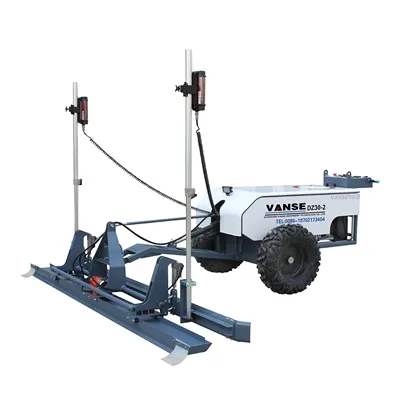
Wow, the laser leveler is really a great assistant for leveling large floors! In construction projects, concrete laser levelings really can handle a variety of challenges with ease.
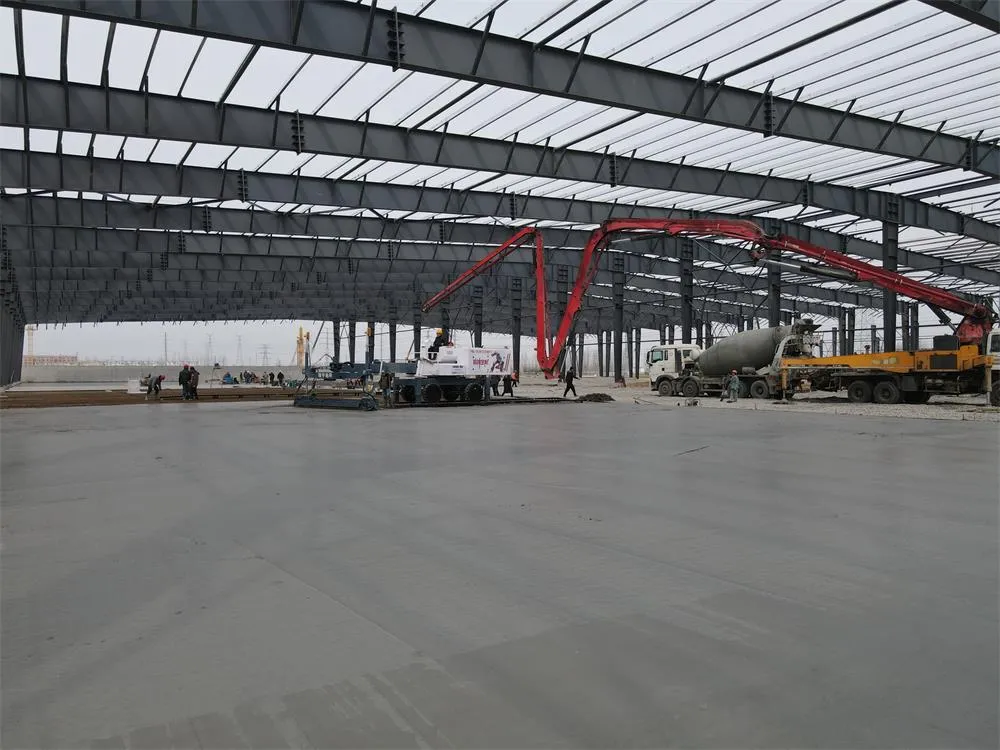
Telescopic arm laser leveling machine for large factory building construction
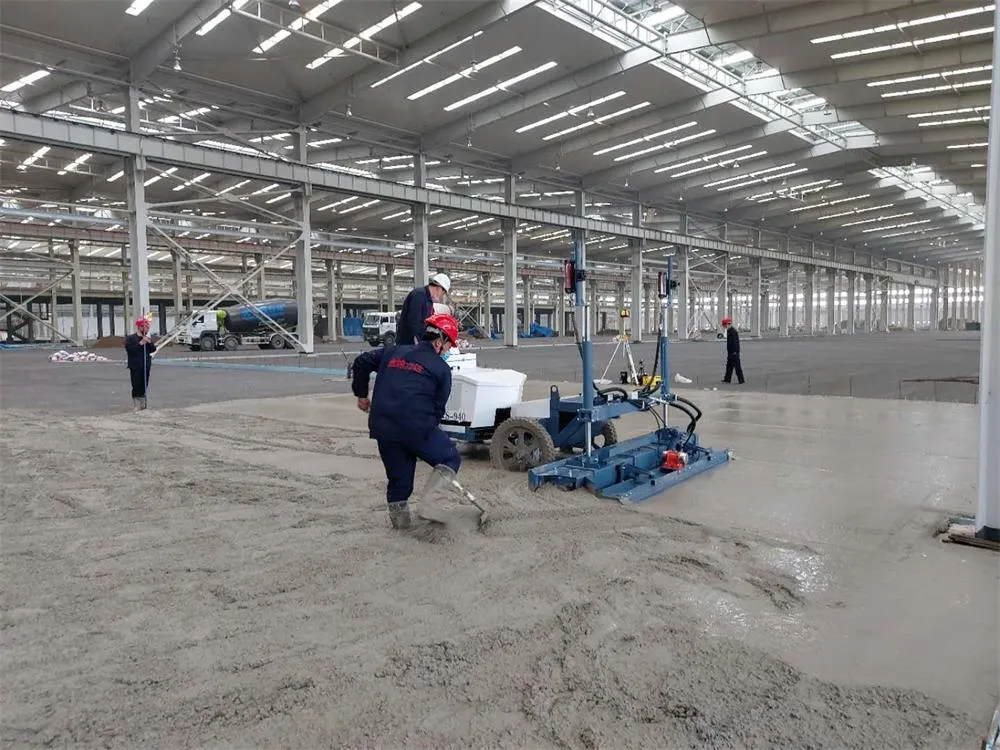
Four-wheel laser leveling machine for large factory building construction
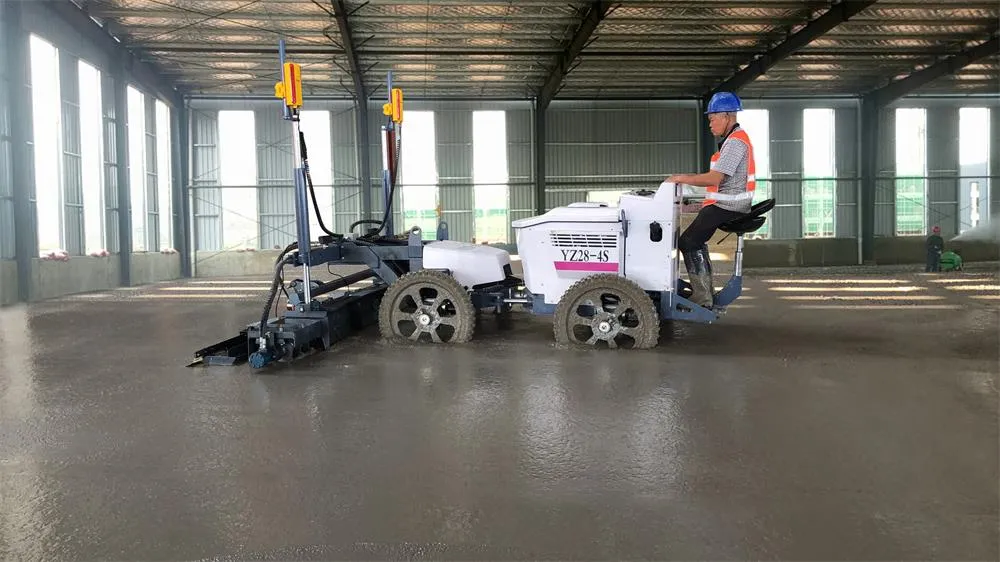
Four-wheeled concrete laser leveling machine construction
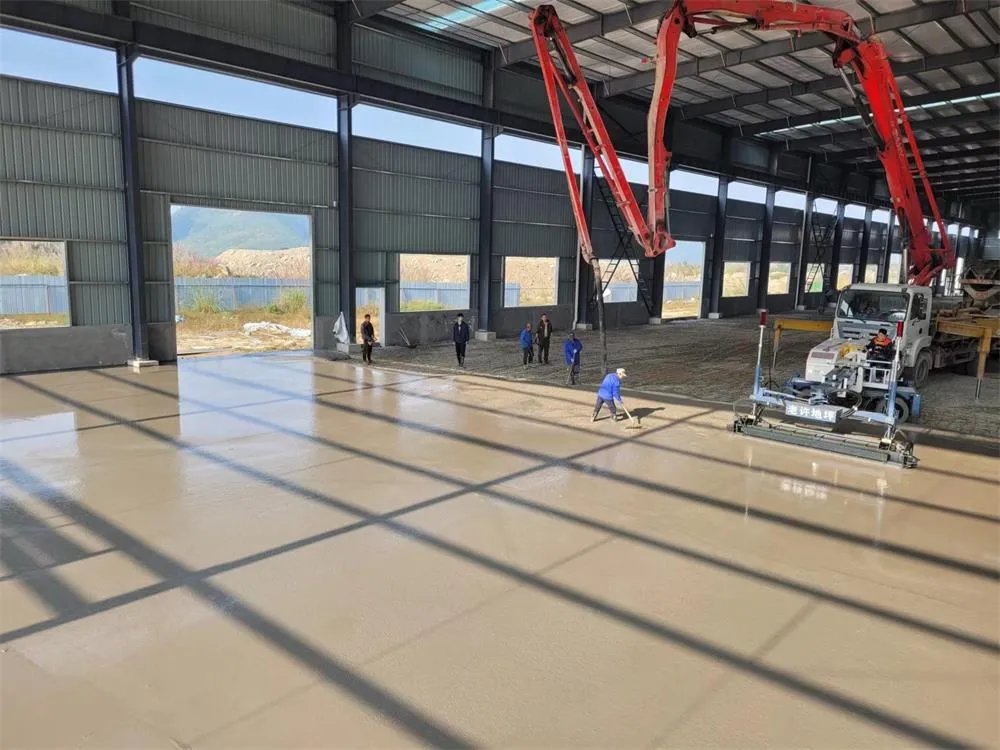
Telescopic arm concrete leveling
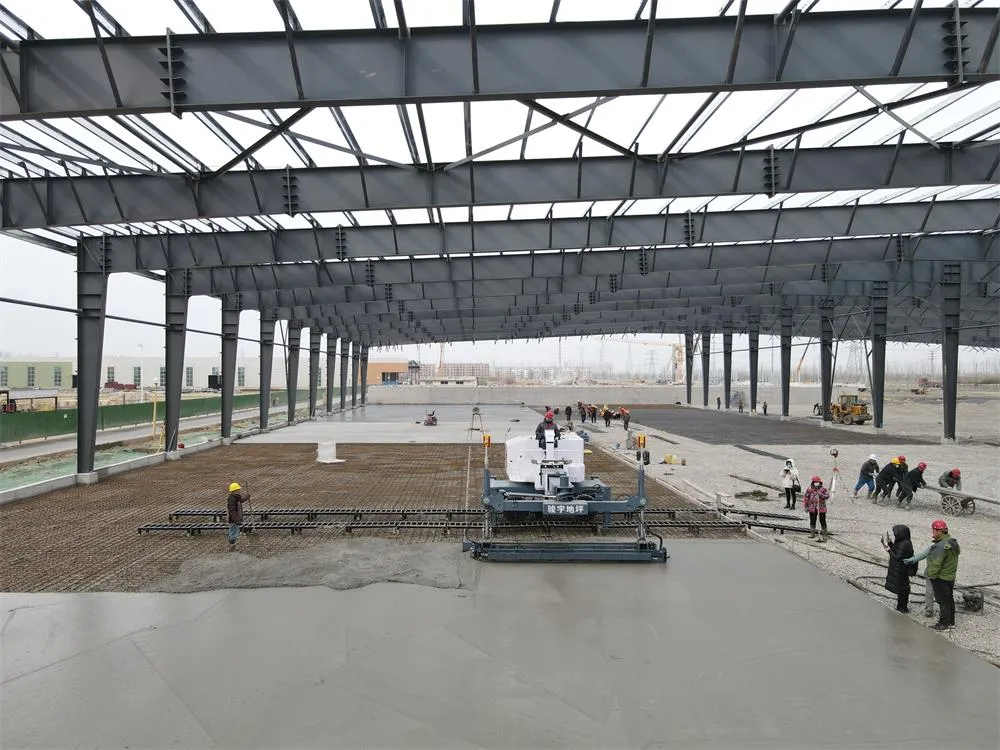
Large telescopic arm laser leveling machine
This magical device uses laser measurement technology and intelligent control system to give your concrete floor a new look, and get precise flatness easily! How does it work? To put it simply, the laser sensor emits a laser signal, then receives the signal reflected from the ground, compares it with the preset plane height, and automatically adjusts the height of the leveling knife through the intelligent control system to reach the preset plane height.
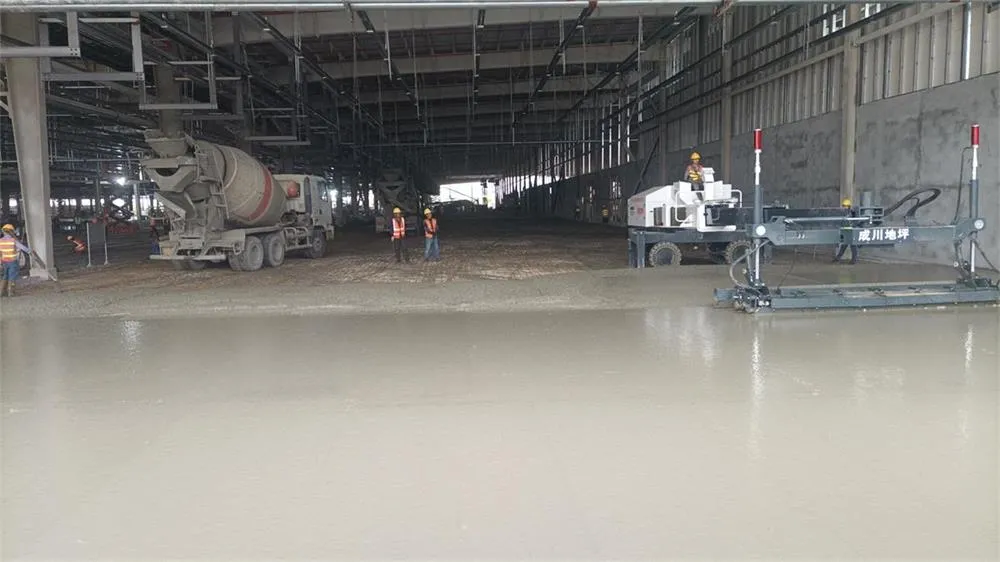
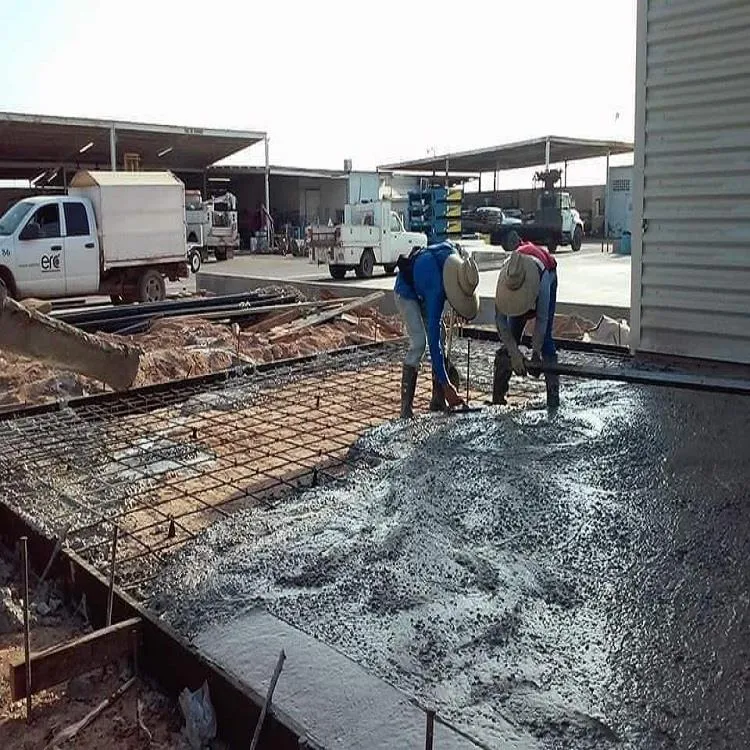
Laser leveling machine steel mesh construction
To sum up, the concrete laser leveling machine is really a practical construction engineering equipment, accurate, efficient and practical! However, when using it, we must also pay attention to some issues, such as environmental protection and energy saving. Therefore, when choosing a concrete laser leveling, we must comprehensively consider various factors to ensure construction quality and efficiency. In general, the concrete laser leveler is a good hand in construction projects, making our ground smoother and more beautiful!
Thanks to All the Friends Who Support and Trust Shandong Vanse Machinery Technology Co., Ltd.
If you want to know more about Shandong Vanse Machinery Technology Co., Ltd. or have any questions, please feel free to contact us:
Our Factory
Shandong Vanse Machinery Technology Co., Ltd.








Share this article

About the Author: Shandong Vanse Machinery Technology Co., Ltd.
Shandong Vanse Machinery Technology Co., Ltd. is a high-tech manufacturer specializing in concrete construction machinery, including laser screeds and related equipment. The company integrates R&D, production, and global sales, with products exported to over 60 countries and widely used in infrastructure projects worldwide.
Previous Post
Next Post
Related Articles
You Might Also Like
Compared with traditional leveling machines, how much is the work efficiency improved by laser leveling machines?
Compared with traditional leveling machines, the improvement in work efficiency of laser leveling machines varies depending on the construction scenario, equipment model, construction process and other factors, and can usually be improved by 30%~50% or even higher. The following is a comparative analysis of the efficiency differences between the two from multiple dimensions: Comparison dimensions Traditional leveling machine Laser leveling machine Leveling basis Relies on manual wire drawing and leveling, with fixed elevation as the benchmark Based on the horizontal laser surface emitted by the laser transmitter, the leveling accuracy is automatically controlled in real time Power and operation mode Manually controls the scraper or roller, and adjusts the height based on experience Hydraulic drive + intelligent control system, automatic leveling and vibration compaction Construction coverage The width of a single operation is narrow (usually 1~3 meters), and it needs to be repeated back and forth The single operation width can reach 2~4 meters, or even wider, reducing the number of round trips Shandong Vanse Machinery Technology Co.,Ltd Construction speed: larger coverage area per unit time Traditional leveling machine: Frequent manual measurement of elevation and adjustment of equipment height are required, and the construction area per hour is about 100~200 square meters due to the limitation of manual operation accuracy. For example, when constructing in large areas (such as parking lots and factory floors), it is necessary to work back and forth multiple times, and it is easy to cause rework due to manual errors. Laser leveling machine: The laser system calibrates the height in real time, without frequent shutdown and measurement. The hydraulic system automatically adjusts the height of the leveling beam. It can construct 300~500 square meters per hour, and some large equipment can even reach more than 800 square meters. Taking a 10,000 square meter site as an example, traditional equipment takes about 50~100 hours, while laser equipment only takes 20~30 hours, and the efficiency is improved by 50%~100%. Precision control: reduce time spent on rework Traditional leveling machines: manual control errors are large (usually ±5~10 mm), prone to unevenness, requiring manual repair later, with a rework rate of about 10%~20%, and additional construction time. Laser leveling machines: laser positioning accuracy can reach within ±3 mm, with a high one-time molding pass rate and almost no need for rework. For example, when constructing industrial floors with high flatness requirements (such as warehouses and workshops), traditional equipment may be delayed by 2~3 days due to rework, while laser equipment can directly save this part of time. Labor costs: reduce labor dependence Traditional leveling machines: require multiple workers (such as surveyors, operators, and auxiliary workers), at least 3~5 people to collaborate, and require high worker experience. Laser leveling machines: only 1~2 operators are required (responsible for equipment control and laser system calibration), labor costs are reduced by 50%~70%, and efficiency fluctuations caused by labor fatigue are reduced. Adaptability to complex scenarios: shortening the time spent in special working conditions Traditional leveling machines: When working on slopes, curved surfaces or sites with large elevation differences, manual adjustments are required, which greatly reduces efficiency (may reduce by more than 30%). Laser leveling machines: can be programmed to adapt to a variety of terrains (such as slopes and curved surfaces), and the laser system automatically adjusts the elevation. The efficiency advantage is more obvious in complex scenarios, for example, the efficiency can be increased by 40%~60% when working on slopes. Shandong Vanse Machinery Technology Co.,Ltd Site scale: Small site (such as a few hundred square meters): The equipment debugging time of the laser leveling machine accounts for a high proportion, and the efficiency is improved by about 30%~40%. Large site (tens of thousands of square meters): The "scale effect" of laser equipment is significant, and the efficiency can be improved by more than 50%. Equipment model and configuration: Small laser leveling machine (such as hand-held): suitable for narrow areas, the efficiency is about 1.5~2 times that of traditional equipment. Large driving laser leveling machine: equipped with double vibrating device and wide leveling beam, the efficiency can reach 2~3 times that of traditional equipment. Construction process requirements: Ordinary floor (low flatness requirement): efficiency is improved by about 30%~40%. High-precision floor (such as ultra-flat floor): Laser equipment can meet the standard at one time, avoiding multiple leveling of traditional processes, and the efficiency is improved by more than 50%. Shandong Vanse Machinery Technology Co.,Ltd Case 1: Industrial plant floor construction For a 12,000 square meter plant, a traditional leveling machine was equipped with a team of 4 people and took 12 days to complete; the laser leveling machine was operated by only 2 people and completed in 6 days, with an efficiency increase of 50%, and the flatness error was reduced from ±8 mm to ±2 mm. Case 2: Municipal square construction A 5,000 square meter square contains a sloped terrain. Due to frequent measurement and adjustment, the traditional equipment can only construct 400 square meters per day; the laser leveling machine can only construct 800 square meters per day, with an efficiency increase of 100%, and the flatness of the slope transition meets the standard. Shandong Vanse Machinery Technology Co.,Ltd The laser leveling machine fundamentally reduces manual intervention and rework time through "automatic measurement + precise control + wide-width operation", and its advantages are particularly prominent in large-scale, high-precision construction scenarios. For projects that pursue construction period and quality, its efficiency improvement is not only reflected in time reduction, but also in the optimization of comprehensive costs by reducing manpower and reducing errors. If specific data is required, it can be further calculated based on the project scale and equipment model. Click the below to jump immediately!!! ARMOUR JOINT CONCRETE LEVELING MACHINE LIGHT TOWER POWER TROWEL SLIPFORM MACHINE STEEL FIBER TOPPING SPREADER TRACKED MINI DUMPERCan a push power trowel be used in small indoor scenes?
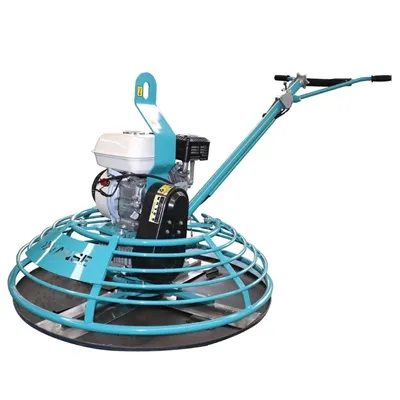
– Hand-push trowels are suitable for indoor scenes with relatively small areas. If the indoor space is relatively open and regular in shape, such as warehouses, large exhibition halls, etc., hand-push trowels can play a good role. It can be easily pushed on the flat ground to smooth the concrete and other floor materials. – However, if the indoor space is narrow and there are many obstacles or corners, the use of hand-push trowels may be restricted. Because its size and operation method determine that it is difficult to turn and operate in a small space. – For common indoor concrete, cement mortar and other floor materials, hand-push trowels can effectively smooth and compact the surface to make the floor smoother and smoother. It can handle newly poured floors and help remove surface defects such as bubbles and protruding pebbles. – However, if the floor material is special, such as wooden floors, epoxy floors, etc., which are relatively fragile or require extremely high surface accuracy, the hand-push trowel may not be suitable. Because its working principle is to operate through a rotating trowel blade, it may cause damage to these special floors. – The hand-push trowel is relatively simple to operate, and general operators can get started after simple training. It is pushed forward by manpower, and the direction and speed can be adjusted at any time according to the ground conditions during operation. For example, near the wall or pillar, you can slow down and operate carefully to avoid collision. – However, long-term use of the hand-push trowel requires certain arm and waist strength, and the operator may be more tired. – The hand-push trowel is small in size and is easier to move in indoor scenes. In indoor areas without large equipment access channels, it can be transported to the work site through small doorways or elevators. – However, compared with large driving trowels, its movement speed is slower, and work efficiency will be affected to a certain extent. – The hand-push trowel has a high speed. If the operator is not careful during operation, clothing, hair, etc. may be drawn into the machine, causing safety accidents. Therefore, the operator needs to wear appropriate work clothes and protective equipment, such as safety helmets, gloves, etc. – In addition, since the operation is indoors, the ground may be slippery, so be careful to prevent slipping when pushing the trowel. – The hand-push trowel will generate certain noise and dust when working. In small indoor scenes, the noise may interfere with the surrounding environment, so try to choose the right time to operate to avoid affecting others. – For dust problems, you can reduce its impact on indoor air quality by equipping a dust collection device or strengthening ventilation.Concrete Knowledge
This paper introduces in detail what strength levels of concrete, what are the requirements of concrete for water quality, what factors the durability of concrete is related to, and how concrete is maintained. Why should concrete be graded in intensity? To ask why concrete should be graded in strength, you should first know what the strength level of concrete is. The concrete strength level is artificially divided according to the value of the concrete cube's anti-pressure strength, which is the characteristic strength of concrete. According to the current relevant standards and specifications, the concrete cube pressure strength is a standard size of 150mm of the edge of the standard size of the cube test piece sproducing according to the standard method, the temperature consistent with the ISO test method is 20 pc 2 degrees C, humidity is more than 95% of the standard maintenance room, maintenance to 28d age. The pressure strength of the concrete cube measured according to the standard test method. According to the relevant standards, building material strength grade should be expressed by the name of the material plus its strength standard value. Therefore, the concrete strength grade is divided into the standard valueofs of the symbol C (short for the English concrete Concrete) and the pressure strength of the cube behind it: C10, C15, C20, C25, C30, C35, C40, C45, C50, C55, C60, C65, C70, C75, C80. Because the general engineering of different parts of the concrete load is not the same, some large, some small, can not fully use a strength grade of concrete. For the heavy pressure of the site, it is necessary to use high-strength grade concrete, for the low pressure of the site, the use of low- strength grade of concrete, therefore, the concrete is divided into different strength levels to meet the needs of different projects, through the design and calculation of selection. Why does concrete specify 28d strength as the standard strength? Concrete is based on the cement bonding action, gradually hardening, and improve the strength of pressure. Because the cement stiffness is not done at once, but gradually perfected over time. Under normal maintenance conditions, the first seven days of pressure resistance increased faster, between 7d and 14d growth slightly slower, and after 28d, the intensity growth is relatively slow. In other words, after 28d the pressure strength is the standard strength, as the standard for design and construction inspection quality. Obviously, if the strength of less than 28d as the standard strength, will make the concrete performance can not be fully exploited. If the strength of greater than 28d as the standard strength, although the performance of concrete can be fully developed, but because of the time to reach the standard strength is too long, affecting the construction progress. Concrete level leveling on concrete working Why does concrete had request standard of water? Industrial wastewater containing fat, vegetable oil, sugar, acid and so on can not be used to mix concrete. Because the water containing impurities will reduce the cement bonding force, so that the strength of the concrete decreased, so can not use mineral water contains a large number of salts, so that cement can not be very resistant to water erosion. For the chemical composition of mineral water, must meet the indicators set by the family, or compared with ordinary drinking fresh water test, see the intensity does not decrease before use. As for the general tap water and drinkable water, can be used to mix concrete. Concrete level leveling on concrete working Why are concrete blocks in groups of three? Concrete test block is the standard to measure the strength of concrete components, that is, the strength of the test block is destroyed by pressure, as the strength of the component can have. Therefore, in addition to the test block should be made according to the component, the test block must also have a certain number. Because although we try to make the concrete of the test block and the concrete of the component is the same, but after all, there are some differences, if only a test block to identify the strength of the component, it is difficult to be reliable. So in three groups, the strength of the three test blocks is used as the strength of the three test blocks (in special cases, some values need to be removed), that is, the strength of the component symup. Next artical we will go on share concrete knowledge etc, please follow our Youtube or Facebook to get more~