Technical Knowledge
Concrete laser leveling machine solves the big problem of concrete leveling
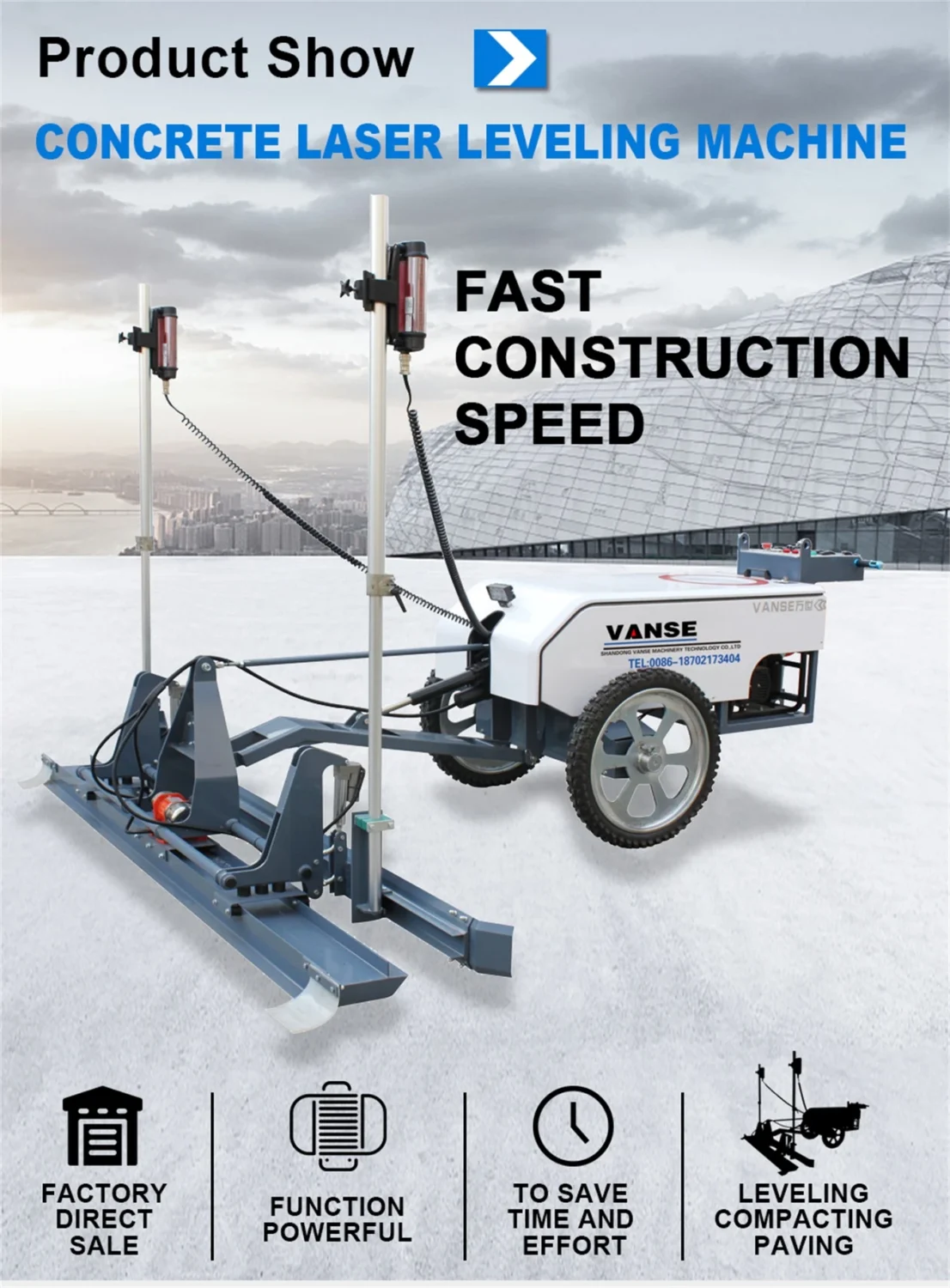
For many buildings today, perhaps the most basic is the paving and leveling of concrete floors. In the past, the development was not as fast as it is now, so the construction of large-area concrete floors would have the disadvantage of being uneven. Later, people slowly invented some methods, but they were also more time-consuming and laborious. But now there is a laser leveling machine, which solves the big problem of concrete leveling.
Many friends may not know much about laser leveling machines. In fact, it is a machine that uses the laser emitted by the laser as a benchmark and can level the ground at any time through the detection of a laser probe. The principle of this machine is also very simple. The machine itself emits a laser, which is then received by its own receiver. If there is any deviation, it will be fed back to the central computer system. Then the height of the scraper is adjusted linearly on the left and right sides, and then the whole process is completed. Flat ground.
The advantages of this machine are still very prominent. First of all, it does not require as much manpower and time as before. The machine's response is very fast, and there is basically no deviation. It is very accurate because it is controlled by a computer program. Unlike manual work, there will be discrepancies if you don't pay attention. Moreover, this machine does not need to find a balance line or add side templates. It is controlled by the machine's own control system. As long as the laser transmitter can operate normally without interference, the machine will adjust the elevation no matter where it is moved.
It is also because of the many advantages of laser leveling machines that many large buildings, such as logistics centers, warehouses, and underground garages, will now purchase such machines to level concrete floors. From this point of view, the sales prospects of laser planing machines are relatively good.
Thanks to All the Friends Who Support and Trust Shandong Vanse Machinery Technology Co., Ltd.
If you want to know more about Shandong Vanse Machinery Technology Co., Ltd. or have any questions, please feel free to contact us:
Our Factory
Shandong Vanse Machinery Technology Co., Ltd.








Share this article

About the Author: Shandong Vanse Machinery Technology Co., Ltd.
Shandong Vanse Machinery Technology Co., Ltd. is a high-tech manufacturer specializing in concrete construction machinery, including laser screeds and related equipment. The company integrates R&D, production, and global sales, with products exported to over 60 countries and widely used in infrastructure projects worldwide.
Previous Post
Next Post
Related Articles
You Might Also Like
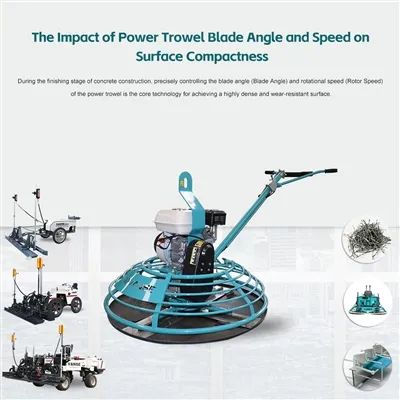
The Impact of Power Trowel Blade Angle and Speed on Surface Compactness
During the finishing stage of concrete construction, precisely controlling the blade angle (Blade Angle) and rotational speed (Rotor Speed) of the power trowel is the core technology for achieving a highly dense and wear-resistant surface. The blade angle (Blade Angle) determines the "pressing force": The physical mechanism is that the smaller the contact area, the greater the pressure. A small angle (such as 0° – 5°) causes the blade to almost lie flat on the ground, used for the initial leveling and slurry removal; as the concrete hardens, the angle needs to be gradually increased (such as 10° – 30°), so that the blade applies high pressure in a "cutting" posture, forcefully closing the capillary pores and squeezing out excess water and air, achieving densification. Studies have shown that correctly setting the blade angle can increase the compressive strength of the concrete surface by up to 15%. The rotational speed (Rotor Speed) determines the "operation frequency": The logic is the combination of kinetic energy and thermal effect. Low speed (50 – 90 RPM) is used in the initial stage to avoid disturbing the unstable surface; medium-high speed (100 – 150 + RPM) is used in the fine troweling stage, generating micro heat and high-frequency friction, promoting the rapid densification of the surface cement paste, forming a high-gloss "hard shell". Combining with the product knowledge base on Vanse Machinery's official website, the specific practical parameters and equipment support are as follows: Coarse scraping stage: Set the blade angle to 10° – 15°, and operate at a low speed (300 – 400 rpm) to remove loose mortar and small protrusions. Fine scraping stage: Gradually increase the angle to 25° – 30° and increase the speed to a medium-high speed (400 – 600 rpm) to enhance the surface density and gloss. For special requirements such as ultra-smooth floors, the angle can be adjusted to 30° – 45° during the final polishing. High-speed "polishing" stage: To achieve a "mirror-like" effect, maximize the blade angle (usually 20° – 30°) and speed, generate local heat through high-speed friction, and achieve the physical ultimate densification of the surface. High-grade/low water-cement ratio concrete (C40 and above): Sets quickly, with a short window period. The initial speed should be introduced earlier, using medium-low speed (approximately 60-80 RPM); during fine troweling, increase to medium-high speed (approximately 90-120 RPM), and gradually increase the blade angle (approximately 5-10°) to implement "cutting-style" polishing. Concrete containing retarders (summer/ large-scale construction): Sets slowly, requiring patience to build up support force. Initially, use low speed (approximately 50-70 RPM) to steadily scrape the surface; for subsequent polishing, maintain medium-low speed throughout to avoid "waveing" or "skinning" on the surface. Core adjustment principle: Just as emphasized in the Vanse technical documentation, "Observation is more important than presetting", there are no fixed values for parameters. The only standard is the immediate state of the concrete surface. Construction personnel should follow the principle of "from low speed to high speed, from small angle to large angle", and make dynamic adjustments. Too small angle: Leads to insufficient compaction, presence of pores on the surface, and reduced strength.应及时 increase the angle and accelerate the troweling during the fine troweling stage to make up for it. Too large angle: May scratch the hardened concrete surface or cause the machine to "chatter" and uneven wear. Should immediately reduce the angle and increase the walking speed. Inconsistent speed: If the initial speed is too fast, it will tear the surface and damage the flatness; if the later speed is too slow, it will result in insufficient compaction and dull luster. The blade angle and rotation speed are the core variables for the power trowel machine to achieve a dense concrete surface. By combining the precise staged parameters recommended by the Vanse Machinery website (rough troweling 10°-15°/300-400 RPM, fine troweling 25°-30°/400-600 RPM), and following the dynamic adjustment principle of "observation is more important than presetting", the construction team can effectively improve the construction quality and operational efficiency of the ground project. For more detailed trowel machine models and operation guidelines, you can directly visit the Vanse Machinery website or contact its technical team via email [email protected]. Note: The parameters provided in this document are for reference only and are not mandatory. Due to differences in technical characteristics between different brands and models of laser levelers, please consult the manufacturer for a suitable solution before actual operation. This reference document assumes no responsibility for any issues arising from failure to follow the manufacturer's instructions.How should the engine of a diesel concrete laser leveling machine be maintained? How often should the engine oil be changed?
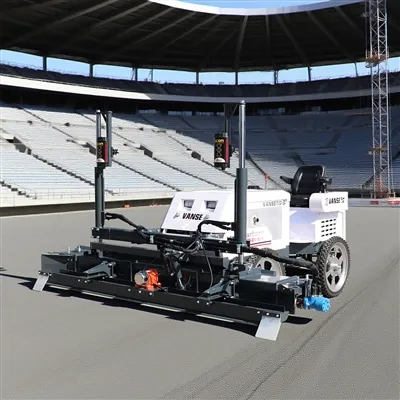
The engine is the "heart" of the leveling machine. Proper maintenance is of vital importance, which can effectively extend the service life of the equipment, ensure construction efficiency and reduce maintenance costs. The following is a detailed summary of the key points for engine maintenance and the oil change cycle for you Maintenance work can be divided into three parts: daily maintenance, weekly/monthly maintenance and long-term storage maintenance. Machine inspection: Before starting, run the machine once to check for oil or water leakage and whether any components are loose or damaged. Check the engine oil level Park the machine on a level ground, turn off the engine and let it stand for 10 to 15 minutes to allow the engine oil to flow back to the oil pan. Pull out the oil dipstick, wipe it clean with a clean cloth, insert it again and pull it out. Check if the oil level is between the "upper limit" (FULL/Max) and "lower limit" (LOW/Min) marks on the dipstick. When insufficient, it should be added to the upper limit position, but must not exceed. Check the coolant level When the engine is cooling, check whether the water level in the expansion tank is between the "FULL" and "LOW" marks. If it is too low, add the same brand and model of antifreeze coolant. Do not directly add tap water to avoid the formation of scale and rust. Check the air filter Check the vacuum indicator on the air filter housing. If the indicator window turns red, it indicates that the filter element is clogged and needs to be cleaned or replaced immediately. In construction sites with extremely high levels of dust, the air filter elements should be cleaned every day or even after each shift. Check the fuel system Check the fuel level in the fuel tank and replenish it in time. Open the water drain valve of the fuel filter to drain the accumulated water and impurities at the bottom. (For oil-water separators with manual pumps, pump the oil to release air first and then drain the water.) Clean the machine: After the operation is completed, promptly clean the cement, dust and debris on the engine surface and radiator to ensure good heat dissipation. Change the engine oil and oil filter: For details, see Part Two. Clean/Replace the air filter Remove the filter element and repeatedly blow and wash it from the inside out with low-pressure compressed air (pressure < 0.5MPa). Do not strike the filter element. If the filter element is damaged, severely contaminated with oil or the indicator still alarms after cleaning, it must be replaced immediately. Replace the fuel filter It is usually replaced every 250 to 500 hours. After replacement, be sure to expel all the air in the fuel line to ensure a smooth start. Check and tighten the fan belt Check if the belt has any cracks or wear. Press the middle of the belt with your finger. The deflection (downward pressure distance) should be between 10 and 15mm. Both being too loose and too tight will affect the normal operation of the water pump and fan. Check the battery Check whether the battery terminals are securely fastened and free from corrosion (vaseline can be applied for protection), and whether the electrolyte level is normal (this operation is not required for maintenance-free batteries). This is a question without a fixed number of days for the answer. The optimal cycle depends on the "engine working hours" and the "working environment". Primary reference: Equipment user manual The maintenance cycles of engines of different brands and models vary. Please be sure to refer to the "User and Maintenance Manual" of the equipment you purchased. This is the most authoritative basis. General reference standard Standard operating conditions: If your leveling machine operates in an environment with little dust and normal load, the general replacement cycle is every 200 to 250 working hours. Harsh working conditions: If your equipment operates for a long time in the following environments, the replacement cycle should be shortened to 150 hours or even shorter: High-dust environments: such as cement grinding and construction sites with heavy sand and dust, dust can accelerate the deterioration of engine oil. Continuous heavy-load operation: Long-term high-intensity leveling. Frequent starts and stops. How to determine if the engine oil needs to be changed? Dipstick observation method: Near the replacement cycle, pull out the dipstick and drop a drop of engine oil onto a white paper towel. Observe the situation after the oil droplets have spread: The color of the central oil ring: If it is dark black and contains many impurities, it indicates that the engine oil is severely dirty. Diffusion ring boundary: If the boundary is unclear and there is no obvious three-layer diffusion ring, it indicates that the dispersibility of the engine oil has declined. The hand feel method: Rub the engine oil with your fingers. If you feel a distinct granular sensation or it loses its stickiness and smoothness, it indicates that there are too many impurities or it has lost its effectiveness. Important Notice The engine oil and filter must be replaced simultaneously! If only the engine oil is changed but the oil filter is not, the dirty oil in the old oil filter will quickly contaminate the new oil. Use the specified grade of engine oil: According to the season and local temperature, select the CF-4, CH-4 or higher grade diesel engine oil recommended in the manual. If the equipment is planned to be parked for more than one month, the following measures should be taken: Drain all the coolant and engine oil from the engine. Inject approximately 15ml of clean engine oil into each cylinder through the intake port and rotate the crankshaft several times to form an oil film on the inner walls of the cylinders for rust prevention. Fill the fuel tank to the brim to prevent condensation of water droplets and disconnect the negative terminal of the battery. Clean the entire machine thoroughly and park it in a dry and well-ventilated room. For the engine maintenance of diesel concrete laser leveling machines, please keep in mind: Regular inspection: Daily checks of oil, water and air are the foundation. Regular replacement: Follow the instructions and replace the engine oil, oil filter, fuel filter and air filter regularly according to the working hours. Under standard operating conditions, changing the engine oil and oil filter every 200 to 250 hours is a safe reference value. Heavy environmental conditions: Under harsh working conditions, the maintenance cycle should be shortened. Use genuine products: Use genuine oil products and filter elements that meet the specifications. By developing good maintenance habits, your equipment will be able to serve you for a longer time and more efficiently. Note: The parameters provided in this document are for reference only and are not mandatory. Due to differences in technical characteristics between different brands and models of laser levelers, please consult the manufacturer for a suitable solution before actual operation. This reference document assumes no responsibility for any issues arising from failure to follow the manufacturer's instructions.An analysis on how concrete laser leveling machines are applied in large-area floor construction
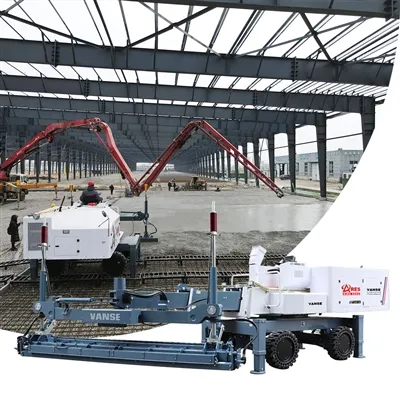
As a key equipment in modern floor construction, concrete laser leveling machines are widely used in large-area floor construction (such as industrial plants, logistics storage centers, large supermarkets, parking lots, etc.) due to their high efficiency and high precision. The following is a detailed analysis from the aspects of application advantages, core technology, construction process, applicable scenarios and precautions: Compared with traditional manual leveling (such as scraping with a ruler, vibrating with a vibrating rod) or small mechanical operations, concrete laser leveling machines show significant advantages in large-area construction: 1. Construction efficiency is greatly improved In large-area floor construction, concrete laser leveling machines can achieve continuous operation, and the average daily construction area of a single device can reach 800-2000㎡ (depending on the equipment model and concrete supply speed), which is 5-10 times the efficiency of manual construction. For example, a 100,000㎡ logistics warehouse floor can shorten the construction period by more than 30% and reduce labor costs by 40%-60% by using a concrete laser leveling machine. 2. Higher flatness and precision The concrete laser leveler forms a horizontal reference plane through the laser transmitter, combined with real-time sensor detection and automatic adjustment of the hydraulic system, which can control the flatness error of the floor within ±3mm/2m (far exceeding the ±5-10mm standard of traditional processes), meeting the high-precision requirements for large-area floors in the "Concrete Structure Engineering Construction Quality Acceptance Code", and is especially suitable for industrial floors that are sensitive to flatness (such as precision equipment workshops). 3. Reduce the risk of concrete cracking The integrated vibration system of the equipment (the spacing between the vibration rods is usually 20-30cm) can vibrate the concrete evenly, with a depth of 30-50cm, which can effectively discharge bubbles, reduce honeycomb surface, and avoid strength differences caused by uneven manual vibration. In addition, efficient construction can shorten the concrete pouring interval, reduce cold joints caused by segmented construction, and improve the integrity of the floor. 4. Reduce manual dependence and labor intensity Large-area floor construction requires a lot of manual cooperation (such as paving, leveling, and vibrating), while the laser leveling machine only needs 1-2 operators to cooperate with auxiliary workers (responsible for laying and edge processing) to complete the work, reducing the dependence on skilled workers and avoiding the labor intensity of long-term bending over. 1. Laser positioning system – The laser transmitter can form a 360° horizontal reference plane (covering a radius of 50-100m) above the construction area, which is not affected by the ups and downs of the ground, ensuring the overall horizontal consistency of large-area construction (traditional rulers can only ensure local flatness and are prone to cumulative errors). – Some high-end equipment is equipped with dual laser systems or laser radars, which can cope with complex environments (such as strong light, obstacles) and reduce signal interference. 2. Automatic control system The equipment detects the deviation between the concrete surface height and the reference surface in real time through sensors (response speed up to 0.1 seconds), and automatically adjusts the lifting and lowering of the scraper and vibrating mechanism to achieve "detection-adjustment-operation" closed-loop control to ensure uniform flatness at every location in large-scale construction. 3. High-efficiency vibration and paving mechanism – The frequency of the vibrating rod is adjustable (usually 3000-6000 times/minute), which can be adjusted according to the slump of concrete to ensure deep vibration and compaction; – The scraper width is mostly 2-4m, and the single paving area is large. With the equipment travel speed (adjustable from 0-10m/min), continuous and uniform paving is achieved. 1. Preliminary preparation – Base treatment: clean up the base debris and water accumulation, repair potholes, and ensure that the base flatness error is ≤5cm (use milling machine if necessary); – Laser system calibration: set the height of the laser transmitter according to the design elevation, and debug the matching degree of the equipment sensor and the reference surface; – Concrete preparation: Mix concrete according to the designed ratio (the slump is usually 120-200mm, and continuous supply is required to avoid construction interruption). 2. Concrete spreading and leveling – Spreading: Use a pump truck or a forklift to unload the concrete to the construction area, and manually level it initially (the thickness is slightly higher than the design elevation by 5-10cm); – Laser leveling: The equipment travels at a uniform speed in the longitudinal or transverse direction, the scraper scrapes the concrete surface, and the vibrator vibrates synchronously; if the area is too large, use the "block skipping method" construction (each block area ≤200㎡, leaving expansion joints) to avoid concrete shrinkage and cracking. 3. Subsequent treatment – Slurry raising and polishing: 1-2 hours after leveling (before the initial setting of concrete), use a polishing machine to raise the slurry and finish the surface (can be used in conjunction with the subsequent process equipment of the laser leveling machine, such as a four-disc polishing machine); – Maintenance: Cover with film or sprinkle water for maintenance, the maintenance period is ≥7 days to avoid surface cracking. – Industrial plant floor: such as automobile factories, electronic workshops, etc., which have high requirements for flatness (must meet the requirements of equipment installation and forklift driving) and strength, and laser leveling can reduce ground settlement and wear; – Logistics warehousing floor: The floor of large warehouses and distribution centers needs to withstand the rolling of heavy shelves and forklifts. The high precision of laser leveling can avoid the tilting of cargo stacking and the bumping of forklifts; – Transportation hub floor: such as airport aprons, high-speed railway station squares, etc., which have large areas and need to withstand vehicle loads for a long time, and require uniform overall strength of the floor; – Commercial and public building floor: such as large shopping malls and exhibition centers, which have high requirements for the aesthetics of the floor (flatness affects the subsequent epoxy and floor tile laying), and laser leveling can reduce the rework of later decoration. 1. Environmental adaptability – Strong light or rainy days may interfere with the laser signal, so a rain shelter or anti-interference laser system is required; – When the wind force is ≥ level 5, the laser transmitter may deviate, and construction needs to be suspended or the transmitter bracket needs to be reinforced. 2. Concrete quality control – The slump of concrete needs to be stable (fluctuation range ≤ 20mm), otherwise it is easy to cause sand or cracking on the surface after leveling; – Avoid interruption of concrete supply, otherwise cold joints will be formed, affecting the integrity of the floor. 3. Equipment operation and maintenance – The operator needs to be trained and familiar with laser system calibration and emergency handling (such as manual shutdown when the signal is lost); – Regularly clean the concrete residue on the vibrator and scraper to avoid affecting the accuracy of the equipment. 4. Cost consideration The purchase or rental cost of laser leveling equipment is relatively high (about 100,000-300,000 yuan for domestic equipment and about 500,000-1,000,000 yuan for imported equipment), but for large-scale construction of more than 10,000 square meters, the cost savings (labor and construction period) brought by its efficiency improvement are far higher than the equipment investment. The concrete laser leveling machine solves the pain points of "low efficiency, poor precision, and strong dependence on manual labor" in large-area floor construction through "laser reference + automatic control" technology, and has become the mainstream solution for modern floor construction. With the intelligent upgrade (such as unmanned driving and BIM technology integration), its application in large-area floor will be more efficient and more accurate, further promoting the development of floor construction towards industrialization and standardization. However, it is necessary to pay attention to the selection of equipment models in combination with scene requirements and strictly control the construction process to maximize its advantages. Click the below to jump immediately!!! ARMOUR JOINT CONCRETE LEVELING MACHINE LIGHT TOWER POWER TROWEL SLIPFORM MACHINE STEEL FIBER TOPPING SPREADER TRACKED MINI DUMPER