Technical Knowledge
The good choice to improve efficiency, the most cost-effective concrete laser leveling machine
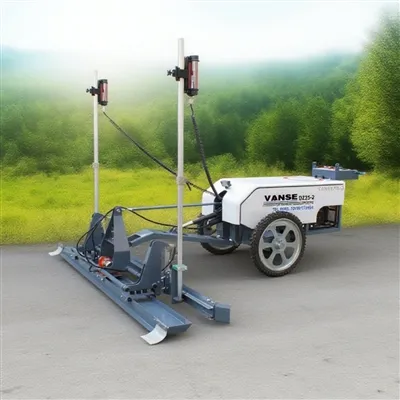
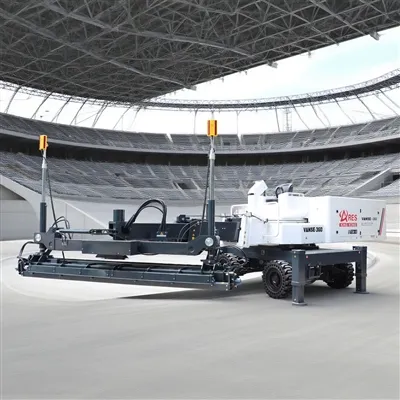
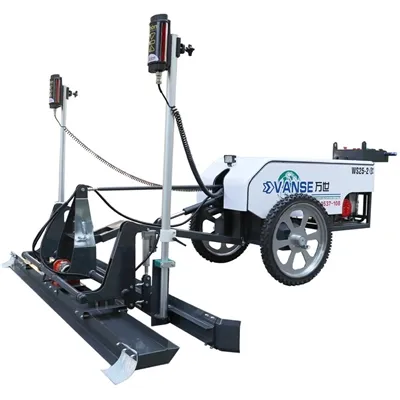
With the continuous development of the world economy and the continuous increase of the world's population, the construction industry is also booming. The technical level of the construction industry continues to improve. Take floor construction for example! In the past, our floors may have been finished manually, but now laser leveling machines have appeared. It is completely suitable for occasions that could only be handled manually. However, with the rapid development of the economy, there are more and more such machines, so that people do not know how to choose them. So how do we choose a cost-effective machine?
It should not be difficult for us to know that there is a concrete laser leveling machine used for large-area floor construction, so we first need a machine with a small flatness error to complete the project to avoid major changes in the entire project due to a small error. So the second question is, how long will it take us to complete such a large-area project? Therefore, we have to choose a machine with a large workload. For example, Aolide has a small machine that can complete an area of more than 1,500 square meters in just half a day. It is a good choice in this regard. Finally, it’s cost-effectiveness. Many machines are high-priced but low-profile equipment, which costs a lot of money.
Well, according to my experience, when constructing a building and watching their workers complete the construction bit by bit, using a small laser leveling machine, the entire project is very beautiful. . Although this small machine has a small body and head, it does have a great effect. Therefore, this type of small machinery is very popular on the market now, and it can also be recycled, recycled and disassembled to meet individual needs.
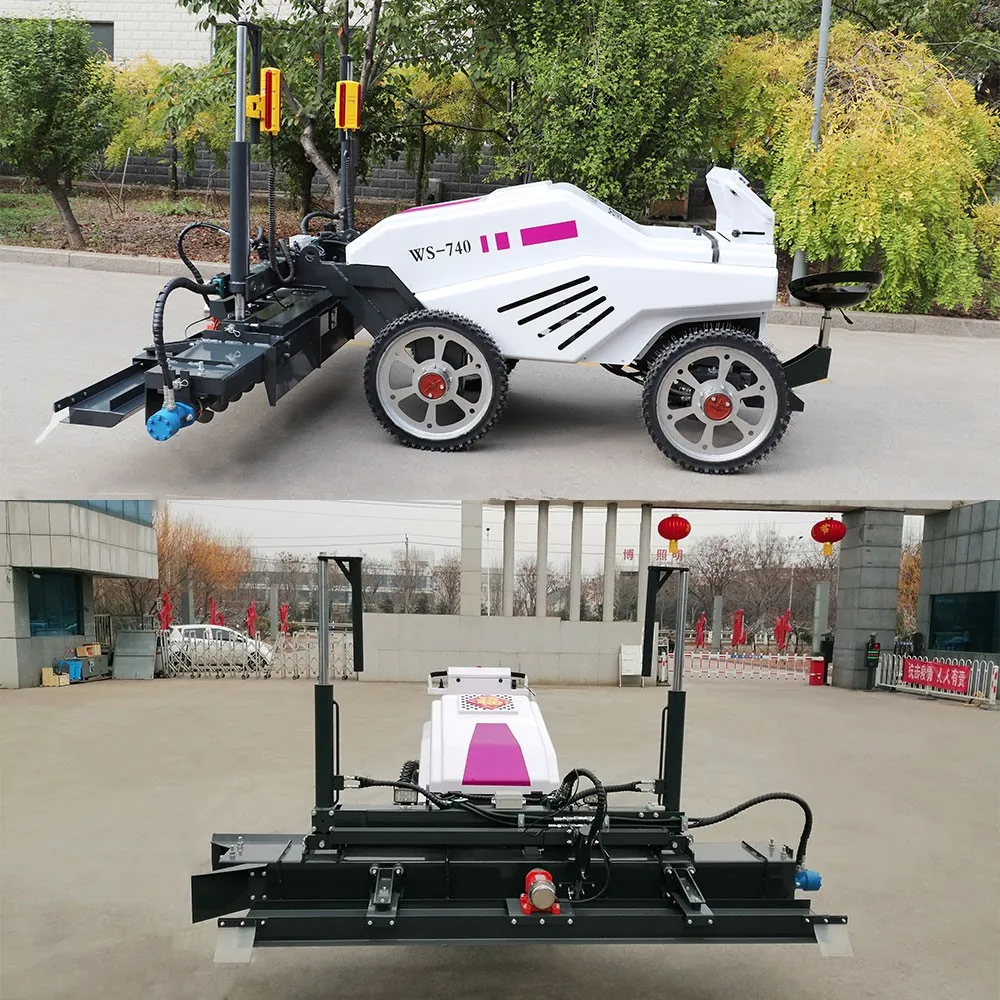
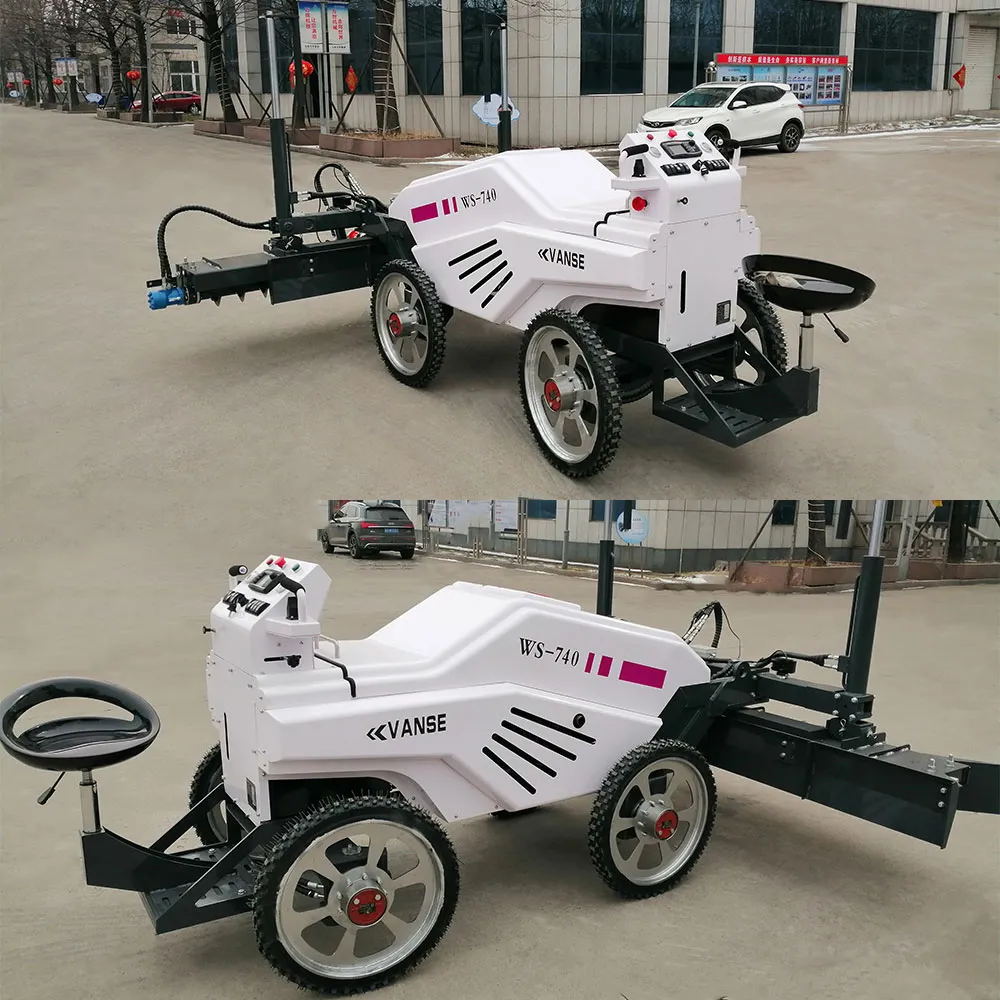
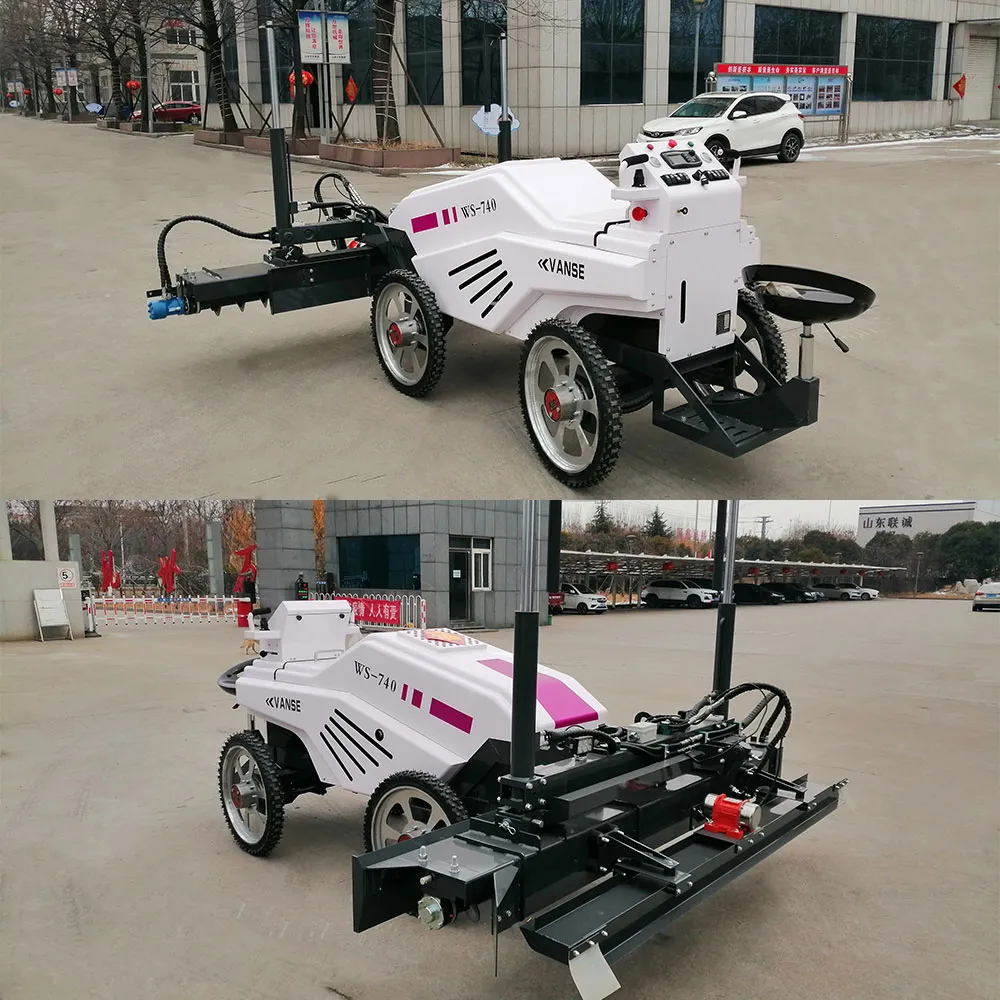
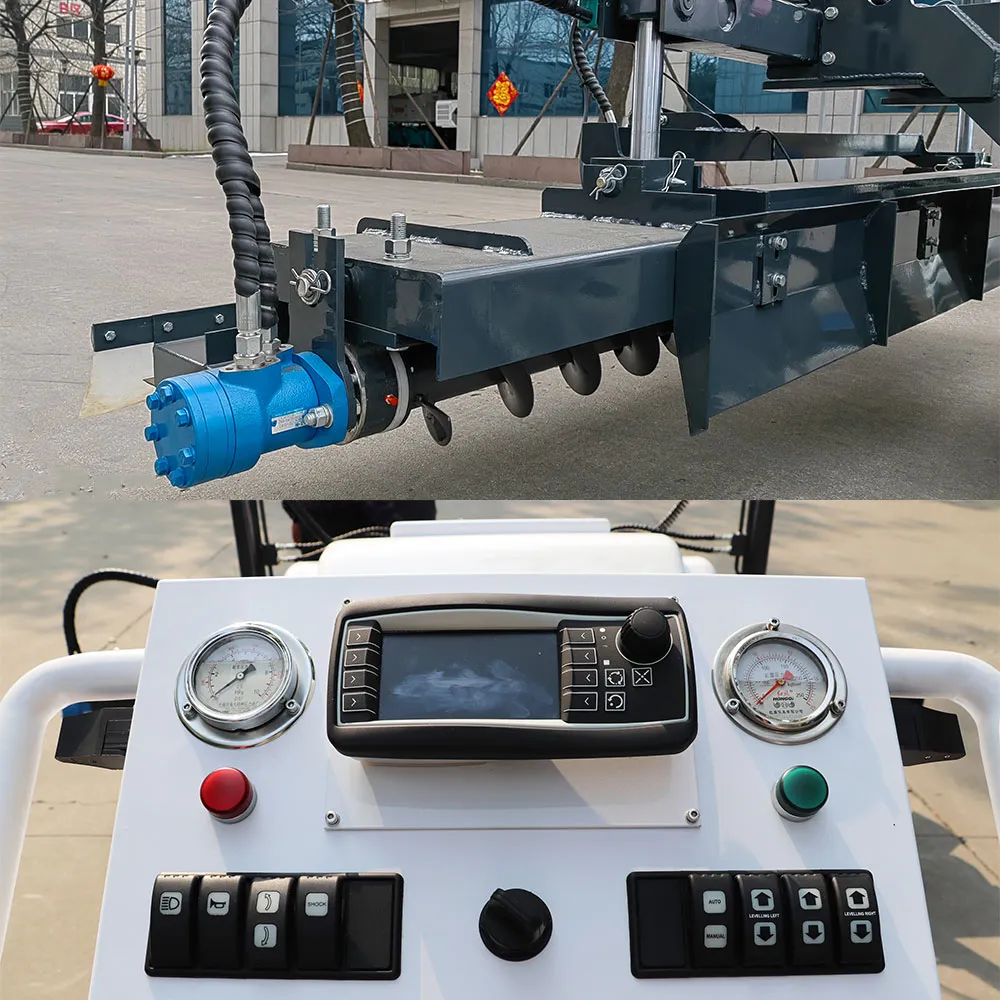
Thanks to All the Friends Who Support and Trust Shandong Vanse Machinery Technology Co., Ltd.
If you want to know more about Shandong Vanse Machinery Technology Co., Ltd. or have any questions, please feel free to contact us:
Our Factory
Shandong Vanse Machinery Technology Co., Ltd.








Share this article

About the Author: Shandong Vanse Machinery Technology Co., Ltd.
Shandong Vanse Machinery Technology Co., Ltd. is a high-tech manufacturer specializing in concrete construction machinery, including laser screeds and related equipment. The company integrates R&D, production, and global sales, with products exported to over 60 countries and widely used in infrastructure projects worldwide.
Previous Post
Next Post
Related Articles
You Might Also Like
How do the concrete laser leveling machines improve the flatness?
The ability of the concrete laser leveler to improve flatness is its core advantage. It fundamentally changes the traditional way of concrete leveling by combining modern laser technology, hydraulic systems and precision mechanical control. To improve the smoothness of construction,Equipment principles, pre-construction preparation, construction process control and post-construction maintenanceThe following is a detailed explanation of the key measures and principles: Erect alaser transmitter, it will produce a very thin, constantly rotating laser plane (360°). This laser plane is the entire field. Absolute horizontal reference, its accuracy is very high (usually up to ±1mm/10m). On the leveling machineLaser receiver, This laser signal will be captured in real time. The receiver transmits the signal to the leveler in real time.Vehicle control system (computer). The control system compares the actual height received with the preset design elevation and calculates the height difference within milliseconds. The control system immediately passes the calculated dropHydraulic valvesdrive. Hydraulic cylinder, to precisely adjust the height of the scraper. This process is Continuous automatic, the machine is always leveling dynamically and in real time, replacing reliance on human judgment and manual operation and eliminating human errors. Foundation treatment: The compaction and smoothness of the base layer (usually crushed stone or stabilized soil) are crucial. While a laser machine can compensate for minor undulations in the base layer, large undulations can significantly impact the concrete usage and overall quality. The base layer should be evenly compacted with no noticeable bumps or indentations. Laser transmitter installation: The laser transmitter must be firmly installed in a place with minimal interference from construction. Use a precise level to ensure it is absolutely level. Input and verification of elevation: Accurately input the design elevation into the control system. Before construction, the site should be tested at multiple points (especially corners and center) withLaser receiving poleVerify the accuracy of the laser signal to ensure that the entire construction surface is within the effective laser scanning range. Formwork (formwork) control: The top surface elevation and rigidity of the template must meet the requirements. Large errors in template elevation or deformation during pouring will directly affect the operating benchmark of the laser leveling machine. Slump: This is a key metric. The slump of each truckload of concrete must be uniform. Excessive slump variation can lead to varying degrees of aggregate segregation after paving, with some areas being too thin and others too dry. Laser leveling cannot effectively treat this uniformly, resulting in poor flatness after hardening. The ideal slump should be determined based on the floor thickness and reinforcement. Generally, a slump of 140-160mm is recommended for pumped concrete. Adequate concrete supply: Ensure the continuous supply of concrete to avoid the situation where the first poured concrete has initially set due to long waiting time, resulting in cold joints between the concrete and the later poured concrete, thus affecting the overall flatness. Paving thickness: The initial paving concrete material should be 2-3 cm higher than the design elevation to leave operating margin for the leveling machine. Routing method: The operator should be experienced and control the leveling machine to move forward smoothly and at a constant speed, avoiding sudden stops and sudden movements. The paths of adjacent milling discs (scrapers) should overlap to avoid missing parts. Bleeding water treatment: If the concrete bleeds severely, the surface water should be scraped off in time before leveling, otherwise a weak layer will be formed on the surface, affecting the final surface strength and flatness. Timely grinding (milling): For floors with ultra-high flatness requirements (such as ultra-flat floors), after the laser leveling machine completes the operation and the concrete reaches the initial setting (people step on it and there is a footprint about 3-5mm deep), it will be used. Double disc driving trowel. Perform overall grinding (milling). This step can eliminate the tiny marks left by the laser leveling machine scraper and the unevenness caused by individual aggregates. It is a key step in achieving extremely high flatness. Slit: Expansion joints must be cut in time within the specified time (when the concrete strength reaches 25-30% of the design strength) to avoid irregular cracking that damages the flatness. Maintenance: Use plastic film to fully cover or spray curing agent to provide sufficient moisturizing maintenance to prevent shrinkage cracks and peeling due to rapid water loss on the surface, there by protecting the flatness that has been achieved. Characteristic Concrete laser leveling machine Traditional manual leveling Benchmark Fixed absolute laser plane (precise) Moving channel steel, rulers, or workers' sight lines (prone to error accumulation) Control method Computer real-time calculation, automatic hydraulic adjustment (intelligent, continuous) Human judgment based on experience and manual operation (subjective, intermittent) Flatness Very high, can reach±2mm within 2 meters Even higher Low, usually only reach4-5mm/2m Efficiency Extremely high, 10-20 times that of manual labor Low, depends on the number and skill of workers Artificial Dependency Low, 1 operator and a few assistants High, requires a large number of skilled workers In short, to improve the flatness of the concrete laser leveling machine, it must be recognized that it is a systematic project: Relying on its high-tech "brain" (control system) and "eyes" (laser system) is a prerequisite, but the final effect also depends on a qualified "foundation" (base and formwork), uniform and stable "ingredients" (concrete), standardized "cooking techniques" (operating technology) and proper "post-processing" (polishing and maintenance).Only when every link is done well can the highest standard of flat floor be produced.Standard use of concrete laser leveling machine
Concrete laser leveling are core equipment for modern, large-scale floor construction. Their proper use directly impacts the flatness, levelness, and overall construction quality of the floor. The following details four aspects: construction preparation, operating procedures, precautions, and post-construction maintenance. Proper preparation is half the battle for a successful construction project. Any negligence during this stage can lead to construction interruptions or quality defects. Compaction: The foundation base (usually a gravel or lime soil layer) must be fully compacted to prevent future settlement. Flatness: The base must be initially leveled, with minimal elevation deviation to minimize concrete waste. Cleaning and Wetting: Clean the base to ensure it is free of debris and loose dust. Before pouring concrete, the base should be moderately moistened (but not with exposed water) to prevent it from absorbing moisture from the concrete too quickly. The top elevation of the formwork must be consistent with the designed floor elevation. The formwork must be strong and stable, able to withstand the weight and vibration of the leveling and prevent deformation. The formwork must be supported straight and the joints tight. Establishing a benchmark network: Set up stable benchmark points outside the construction area according to the construction drawings. Mount the laser transmitter in the center or at a high point within the construction area, ensuring its field of view covers the entire work surface and is unobstructed. Adjust the laser transmitter to its level and design elevation. This is the key to the accuracy of the entire construction process and must be carefully calibrated by a dedicated person. Secure the laser transmitter securely to prevent movement due to vibration or impact during construction. Install protective equipment if necessary. Mix Proportion: The slump of concrete is crucial, generally recommended to be between 140-180mm. Excessive slump results in excessive fluidity, making it difficult for the laser leveling to operate; too little slump results in poor fluidity and difficulty leveling. Aggregate: The maximum aggregate particle size should be minimal (usually no larger than 25mm). Supply: Ensure a continuous supply of concrete to avoid cold joints during construction. Fuel/Battery: Check the leveling machine's fuel or battery level. Cutter Head Inspection: Check the leveling blade (cutter head) for wear and replace if necessary. Sensitivity Calibration: Start the leveling machine and check whether its laser receiver is receiving signals properly and raising and lowering the machine according to the laser plane. Perform lift and lowering tests in both manual and automatic modes to ensure sensitive and accurate response. The concrete truck unloads the material at the construction site. Use a large rake or small excavator to initially spread the concrete to the approximate height. The pile should be slightly higher than the designed elevation (approximately 3-5 cm higher). Place the laser leveling machine astride a pre-installed formwork or on pre-paved concrete. Lower the leveling blade until it contacts the concrete surface. Turn on the laser receiver to confirm it is receiving the laser signal. The machine will then automatically adjust the blade to the precise elevation set by the laser plane. Select a mode: There are usually two modes: automatic and manual. In automatic mode, the machine automatically controls the scraper height based on the laser plane; in manual mode, the operator manually controls it. Start leveling: The scraper at the front removes any raised concrete and fills any low spots. Simultaneously, a high-frequency vibrating plate behind the leveling machine vibrates, compacts, and raises the concrete. The vibration frequency should be adjusted according to the concrete's fluidity. Travel Path: An overlapping travel path is typically used, meaning the next travel overlaps the previous travel path by approximately 10-20 cm to ensure no gaps are missed. Operator Coordination: The operator must follow the machine and monitor the concrete's condition. If any areas are short of concrete, they should be replenished manually. Excessive material should be removed promptly to avoid affecting the levelinging effect. Corners and edges where the laser leveling cannot reach require manual levelinging using a scraper (rebar) against the formwork. The level should be aligned with the machine-leveled area. For very large areas, the work should be divided into grids and constructed sequentially. The interval between adjacent grids should be controlled before the concrete begins to set. Daily Calibration: The laser transmitter and leveling machine's measurement system must be recalibrated before each day's work. Preventing Interference: Avoid frequent movement of people or equipment in the laser path, which could interfere with the signal. Dedicated Supervision: Assign a dedicated person to supervise the laser transmitter to prevent it from being disturbed. Strictly control slump and inspect each load. Substandard concrete will be rejected. Ensure the continuity of concrete pouring to avoid cold joints. Operators must undergo professional training and hold a license. Workers on site must wear safety equipment, especially insulated shoes, to prevent electric shock and concrete corrosion and injuries to the feet. Pay attention to cables around the equipment to prevent them from being crushed. Strong winds can affect laser signal stability, so construction should be conducted with caution or suspended. High temperatures and strong winds can accelerate moisture evaporation from the concrete surface, so timely maintenance is required to prevent cracking. After each use, the leveling must be cleaned immediately and thoroughly, especially on the scraper, vibrating plate, travel wheels, and sensors. Solidified concrete can damage the equipment and affect accuracy during the next use. When flushing, avoid direct high-pressure water jets onto delicate components such as bearings, motors, and laser receivers. Inspection and Maintenance: Regularly lubricate and maintain the engine, hydraulic system, and vibrating bearings according to the manufacturer's instructions. Check the scraper for wear and replace or rotate it promptly. Store the equipment in a dry, level area. Stow the outriggers and reduce tire pressure. Prevent rust on exposed metal parts. Proper use of a concrete laser leveling is a systematic process, requiring meticulous preparation, precise operation, strict material control, and thorough maintenance. Following these guidelines not only significantly improves floor construction quality and efficiency (flatness can reach over 3mm/3m), but also effectively reduces labor costs and minimizes material waste, making it an indispensable process in modern floor construction. Note: The parameters provided in this document are for reference only and are not mandatory. Due to differences in technical characteristics between different brands and models of laser levelers, please consult the manufacturer for a suitable solution before actual operation. This reference document assumes no responsibility for any issues arising from failure to follow the manufacturer's instructions.Summer maintenance tips for hybrid laser leveling machines
In the hot summer, the construction of concrete laser leveling machines has not stopped. The high temperature construction environment in summer is a heavy test for engineering machinery and equipment such as concrete laser leveling machines. Therefore, it is very important to do a good job of daily maintenance of laser leveling machines in summer. Today, the editor of Shandong Vanse will explain to you some construction precautions for concrete laser leveling machines in summer for your reference. 1. In summer construction, we must first prevent the engine from overheating. Under normal circumstances, the engine temperature should not exceed 95°. If the temperature is too high, we should choose a relatively cool area to shut down and cool down. At the same time, we can lift the engine hood for ventilation and heat dissipation. 2. The amount of cooling water should be detected in time. When the water radiator reaches 100°, do not rush to add cooling water. Instead, we should shut down the engine immediately to cool down the engine at idle speed, and then add coolant. 3. The construction temperature in summer is high. We should check the tire pressure and tire temperature frequently. If the tire temperature is too high, we should shut down the engine in time and place it in a cool place to cool down. Remember to use the wrong method of deflation or pouring cold water to cool down. 4. Check the battery level frequently, add distilled water in time, dredge the vents, pay attention to the density of the electrolyte, and maintain a good charging state. 5. Prevent engine explosion. Before entering the summer, the carbon deposits in the combustion chamber, valve top and other parts should be thoroughly removed to maintain good heat dissipation and normal compression ratio; and the fuel supply advance angle should be checked and adjusted to prevent engine explosion. 6. Check the temperature of hydraulic oil and hydraulic transmission oil frequently. If the temperature is too high, stop the machine for a rest, and never exceed high temperature operation. In short, engineering machinery such as concrete laser leveling machines are subjected to the test of long-term continuous operation during summer construction, and are also affected by high temperature environments. Therefore, summer construction must pay attention to the above conditions, and regular inspections and maintenance work must be carried out regularly, which is not only related to the service life of the concrete machine leveling machine, but also to the construction hidden dangers and the smoothness of the concrete laser leveling machine at work.