Technical Knowledge
How to use concrete power trowel correctly? Please example
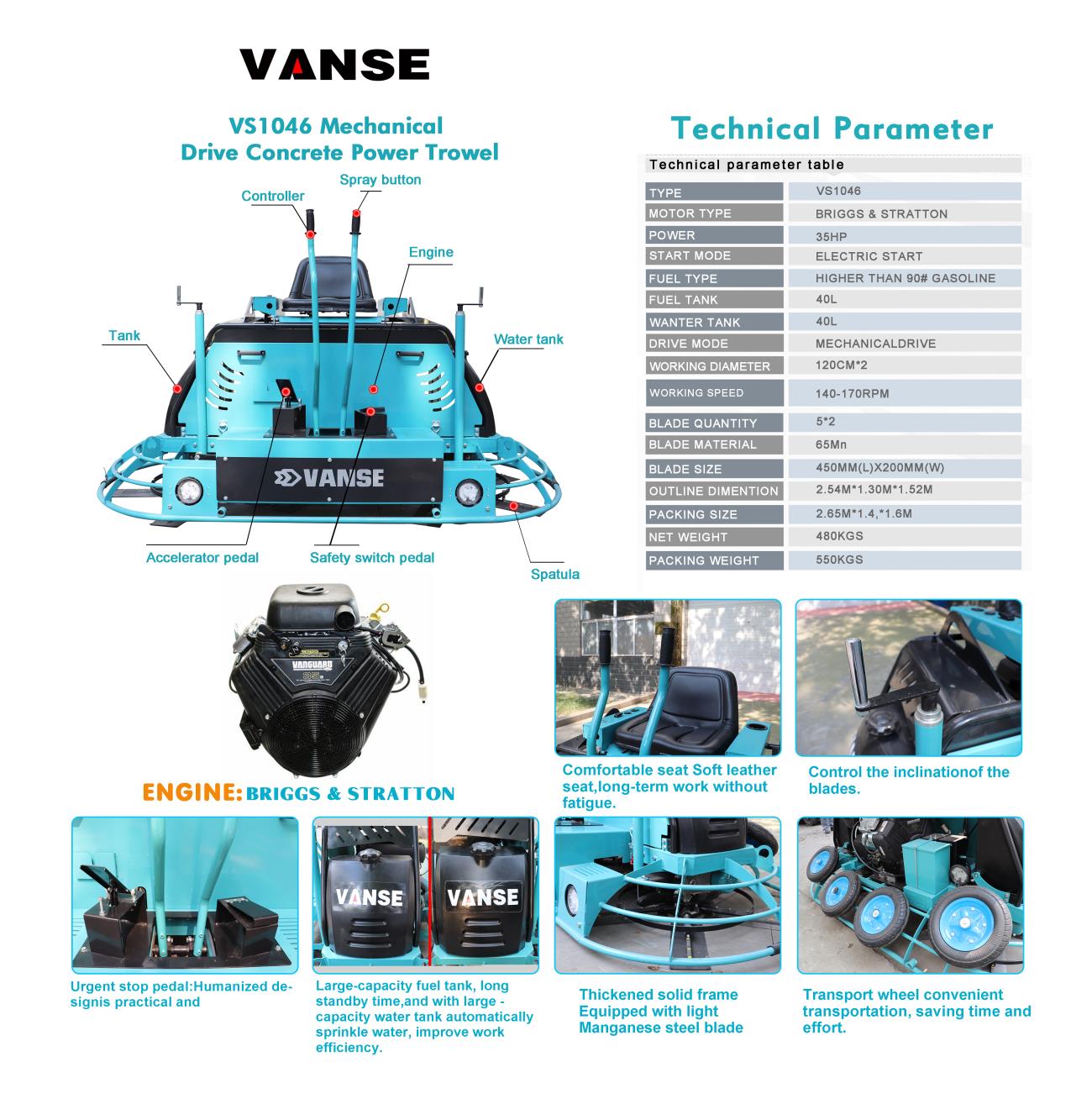
How to use a concrete trowel correctly
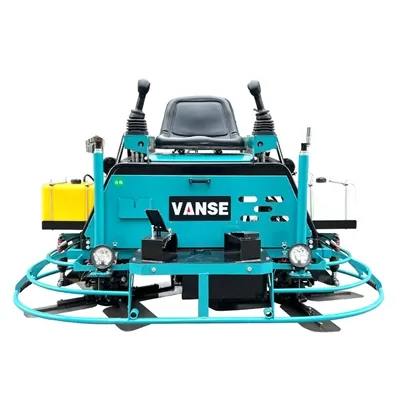
The concrete trowel is a construction machine widely used on concrete surfaces. Its main function is to smooth, compact and trim the concrete surface to improve its flatness and aesthetics. In order to ensure the correct use of the concrete trowel and extend its service life, here are some suggestions on how to use the concrete trowel correctly.
☀☀1. Preparation for machine operation
1.1 Check device status
Before operating the concrete trowel, you should check whether its various components are intact, including the motor, blades, bearings, etc. Ensure that all components are in good working order to ensure normal operation of the machine and construction efficiency
1.2 Determine the work area
Before operating the concrete trowel, you should identify the work area and make sure it is clean, flat, and free of debris. At the same time, the temperature of the work area should be ensured to be appropriate to avoid damage to the machine and concrete caused by excessively high or low temperatures.
☀☀2. Start operation
2.1 Adjust working mode
According to the specific conditions of the concrete surface, select the appropriate working mode, such as rough grinding, fine grinding, etc. After adjusting the working mode, check whether the machine parameters are correct, such as pressure, speed, etc.
2.2 Operating the trowel
When operating the concrete trowel, you should maintain a stable speed and pressure and avoid being too fast or too slow or too light or too heavy. At the same time, attention should be paid to observing the condition of the concrete surface and adjusting the working status of the machine in a timely manner. During operation, a safe distance should be maintained to avoid injuries from scratches or splashes by the blade.
☀☀3. Operation precautions
3.1 Maintain stable operation
When operating the compacted soil trowel, you should maintain a stable speed and pressure and avoid being too fast or too slow or too light or too heavy. This helps improve construction efficiency and quality and reduces damage to machines
3.2 Pay attention to safe distance
During operation, a safe distance should be maintained to avoid injuries from scratches or splashes by the blade. At the same time, attention should be paid to observing the surrounding environment to ensure construction safety.
☀☀4. Maintenance recommendations
4.1 Regular replacement of parts
In order to maintain the good condition and working efficiency of the concrete trowel, wearing parts and consumables such as blades, bearings, etc. should be replaced regularly. At the same time, attention should be paid to checking whether all parts of the machine are intact, and if damaged, they should be replaced in time.
4.2 Cleaning and lubrication
During use, the concrete trowel should be cleaned regularly to keep it clean and in good working order. At the same time, various parts of the machine should be lubricated regularly to reduce wear and extend service life.
4.3 Storage precautions
After use, the concrete trowel should be stored in a dry, ventilated place away from direct sunlight and humid environments. At the same time, all parts of the machine should be disassembled and stored to avoid damage caused by long-term exposure.
In short, the correct use of a concrete trowel requires certain skills and precautions. Only by following the correct operating methods and maintenance recommendations can the normal operation of the machine be ensured and construction efficiency and quality improved.
Thanks to All the Friends Who Support and Trust Shandong Vanse Machinery Technology Co., Ltd.
If you want to know more about Shandong Vanse Machinery Technology Co., Ltd. or have any questions, please feel free to contact us:
Our Factory
Shandong Vanse Machinery Technology Co., Ltd.








Share this article

About the Author: Shandong Vanse Machinery Technology Co., Ltd.
Shandong Vanse Machinery Technology Co., Ltd. is a high-tech manufacturer specializing in concrete construction machinery, including laser screeds and related equipment. The company integrates R&D, production, and global sales, with products exported to over 60 countries and widely used in infrastructure projects worldwide.
Previous Post
Next Post
Related Articles
You Might Also Like
Practical information | Answers to many questions about purchasing laser levelers
With the increasing demand for laser leveling machines, the number of leveling machine manufacturers and their types and models is also increasing. The increase in number has undoubtedly created conditions for users to choose, but at the same time, it has also brought a lot of troubles. How to choose a laser leveling machine with high cost performance from many laser leveling machines with varying quality and prices has become a challenge that every user has to face. In order to help everyone choose a laser leveling machine that suits their needs, our company has summarized some issues related to the purchase of leveling machines in detail, and now we will answer them one by one in detail. Answer: In the era of popularization of the Internet, we rely more and more on the Internet. For example, when we get information, we think of the Internet, and when we shop, we will choose to buy online. When buying a laser leveling machine, many users also want to order it online, mainly because they feel it is convenient. But is it reliable to order this kind of equipment online? This is undoubtedly a matter of concern to everyone. But in fact, it is not impossible to order online when purchasing this equipment, but you should keep your eyes open. It is better to choose the cash on delivery method, so that you can decide whether to pay for the purchase after judging the quality of the equipment, so that the quality of the purchased equipment will be more guaranteed. Answer: The second-hand market of laser levelers is very hot now, and there are many people buying them. But some people have expressed doubts, that is, is it cost-effective to buy such second-hand equipment? Judging from the current market situation, many people still trust second-hand laser levelers. They think that the price of second-hand is affordable, and many second-hand ones are even 80% to 90% new. It is a very cheap thing to buy them at a second-hand price. Therefore, it actually reveals a point, that is, second-hand ones can be bought, but the quality still depends on it. If it is just affordable, but the quality is not good, then this thing is not worth buying, so as to avoid too frequent and expensive repairs after buying it in the future. Answer: Which brand of laser leveler is better? This should be a question that every user will ask before buying. After all, everyone hopes that what they buy is better and they hope to worry less when using it. However, judging from the current market situation, many well-known brands of laser levelers are good, and they are doing well in terms of quality and after-sales service. So when choosing a brand, you will not go wrong if you choose those with relatively guaranteed reputation and popularity. You can use it with confidence, and you don't have to worry about too many problems when the equipment is working. The most important point is that the operation is efficient. Due to space limitations, we will discuss the issue of purchasing laser levelers with you here. Our company is a comprehensive enterprise integrating R&D, manufacturing, sales, and technical services. It is a professional manufacturer specializing in concrete laser levelers. If you choose to cooperate with us, we will wholeheartedly provide you with high-quality leveling equipment and complete after-sales service.How can maintenance standards for equipment used in concrete construction be improved?
In concrete construction, improving equipment maintenance standards requires focusing on the characteristics of core equipment (such as concrete laser screeds and trowels) and the demands of construction scenarios. A closed-loop system encompassing four key dimensions: system improvement, process refinement, technical empowerment, and personnel management, should be established to ensure the equipment maintains efficient and safe operation. The following is a specific implementation path: Concrete laser screeds (relying on laser systems, hydraulic devices, and screed blades) and trowels (focused on grinding discs, power systems, and clutches) have significantly different structures and vulnerable components. Therefore, it is necessary to establish maintenance systems tailored to each device and component to avoid a one-size-fits-all approach. Precision of equipment files Create an independent electronic file for each laser leveler and trowel machine to record key information: Basic Information: Equipment model (e.g., SXP-200 laser leveler, MG-36 trowel), serial number, purchase date, warranty period; Core Components: Laser leveler laser transmitter, receiver, and hydraulic pump models; Trowel disc material (diamond/alloy), motor power, and clutch brand; Maintenance History: Date of each maintenance/repair, component replacement records, and cause of failure (e.g., laser receiver interference with dust, trowel disc wear). Quantified Tiered Maintenance Standards The three-level maintenance system, "daily – regular – seasonal", clarifies the specific operating requirements for the two types of equipment to avoid ambiguity: Maintenance Level Period Core Requirements for Concrete Laser Leveling Machines Key Requirements for Trowel Machines Daily Maintenance Daily before and after construction 1. Clean the laser transmitter/receiver lens with a dust-free cloth (to avoid dust that could affect accuracy); 1. Clean any remaining concrete from the grinding disc (use a scraper to remove it to prevent it from sticking after hardening). 2. Check the hydraulic oil tank oil level (must be above 2/3 of the scale line) and observe whether the oil is turbid; 2. Check the grinding disc mounting bolts for looseness (torque must comply with the manufacturer's instructions, e.g., 25 N·m). 3. Test the leveling blade for flatness and straighten if deformed. 3. Run the machine for one minute to listen for any unusual motor noises and ensure the clutch engages and disengages smoothly. Regular Maintenance Every 50 hours (or weekly) 1. Replace the hydraulic oil filter and refill with anti-wear hydraulic oil (must match the model, such as L-HM46); 1. Check the motor carbon brushes for wear (replace if the remaining length is less than 5 mm). 2. Calibrate the laser system: Use a standard ruler to ensure the leveling error is ≤ 2mm/2m; 2. Replace the grinding disc (when the grinding disc thickness is less than 10 mm, avoid uneven grinding discs that can cause sanding on the floor). 3. Lubricate the travel wheel bearings (fill with lithium-based grease, such as ZL-3). 3. Clean the electrical box and tighten the terminals to prevent concrete dust from causing a short circuit. Seasonal Maintenance Before construction in winter/summer 1. Winter: Replace with low-temperature hydraulic oil (such as L-HV32) and install an insulation cover on the laser system to prevent freezing due to low temperatures; 1. In winter: Check the cable insulation to prevent low-temperature cracking. 2. Summer: Clean the hydraulic system heat sink (use compressed air to remove dust) and check the motor cooling fan. 2. In summer: Apply high-temperature grease (such as ZL-4) to the motor bearings to prevent high-temperature seizures. Equipment failures often stem from overlooking minor issues. Maintenance should be integrated into the entire construction process, especially for precision-sensitive components on laser levelers and high-frequency wear components on trowels. Laser levelers: Prioritize checking the laser system's "effectiveness"-after powering on the machine, test the receiver's sensitivity using a calibration plate. If a "flashing signal" is detected, check the lens cleanliness or battery level (the laser transmitter battery must be fully charged to avoid power outages that could cause leveling errors). Also, check the hydraulic lines for leaks (focusing on the joints; if oil is present, replace the seals). Smoothing machines: Focus on testing the "power and clutch"-after starting, allow the machine to idle for 30 seconds to observe whether the grinding disc rotates smoothly (without eccentricity or wobble). When the clutch handle is pulled, the grinding disc should start and stop immediately. If there is a delay, adjust the clutch cable tension (too loose can cause the grinding disc to "slip," while too tight can burn the clutch plate). Stop the machine for inspection every two hours: Laser screeds should be inspected for stuck scrapers (concrete clumps can cause scraper deformation). Trowels should be inspected for grinding disc wear (if the disc edge appears jagged, the machine should be stopped and replaced to avoid scratches). Intensified inspections during extreme conditions: When pouring large volumes of concrete (ambient temperature > 35°C), check the laser screed hydraulic oil temperature every hour (if it exceeds 65°C, stop the machine and cool it down to prevent damage to the hydraulic pump). Trowels operating on rapidly hardening concrete surfaces should frequently check motor load (if the motor is overheating, reduce the operating speed to avoid overload and burnout). Laser screed machines: Use a high-pressure water jet (pressure ≤ 0.8 MPa to avoid damaging laser components) to rinse the concrete on the machine body, focusing on cleaning the scraper and travel wheels. The laser transmitter must be disassembled and stored separately (in a dry, dust-proof box to prevent moisture from getting on the lens). The hydraulic system must be run at no load for 5 minutes to expel air from the lines, then the power must be turned off. Troweling machines: First, scrape away any remaining concrete from the grinding disc, then use a wire brush to clean the gaps between the discs. Wipe the motor housing with a damp cloth (avoid direct water on the electrical components). Finally, coil the cables neatly and store them in a dry, well-ventilated area to avoid contact with sharp objects and damage. Traditional "rule-of-thumb" maintenance is prone to oversights, requiring the use of technology for more precise maintenance, especially for the core precision components of laser screed machines. Installation of intelligent monitoring equipment Laser levelers: Install a hydraulic oil temperature sensor and laser signal detector to collect real-time data and synchronize it to a mobile phone (e.g., via Bluetooth). When the oil temperature exceeds a threshold (e.g., 70°C) or the laser signal strength falls below a specified value (e.g., <80%), an alert is automatically sent to prevent manual inspections from missing information. Trowel machines: Install a current sensor on the motor to issue an alert when the motor load current exceeds the rated value (e.g., if the rated current of a 10A motor exceeds 12A), prompting a prompt to reduce operating intensity and prevent motor overload. Specialized tools ensure maintenance quality Laser levelers: Calibrate the laser system with a laser level (accuracy ±0.1mm). Replace hydraulic filters with a filter wrench (to avoid damaging the filter housing). Trowelers: Remove the grinding disc with a dedicated socket wrench (matching the disc bolt size, such as M12). Adjust the clutch cable with a cable tension gauge (ensure the tension meets the manufacturer's specifications, such as 50N). The core of equipment maintenance is people. Training, assessment, and responsibility division are essential to prevent equipment damage caused by improper operation. Layered training covering "operation – maintenance – emergency" Basic Training (Operator): Focuses on laser leveling machine "laser system protection" (avoid hitting the lens with hard objects) and trowel machine "grinding disc replacement specifications" (bolts must be tightened diagonally to prevent uneven wear). Advanced Training (Maintenance): In-depth explanation of the principles of the laser leveling machine hydraulic system (e.g., common hydraulic pump troubleshooting: loud noise may indicate oil contamination) and trowel machine motor maintenance (e.g., carbon brush replacement procedures). Emergency Training: Develop emergency response procedures for sudden failures (e.g., laser leveling machine hydraulic line rupture, trowel machine motor smoke) (immediately shut down the machine, disconnect the power supply, and replace with backup equipment). Assign responsibilities to individuals and establish a "maintenance assessment mechanism." Implementing an "equipment-to-personnel" responsibility system: Each laser leveler and trowel machine is assigned a dedicated operator and maintenance person, who sign and confirm the equipment records, clearly stating "operator, responsible for daily maintenance, and maintenance, responsible for regular inspections." Performance-linked: Equipment availability (target ≥ 95%) and downtime (target ≤ 1 hour/day) are incorporated into performance appraisals. If equipment malfunctions due to inadequate maintenance (e.g., laser receiver accuracy deviation due to dust not being cleaned) are reported, the relevant personnel will be held accountable. Long-term trouble-free equipment performance is rewarded. Through the above measures, a closed loop can be formed from the four dimensions of "system, process, technology, and personnel" to specifically solve the maintenance pain points of concrete laser leveling machines and trowel machines, and ultimately achieve the goals of reducing equipment failure rates, extending service life, and stabilizing construction quality. Note: The parameters provided in this document are for reference only and are not mandatory. Due to differences in technical characteristics between different brands and models of laser levelers, please consult the manufacturer for a suitable solution before actual operation. This reference document assumes no responsibility for any issues arising from failure to follow the manufacturer's instructions.How can it be judged whether the compaction effect of the concrete power trowel meets the quality standards?
– Tools and methods: Use a 2-meter ruler and a feeler gauge for measurement. Place the 2-meter ruler on the concrete surface so that it fits tightly against the ground, and then use the feeler gauge to measure the maximum gap between the ruler and the ground. For general industrial and civil building floors, the allowable flatness deviation is usually within 4-5 mm; for places with high precision requirements, such as electronic chip production workshops, precision instrument laboratories, etc., the flatness deviation requirement may be within 2-3 mm. If the measured gap is within the specified range, it means that the compaction effect of the trowel meets the quality standards in terms of flatness. – Visual inspection to assist judgment: In addition to tool measurement, it is also important to observe whether the ground has obvious waves, potholes or bulges by naked eyes. Stand at a certain distance (such as 5-10 meters) to observe the overall effect of the ground to see whether the light is reflected evenly on the ground. If the ground reflects light evenly without obvious changes in light and shadow, it usually means that the ground is relatively flat and the compaction effect is good. – Rebound hammer test: Use a rebound hammer to test the concrete surface. The rebound hammer hits the concrete surface and infers the strength of the concrete based on the rebound value, which indirectly reflects the density. During the test, multiple test points should be selected on the concrete surface (generally no less than 3 points per 10 square meters) to calculate the average rebound value. Concrete of different strength grades has a corresponding standard range of rebound values. For example, the rebound value of C30 concrete is generally between 34 and 46. If the rebound value obtained by the test is within the standard range of concrete of the corresponding strength grade, it means that the concrete density is high and the compaction effect of the trowel is good. – Core sampling analysis: In some cases with extremely high quality requirements or disputes, the core sampling method can be used. Use professional core drilling equipment to take out core samples with a diameter of usually 100-150 mm in the concrete structure. Observe the appearance of the core sample, which should be uniform in texture and without obvious pores and stratification. Then send the core sample to the laboratory for compressive strength testing and porosity analysis. The compressive strength meets the design requirements and the porosity is low (generally no more than 5% – 8%, depending on the specific project requirements), indicating that the density of the concrete meets the quality standards and the compaction effect of the trowel machine is qualified. – Visual observation: Carefully observe the trowel traces on the concrete surface. The trowel traces should be uniform and continuous, without obvious depth or interruption. If the trowel traces are uniform, it means that the pressure applied by the trowel machine to the ground during work is uniform and the compaction effect is good. For example, after the construction of a large area of parking lot floor, the trowel traces on the entire floor should show a consistent texture, without local roughness or over-troweled areas. – Touch inspection: Touch the concrete surface with your hand to feel whether its smoothness and hardness are uniform. If the surface feels consistent and there is no local softness or over-hardness, it can also indicate to a certain extent that the compaction effect is uniform and meets the quality standards. – Test block test under the same curing conditions: During the concrete construction process, make test blocks that are cured under the same conditions as the actual construction concrete. At the specified age (such as 7 days, 28 days), the compressive strength of the test block is tested, and the test results are compared with the design strength grade. If the strength of the test block can reach or exceed the design strength according to the expected growth curve, it means that the compaction operation of the trowel machine has no adverse effect on the strength of the concrete, and the compaction effect meets the quality standards. – On-site rebound-core drilling comprehensive method evaluation: Combined with the rebound hammer test and core drilling sampling, the strength of the on-site concrete structure is comprehensively evaluated. The rebound hammer is used to quickly screen out areas that may be insufficient in strength, and then core drilling sampling is performed on these areas for verification. If the overall strength of the on-site concrete meets the design requirements, and the strength distribution in different areas is relatively uniform, it means that the compaction effect of the trowel machine is good and meets the quality standards.