Technical Knowledge
What should we pay attention to when maintaining concrete?

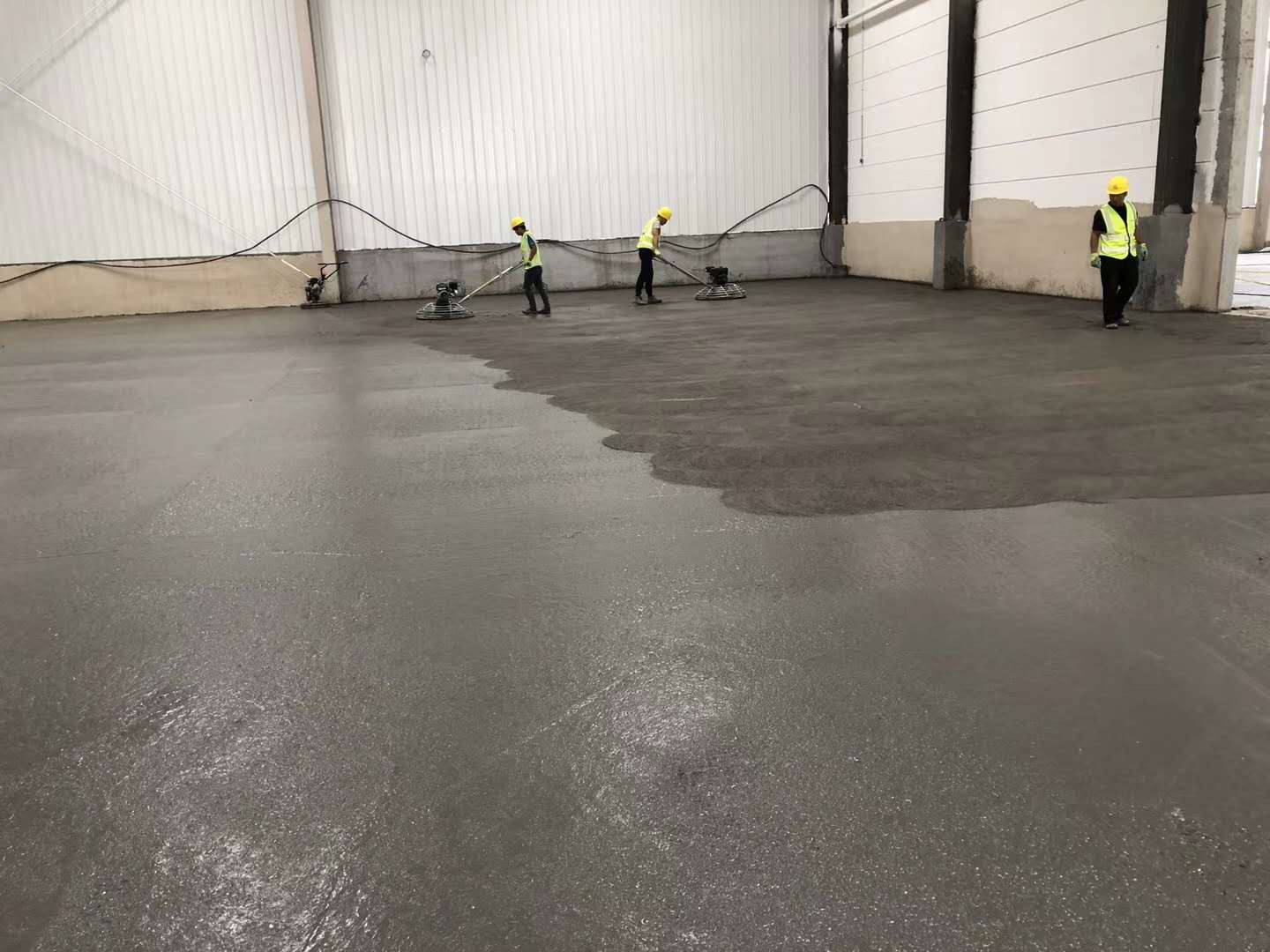
Concrete curing is a key link to ensure the quality of concrete. The following points need to be noted:
1. Maintain appropriate humidity and temperature: During concrete curing, appropriate humidity and temperature should be maintained to promote the hardening and strength development of the concrete. Excessively high temperature and leakage may cause concrete to crack or deform, while too low temperature and humidity may cause drying shrinkage cracks on the concrete surface. Therefore, appropriate moisturizing and heat preservation measures need to be taken according to specific maintenance conditions and requirements.
2. Avoid excessive exposure time: During the condensation curing period, the exposure time of the surface mix should be minimized, and the exposed surface of the concrete should be tightly covered in a timely manner to prevent surface moisture from evaporating. Before the concrete of the exposed surface protective layer is initially set, the covering should be rolled up, and the surface should be rubbed with a trowel at least twice to make it flat and then covered again. At this time, care should be taken that the covering should not directly contact the concrete surface until the concrete is finally set.
3. Appropriately increase the thickness of the protective layer: In order to increase the wear resistance and durability of concrete, the thickness of the protective layer can be appropriately increased. When pouring concrete, you can lay a layer of plastic film or wet cloth on the surface to keep the concrete surface moist and smooth. During the maintenance period, the thickness of the protective layer should be checked regularly to ensure that it meets the design requirements.
4. Control the construction temperature: During the concrete construction process, the construction temperature should be controlled to avoid excessively high or low temperatures affecting the quality of the concrete. During summer construction, measures should be taken to reduce the temperature of concrete entering the mold to avoid the phenomenon of "thermal bridge"; during construction in winter, measures should be taken to increase the temperature of concrete entering the mold to avoid the phenomenon of "cold bridge".
5. Regular inspection and maintenance: During the concrete curing period, the concrete structure should be inspected and maintained regularly to ensure its quality and safety. If cracks, deformation or other problems are found in the concrete structure, timely measures should be taken to repair and reinforce it.
In short, concrete curing is a key link to ensure the quality of concrete. It is necessary to pay attention to maintaining appropriate humidity and temperature, avoiding excessive exposure time, appropriately increasing the thickness of the protective layer, controlling construction temperature, and regular inspection and maintenance. Only in this way can we ensure that the strength and durability of the concrete structure meet the design requirements and provide a strong guarantee for the safety and quality of the construction project.
Thanks to All the Friends Who Support and Trust Shandong Vanse Machinery Technology Co., Ltd.
If you want to know more about Shandong Vanse Machinery Technology Co., Ltd. or have any questions, please feel free to contact us:
Our Factory
Shandong Vanse Machinery Technology Co., Ltd.








Share this article

About the Author: Shandong Vanse Machinery Technology Co., Ltd.
Shandong Vanse Machinery Technology Co., Ltd. is a high-tech manufacturer specializing in concrete construction machinery, including laser screeds and related equipment. The company integrates R&D, production, and global sales, with products exported to over 60 countries and widely used in infrastructure projects worldwide.
Previous Post
Next Post
Related Articles
You Might Also Like
Experience sharing on the daily maintenance and calibration of precision components such as laser transmitters and receivers of concrete laser leveling
The core of daily maintenance lies in "cleanliness, stability, power supply and inspection", with the aim of minimizing the occurrence of faults and extending the service life of equipment. Lens/glass cover: After the daily construction is completed, the dust and cement slurry mist on the surface must be gently wiped or blown off with special lens paper or a blowing balloon. It is strictly prohibited to wipe directly with rough items such as clothes or ordinary tissues to avoid scratching the coating. Body: After use, promptly remove the mud and dust on the surface of the body with a dry cloth. If there are stubborn stains, you can wipe them with a slightly damp cloth, but make sure that the moisture does not enter the gaps of the machine body. Tripod/stand: Keep the outrigger clean to prevent sand and mud from entering the telescopic joint, which may affect stability and height adjustment. Handling is crucial: During transportation, it must be placed back in a dedicated carrying box, which should be filled with shockproof foam. It is strictly prohibited to throw it randomly in the vehicle toolbox and let it collide with other tools. When setting up, ensure stability: When setting up on the construction site, make sure the tripod is supported on a solid and stable ground, away from vehicle passage channels and sources of severe vibration. Storage environment: For long-term storage, it should be placed in a cool, dry and dust-free environment, avoiding high temperature and high humidity to prevent aging of internal electronic components and lasers. Battery management Avoid over-discharging. When the battery level indicator light goes off, charge it in time. When not in use for a long time, a charge and discharge maintenance should be carried out every 1 to 2 months to maintain the battery's activity. It is also necessary to keep the surface of the sensor clean and free from mud coverage. Check whether the fixed seat is secure to prevent loosening due to vibration during the operation of the leveling. Be careful when retracting and lowering the receiver rod to avoid bending or hitting it. Daily inspection: Before construction, check all the cables connecting the laser receiver to the control box for any damage, indentations, breaks or loose joints. Damaged circuits can cause intermittent signals, which is a common reason for the leveling machine to "go crazy". Waterproof and oil-proof: Ensure that the connectors are clean and dry, and avoid immersion in cement slurry or oil stains. Keep the exterior of the control box clean to prevent dust from entering through the heat dissipation holes. Clean after turning off the machine to avoid short circuits. Calibration is the soul that ensures the accuracy of construction. It is recommended that calibration be carried out before each shift and before the commencement of key projects. Preparations before calibration Choose a relatively flat, stable area without strong vibration. Make sure the laser emitter is fully charged. Clean all related components. Step 1: Self-calibration (leveling) of the laser emitter This is the most crucial step, ensuring that the laser beam itself is a perfect horizontal reference plane. Rough leveling: Set up the tripod and use the bubble level on the tripod to roughly level the transmitter. Power-on self-check: Turn on the transmitter to enter the automatic leveling mode. Most modern lasers have this function. Wait for stability: Patiently wait for the device to automatically level itself (usually accompanied by a prompt sound or the indicator light stopping flashing). During this period, it is strictly forbidden to touch or move the tripod. Verify self-inspection results (Important!)" After the self-check is completed, manual verification is required. At about 5 meters and 15 meters away from the transmitter, set up a laser measuring rod or a receiving rod with scales. Rotate the laser emitter and record the height readings A1, A2 (at 5 meters) and B1, B2 (at 15 meters) of the laser beam on the measuring rod at two distance points respectively. Calculation and judgment: The difference between (A1-A2) and (B1-B2) should approach zero. According to the precision requirements of the equipment, the error is usually less than ±1mm. If the error is too large, it indicates that the self-check may be disturbed or there is a potential fault with the equipment. It is necessary to restart or contact after-sales service. Step Two: Linkage calibration of the leveling machine system This step is to ensure that the leveling machine can correctly identify and strictly implement the laser reference surface. Install the receiver: Install the laser receiver at the specified position on the mast of the leveler. Establish a reference: Let the laser beam shine on the middle position of the receiving rod. At this point, the elevation display on the control panel should be the "0" point or the middle value. High point and "low point" calibration: High point calibration: Slowly raise the receiving rod. When the laser beam moves to the very top of the receiver (the position where the signal is about to be lost), press the "High Point" or "+" calibration key on the control panel. The machine will record this position as the maximum height that "requires a shovel". Low point calibration: Slowly lower the receiving rod. When the laser beam moves to the bottom of the receiver, press the "Low point" or "-" calibration key. The machine will record this position as the limit depth that "requires lifting and shoveling". Verify the linkage accuracy Move the receiving rod back to the reference "0" position, and then move it up and down a few millimeters respectively (for example, +3mm, -3mm). Observe whether the display on the control panel changes accordingly and linearly, and at the same time listen to whether the response of the hydraulic system of the leveling machine is timely and accurate. Field test: Conduct a short-distance trial scrape on the prepared sand or low-grade concrete, and use a level or straightedge to check whether the flatness of the scrape meets the requirements. Troubleshooting: ① Check if the receiver is clean. ② Check all cable connection lines. ③ Check the battery power of the transmitter. ④ Is there any strong interference around (such as other laser equipment, direct strong sunlight)? Troubleshooting: The "high point" and "low point" Settings during calibration were reversed. Re-perform the linkage calibration. Investigation: ① The laser emitter was touched during the construction period. ② The self-check of the laser was not completed or inaccurate. ③ The tracks of the leveling machine were moving on a soft foundation, causing the machine body to tip over. ④ The calibration accuracy is insufficient and needs to be recalibrated. Troubleshooting: ① The ground where the equipment is set up is too soft or has excessive vibration. ② If the equipment exceeds the automatic compensation range, it needs to be roughly leveled again. ③ Internal equipment failure requires reporting for repair. Form a habit: Make "calibrate before work starts and clean after work ends" an unbreakable rule. Handle with care: Treat these precision components as you would a camera lens. Trust but not blindly believe: Even if the equipment has automatic functions, manual verification should be carried out regularly. Record file: Make simple records of the calibration records of the equipment and the problems that occur, which is convenient for tracking and analysis. Professional matters should be handled professionally: When encountering internal faults that cannot be resolved, do not disassemble them by yourself. Instead, contact professional maintenance personnel promptly. Through meticulous daily maintenance and meticulous precise calibration, your concrete laser leveling will surely become your most reliable "divine weapon" on the battlefield, creating an impeccable premium floor for you. Note: The parameters provided in this document are for reference only and are not mandatory. Due to differences in technical characteristics between different brands and models of laser levelers, please consult the manufacturer for a suitable solution before actual operation. This reference document assumes no responsibility for any issues arising from failure to follow the manufacturer's instructions.How to monitor the status of the concrete laser leveling machine in real time during the construction process?
To monitor the status of the concrete laser leveling in real time during the construction process, the following methods can be used: 1. Vibration sensor: Install a vibration sensor on the scraper or leveling beam of the concrete laser leveling machine to monitor the vibration status of the leveling machine in real time. If an abnormality is found, it may be dealt with immediately to ensure that the leveling machine is in good working condition. 2. Depth sensor: Install a depth sensor to monitor the flatness of the concrete surface in real time. The sensor can transmit data to the control system, and the operator can adjust the operating status of the leveler based on the data to ensure that the flatness of the concrete surface meets the requirements. 3. Machine control system: Through the machine control system, the operator can monitor various operating parameters of the leveling machine in real time, such as temperature, speed, working area, etc. The control system can automatically detect and diagnose abnormalities to ensure that the leveler is in good working order. 4. Sound and video monitoring system: Set up a sound and video monitoring system around the concrete laser leveling machine to monitor the operating status of the leveling machine and the surrounding environment in real time. By observing the monitoring screen, the operator can detect abnormal situations in time and handle them. 5. Remote monitoring system: Using the remote monitoring system, the operator can monitor the operating status of the leveling machine in real time away from the construction site. By transmitting data to the remote control center via wireless network, the operator can view and adjust the parameters of the leveling machine at any time. To sum up, real-time monitoring of the status of the concrete laser leveling requires a combination of methods. Through vibration sensors, depth sensors, machine control systems, sound and video monitoring systems, and remote monitoring systems, the operating status of the levelinging machine can be fully understood, abnormal situations can be detected and handled in a timely manner, and the construction process can be ensured to proceed smoothly.Which types of concrete admixtures can improve the plasticity of the concrete used for laser leveling construction?
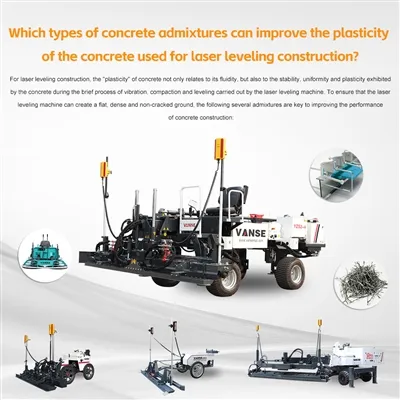
For laser leveling construction, the "plasticity" of concrete not only relates to its fluidity, but also to the stability, uniformity and plasticity exhibited by the concrete during the brief process of vibration, compaction and leveling carried out by the laser leveling machine. To ensure that the laser leveling machine can create a flat, dense and non-cracked ground, the following several admixtures are key to improving the performance of concrete construction: Type of admixture The core role of laser leveling in plasticity Applicable Scenarios and Advantages Key points to note Water reducer / High-efficiency water reducer Core role: While maintaining fluidity, significantly reduces the water-cement ratio, making the concrete slurry denser, more uniform, and more stable. It is the preferred choice for almost all laser-leveling of floors, especially for industrial floors that require high wear resistance and high strength. The dosage must be strictly controlled. Excessive dosage may cause the concrete to become too thick, thereby increasing the load on the leveling machine. Impact on construction: Reduces bleeding and segregation, allowing the surface of the laser leveling machine to immediately set concrete after vibration, facilitating surface finishing; at the same time, prevents "edge collapse" due to excessive softness after spreading, ensuring flatness. Retarding agent Core role: Delays the cement hydration reaction, prolonging the plastic state of the concrete. Large-scale and large-volume flooring construction, or construction under hot weather conditions. The dosage must be precisely adjusted according to the temperature and the construction speed. Excessive retardation will seriously affect the construction schedule. Impact on construction: Provides sufficient operating window periods for the laser leveling machine's spreading, vibrating, and repeated leveling, ensuring that the joints of large-area flooring can be perfectly integrated and eliminating cold joints. Air-entraining agent Core role: Introduces a large number of stable, tiny closed air bubbles into the concrete. For ground that requires freeze-thaw cycles (such as outdoor parking lots), or to address the construction challenges posed by high clay content in sand and gravel. It will slightly reduce the strength of the concrete. Special equipment is required to measure the air content and keep it within a reasonable range (usually 4% – 6%). Impact on construction: These bubbles are like "micro-rollers", significantly improving the cohesion and plasticity of the concrete, making the mixture softer and easier to level, and reducing bleeding and segregation. Adhesive agent / Viscosity regulator Core role: Increases the viscosity of the cement slurry and enhances its ability to encapsulate the aggregate. Used for preparing self-compacting concrete or pumped concrete, it prevents segregation during the vibration of the laser leveling machine, ensuring the uniformity of the concrete. It is often used in combination with high-efficiency water reducing agents to balance fluidity and anti-dewatering properties. In actual engineering projects, to achieve the best plastic effect, these additives are usually used in combination. A typical "golden combination" is: high-efficiency water reducer + retarder. This combination can ensure that the concrete has the excellent fluidity required for laser leveling (facilitating spreading), provide sufficient construction time (facilitating leveling), and ensure the strength and stability after hardening. If your construction environment is complex, such as during hot summer construction, or if the aggregate gradation you use is not ideal, you can consider adding air-entraining agent or tackifier to further optimize the workability of the concrete. Which additives are currently used in your concrete mix ratio? Or did you encounter specific plasticity problems during construction (such as poor fluidity, rapid setting, or easy bleeding)? Please tell me these details, and I can help you analyze how to optimize the combination of additives. Contact us NOW Note: The parameters provided in this document are for reference only and are not mandatory. Due to differences in technical characteristics between different brands and models of laser levelers, please consult the manufacturer for a suitable solution before actual operation. This reference document assumes no responsibility for any issues arising from failure to follow the manufacturer's instructions.