Technical Knowledge
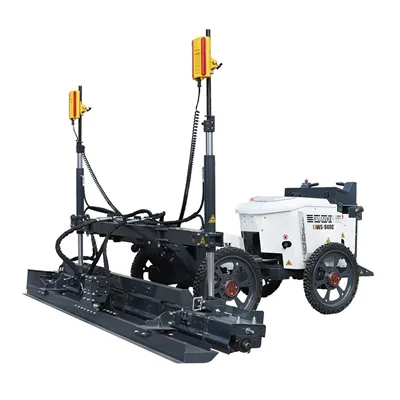
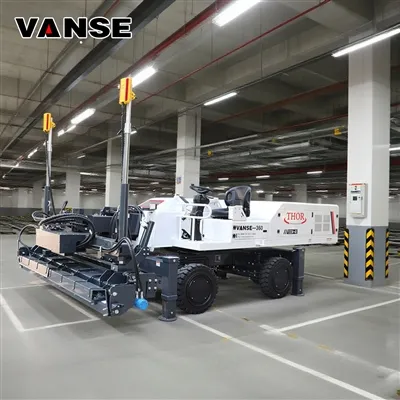
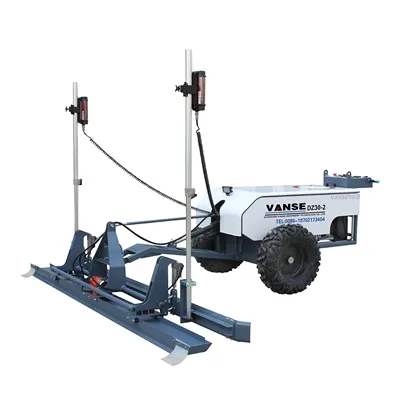
How does a concrete laser leveling improve the flatness?
Concrete laser levelings improve flatness by:
1. Utilize laser technology to ensure the flatness and thickness of the concrete surface by precisely controlling the position and height of the laser beam.
2. Automated control technology can realize continuous and automatic leveling operations and improve work efficiency.
3. When performing automatic leveling, there is an accurate reference plane. Generally, when the main focus is to control the height, the tightrope method is suitable; when the main focus is to control the thickness, the floating datum beam method is adopted. Generally, tightrope is used for the bottom layer, and floating datum beam method is used for the middle layer and surface layer.
4. The leveling machine has a vibration function, which can effectively compact the concrete material to the required thickness evenly, further improving the flatness.
5. Leveling machines are usually equipped with high-precision sensors and controllers that can monitor and adjust the flatness and height of the concrete surface in real time.
Therefore, through the above methods, the concrete laser leveling can effectively improve the flatness of the concrete surface, thereby improving the quality of stinging.

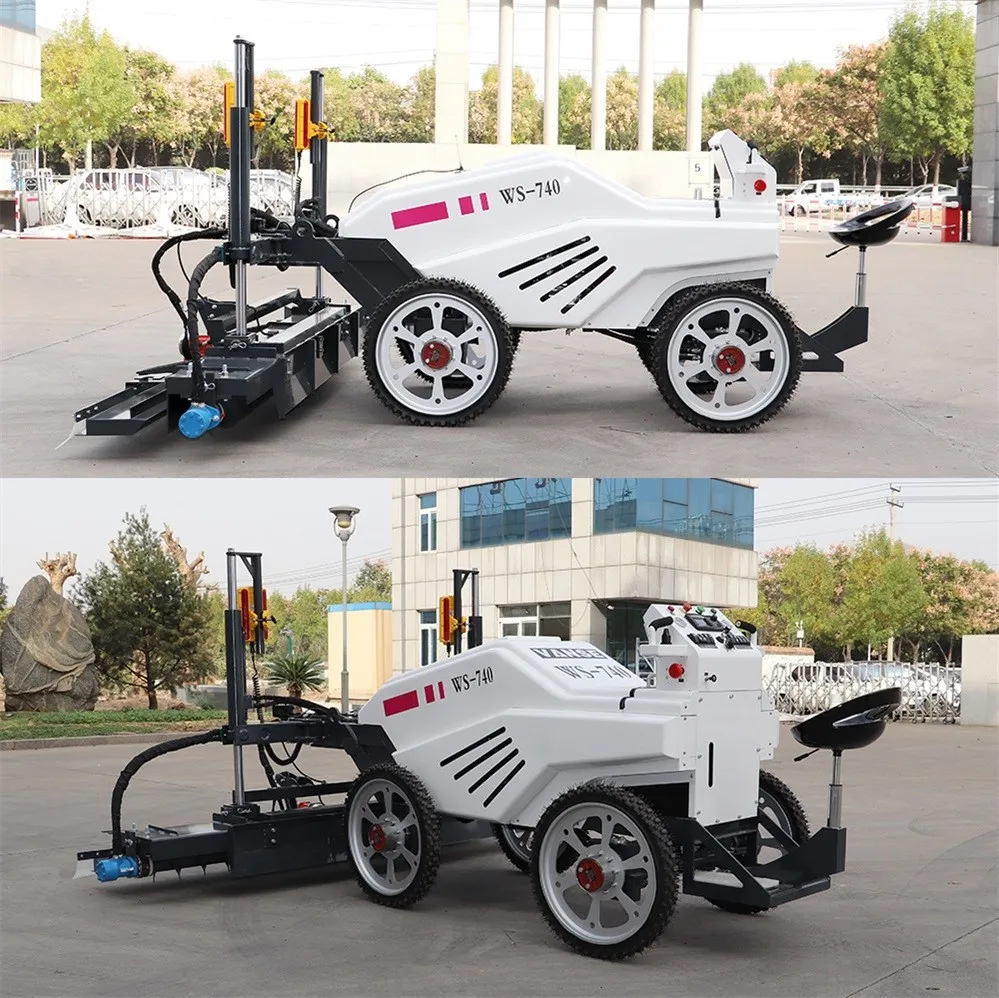
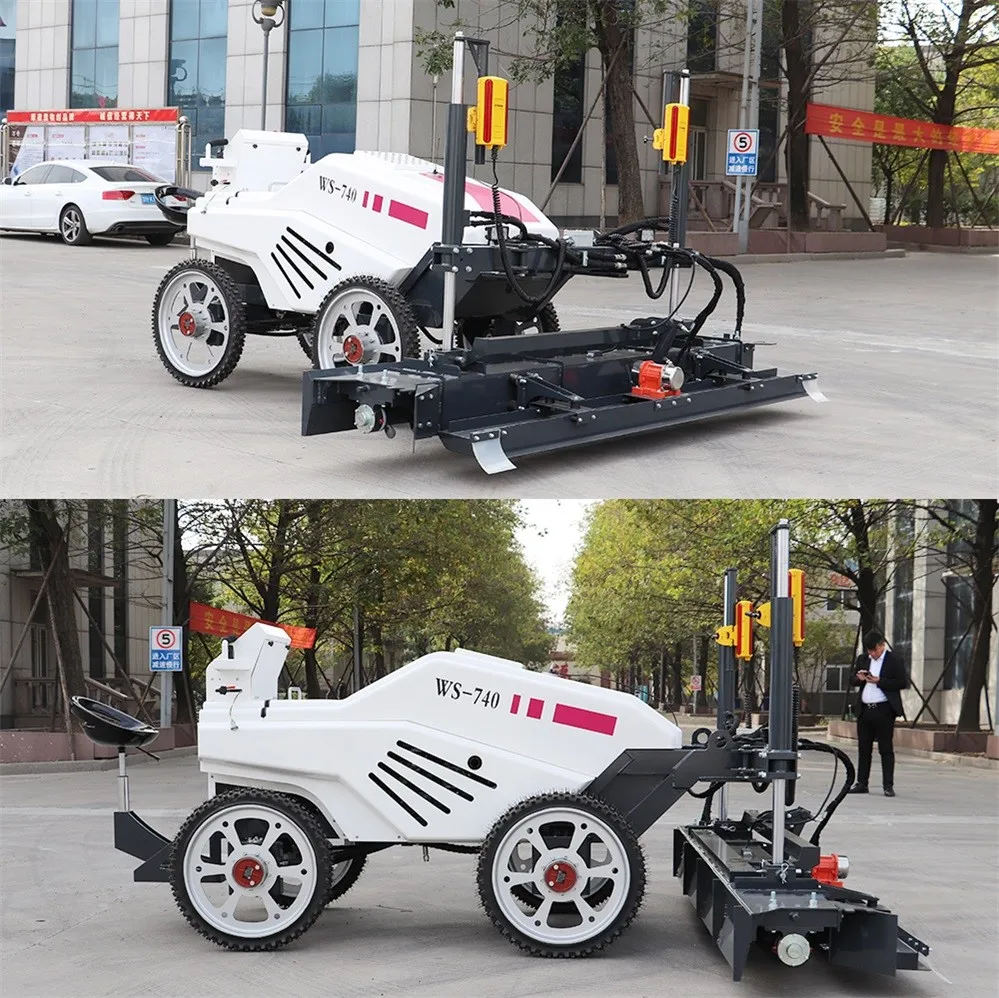
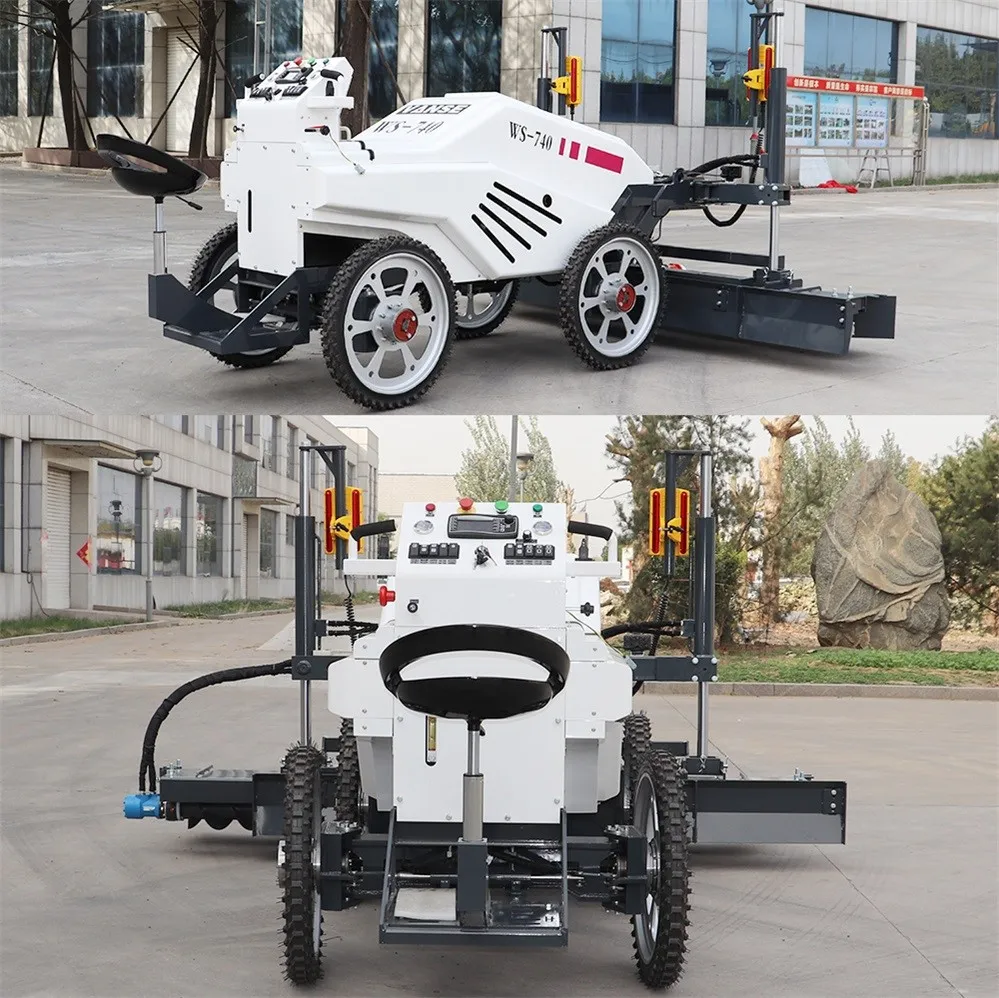
Thanks to All the Friends Who Support and Trust Shandong Vanse Machinery Technology Co., Ltd.
If you want to know more about Shandong Vanse Machinery Technology Co., Ltd. or have any questions, please feel free to contact us:
Our Factory
Shandong Vanse Machinery Technology Co., Ltd.








Share this article

About the Author: Shandong Vanse Machinery Technology Co., Ltd.
Shandong Vanse Machinery Technology Co., Ltd. is a high-tech manufacturer specializing in concrete construction machinery, including laser screeds and related equipment. The company integrates R&D, production, and global sales, with products exported to over 60 countries and widely used in infrastructure projects worldwide.
Previous Post
Next Post
Related Articles
You Might Also Like
How to improve construction efficiency of concrete laser leveling machine?
Improving the construction efficiency of concrete laser leveling machines is of great significance for reducing construction costs and shortening project cycles. The following is a comprehensive analysis of how to improve the construction efficiency of concrete laser leveling machines. Introduction As a highly efficient construction machine, concrete laser leveling machines are increasingly widely used in the field of construction. However, the improvement of construction efficiency not only depends on the performance of the equipment itself, but also requires comprehensive consideration of construction preparation, operating skills, construction management and other factors. 1. Preparation before construction Sufficient pre-construction preparation is the prerequisite for improving construction efficiency: – **Equipment inspection and maintenance: Ensure that the laser leveling machine is in the best working condition to avoid failures during construction. – **Construction plan optimization: Develop a reasonable construction plan based on the characteristics of the project, including construction process, equipment layout, etc. – **Material preparation: Prepare the required concrete materials in advance to ensure the continuity of material supply during construction. 2. Professional training of construction personnel Professional construction personnel are the key to improving construction efficiency: – **Operation skills training: Regularly conduct skill training for operators to improve their proficiency in operating laser leveling machines. – **Safety education: Strengthen safety education to ensure that construction workers comply with safety regulations while working efficiently. 3. Fine management during the construction process Fine construction process management can effectively improve construction efficiency: – **Construction scheduling: Rationally dispatch construction resources to avoid construction delays caused by waiting for materials or equipment. – **Real-time monitoring: Real-time monitoring of construction progress and equipment status, and quick response to possible problems. 4. Optimal use of construction equipment Optimizing the use of construction equipment can improve construction efficiency: – **Equipment configuration: Rationally configure the laser leveler according to construction needs to avoid excess or insufficient equipment capacity. – **Equipment automation: Use equipment automation functions to reduce manual intervention and increase construction speed. 5. Innovation and improvement of construction technology Innovation and improvement of construction technology is an important way to improve construction efficiency: – **Technology innovation: Explore new construction technologies, such as using premixed concrete, to reduce on-site mixing time. – **Technology integration: Integrate advanced technologies, such as GPS positioning, intelligent control systems, etc., to improve construction accuracy and speed. 6. Optimization of construction environment A good construction environment helps improve construction efficiency: – **Environmental control: Control the temperature, humidity and other conditions of the construction site to ensure a suitable construction environment for concrete. – **Construction site layout: Rationally plan the construction site layout to reduce the time for equipment movement and material transportation. 7. Quality and supply of construction materials High-quality construction materials and stable supply are crucial to improving construction efficiency: – **Material quality control: Ensure the quality of concrete materials and avoid construction interruptions caused by material problems. – **Supply chain management: Optimize supply chain management to ensure the timeliness and stability of material supply. 8. Collection and analysis of construction data Collecting and analyzing construction data helps to find room for efficiency improvement: – **Data collection: Collect various data during the construction process, such as construction speed, equipment utilization, etc. – **Data analysis: Analyze the data, find out the factors that affect construction efficiency, and formulate improvement measures. 9. Maintenance and upgrading of construction machinery Regular maintenance and timely upgrading of construction machinery are the guarantee for maintaining construction efficiency: – **Regular maintenance: Formulate equipment maintenance plans to ensure that the equipment is in good condition. – **Technology upgrade: Pay attention to the development of industry technology and upgrade the technology of equipment in a timely manner. 10. Prevention and control of construction risks Preventing and controlling construction risks can reduce construction interruptions and improve efficiency: – **Risk assessment: Conduct construction risk assessment regularly to identify potential risk factors. – **Emergency plan: Develop an emergency plan to ensure that you can respond quickly when risks occur. 11. Conclusion Improving the construction efficiency of concrete laser leveling machines is a systematic project involving construction preparation, personnel training, process management, equipment use, process innovation, environmental optimization, material supply, data collection, machinery maintenance, risk control and other aspects. Through the comprehensive application of these measures, we can effectively improve construction efficiency, shorten the project cycle and reduce construction costs.What are the benefits of using a laser leveling machine for concrete construction?
Concrete laser levelings have become a core piece of equipment for achieving high quality standards in modern floor construction. Their advantages are multifaceted and revolutionary, far surpassing traditional manual construction methods. The following are the main advantages of concrete laser leveling machines in construction, divided into four aspects: efficiency, quality, cost and safety: Technical principle: The leveling machine receives the rotating laser signal generated by the laser transmitter, and the control system automatically adjusts the height of the scraper in real time to achieve precise control of the concrete elevation. Results: This completely eliminates the errors associated with manual rebar punching and leveling, easily achieving ultra-high precision of FF 50/FL 35 (American Concrete Institute standards) and even exceeding FF 100/FL 80. This is impossible to achieve manually, making it particularly suitable for logistics warehouses, large supermarkets, clean workshops, aircraft hangars, and other locations with extremely high floor requirements. Technical principle: The equipment's high-power vibrator produces uniform, high-frequency vibrations, making the concrete aggregate more evenly distributed and the thickness of the mortar floating layer consistent. Effect: Greatly reduces the pores and bubbles in the base layer, making the concrete denser and stronger, thereby significantly improving the wear resistance, compression resistance, and impact resistance of the ground and extending its service life. Technical principle: The construction efficiency of the laser leveling machine allows one-time continuous pouring of ultra-large areas (up to tens of thousands of square meters). Effect: Construction joints formed by multiple pourings are reduced, thus fundamentally avoiding potential cracking problems caused by joints. The entire floor becomes a complete plate with better structural performance. A laser leveling machine can achieve an average productivity of 150-300 square meters per hour, 10-15 times faster than traditional manual construction methods. This significantly shortens construction timelines and saves valuable project time. Traditional craftsmanship: A large number of workers are required to perform heavy physical labor such as supporting formwork, making mortar cakes, scraping bars and leveling. Laser leveling: It can be completed by only 1 equipment operator and 4-6 auxiliary workers responsible for paving concrete and operating the laser transmitter, saving more than 60% of labor, reducing dependence on skilled workers and management difficulty. A substantial reduction in the number of employees directly means a significant drop in labor costs, which is particularly advantageous today when labor costs are increasing. Because the floor is highly flat, has good integrity, and is less susceptible to dust and cracking, the frequency and cost of subsequent maintenance (such as repairs, polishing, and curing) are greatly reduced. This is a very important long-term value for the owner. Precise elevation control avoids concrete waste caused by over-thick pouring. In theory, it can achieve "zero error" pouring thickness and save materials. Workers are freed from heavy bending and squatting labor and can now focus on operating and maintaining machinery, greatly reducing labor intensity. The shortened construction period means that the exposure time of safety risks of the entire project site is reduced, which indirectly improves the overall safety of the project. Advantages Traditional manual construction Laser Leveling Installation Results: Flatness/Levelness Relies on experience, low precision (FF20-30) Fully automatic control, extremely high precision (FF50+) Meets high-standard requirements, such as automated warehouses. Construction Efficiency Slow, 50-100 m2/day/group Extremely fast, 1000-2000 square meters/day/machine Significantly shortens construction timelines and accelerates project progress. Number of Workers Requires a large number of skilled workers (10-15 people) Reduced staff requirements (5-7 people) Reduces labor costs and management complexity. Surface Integrity Prone to delamination, uneven strength High density, high strength, and excellent integrity Durable and wear-resistant, with a long service life. Maintenance Prone to dust and cracking, frequent maintenance Resistant to damage, extremely low maintenance costs Saves long-term costs for owners. Labor Intensity High-intensity physical labor Mechanically operated, low labor intensity Improves the work environment and makes recruitment easier. In short, the concrete laser leveling represents not only an upgrade to construction tools but also a revolution in construction technology. Through automated, digital, and precise control, it achieves breakthroughs in quality, efficiency, cost, and safety, making it an indispensable and critical piece of equipment for modern large-scale floor construction. Click the below to jump immediately!!!Compared with traditional leveling machines, how much is the work efficiency improved by laser leveling machines?
Compared with traditional leveling machines, the improvement in work efficiency of laser leveling machines varies depending on the construction scenario, equipment model, construction process and other factors, and can usually be improved by 30%~50% or even higher. The following is a comparative analysis of the efficiency differences between the two from multiple dimensions: Comparison dimensions Traditional leveling machine Laser leveling machine Leveling basis Relies on manual wire drawing and leveling, with fixed elevation as the benchmark Based on the horizontal laser surface emitted by the laser transmitter, the leveling accuracy is automatically controlled in real time Power and operation mode Manually controls the scraper or roller, and adjusts the height based on experience Hydraulic drive + intelligent control system, automatic leveling and vibration compaction Construction coverage The width of a single operation is narrow (usually 1~3 meters), and it needs to be repeated back and forth The single operation width can reach 2~4 meters, or even wider, reducing the number of round trips Shandong Vanse Machinery Technology Co.,Ltd Construction speed: larger coverage area per unit time Traditional leveling machine: Frequent manual measurement of elevation and adjustment of equipment height are required, and the construction area per hour is about 100~200 square meters due to the limitation of manual operation accuracy. For example, when constructing in large areas (such as parking lots and factory floors), it is necessary to work back and forth multiple times, and it is easy to cause rework due to manual errors. Laser leveling machine: The laser system calibrates the height in real time, without frequent shutdown and measurement. The hydraulic system automatically adjusts the height of the leveling beam. It can construct 300~500 square meters per hour, and some large equipment can even reach more than 800 square meters. Taking a 10,000 square meter site as an example, traditional equipment takes about 50~100 hours, while laser equipment only takes 20~30 hours, and the efficiency is improved by 50%~100%. Precision control: reduce time spent on rework Traditional leveling machines: manual control errors are large (usually ±5~10 mm), prone to unevenness, requiring manual repair later, with a rework rate of about 10%~20%, and additional construction time. Laser leveling machines: laser positioning accuracy can reach within ±3 mm, with a high one-time molding pass rate and almost no need for rework. For example, when constructing industrial floors with high flatness requirements (such as warehouses and workshops), traditional equipment may be delayed by 2~3 days due to rework, while laser equipment can directly save this part of time. Labor costs: reduce labor dependence Traditional leveling machines: require multiple workers (such as surveyors, operators, and auxiliary workers), at least 3~5 people to collaborate, and require high worker experience. Laser leveling machines: only 1~2 operators are required (responsible for equipment control and laser system calibration), labor costs are reduced by 50%~70%, and efficiency fluctuations caused by labor fatigue are reduced. Adaptability to complex scenarios: shortening the time spent in special working conditions Traditional leveling machines: When working on slopes, curved surfaces or sites with large elevation differences, manual adjustments are required, which greatly reduces efficiency (may reduce by more than 30%). Laser leveling machines: can be programmed to adapt to a variety of terrains (such as slopes and curved surfaces), and the laser system automatically adjusts the elevation. The efficiency advantage is more obvious in complex scenarios, for example, the efficiency can be increased by 40%~60% when working on slopes. Shandong Vanse Machinery Technology Co.,Ltd Site scale: Small site (such as a few hundred square meters): The equipment debugging time of the laser leveling machine accounts for a high proportion, and the efficiency is improved by about 30%~40%. Large site (tens of thousands of square meters): The "scale effect" of laser equipment is significant, and the efficiency can be improved by more than 50%. Equipment model and configuration: Small laser leveling machine (such as hand-held): suitable for narrow areas, the efficiency is about 1.5~2 times that of traditional equipment. Large driving laser leveling machine: equipped with double vibrating device and wide leveling beam, the efficiency can reach 2~3 times that of traditional equipment. Construction process requirements: Ordinary floor (low flatness requirement): efficiency is improved by about 30%~40%. High-precision floor (such as ultra-flat floor): Laser equipment can meet the standard at one time, avoiding multiple leveling of traditional processes, and the efficiency is improved by more than 50%. Shandong Vanse Machinery Technology Co.,Ltd Case 1: Industrial plant floor construction For a 12,000 square meter plant, a traditional leveling machine was equipped with a team of 4 people and took 12 days to complete; the laser leveling machine was operated by only 2 people and completed in 6 days, with an efficiency increase of 50%, and the flatness error was reduced from ±8 mm to ±2 mm. Case 2: Municipal square construction A 5,000 square meter square contains a sloped terrain. Due to frequent measurement and adjustment, the traditional equipment can only construct 400 square meters per day; the laser leveling machine can only construct 800 square meters per day, with an efficiency increase of 100%, and the flatness of the slope transition meets the standard. Shandong Vanse Machinery Technology Co.,Ltd The laser leveling machine fundamentally reduces manual intervention and rework time through "automatic measurement + precise control + wide-width operation", and its advantages are particularly prominent in large-scale, high-precision construction scenarios. For projects that pursue construction period and quality, its efficiency improvement is not only reflected in time reduction, but also in the optimization of comprehensive costs by reducing manpower and reducing errors. If specific data is required, it can be further calculated based on the project scale and equipment model. Click the below to jump immediately!!! ARMOUR JOINT CONCRETE LEVELING MACHINE LIGHT TOWER POWER TROWEL SLIPFORM MACHINE STEEL FIBER TOPPING SPREADER TRACKED MINI DUMPER