Technical Knowledge
Working principle of concrete leveling machine

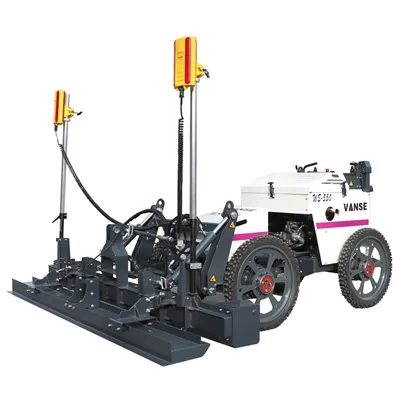
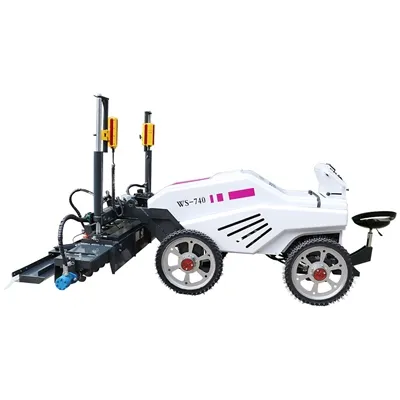
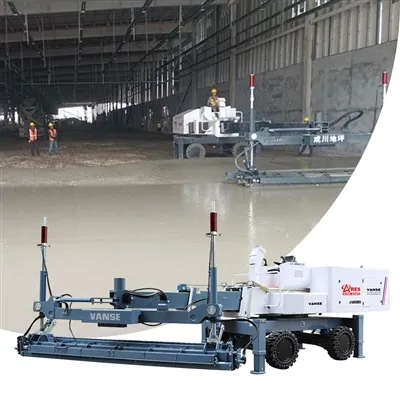
Thanks to the rapid development and prosperity of the flooring industry, laser leveling machines are increasingly used in floor construction. However, because the laser leveling machine industry is still an emerging industry, many people are not familiar with laser leveling. The leveling principle of the floor laser leveling machine is still in a vague state. Today, I will give you a detailed answer based on the principle of the floor laser leveling machine. First of all, we need to clarify what a laser leveling is. A laser leveling is a machine and equipment that is guided by a laser and used to level and level concrete. It can also be understood this way: when constructing large-area concrete floors, a laser leveling machine is used to vibrate, level and control the ground elevation of newly poured concrete.
Let's explain in detail the working principle of the laser leveling machine leveling system. The principle of concrete laser leveling: the laser transmitter produces a rotating laser, and the laser receiver on the leveling machine receives the signal, which is analyzed by the laser measurement and control system. The deviation will be fed back to the sensitive computer control system on the leveling machine. The right electric The push rod will adjust the height of the scraper to ensure leveling accuracy. Paving, scraping, vibrating, and leveling floor concrete, mainly spreading the concrete to an elevation greater than the design requirements, and vibrating and leveling the concrete. The traditional method is: use mortar to punch the pier, find the elevation, lay out the support side formwork, transport alkali with a dump truck, perform preliminary leveling manually, use a flat plate to level the concrete, vibrate the concrete with a vibrator, and then use a special double-row steel pipe to vibrate. The concrete laser leveling machine uses a scraper to take away the elevated concrete and initially scrape it, compact it, and level it back and forth. to the design required elevation. It adopts a two-wheel automatic walking system with a vibration frequency of 3000 times/minute, which drives the entire vibrating plate to vibrate the concrete together. The construction width of the concrete laser leveling is 3 meters.
The leveling of the laser leveling machine does not require a control line or a support side template to control the ground elevation. Instead, it is controlled by the laser measurement and control system on the leveling machine. As long as the laser transmitter is not disturbed, no matter where the leveling machine moves, This can ensure that the overall elevation of the paved ground is not affected.
The use of laser leveling machines can reduce high-intensity labor by about 60%, save about 50% of construction costs, shorten the construction period by about 50%, and increase the strength and compactness of the floor by about 25%.
Thanks to All the Friends Who Support and Trust Shandong Vanse Machinery Technology Co., Ltd.
If you want to know more about Shandong Vanse Machinery Technology Co., Ltd. or have any questions, please feel free to contact us:
Our Factory
Shandong Vanse Machinery Technology Co., Ltd.








Share this article

About the Author: Shandong Vanse Machinery Technology Co., Ltd.
Shandong Vanse Machinery Technology Co., Ltd. is a high-tech manufacturer specializing in concrete construction machinery, including laser screeds and related equipment. The company integrates R&D, production, and global sales, with products exported to over 60 countries and widely used in infrastructure projects worldwide.
Previous Post
Next Post
Related Articles
You Might Also Like
Practical information | Answers to many questions about purchasing laser levelers
With the increasing demand for laser leveling machines, the number of leveling machine manufacturers and their types and models is also increasing. The increase in number has undoubtedly created conditions for users to choose, but at the same time, it has also brought a lot of troubles. How to choose a laser leveling machine with high cost performance from many laser leveling machines with varying quality and prices has become a challenge that every user has to face. In order to help everyone choose a laser leveling machine that suits their needs, our company has summarized some issues related to the purchase of leveling machines in detail, and now we will answer them one by one in detail. Answer: In the era of popularization of the Internet, we rely more and more on the Internet. For example, when we get information, we think of the Internet, and when we shop, we will choose to buy online. When buying a laser leveling machine, many users also want to order it online, mainly because they feel it is convenient. But is it reliable to order this kind of equipment online? This is undoubtedly a matter of concern to everyone. But in fact, it is not impossible to order online when purchasing this equipment, but you should keep your eyes open. It is better to choose the cash on delivery method, so that you can decide whether to pay for the purchase after judging the quality of the equipment, so that the quality of the purchased equipment will be more guaranteed. Answer: The second-hand market of laser levelers is very hot now, and there are many people buying them. But some people have expressed doubts, that is, is it cost-effective to buy such second-hand equipment? Judging from the current market situation, many people still trust second-hand laser levelers. They think that the price of second-hand is affordable, and many second-hand ones are even 80% to 90% new. It is a very cheap thing to buy them at a second-hand price. Therefore, it actually reveals a point, that is, second-hand ones can be bought, but the quality still depends on it. If it is just affordable, but the quality is not good, then this thing is not worth buying, so as to avoid too frequent and expensive repairs after buying it in the future. Answer: Which brand of laser leveler is better? This should be a question that every user will ask before buying. After all, everyone hopes that what they buy is better and they hope to worry less when using it. However, judging from the current market situation, many well-known brands of laser levelers are good, and they are doing well in terms of quality and after-sales service. So when choosing a brand, you will not go wrong if you choose those with relatively guaranteed reputation and popularity. You can use it with confidence, and you don't have to worry about too many problems when the equipment is working. The most important point is that the operation is efficient. Due to space limitations, we will discuss the issue of purchasing laser levelers with you here. Our company is a comprehensive enterprise integrating R&D, manufacturing, sales, and technical services. It is a professional manufacturer specializing in concrete laser levelers. If you choose to cooperate with us, we will wholeheartedly provide you with high-quality leveling equipment and complete after-sales service.How should the emery floor be maintained before and after construction?
Emery floor is widely used in industrial plants, parking lots, warehouses and other places due to its high wear resistance, high strength, anti-slip and beautiful appearance. However, in order for the emery floor to achieve the expected use effect and life, in addition to high-quality materials and scientific construction technology, maintenance work before and after construction is also crucial. This article will conduct an in-depth discussion on the maintenance of diamond floor before and after construction, in order to provide valuable reference for relevant practitioners. 1. Foundation treatment before construction The foundation treatment before the construction of diamond floor is a key step to ensure the quality and service life of the floor. First, the base floor should be thoroughly cleaned to remove oil, dust, debris, etc., to ensure that the surface of the base is dry, flat and free of slurry. Secondly, the strength and density of the base should be checked. If there are defects such as cracks and potholes, they should be repaired and leveled in time. In addition, for the newly poured concrete base, the diamond floor should be fully maintained to sufficient strength before the construction of diamond floor. During the foundation treatment process, the following points should also be noted: First, ensure that the bonding performance between the base layer and the diamond floor material is good to avoid problems such as delamination and sanding; second, control the moisture content of the base layer to avoid excessive or low moisture content affecting the quality of the floor; third, for special base layers, such as renovation of old floors, appropriate treatment plans should be formulated according to specific circumstances. 2. Preparation of construction materials The construction materials of diamond floor mainly include diamond aggregate, cementitious materials, additives, etc. During the material preparation stage, it should be ensured that the selected materials meet the design requirements and have good wear resistance, compression resistance, anti-slip properties, etc. At the same time, strict quality inspections should be carried out on the materials to ensure that there are no impurities, no lumps, no expiration, etc. During the transportation and storage of materials, attention should be paid to moisture-proof, sun-proof, and anti-pollution measures to prevent the materials from being damp, lumped or polluted and affecting the use effect. In addition, during the material mixing process, the water-cement ratio and mixing time should be strictly controlled to ensure the uniformity and fluidity of the mixture. 3. Construction process control The construction process of diamond floor includes primer construction, diamond aggregate laying, compaction, maintenance and other steps. During the construction process, the construction specifications and process flow should be strictly followed to ensure quality control of each link. First, the primer construction should be uniform and without omission to enhance the adhesion between the base and the diamond floor. Secondly, when laying diamond aggregate, the laying thickness and uniformity should be controlled to avoid uneven thickness or hollowing. At the same time, compaction should be carried out in time after laying to improve the density and strength of the floor. Finally, during the maintenance stage, the maintenance time and method should be reasonably controlled according to the ambient temperature and humidity conditions to ensure that the floor is fully hardened and dried. 4. Initial maintenance and protection After the construction of diamond floor is completed, initial maintenance is an important link to ensure the quality of the floor and extend its service life. During the maintenance period, heavy objects should be avoided from rolling on the floor or scratching with sharp objects to avoid damage to the floor. At the same time, the floor surface should be kept clean and dry to prevent moisture and dirt from penetrating and affecting the quality of the floor. In the initial maintenance stage, some measures can also be taken to improve the performance and aesthetics of the floor. For example, applying a layer of transparent or colored coating on the floor surface can increase the gloss and wear resistance of the floor; setting angle steel or corner guard strips on the edge of the floor can prevent damage caused by the impact of equipment such as forklifts. 5. Long-term maintenance and care The long-term maintenance and care of diamond sand floor is the key to ensuring its performance and service life. In daily use, the floor surface should be cleaned regularly to remove oil, dust and other debris to keep the floor clean and beautiful. At the same time, avoid using corrosive substances such as strong acids and alkalis to clean the floor to avoid damage to the floor. For floor areas with wear, scratches and other problems, they should be repaired and renovated in time. When repairing, the repair material compatible with the original floor material should be selected, and the operation should be carried out in accordance with the construction specifications to ensure the quality of the repair. In addition, according to the use and wear of the floor, the overall renovation can be carried out regularly to restore the performance and aesthetics of the floor. 6. Problem Solving and Prevention During the use of diamond sand floor, some problems may occur, such as delamination, sanding, cracking, etc. For these problems, the causes should be analyzed in time and corresponding solutions should be taken. For example, for delamination problems, it may be caused by improper base treatment or poor material quality. Therefore, the base treatment and material quality control should be strengthened; for cracking problems, it may be caused by improper construction or changes in ambient temperature. Therefore, the construction process should be optimized and the ambient temperature should be controlled. At the same time, in order to prevent the occurrence of problems, daily inspections and maintenance should be strengthened. During inspections, attention should be paid to changes in the flatness, glossiness, wear resistance, etc. of the floor, and potential problems should be discovered and dealt with in a timely manner. During maintenance, a reasonable maintenance plan should be formulated according to the use and wear of the floor, and regular cleaning, repairs and renovations should be carried out. 7. Summary and Precautions In summary, the maintenance work before and after the construction of diamond sand floor is of great significance to ensure the quality and service life of the floor. In actual operation, attention should be paid to the basic treatment before construction, the preparation of construction materials and the control of construction process to ensure the quality of construction; at the same time, it is necessary to strengthen the initial maintenance and long-term maintenance and maintenance work, and timely discover and deal with problems; finally, through the implementation of problem solving and preventive measures, ensure that the diamond floor always maintains good performance and appearance. It should be noted that when carrying out the maintenance of diamond floor, relevant specifications and safety requirements should be followed to ensure the safety of operators. In addition, a reasonable maintenance plan should be formulated according to the specific use environment and requirements to ensure that the diamond floor can meet the needs of long-term use. When summarizing the key points of maintenance before and after the construction of diamond floor, we can summarize the following points: First, ensure that the base is properly treated, which is the basis for ensuring the quality of the floor. The flatness, strength, moisture content and other indicators of the base must meet the construction requirements, otherwise it will have an adverse effect on the subsequent use of the floor. Secondly, pay attention to the selection and quality control of materials. High-quality materials are the key to ensuring the performance and service life of the floor. When selecting materials, full consideration should be given to performance indicators such as wear resistance, compression resistance, and anti-slip properties, and the supplier should be ensured to have a good reputation and stable supply capacity. Furthermore, the control of the construction process is also crucial. During the construction process, operations should be carried out strictly in accordance with the construction specifications and process flow to ensure quality control at each link. In particular, the compaction and maintenance links are of great significance for improving the density and strength of the floor. In addition, daily maintenance and care work should not be ignored. Regular cleaning, inspection of the wear of the floor, and timely repair and renovation can effectively extend the service life of the floor. At the same time, the use of corrosive substances such as strong acids and alkalis to clean the floor should be avoided to avoid damage to the floor. Finally, it is equally important to prevent the occurrence of problems. By strengthening daily inspections, optimizing construction processes, and controlling ambient temperature, potential problems can be discovered and dealt with in a timely manner to avoid the expansion and deterioration of problems. To sum up, the maintenance work of diamond abrasive floor before and after construction is a systematic and complex task, which requires comprehensive consideration of multiple factors. By strengthening the work in grassroots treatment, material selection, construction process control, daily maintenance and care, as well as problem prevention, the quality and service life of diamond abrasive floor can be guaranteed to the greatest extent.What are the importance of daily equipment maintenance for concrete laser leveling machines?
– Maintain high-precision operation: One of the core advantages of concrete laser leveling machines is its high-precision leveling effect. Through daily maintenance, key components such as laser transmitters and receivers can be cleaned and calibrated to avoid measurement errors caused by dust, dirt or component offset, thereby ensuring leveling accuracy. – Ensure the normal operation of the hydraulic system: The hydraulic system is an important part of the laser leveling machine and is responsible for controlling the lifting and adjustment of the leveling head. Daily maintenance includes checking the oil level and oil quality of the hydraulic oil, as well as the sealing of the hydraulic pipeline, preventing hydraulic oil leakage or contamination, and ensuring that the hydraulic system can work stably and accurately. – Reduce component wear: During the construction process of the laser leveling machine, various components will wear due to friction, vibration, etc. Regular maintenance work such as lubrication and tightening can effectively reduce friction between components, reduce wear rate, and extend the service life of components. – Preventing failures: Through daily inspections, potential equipment failures can be discovered in time, such as loose electrical connections, aging lines, damaged parts, etc., and repaired or replaced to prevent small problems from turning into major failures, reducing equipment downtime and maintenance costs. – Reducing downtime caused by equipment failure: Equipment failure is one of the main reasons for construction interruptions. Doing a good job of daily maintenance can effectively reduce the failure rate and ensure that the equipment can operate continuously and stably during the construction process, thereby improving construction efficiency. – Maintaining equipment in good condition: Maintenance work includes cleaning, adjusting and replacing wearing parts of the equipment. These measures can keep the equipment in good working condition at all times and avoid construction speed reduction or quality problems caused by poor equipment condition. – Ensuring leveling accuracy: The leveling accuracy of the laser leveling machine directly affects the flatness and levelness of the concrete floor. Daily maintenance can ensure the accuracy and stability of the laser system, thereby ensuring that the leveled floor meets the design requirements and improves construction quality. – Reduce construction defects: Through maintenance, construction defects caused by equipment problems, such as uneven ground, large elevation errors, insufficient concrete density, etc., can be avoided, thereby reducing the workload of later repairs and rework. – Reduce maintenance costs: Regular maintenance can promptly detect and solve small problems with the equipment to prevent them from developing into major failures, thereby reducing the high maintenance costs caused by major failures. – Save labor costs: Efficient operation of equipment can reduce construction time and improve construction efficiency, thereby saving labor costs. – Reduce safety risks: Daily maintenance includes checking the electrical system, protective devices, etc. of the equipment to ensure their normal operation, thereby reducing safety risks such as electric shock and mechanical injuries to operators. – Improve operator safety awareness: During daily maintenance, operators can become more familiar with the structure and performance of the equipment, enhance safety awareness, comply with operating procedures, and further ensure operational safety.