Technical Knowledge
How to deal with the existing cracks in the diamond wear-resistant floor?


How to deal with existing cracks in diamond wear-resistant flooring
Diamond wear-resistant flooring has been widely used in industrial plants, warehouses, parking lots and other places due to its high wear resistance, high strength and beautiful appearance. However, during use, cracks may appear in the floor due to the influence of various factors such as materials, construction, and environment. Cracks not only affect the aesthetics of the floor, but also the durability and performance of the floor. Therefore, for cracks in diamond wear-resistant flooring that have already appeared, appropriate treatment methods must be adopted. This article will combine actual cases to explore how to deal with cracks in diamond wear-resistant flooring that have already appeared.
1. Crack type and cause analysis
Before dealing with cracks in diamond wear-resistant flooring, it is necessary to first analyze the types and causes of cracks. Crack types mainly include transverse cracks, longitudinal cracks, mesh cracks and irregular cracks. The causes of these cracks are varied, and may involve various factors such as material quality, construction technology, temperature changes, humidity changes, foundation settlement, etc. Therefore, different treatment methods are needed for cracks of different types and causes.
2. Preparation before crack treatment
Before treating the cracks in the diamond wear-resistant floor, a series of preparations need to be carried out. First, the cracks need to be inspected and recorded in detail, including the length, width, depth and distribution of the cracks. Secondly, it is necessary to clean up the debris and oil in the cracks to ensure that the surface of the cracks is clean and dry. Finally, according to the type and cause of the cracks, a suitable treatment plan is formulated.
3. Crack treatment method
☑ Filling method
For cracks with smaller width and shallower depth, the filling method can be used for treatment. First, select the filling material suitable for the floor material, such as elastic caulking agent, polyurethane sealant, etc. Then, apply the filling material evenly on the crack surface to ensure that the filling material fully fills the crack. Finally, use a sharp plate to level the excess filling material so that it is flush with the floor surface. The filling method is simple to operate and low in cost, and is suitable for treating minor cracks.
☑ Expansion method
For cracks with larger width and deeper depth, the filling method may not be effective. At this time, the expansion method can be used for treatment. First, use a cutting machine or a drilling machine to widen and deepen the profile joint so that the profile joint forms a V-shaped groove. Then, fill the special floor repair material into the V-shaped groove to ensure that the repair material fully fills the entire crack. Finally, use a scraper to scrape off the excess repair material and maintain it until the repair material is completely solidified. The crack expansion method can effectively improve the quality of crack repair, but the operation is relatively complicated and the cost is high.
☑ Pressure grouting method
For cracks with larger width and deeper depth, the crack position is more special, and it is difficult to expand the crack, the pressure grouting method can be used. First, set a grouting hole at one end of the crack and an exhaust hole at the other end. Then, use a grouting machine to inject special grouting materials (such as epoxy resin, polyurethane, etc.) into the crack through the grouting hole. During the grouting process, the grouting pressure and grouting speed are controlled to make the grouting material fully fill the crack. Finally, after the grouting material is solidified, the crack surface is polished and processed. Pressure grouting can effectively improve the density and strength of crack repair, but the operation is difficult and requires professional equipment and personnel.
4. Maintenance and precautions after crack treatment
☑ Maintenance
After the crack treatment is completed, the repaired part needs to be maintained. During the maintenance period, heavy objects should be avoided from rolling over and sharp objects should be avoided from scratching the repaired part to avoid affecting the repair effect. At the same time, the repaired part should be kept dry and clean to avoid water or other liquids from penetrating into the repaired part. The maintenance time is generally determined by the curing time of the repair material and environmental conditions.
☑ Precautions
(1) When dealing with cracks, the appropriate treatment method should be selected according to the type and cause of the cracks. Avoid blind treatment or inappropriate treatment methods that may cause crack expansion or poor repair effect.
(2) When selecting repair materials, ensure that the performance of the repair materials matches the original floor materials. Avoid using inferior or incompatible repair materials that may cause problems such as falling off and cracking at the repaired part.
(3) When dealing with cracks, safety protection measures should be taken. Avoid dust and splashes generated during the treatment process that may cause harm to personnel and the environment. At the same time, relevant safety operating procedures must be followed to ensure the safety and stability of the construction process.
5. Case Analysis
After a period of use, the diamond wear-resistant floor of a large industrial plant had multiple horizontal cracks and mesh cracks. After a detailed inspection and cause analysis of the cracks, it was found that the cracks were mainly caused by factors such as temperature changes, humidity changes and foundation settlement. In response to this situation, the expansion method was adopted for treatment. First, the cracks were widened and deepened to form a V-shaped groove. Then, a special floor repair material was used to fill the V-shaped groove to ensure that the repair material fully filled the entire crack. Finally, the repaired part was maintained and polished. After treatment, the cracks were effectively repaired, and the flatness and aesthetics of the floor were restored.
6. Summary and Outlook
The treatment of diamond wear-resistant floor cracks is a complex and important task. By analyzing the types and causes of cracks and selecting appropriate treatment methods, the quality of crack repair and the performance of the floor can be effectively improved. At the same time, attention should be paid to safety protection and maintenance work during the crack treatment process to ensure the safety of the construction process and the durability of the repair effect.
With the continuous advancement of science and technology and the emergence of new materials, the crack treatment technology of diamond wear-resistant floor will be more mature and perfect in the future. For example, advanced non-destructive testing technology can be used to accurately measure and locate cracks to improve the accuracy and efficiency of treatment: more excellent repair materials can be developed to improve the strength and durability of the repaired parts: more environmentally friendly and energy-saving crack treatment methods can be explored to reduce the impact on the environment during the treatment process.
In addition, in addition to crack treatment, daily maintenance and care are also the key to keeping diamond wear-resistant floor in good condition. The floor should be cleaned and maintained regularly, and small cracks and damage should be discovered and treated in time to prevent them from expanding and deteriorating. At the same time, care should be taken to avoid collisions with heavy objects and scratches with sharp objects to avoid damage to the floor. In summary, the treatment of diamond wear-resistant floor cracks is a systematic project, which requires comprehensive consideration of the types, causes, treatment methods and daily maintenance of cracks. Only by scientific analysis, reasonable treatment and careful maintenance can the long-term use effect and aesthetics of diamond wear-resistant floor be ensured.
In practical applications, we also need to constantly sum up experience and lessons, combine specific engineering practices, and explore crack treatment methods that are more suitable for different environments and needs. At the same time, strengthening the training and education of relevant personnel and improving their professional skills and operation level are also important measures to ensure the quality and effect of crack treatment.
In the future, with the continuous advancement of science and technology and the continuous development of floor materials, we have reason to believe that the treatment of diamond wear-resistant floor cracks will become simpler, more efficient and more reliable. This will provide safer, more beautiful and more durable floor solutions for industrial plants, warehouses, parking lots and other places, and provide a more comfortable and convenient environment for people's production and life.
In the process of crack treatment, in addition to the traditional methods such as the expansion method and pressure grouting method mentioned above, some new technical means can also be tried. For example, using drones or robots to automatically detect and identify cracks, accurately determine the location and size of cracks through image recognition technology, and improve processing efficiency and accuracy. In addition, it is possible to consider the use of new self-healing materials that can automatically fill and repair cracks when they occur, thereby extending the service life of the floor.
At the same time, with the continuous improvement of environmental awareness, attention should also be paid to environmental protection and sustainable development in the process of crack treatment. Select repair materials with excellent environmental performance, reduce waste and pollutants generated during the treatment process, and ensure that the impact of the treatment process on the environment is minimized. In addition, energy-saving technologies should be actively promoted and applied to reduce energy consumption in the treatment process and improve resource utilization efficiency.
In short, the treatment of cracks in diamond wear-resistant floor is a field that is constantly developing and improving. Through continuous exploration of new technical means, improving treatment efficiency and accuracy, and focusing on environmental protection and sustainable development, we are expected to provide more high-quality, efficient and environmentally friendly solutions for the treatment of cracks in diamond wear-resistant floor. This will bring a better experience to industrial production and people's daily life.
Before ending this article, it should be emphasized that for the treatment of cracks in diamond wear-resistant floor, prevention is always better than treatment. Therefore, in the design and construction stages, factors such as material selection, construction technology, and foundation treatment should be fully considered to avoid the occurrence of cracks as much as possible. At the same time, during use, the maintenance and care of the floor should be strengthened, potential problems should be discovered and dealt with in a timely manner, and the long-term stable operation of the floor should be ensured.
Looking to the future, with the advancement of science and technology and the development of floor materials, we look forward to seeing more innovative solutions applied to the treatment of cracks in diamond wear-resistant floor. This will bring a broader development prospect to the flooring industry and make greater contributions to the sustainable development of society.
In summary, the treatment of diamond wear-resistant flooring is a complex process that requires comprehensive consideration of multiple factors. Through scientific analysis, reasonable treatment methods and careful maintenance, we can effectively solve this problem and ensure the long-term stable operation and aesthetics of the floor. At the same time, we should also pay attention to the application of new technologies and new materials to promote the continuous innovation and development of the flooring industry.
This article discusses in detail the treatment methods, precautions, case analysis and future prospects of diamond wear-resistant floor cracks, and strives to provide readers with a comprehensive and in-depth understanding. It is hoped that this article can provide certain reference and reference value for practitioners and researchers in related fields, and jointly promote the continuous progress and development of diamond wear-resistant floor crack treatment technology.
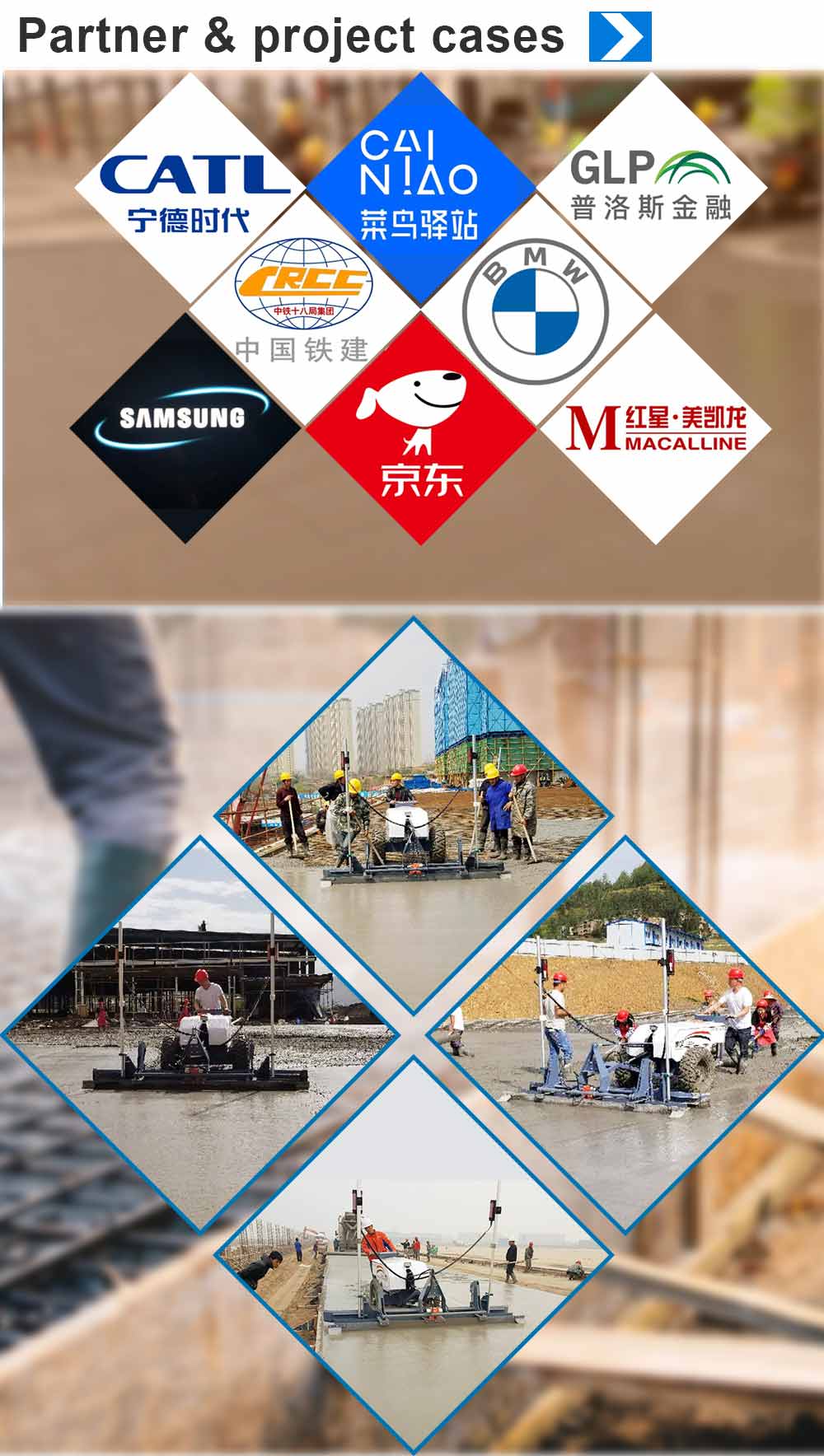
Thanks to All the Friends Who Support and Trust Shandong Vanse Machinery Technology Co., Ltd.
If you want to know more about Shandong Vanse Machinery Technology Co., Ltd. or have any questions, please feel free to contact us:
Our Factory
Shandong Vanse Machinery Technology Co., Ltd.








Share this article

About the Author: Shandong Vanse Machinery Technology Co., Ltd.
Shandong Vanse Machinery Technology Co., Ltd. is a high-tech manufacturer specializing in concrete construction machinery, including laser screeds and related equipment. The company integrates R&D, production, and global sales, with products exported to over 60 countries and widely used in infrastructure projects worldwide.
Previous Post
Next Post
Related Articles
You Might Also Like
Rotary power trowel VS ride-on power trowel: Which is better for polishing super flat concrete floors?
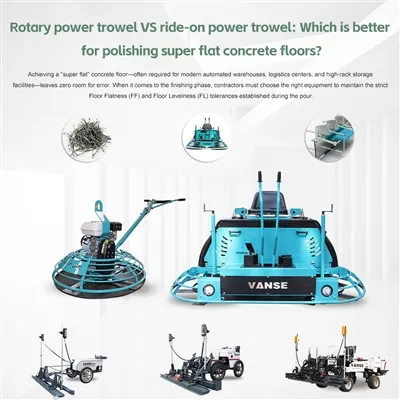
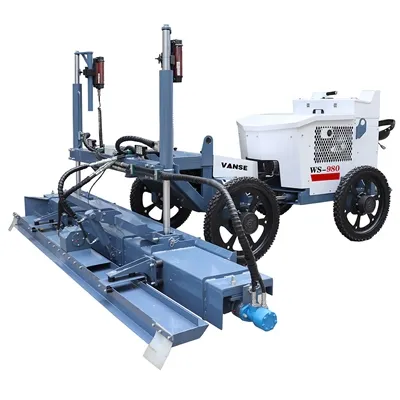
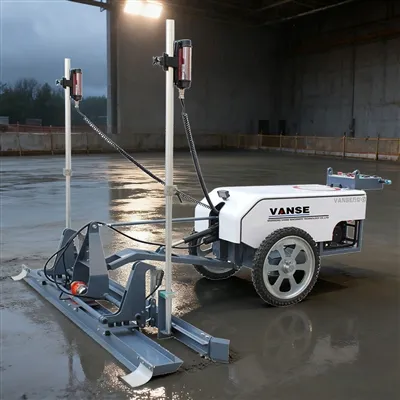
Achieving a "super flat" concrete floor-often required for modern automated warehouses, logistics centers, and high-rack storage facilities-leaves zero room for error. When it comes to the finishing phase, contractors must choose the right equipment to maintain the strict Floor Flatness (FF) and Floor Levelness (FL) tolerances established during the pour. So, in the debate between a standard walk-behind (rotary) power trowel and a ride-on power trowel, which is the superior choice for super flat commercial floors? For large-scale, high-tolerance projects, the ride-on power trowel is unequivocally the better choice. Here is a comprehensive, SEO-optimized breakdown of why ride-on equipment dominates the commercial sector, and how to choose the right machinery for your next pour. Walk-behind power trowels are operated by a single worker walking behind the machine, guiding a single rotating rotor. The Pros: These machines are highly maneuverable, lightweight, and cost-effective. They are absolutely essential for finishing edges, tight corners, around plumbing or structural columns, and in small residential spaces where a larger machine cannot fit. The Cons for Super Flat Floors: For large, super flat applications, walk-behind trowels fall short. The operator must physically walk on the semi-cured concrete, leaving footprints that the machine then has to erase. Furthermore, the lighter weight and single-rotor design do not provide the uniform, heavy-duty compaction required to meet aggressive FF/FL specifications across a massive slab. Ride-on power trowels feature dual (or sometimes triple) rotors and are operated by a driver seated on top of the machine., Unmatched Compaction and Density: The sheer weight of a ride-on trowel-often exceeding hundreds of kilograms-is its greatest asset. When equipped with float pans, this heavy, mechanized downward pressure violently kneads the concrete surface, driving the coarse aggregate down and bringing a rich layer of cement paste to the surface. This deep compaction creates a denser, more wear-resistant "burnished" finish that manual or lightweight tools simply cannot achieve. Preserving FF and FL Metrics: To get a super flat floor, you typically start with a concrete laser leveling (a specialty of manufacturers like Vanse Machinery). The laser leveling sets the perfect level. The ride-on trowel preserves it. Because the operator is seated on the machine, there are no footprints to fix. The wide wheelbase and overlapping dual-rotor footprint bridge minor undulations, acting like a massive smoothing plane that actually improves the FF numbers as it works. Massive Output and Efficiency: Concrete sets on its own schedule. If a contractor is pouring thousands of square meters in a single day, the finishing equipment must keep up before the slab cures. A high-performance ride-on trowel can cover vast areas exponentially faster than a walk-behind unit, ensuring the entire slab is finished during the optimal curing window, preventing cold joints and surface defects. To consistently win bids for high-end commercial floors, contractors must look at their equipment as an integrated system. According to the engineering and product parameters found at Vanse Machinery (vansemac.com), achieving top-tier industrial flooring requires a combination of precision and power. Using an advanced telescopic boom concrete laser leveling (like the YZ30-4E or YZ40-4E) guarantees initial levelness. Following that immediately with a heavy-duty, engine-driven ride-on power trowel ensures that the precise leveling is locked in with a hardened, highly polished surface. Using a walk-behind trowel to finish a massive, laser-levelinged commercial floor is a bottleneck that risks ruining the tight tolerances you just paid to establish. If your project demands a super flat floor for commercial, industrial, or logistics applications, a ride-on power trowel is not just better; it is a mandatory investment. Walk-behind trowels should be strictly reserved for complementary edge work and confined spaces. Note: The parameters provided in this document are for reference only and are not mandatory. Due to differences in technical characteristics between different brands and models of laser levelers, please consult the manufacturer for a suitable solution before actual operation. This reference document assumes no responsibility for any issues arising from failure to follow the manufacturer's instructions.How to ensure the smooth progress of the laser leveling machine leveling work
When you use a laser leveler for floor construction, you will definitely hope that the leveler can run smoothly, because only in this way can the completion of the floor construction be guaranteed, but it is easier said than done, and many people are controlling The laser leveling machine often fails to master the skills, which will lead to some errors in the construction of the floor and affect the construction effect. So how can we ensure the smooth operation of the laser leveling machine? The little knowledge about the smooth operation of the laser leveling machine will be shared here first, and we will continue to update it for you in the future. We hope that the shared content can help you better solve the problem. If you still want to know more exciting information about levelings, please feel free to visit our official website for inquiries.Technical measures to ensure construction quality of concrete laser leveling machines under extreme weather conditions such as high and low temperatures
For the technical measures to ensure the construction quality of concrete laser leveling machines under extreme weather conditions such as high and low temperatures, we need to carry out systematic control from five aspects: "people, machines, materials, methods and environment". laser leveling machines are the core equipment for achieving high-precision ground surfaces, but extreme weather can seriously affect the performance of concrete itself, ultimately impacting the construction quality. The following is a detailed technical measure plan High temperatures can cause rapid evaporation of concrete moisture, significant loss of slump, shortened setting time, and easily lead to problems such as plastic shrinkage cracks and surface powdering, posing challenges to the construction efficiency of laser levelings and the quality of the ground. 1. Concrete mix proportion and material control Adjust the mix ratio: Communicate with the mixing plant in advance to use retarding water-reducing agents or high-efficiency retarders to delay the setting time of the concrete and create a longer operation window for leveling. Reduce the mold entry temperature Shade and cover the aggregates (sand, stone) or spray water to cool them down to avoid direct sunlight. Mix with cold water or ice to lower the temperature of the mixing water. When necessary, sprinkle water on the surface of the cement tanker to cool it down. Control slump: Strictly monitor the slump of the concrete arriving at the site to avoid it being too large (prone to bleeding and significant shrinkage) or too small (difficult to level). Slump loss is rapid at high temperatures, so it is necessary to ensure that the concrete has good workability. 2. Construction process control Arrange the operation time reasonably: Try to avoid pouring operations during the hottest period of the day (such as from 10 a.m. to 4 p.m.), and choose to carry out construction in the morning and evening when the temperature is lower. Accelerate transportation and pouring: Plan the transportation route well to ensure that the time from the concrete leaving the machine to the completion of pouring is the shortest. On-site dispatching should be efficient, ensuring that "vehicles wait for jobs" rather than "jobs wait for vehicles". Adequate preparation and rapid construction: Before pouring the concrete, ensure that everything such as formwork, steel bars, and laser leveling machines is in place. After the concrete arrives, immediately organize pouring, spreading and leveling to shorten the exposure time. 3. Key points for Operating a laser leveling Improving leveling efficiency: The laser leveling should maintain continuous and uniform operation, taking advantage of its high efficiency to complete the leveling work before the initial setting of the concrete. Prevent rapid evaporation of moisture: After the scraper of the leveling machine is applied, personnel can be immediately arranged to spray curing agent or cover it with plastic film for "covering as needed". This is a very effective measure to prevent surface plastic cracks. 4. Early maintenance Timely maintenance: After the leveling is completed, maintenance should be carried out immediately. Do not wait until the concrete has completely hardened before curing. Moisture retention curing: Cover with wet gunny bags or straw curtains and continuously sprinkle water, or use water retention curing, covering with curing film and other methods to ensure that the concrete surface remains moist for at least 7 days. Low temperatures can delay the hydration of cement. When the temperature drops below 0℃, the free water inside the concrete freezes, generating ice expansion stress, which damages the concrete structure and leads to permanent loss of strength. When using a laser leveling for construction at low temperatures, the key is to ensure that the concrete is not damaged by freezing and to create a normal environment for its strength growth. 1. Concrete mix proportion and material control Adjust the mix ratio: Use early-strength cement or add early-strength agents and antifreeze agents to accelerate the early strength development of concrete and enhance its frost resistance. Increase the mold entry temperature Heat the aggregates (sand, stone) to prevent caking and the presence of ice chips. Heat the mixing water (generally not exceeding 60℃). Ensure that the temperature of the concrete leaving the machine and entering the mold comply with the specification requirements (generally, the temperature leaving the machine should not be lower than 10℃ and the temperature entering the mold should not be lower than 5℃). 2. Construction Environment and Maintenance Control (Heat Storage Method and External Heating Method) Build an insulated greenhouse: Set up a temporary insulated greenhouse in the construction area, and use heating methods such as warm air fans and steam pipes inside to maintain the environmental temperature above 5℃. This is the most reliable method. Heat storage maintenance method: This method can be adopted when the average outdoor temperature is not lower than -5℃. After the pouring is completed, immediately cover the concrete surface closely with insulation materials (such as rock wool quilts, plastic films with straw curtains, etc.), and utilize the heat of hydration of cement and the initial heat of the concrete to make it reach the critical strength in a positive temperature environment. Heating maintenance method: When the temperature is extremely low, an external heat source should be used. Warm air blower hot air method: Blowing hot air in a closed space. Electric blanket covering method: Cover the concrete surface with a special electric heating curing blanket. Note: It is strictly prohibited to directly bake the concrete surface with an open flame, as this will cause rapid water loss and carbonization. 3. Operation and construction management of laser leveling machines Base layer and preparation: Before pouring, it is necessary to remove ice, snow and frozen blocks from the formwork and base layer. It is strictly prohibited to pour concrete on the frozen base. Rapid construction: Similar to high-temperature weather, it is necessary to organize tightly to reduce heat loss during the transportation and pouring of concrete. The leveling machine should operate efficiently and be immediately covered and insulated after completion. Temperature monitoring: Temperature measurement points are set up at different parts within the concrete structure to monitor temperature changes at regular intervals, ensuring that the internal temperature of the concrete reaches the "critical strength for freezing" (typically 30% of the designed strength or 5MPa) before dropping to 0℃. No matter what extreme weather conditions it is, the stability and accuracy of the equipment itself are the prerequisites for ensuring quality. Equipment calibration and inspection Before starting work every day, the accuracy of the laser transmitter and the receiver of the leveling machine must be checked and calibrated. Inspect key components such as the hydraulic system, engine, and scraper base plate to ensure there are no faults. At extreme temperatures, the viscosity of hydraulic oil will change, and the corresponding grade of hydraulic oil should be used. Equipment adaptability High temperature: Pay attention to the heat dissipation of the equipment and prevent the hydraulic system from overheating. It is advisable to consider installing sunshade devices at key parts of the equipment. Low temperature: Equipment (especially diesel engines) may have difficulty starting. Low-temperature grade diesel should be used, and the engine should be preheated if necessary. At low temperatures, the brittleness of metal parts in the equipment increases. Operation should be smooth and avoid severe impacts. Power supply guarantee: Ensure the power supply of the laser emitter is stable to prevent the leveling from being interrupted due to power failure, which may cause cold joints during construction. Control dimension Core measures for high-temperature weather Core measures for low-temperature weather Concrete material Retarder, reducing mold entry temperature Early strength agent/antifreeze, increase mold entry temperature Construction process Avoid high-temperature periods and carry out rapid and continuous construction Rapid construction and ice and snow removal Leveling operation High-efficiency leveling and immediate application High-efficiency leveling and immediate insulation Maintenance measures Moisturizing is key (watering, covering) Insulation is key (covering, heating) Environmental control Shading and wind protection Build an insulated shed and heat it up The core idea: The laser leveling is a tool for achieving high flatness, but the quality of the concrete itself is the foundation. In extreme weather conditions, all technical measures should be formulated around the central goal of "creating a favorable environment for the normal hydration and hardening of concrete". Only through material adjustment, process optimization and meticulous maintenance, combined with the efficient and precise operation of the laser leveling, can the construction quality be ultimately guaranteed. Note: The parameters provided in this document are for reference only and are not mandatory. Due to differences in technical characteristics between different brands and models of laser levelers, please consult the manufacturer for a suitable solution before actual operation. This reference document assumes no responsibility for any issues arising from failure to follow the manufacturer's instructions.