Technical Knowledge
Laser leveling machine failure is inevitable after long-term use. Early treatment ensures safety
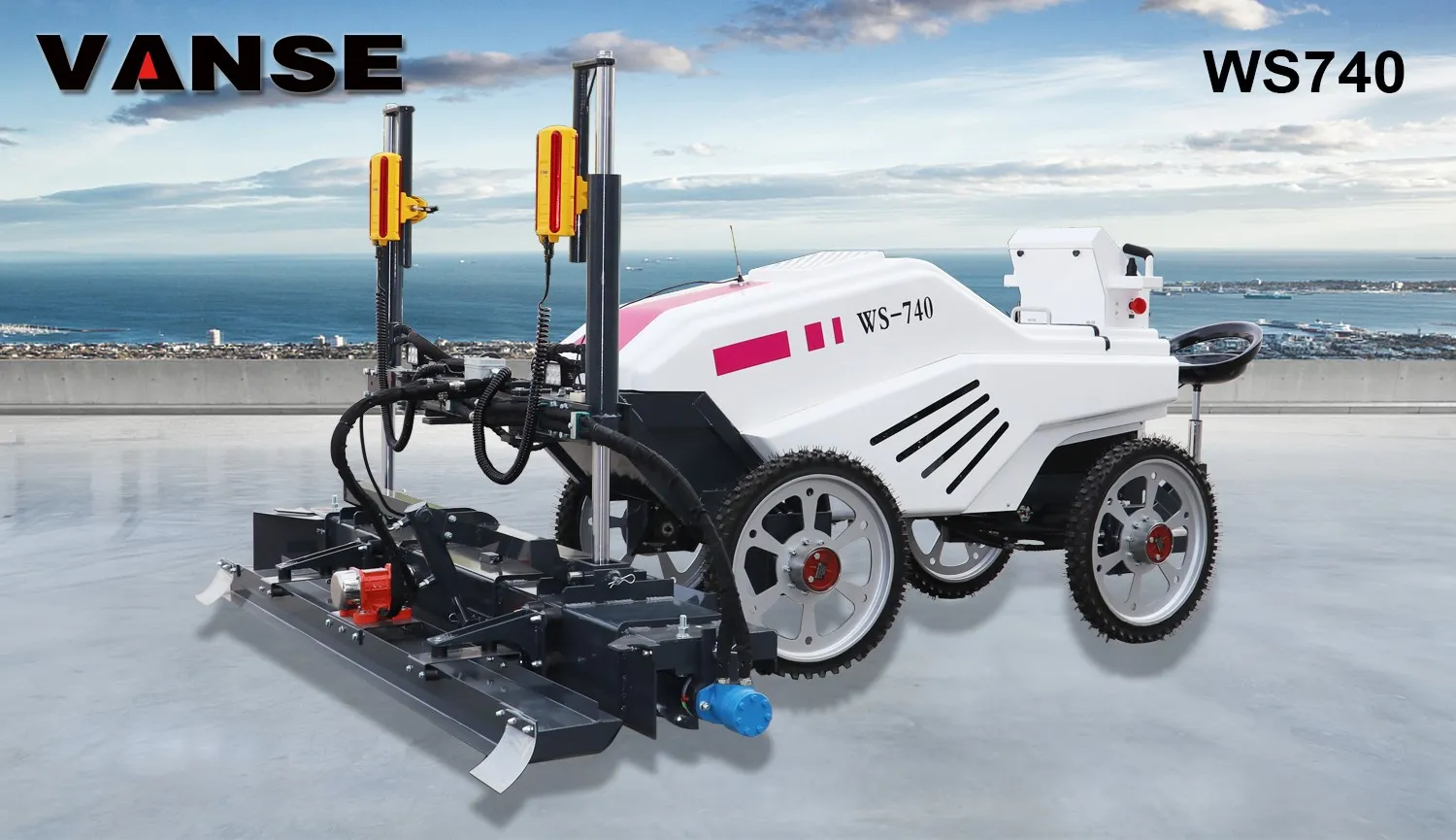
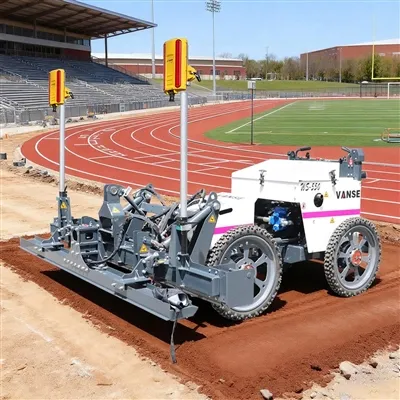
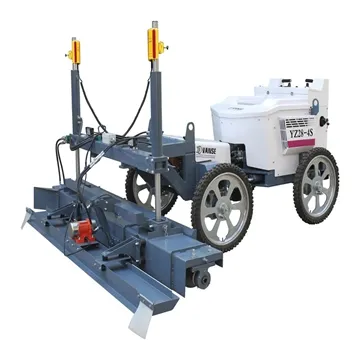
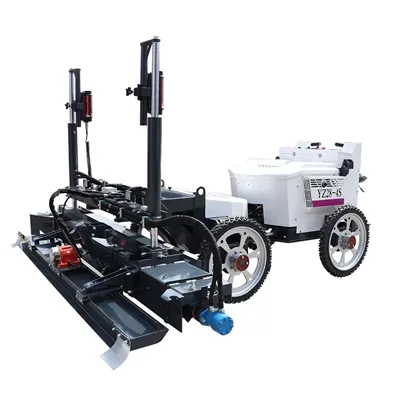
When the laser leveler is working, sanding of the ground is a common fault. The following are the reasons and solutions for sanding of the ground:
I. Reasons
1. Material problems
○ Improper concrete mix ratio, too little cement content or too high mud content in sand will lead to insufficient ground strength and easy sanding.
○ The strength grade of the selected cement is not enough to meet the construction requirements.
2. Construction problems
○ Improper operation of the laser leveler, such as too fast leveling speed, leads to insufficient density of concrete.
○ Poor grasp of the finishing time, too early or too late finishing will affect the quality of the ground.
○ Inadequate maintenance, concrete lacks water during the hardening process, affecting the development of strength.
3. Environmental problems
○ Too high or too low construction environment temperature will affect the coagulation and hardening of concrete and increase the risk of sanding.
○ Low air humidity and too fast evaporation of water on the concrete surface can also easily lead to sanding.
II. Solutions
1. Material aspects
○ Optimize the concrete mix ratio, ensure moderate cement content, and control the mud content of sand.
○ Choose cement with appropriate strength grade to ensure the strength requirements of the ground.
2. Construction
○ Operators should be proficient in the use of laser leveling machines, control the leveling speed, and ensure the density of concrete.
○ Accurately grasp the finishing time, generally finishing after the initial setting of concrete and before the final setting.
○ Strengthen maintenance, such as covering with plastic film and sprinkling water to keep the concrete surface moist, and the curing time is not less than 7 days.
3. Environmental
○ Adjust the construction time and maintenance measures according to the ambient temperature to avoid construction under extreme temperatures.
○ In a dry environment, the number of sprinkling water can be appropriately increased to maintain the humidity of the concrete surface.
Thanks to All the Friends Who Support and Trust Shandong Vanse Machinery Technology Co., Ltd.
If you want to know more about Shandong Vanse Machinery Technology Co., Ltd. or have any questions, please feel free to contact us:
Our Factory
Shandong Vanse Machinery Technology Co., Ltd.








Share this article

About the Author: Shandong Vanse Machinery Technology Co., Ltd.
Shandong Vanse Machinery Technology Co., Ltd. is a high-tech manufacturer specializing in concrete construction machinery, including laser screeds and related equipment. The company integrates R&D, production, and global sales, with products exported to over 60 countries and widely used in infrastructure projects worldwide.
Previous Post
Next Post
Related Articles
You Might Also Like
Analysis of the correlation between the causes of common surface defects (such as color difference, scratches, and peeling) during construction and the operation of concrete laser leveling machine
Concrete laser leveling machines are powerful tools for achieving high-precision floors, but if not operated properly, they can also directly cause or exacerbate various surface defects. The following will conduct a detailed analysis of the causes of three common defects: color difference, scratches, and peeling, and will focus on elaborating their correlation with the operation of laser leveling machines. The laser leveling machine itself is a neutral tool, but parameters such as its operation timing, traveling speed, knife plate Angle, and vibration frequency will directly affect the bleeding, slurry distribution, and density of the concrete surface, thus becoming the "cause" or "inducement" of surface defects. Defect description: After the floor was completed, there were uneven colors, with some areas being darker and others lighter. The essence of color difference lies in the uneven composition of the surface slurry and the distribution of moisture. Specifically, it is manifested as Uneven water-cement ratio: Excessive or insufficient moisture in some areas. Bleeding phenomenon: Water is overly vibrated or squeezed onto the surface. After evaporation, it leaves cement slurry, which is bluish and dark in color. Slurry deficiency: Insufficient surface mortar, exposed aggregates, light and grayish color. Operational issues The mechanism causing color difference Intensity of correlation 1. The timing of the leveling was inappropriate • Premature leveling: When the concrete is still bleeding in large quantities, the knife plate of the leveling machine will stir and mix the water and slurry, disrupting the natural bleeding process and causing local water spots. Extremely high • Late leveling: The concrete has already begun to set, and the trowel cannot bring sufficient slurry to the surface, resulting in slurry loss, exposed aggregates, and the formation of light-colored patches. 2. Uneven walking speed • Excessive speed: The knife plate fails to bring sufficient mortar to the surface in time, resulting in uneven coverage of the mortar. High • Speed fluctuates: In the slow zone, the equipment will rub the concrete excessively, causing concentrated bleeding and darkening of the color. In the rapid area, the slurry is insufficient and the color becomes lighter. 3. Improper vibration frequency • Excessive vibration frequency: Especially when the slump of concrete is large, excessive vibration will intensify bleeding, causing a large amount of water and fine particles to float up, forming dark water marks or slurry spots. High 4. The Angle and height of the knife plate were set incorrectly • Too flat Angle (too small attack Angle) : The blade mainly serves to level rather than lift the slurry, which may result in insufficient surface slurry. Medium • Too steep Angle: Excessive compression of concrete can also promote bleeding. • The height setting is too low: The knife plate overly compresses the concrete surface, forcing the slurry and water to float up. Summary: Improper operation of the laser leveling machine is one of the direct causes of color difference. By controlling the "waiting time" (allowing the concrete to have a stable bleeding process), maintaining a uniform speed, and adjusting the vibration frequency according to the state of the concrete, color differences can be greatly avoided. Defect description: Obvious knife plate scratches or "serpentine" trajectories appear on the surface. The direct cause of the scratches is that the knife plate of the leveling machine left marks on the initially formed surface, and these marks cannot heal by themselves before the concrete solidifies. Operational issues The mechanism that causes scratches Intensity of correlation 1. The knife plate is not clean The initially set concrete blocks bonded on the knife plate will create deep grooves on the new surface. This is the most common reason. Extremely high 2. The timing for leveling was too late The concrete has entered the initial setting period and lost its fluidity. At this moment, the blade was not leveling but plowing the land, and the marks left could not be smoothed and healed. Extremely high 3. Walking too fast The blade quickly cuts across the surface, and the concrete has no time to level and merge behind the blade, forming waves and marks. High 4. The equipment jolts up and down The base layer is uneven or the equipment's tracks/tires are moving on the soft concrete, causing the leveling head to rise and fall accordingly. The knife plate cuts into the surface too deeply, forming periodic dents. High The laser signal receiver is subject to vibration and constantly corrects the height of the machine head, which can also cause slight jolts. 5. The material or type of the knife plate is inappropriate For fast-setting concrete, using hard plastic knife plates can reduce scratches more effectively than using metal knife plates. Medium Summary: Scratches are almost 100% related to the operation of the leveling. Keeping the knife board clean, mastering the correct construction window period, and maintaining a uniform and stable operation on a flat base layer are the keys to eliminating scratches. Defect description: A layer of slurry or mortar on the surface separates from the lower layer of concrete, with extremely low strength. It can be easily scraped off by hand or with a hard object. The mechanism of peeling is that a weak layer with an excessively high water-cement ratio and low strength is formed on the surface, which fails to combine well with the main structure. This weak layer mainly comes from: Excessive bleeding: A large amount of water rises to the surface, forming a layer of cement slurry with an extremely high water-cement ratio. Secondary surface finishing damage: When there is bleeding on the surface, troweling is carried out to press the cement slurry back to the surface layer. Surface loss of mortar: The operation of the leveling machine "takes away" or "destroys" the valuable mortar on the surface. Operational issues The mechanism causing peeling Intensity of correlation 1. Excessive vibration frequency/premature timing Excessive vibration during the bleeding period of concrete is the primary cause of excessive bleeding. A large amount of water and fine particles are forcibly discharged to the surface, forming a weak layer. This layer of slurry has a large shrinkage and low strength, and is very prone to peeling. Extremely high 2. The height of the knife plate is set too low The knife plate penetrates deep into the concrete like a "plough", not only squeezing and bleeding water, but also destroying the already compacted aggregate structure, causing segregation between the slurry and the aggregates, and forming a rich slurry layer without aggregates on the surface, which is prone to peeling. High 3. Too many leveling operations Repeatedly leveling the same area back and forth is equivalent to repeatedly disturbing and rubbing the surface, which aggravates bleeding and damage to the surface structure. Medium 4. Indirect impact: Creating adverse conditions Improper operation of the leveling machine can cause severe bleeding or color difference. When workers operate on it later, improper finishing timing (working when there is standing water) will increase the risk of peeling. Indirect Summary: The laser leveling machine is the key cause of peeling. Excessive vibration and improper pressure on the knife plate are the main culprits for the formation of a weak surface layer. Controlling vibration and avoiding excessive leveling are at the core. Defect Key control points of the laser leveling machine Supporting management measures Color difference Seize the opportunity: Wait until the bleeding stabilizes before starting to level it. Ensure the stability of the concrete mix ratio and the consistency of the slump. 2. Walk at a constant speed: Maintain a stable and appropriate speed. Ensure uniform unloading and avoid uneven local dryness and wetness. 3. Adjust the vibration properly: Dynamically adjust the frequency according to the slump of the concrete. Scratch 1. Keep clean: Clean the adhesive material on the knife plate at all times. • Ensure proper equipment maintenance to guarantee the stability of the hydraulic and control systems. 2. Seize the time: Complete all leveling work before the initial setting. Train the operators to be familiar with the setting characteristics of concrete. 3. Smooth operation: Ensure the base is flat and the equipment moves smoothly. Peeling 1. Avoid over-vibration: It's better to have less than more, especially during the bleeding period. Optimize the concrete mix proportion to reduce bleeding. 2. Set the height: The height of the knife plate should be set just to level it. Do not press it down. The education light collection team must carry out the light collection when there is no bleeding. 3. Reduce the frequency: Plan the path well to avoid repetitive work. Conclusion: The operator of a laser leveling machine is not only the equipment driver but also the "sculptor" of the concrete surface. He must have a profound understanding of the rheological properties of concrete (bleeding and setting), and through precise control of the parameters of the equipment in his hand, guide the concrete to form a uniform, dense and smooth surface. Any mechanized operation that is detached from the state of the concrete (" acting on the material ") is highly likely to cause surface defects. Note: The parameters provided in this document are for reference only and are not mandatory. Due to differences in technical characteristics between different brands and models of laser levelers, please consult the manufacturer for a suitable solution before actual operation. This reference document assumes no responsibility for any issues arising from failure to follow the manufacturer's instructions.Tell you how effective the concrete laser leveling machine is!
Tell you how effective the concrete laser leveling machine is! Many consumers are still hesitating whether they should buy a concrete laser leveling machine, because they have no concept of the construction effect of the equipment. Today we will introduce the use effect of the equipment. First of all, the biggest feature of this equipment is that it is fast, and the time-consuming is 1/10 of manual work, which is enough to make many construction teams excited; secondly, it is flat, and the ground level error after paving is small , is almost negligible. 1. Requirements for concrete and formwork ① Concrete: Concrete must be produced, conveyed or pumped to the flooring site by a commercial concrete production plant. ② Concrete specifications: C25~C30 concrete, the strength of which is not less than 25MPa in 28 days, according to the design requirements. ③ Water-cement ratio: N o more than 0.5, no water can be added during the feeding process. ④ Cement: Use ordinary Portland cement with a grade of not less than 42.5. ⑤ Aggregate: Well-graded aggregate should be used. Crushed granite or pebbles are used as coarse aggregate, and the maximum diameter is not more than 25mm. The fine aggregate is clean river sand with a fineness modulus of 2.4-2.7. ⑥ Concrete mix ratio: The amount of cement is not less than 350Kg/m3. In order to avoid surface quality problems, the sand rate should be controlled at 35% to 40%. ⑦ Concrete slump: 14±2cm, maximum 16cm. ⑧ Setting time: The initial setting time should be controlled within 3-5 hours. In order to avoid the excessive deviation of the surface elevation affecting the joints, the formwork should be steel formwork. The height of the formwork should be controlled within +0 and -2mm, and the steel formwork should be within 1-1.2 meters from the surrounding walls. 2. Construction cooperation requirements ① The concrete feeding speed should be determined according to the ground thickness and pouring area to determine the minimum hourly feeding speed. For a floor with a thickness of 200 mm, if the width of one-time pouring reaches 40 meters, the minimum feeding speed should reach 40 cubic meters per hour, otherwise there will be cold joint problems, which will affect the quality of ground construction. ② Manually coordinate the concrete sent to the platform, and workers need to remove it as soon as possible and roughly level it. In addition, the areas around the formwork, walls, columns, trenches, equipment foundations, floor drains or around pipelines that cannot be leveled require manual cooperation for local leveling. Generally, 3-4 workers are required to cooperate with the construction (provided by Party A). ③ Other precautions In order to ensure the flatness of the ground, attention should be paid to: 1) The slump of concrete sent to the platform must be consistent each time. 2) Ensure that the concrete feeding speed reaches 40 cubic meters per hour or above, and the initial setting time of each batch of concrete must be consistent. 3) Ensure that the formwork elevation is accurate and cannot be disturbed during construction. 4) Environmental cooperation. The concrete floor that has just been constructed cannot be exposed to sunlight, wind, rain, etc. that are unfavorable to concrete health. ④ Other requirements: A. In order to avoid random cracks in the floor, the cutting time of shrinkage joints should be carried out as early as possible (within 24 hours). B. At the same time as the construction of the laser leveling machine, there should be no electric welding machines on site, and no reflective objects (such as glass windows). C. The foundation must reach a certain hardness to ensure that the laser leveling machine does not collapse when working on the ground. D. The height of the ground in the factory building shall be calibrated by Party A, and the points must be evenly distributed, and there must be no error in the levelness. E. Pouring concrete must be operated according to the requirements of Party B's technicians.How to prevent flatness problems on concrete pavement?
To prevent the problem of flatness of concrete pavement, it is necessary to strictly control the quality in various links such as construction preparation, concrete pouring, pavement paving and subsequent maintenance. The specific measures are as follows: – Do a good job of roadbed treatment: The roadbed is the foundation of the road surface and must be guaranteed to be solid, stable and uniform. Before construction, the original ground should be carefully cleaned, weeds, tree roots, garbage and other debris should be removed, and the soft soil, silt and other unfavorable geological areas should be replaced and reinforced. Fill and compact the roadbed according to the design requirements, control the moisture content of the fill, fill and compact in layers, ensure that the compaction meets the standard, and avoid uneven settlement of the roadbed in the later stage and affect the flatness of the road surface. – Precise measurement and layout: Use high-precision measuring instruments, such as total stations, levels, etc., to accurately measure and lay out the center line, side line, elevation, etc. of the road surface. During the construction process, the measurement control points should be reviewed regularly to ensure the accuracy of the measurement data. At the same time, according to the measurement results, set the road template or the guide line of the paver to provide an accurate benchmark for road construction. – Check construction equipment: Ensure that the performance of construction equipment such as concrete mixing equipment, transport vehicles, pavers, and rollers is good and can operate normally. Carry out regular maintenance and maintenance of the equipment, and conduct a comprehensive inspection and commissioning of the equipment before construction. For example, check whether the screed of the paver is flat, whether the vibrating device is working properly, whether the roller wheel of the roller is evenly worn, etc., to ensure that the equipment operates stably during the construction process and avoid problems with the flatness of the road surface due to equipment failure. – Control concrete mix ratio: According to the road design requirements and construction conditions, determine the reasonable concrete mix ratio through experiments. Strictly control the quality and amount of raw materials such as cement, sand and gravel, water, and admixtures to ensure that the workability, strength, and durability of the concrete meet the requirements. In particular, attention should be paid to controlling the slump of concrete. The slump should not be too large or too small. If it is too large, it will easily cause concrete segregation and surface water seepage, affecting the smoothness of the road surface; if it is too small, it will make it difficult to spread and vibrate the concrete. – Ensure the quality of concrete mixing: Use a forced mixer to mix to ensure that the concrete is mixed evenly. Strictly control the mixing time. Determine the appropriate mixing time according to the mix ratio of concrete and the performance of the mixer. Generally, it should not be less than 90 seconds to ensure that the various components of the concrete are fully mixed to avoid uneven distribution of cement slurry and stone clumping, which will affect the working performance of the concrete and the smoothness of the road surface. – Reasonably arrange concrete transportation: Choose appropriate transportation vehicles to ensure that concrete does not segregate or leak during transportation. According to the distance and traffic conditions of the construction site, reasonably arrange the number of transportation vehicles and transportation routes to ensure that concrete can be supplied to the construction site in time, avoid waiting for too long during transportation, resulting in excessive slump loss, and affecting the quality of concrete spreading and vibration. – Standardize paving operation: When using a paver for concrete paving, adjust the working parameters of the paver, such as the elevation angle of the screed, vibration frequency, paving speed, etc. The paver should move forward at a uniform speed, and the speed is generally controlled at 2-3m/min to avoid too fast or too slow speed. During the paving process, a special person should be arranged to follow the machine and deal with the leakage and uneven parts on both sides of the paver in time. If manual paving is used, the paving thickness and surface flatness must be strictly controlled. Use tools such as scrapers and shovels to roughly flatten the concrete, and then vibrate it with a vibrating beam or a flat vibrator. – Strengthen vibration control: Vibration is a key link to ensure the density and flatness of concrete. According to the slump and paving thickness of the concrete, choose the appropriate vibration equipment and vibration method. Generally, a combination of an inserted vibrator and an attached vibrator is used for vibration. The inserted vibrator should be inserted vertically into the concrete, and the vibration points should be evenly distributed. The spacing should not be too large, generally about 1.5 times the radius of the vibrator. The vibration time is based on the concrete surface no longer having bubbles, slurry and sinking, generally 20-30 seconds. The attached vibrator should be installed on the formwork to make the concrete dense by vibrating the formwork. During the vibration process, the vibrator should be prevented from colliding with the formwork, steel bars and force transmission rods, so as not to affect the flatness and structural dimensions of the road surface. – Do a good job of finishing: After the concrete is vibrated, the finishing operation should be carried out in time. The finishing is generally done in two times. The first finishing is done after the concrete surface absorbs water. A wooden trowel is used to scrape the surface slurry, gravel, etc. to make the road surface flat. The second finishing is done before the concrete is initially set. An iron trowel is used for fine finishing to make the road surface flatter and smoother. At the same time, attention should be paid to controlling the strength and number of finishing to avoid excessive finishing, which may lead to excessive thickness of cement slurry on the surface, cracks, peeling, etc. – Standard roughening treatment: After finishing, roughening should be done in time to increase the roughness of the road surface and improve driving safety. The depth and spacing of roughening should be uniform. Generally, the depth of roughening is 2-3mm and the spacing is 2-4cm. Roughening can be done with tools such as a roughening machine or a broom. The roughening direction should be consistent with the driving direction of the road surface to ensure uniform and beautiful roughening quality. – Timely maintenance of the road surface: After the concrete road surface is poured, it should be maintained within 12 hours. The maintenance method can be to cover with moisturizing materials such as geotextiles and straw mats, and regularly sprinkle water to keep it moist, or spray curing agents for maintenance. The maintenance time is generally not less than 7 days. For high-strength concrete or concrete constructed in high temperature and dry environments, the maintenance time should be appropriately extended. During the maintenance period, it is necessary to ensure that the concrete surface is always moist to avoid shrinkage cracks caused by water loss in the concrete, which will affect the flatness of the road surface. – Strict traffic control: During the maintenance of the concrete pavement, strict traffic control must be carried out, and all vehicles and pedestrians are prohibited from passing on the road surface until the concrete reaches the design strength. Before the road surface is opened to traffic, the road surface must be inspected and accepted to ensure that the various indicators such as the flatness and strength of the road surface meet the design requirements. At the same time, obvious warning signs should be set up on the road surface to guide vehicles and pedestrians to bypass the construction area to avoid damage to the road surface that has not been fully formed. ARMOUR JOINT CONCRETE LASER LEVELING MACHINE LIGHT TOWER POWER TROWEL STEEL FIBER TRACKED MINI DUMPER