Technical Knowledge
How long does it take to recover the investment in a laser leveling machine?

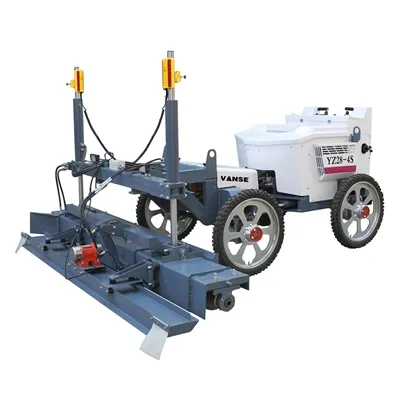
Concrete laser leveling machine is the most popular mechanical equipment in concrete floor construction nowadays. Many construction and floor construction units have purchased concrete laser leveling machines, because the labor cost saved by concrete laser leveling machine for construction and the wealth brought by it have been proved by countless users.
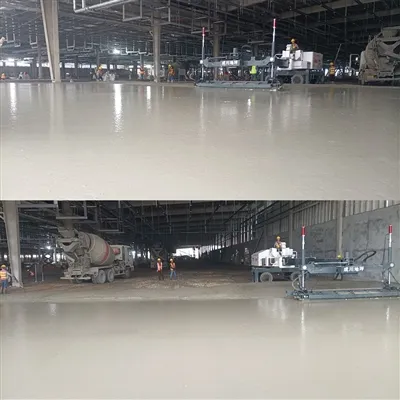
For users who want to buy concrete laser leveling machine, a question they are more concerned about is how long it will take to recover the cost of the machine. In response to this problem, we summarized the before and after construction comparison of previous customers, and combined with the purchased equipment models and local market to conduct an analysis. Different concrete laser leveling machines have different prices, daily working areas and profits. Taking dz30-2 as an example, the construction area per hour is more than 300 square meters, and the daily workload can be completed in more than 2000 square meters to 2500 square meters. Taking the labor and cost saving of 4 yuan per square meter as an example, the daily profit is about 6000 yuan. If the project goes smoothly, the cost can be recovered in less than two months.
Concrete laser leveling machine is suitable for large-area paving work. Through the connection with the power supply, the click generates power to drive the operation of the machine to complete the designated work and tasks. The independent transmitter arrangement of the laser leveling machine can complete large-area building paving, thereby effectively ensuring the consistency of other ground elevations.
Moreover, the elevation is not controlled by the template, so the error caused by the machine construction is very small, which can effectively reduce the problem of construction joints and also minimize the subsequent maintenance costs.
Thanks to All the Friends Who Support and Trust Shandong Vanse Machinery Technology Co., Ltd.
If you want to know more about Shandong Vanse Machinery Technology Co., Ltd. or have any questions, please feel free to contact us:
Our Factory
Shandong Vanse Machinery Technology Co., Ltd.








Share this article

About the Author: Shandong Vanse Machinery Technology Co., Ltd.
Shandong Vanse Machinery Technology Co., Ltd. is a high-tech manufacturer specializing in concrete construction machinery, including laser screeds and related equipment. The company integrates R&D, production, and global sales, with products exported to over 60 countries and widely used in infrastructure projects worldwide.
Previous Post
Next Post
Related Articles
You Might Also Like
Can the bathroom floor be leveled with self-leveling cement?
It is feasible to use self-leveling cement to level the bathroom floor, but some details and construction steps need to be paid attention to. Below are detailed answers to the use of self-leveling cement for bathroom floor leveling. 1. Characteristics of self-leveling cement Self-leveling cement is a special cement material with strong fluidity, small shrinkage, high strength, wear resistance, and anti-skid properties. It is a pre-mixed dry powdery material that, when mixed with water, can automatically level and form a smooth, flat ground. 2. Advantages of using self-leveling cement on bathroom floor ♦Good leveling effect: Self-leveling cement can automatically level, reducing manual operations and avoiding uneven ground problems. ♦Smooth surface: The floor formed by self-leveling cement is very smooth, difficult to accumulate dirt and moisture, and easy to clean. ♦Wear-resistant and anti-skid: Self-leveling cement has high wear-resistant and anti-skid properties, which can ensure the safety and service life of the bathroom. ♦Environmental protection: Self-leveling cement produces relatively little pollution and noise during the construction process, which complies with environmental protection requirements. 3. Construction steps for using self-leveling cement on bathroom floor ♦Preparation: Clean the bathroom floor to ensure there is no oil, moisture and debris. Make simple repairs to the ground, such as filling cracks and local leveling. ♦Measure the area: Measure the bathroom floor to determine the amount of self-leveling cement required. ♦Mixing materials: Mix self-leveling cement and water according to the proportion required in the instruction manual, and stir evenly. ♦Pour grout laying: Pour the mixed self-leveling cement slurry on the ground and let it flow freely until it covers the entire ground. Make sure the slurry is of consistent thickness to avoid build-up or thin layers. ♦Scraping operation: Use a scraper to smooth the self-leveling cement to control surface flatness and slope. Scaling and patching can be done as many times as needed. ♦Maintenance: Carry out maintenance after the initial setting of the self-leveling cement, keep the ground moist, and avoid walking and placing heavy objects. Maintenance time generally takes more than 24 hours. ♦Complete finishing: After the maintenance is completed, finishing work such as laying anti-skid tiles and floors can be carried out to enhance the beauty and practicality of the ground. 4. Precautions ♦Before using self-leveling cement, make sure the bathroom floor is dry, flat and firm to avoid the slurry from adhering easily or causing hollowing. Self-leveling cement has high strength and wear resistance, but for heavily loaded areas or areas subject to frequent friction, it is recommended to reinforce or choose a more wear-resistant material. ♦When mixing self-leveling cement, the material proportion and mixing time should be strictly controlled in accordance with the instructions to ensure stable slurry quality. ♦When scraping, attention should be paid to controlling the strength and direction of the scraper to avoid scratches or marks. Local unevenness or defects can be repaired. ♦During the maintenance period, the ground should be kept moist to avoid direct sunlight or high temperatures that may cause the surface to dry out too quickly. At the same time, avoid walking and placing heavy objects to avoid damage to the ground. ♦After completing the finishing work, regular cleaning and maintenance should be carried out to avoid dirt accumulation and wear and tear, and to maintain the beauty and service life of the floor. In short, using self-leveling cement to level the bathroom floor has many advantages and feasibility. However, attention should be paid to details and precautions during the construction process to ensure that the quality and effect of the ground are at its best. If you have any questions or need further information, it is recommended to consult professionals or construction teams for advice and guidance.What details do you need to pay attention to when using a concrete laser leveling machine to deal with special ground conditions?
When using a concrete laser leveling to deal with special ground conditions, you need to pay attention to the following details: 1. For situations where construction efficiency is high, it is necessary to ensure that the later cutting work is carried out in a timely manner. Usually, each laser paving and leveling machine needs to be equipped with 7-8 seam cutting machines to meet the requirements. 2. The laser leveling machine should not travel too fast during leveling operations to ensure the leveling effect and quality. 3. Before concrete leveling, preliminary leveling work is required to ensure that the concrete surface after initial leveling is higher than the established elevation. 4. When dealing with special ground conditions, you can consider using mulching film covering and maintenance methods, and covering the seams with non-woven fabric to protect the surface. 5. When installing the laser transmitter, special attention needs to be paid to avoiding obstacles to avoid affecting the laser emission and leveling effects. 6. During the construction process, the steel mesh may experience horizontal displacement due to the alkaline side pressure. In order to effectively control the horizontal displacement of the steel mesh sheets, isolation benches can be placed between adjacent steel mesh sheets, and these benches can be used interchangeably. Please note that the above are just some basic considerations and specific details may vary depending on ground conditions and construction requirements. When dealing with special ground conditions, it is recommended to evaluate based on the actual situation and seek professional advice.The influence of the blade configuration of the power trowel machine on the final surface effect of concrete
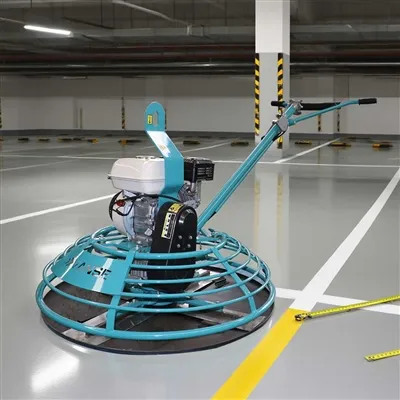
The configuration of power trowel blades (commonly known as power trowel blades or power trowel discs) directly determines the final flatness, smoothness, strength and wear resistance of the concrete surface. Improper selection and use can lead to various surface defects. The following elaborates in detail on how the configuration of the power trowel machine blades affects the final surface effect of concrete. Shape: Usually wide and thick, with a relatively small number of blades (commonly 3 or 4), and the blades have a large inclination Angle (negative Angle) with the rotating plane. Main functions: Lifting slurry and leveling. Working mode Scraping effect: The larger negative Angle causes the front edge of the blade to "shovel" the concrete surface. It can effectively level the height difference between aggregates (stones), bring the wetter mortar from the lower layer to the surface, and form a "cement slurry layer". Compaction: Through rolling, the surface aggregates are pressed into the interior of the concrete, making the structure more compact. Influence on surface effect: The front side: It provides a relatively smooth base layer rich in cement slurry for subsequent fine plastering. If this step is not taken, direct fine power troweling may bring out the aggregates, resulting in a rough and uneven surface. Negative: If it is used too late (the concrete is too hard), it will loosen the surface, causing cracks or wavy patterns. If used for too long, it will carry out excessive moisture and slurry, resulting in a fragile surface. Shape: Usually thin and narrow, with a large number of blades (commonly 8 to 12), and the Angle between the blades and the rotating plane is small, even close to horizontal (positive Angle or zero Angle). Main functions: Compaction, sealing and polishing. Working mode Patting and smoothing: Numerous and narrow blades pat and smooth the surface of the cement slurry at high speed and frequency to eliminate the marks left by rough smoothing. Sealing the surface: Compact the fine particles in the cement slurry, force the air out, seal the surface capillary pores, and form a dense, pore-free hardened layer. Generating luster: When the concrete is close to final setting, the high-speed rotating precision power trowel rubbing against the surface generates heat, causing the surface of the slurry to "melt" and present a luster. Influence on surface effect: Front: Achieve a dense, smooth, wear-resistant and dust-free surface. The level of glossiness is also determined at this stage. Negative: If used too early, the blade may get stuck in the concrete, creating wavy patterns or even damaging the surface. If used too late, the surface cannot be effectively sealed, which will cause powdering and sanding on the surface. Configuration factors The influence on the surface effect of concrete Applicable scenarios and suggestions Blade Angle This is the most crucial configuration parameter. Rough scraping stage: Use a negative Angle (with the front edge of the blade facing down) to achieve the effect of scraping and lifting the slurry. Fine smoothing stage: Use a small positive Angle or zero Angle (the blade is nearly horizontal) to achieve the effect of patting and smoothing. The larger the Angle, the stronger the cutting force, but the lower the surface finish. The smaller the Angle, the better the polishing effect. Number of blades The more the quantity, the more times each rotation is tapped, and the smoother the smoothing effect will be. Coarse power trowel (3-4 pieces) : Focuses on efficiency and slurry lifting. Fine power trowel (8-12 pieces or more) : Focuses on achieving extremely high flatness and smoothness. The more pieces there are, the finer the final surface will be. Blade material Wear resistance and toughness directly affect lifespan and performance. Spring steel: The most commonly used, it has good toughness, is not easy to break, and offers high cost performance. Tungsten carbide/hard alloy: Extremely wear-resistant, used for treating super-hard concrete or renovating old floors, with an extremely long service life, but expensive. The newness or oldness of the blade Blades that are severely worn cannot function effectively. Old/worn blades: Low efficiency in slurry lifting and polishing can lead to uneven surfaces and poor smoothness. Regular inspection and replacement are necessary. New blade: It can provide the best design Angle and cutting force to ensure the polishing effect. No matter how good the blade is, if it is used wrongly, the opportunity will be wasted. The blade and operation must be switched according to the setting condition of the concrete (the person standing on it should not sink more than 3mm). Phase One: Rough power troweling (Slurry lifting and leveling Timing: After the concrete has initially set, when it sinks by about 5 to 10mm when stepped on. Configuration: Install a coarse power trowel (negative Angle). Operation: The machine runs at a relatively slow speed and mainly focuses on leveling and large-angle scraping. Press the aggregates down and lift the cement slurry up to eliminate the obvious unevenness. Phase Two: Fine Smoothing (Pressing and smoothing) Timing: After the rough plastering is completed, when the concrete further hardens and sinks by about 1-3mm when stepped on. Configuration: Replace with a fine spatula (zero degree or small positive Angle). Operation: The machine speed can be increased and the smoothing can be carried out in a cross direction. At this point, it should be clearly visible that the surface gradually becomes fine and dense, and the rough knife marks are eliminated. Phase Three: Polishing (achieving a bright finish) Timing: When the concrete is close to final setting and there is almost no subsidence when stepped on. Configuration: Continue to use the fine spatula, but you can increase the Angle to a smaller positive Angle (if the blade head is adjustable). Operation: Run at high speed and "drift light" at a small Angle to the ground. The heat generated by friction will slightly liquefy the surface slurry, creating a mirror-like luster. Surface powdering and sanding Reason: The fine power troweling was done too late, and the surface could no longer be effectively compacted and sealed. Or the number of fine power trowel blades is insufficient or the Angle is inappropriate, resulting in poor polishing effect. The surface has wavy patterns and is uneven. Reason: The rough application was done too late, and it was caused by hard scraping and pulling. Or the blade angles are inconsistent (with different degrees of wear); The machine's walking speed is uneven. Exposed aggregates, rough surface The reason is that the coarse coating was skipped or not done thoroughly, and the fine coating was started before a thick enough layer of cement slurry was formed, which brought out the aggregates. Cracks on the surface: Reason: Using a coarse power trowel when the concrete was still too soft (bleeding period) damaged the surface structure. Or the polishing was done too early, causing the blade to sink and the material to be pushed and cracked. The configuration of a power trowel blade is a systematic project that involves using the "right tool" at the "right time" in the "right way". The rough power trowel is the foundation, responsible for creating a smooth and cement-rich working surface. The fine power trowel is the key, responsible for creating a dense, smooth and wear-resistant final surface. The Angle of the blade is the soul, directly determining whether the machine is a "scraper" or a "polishing machine". The timing of construction is the lifeblood. No matter how perfect the configuration is, it cannot play its role if the window period is missed. Only by mastering the relationship among the three proficiently can consistently produce high-quality concrete surfaces. Note: The parameters provided in this document are for reference only and are not mandatory. Due to differences in technical characteristics between different brands and models of laser levelers, please consult the manufacturer for a suitable solution before actual operation. This reference document assumes no responsibility for any issues arising from failure to follow the manufacturer's instructions.