Technical Knowledge
How to maintain and service the riding power trowel to extend its service life?

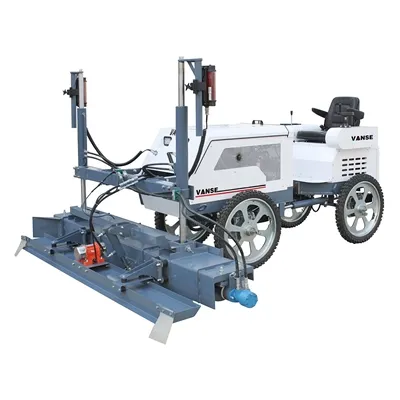
A ride-on trowel is a construction machine used to smooth and compact concrete surfaces. Here are some ways to maintain and service it:
Daily maintenance
– **Cleaning the machine body**
– After each use of the ride-on trowel, clean the concrete, dust and other debris on the machine surface in time. You can use a damp cloth or a soft brush to clean it to prevent debris from sticking to the machine body for a long time and causing corrosion. For example, chemicals in concrete may react with the metal material of the machine body, so it must be cleaned in time.
– Pay special attention to cleaning the chassis and around the blade of the trowel. These parts are in direct contact with concrete and are most likely to accumulate dirt.
– **Check the blade**
– Check the wear of the blade before and after use every day. If the blade is worn too much, it will affect the troweling effect. Generally, it is judged by observing whether the blade edge becomes blunt or has a notch.
– If the blade is found to be severely worn, it needs to be replaced in time. And when installing a new blade, make sure the blade is firmly installed and tighten the fixing screws to prevent the blade from loosening during work and causing safety accidents.
– **Check fuel and lubricating oil**
– For fuel-powered ride-on trowels, check the fuel quantity and quality regularly. Use qualified fuel and avoid using fuel containing impurities or water to prevent damage to the engine.
– At the same time, check the oil level and oil quality of the lubricating oil. Insufficient lubricating oil will increase the friction between machine parts and lead to increased wear. If the lubricating oil is found to be dirty or insufficient, it should be added or replaced in time. It is generally recommended to replace the lubricating oil according to the time and model specified in the machine's instruction manual.
Regular maintenance (weekly, monthly, etc.)
– **Check the various connecting parts of the machine**
– Regularly check the connecting parts of the ride-on trowel, such as screws, nuts, etc., for looseness. Because the machine will vibrate during operation, these connecting parts may become loose.
– Use tools such as wrenches to check and tighten various connecting parts, especially the connecting screws of key parts such as chassis, engine, and joystick.
– **Clean the air filter**
– The function of the air filter is to filter the air entering the engine and prevent impurities such as dust from entering the engine. If the air filter is clogged, it will cause insufficient air intake to the engine, affecting its performance and service life.
– The air filter can be removed and cleaned with compressed air or water. After cleaning, make sure it is completely dry before installing it back. It is generally recommended to clean the air filter once a week or every two weeks. The specific cycle depends on the dust conditions in the working environment.
– **Replace the engine oil and oil filter**
– The engine oil plays a role in lubrication, cooling and cleaning during the operation of the engine. As the use time increases, the engine oil will become dirty and deteriorate, so it needs to be replaced regularly.
– At the same time, the oil filter also needs to be replaced to ensure the filtering effect. Generally, the engine oil and oil filter need to be replaced every 50-100 hours of work (the specific time depends on the machine's instruction manual).
Long-term storage and maintenance
– **Storage environment selection**
– If the ride-on trowel is to be stored for a long time, a dry and well-ventilated indoor environment should be selected. Avoid storing in humid or corrosive places to prevent the machine from rusting and corrosion.
– **Cleaning and protection of the whole machine**
– Before storage, the machine should be thoroughly cleaned, including the body, chassis, blades and other parts. And apply a layer of anti-rust oil on the metal surface to protect the machine.
– You can use special anti-rust oil or lubricating oil for application, focusing on parts that are prone to rust, such as blades, screws, etc.
– **Battery maintenance (if it is an electric trowel)**
– For electric driving trowels, pay attention to battery maintenance when stored for a long time. Take out the battery after it is fully charged and store it in a dry and cool place. Charge the battery once every period of time (generally recommended every month) to prevent damage caused by battery self-discharge.
Thanks to All the Friends Who Support and Trust Shandong Vanse Machinery Technology Co., Ltd.
If you want to know more about Shandong Vanse Machinery Technology Co., Ltd. or have any questions, please feel free to contact us:
Our Factory
Shandong Vanse Machinery Technology Co., Ltd.








Share this article

About the Author: Shandong Vanse Machinery Technology Co., Ltd.
Shandong Vanse Machinery Technology Co., Ltd. is a high-tech manufacturer specializing in concrete construction machinery, including laser screeds and related equipment. The company integrates R&D, production, and global sales, with products exported to over 60 countries and widely used in infrastructure projects worldwide.
Previous Post
Next Post
Related Articles
You Might Also Like
The Cold Wave Is Coming! If The Laser Leveling Machine Is Not Used For A Long Time, You Need To Pay Attention To 10 Maintenance Tips
The cold wave is coming and the temperature drops sharply. In order to reduce the impact of low temperature on the laser leveling machine equipment, Wanshi Friendly reminds you to do a good job in keeping the laser leveling machine cold and warm to prevent "frostbite" incidents of the equipment, so as to avoid inconvenience to you. or cause unnecessary losses. The cold wave is coming, how to maintain the laser leveling machine in winter? 01 "Great health care" in the off-season, "Roll up your sleeves and do it" in the peak season When the winter cold wave hits, floor construction gradually enters the off-season, and the laser leveling machine is parked for a long time. It is necessary to pay attention to "equipment maintenance" and ensure that the laser leveling machine equipment is in good working condition at all times, so that it can be used for the first time when the construction peak season arrives. Invest in on-site work at once to seize market opportunities. However, low-temperature construction in winter is also a huge challenge and test for concrete and concrete laser leveling machines. Do a good job of maintenance in the off-season and seize market opportunities in the peak season! As the pioneer and leader of laser leveling machines, Wanshi concrete laser leveling machine product series can fully meet the concrete floor pouring and paving construction of different types of construction projects. Currently, it occupies more than 80% of the national market share and the global market share. It is also increasing year by year. Especially as an important construction equipment for high-end floors such as logistics warehouse floors, high-quality factory floors, garage floors, and ultra-flat wear-resistant floors, Wanshi Concrete Laser Leveling Machine plays a vital role for floor builders. effect. 02 Laser leveling machine, winter maintenance tips Today, Wanshi will bring you tips on winter maintenance of concrete laser levelinging machines. I hope you can do a good job in winter maintenance of the equipment, protect your investment, and become your money-making machine! 1. Maintenance recommendations for large laser leveling machines and spreaders: 1) Add diesel and antifreeze suitable for the local temperature according to the area where the equipment is located. 2) When the device is idle, you should pay attention to the battery level. The battery can be removed when the equipment is parked for a long time. If it is difficult to start, an auxiliary battery can be added. 3) Replace the third engine filter. 4) Add butter in time and clean the piston rod and other parts of the oil cylinder. 5) The equipment needs to be cleaned and dried before being put into storage, otherwise the equipment will freeze and cause damage to the pipelines. 6) During winter construction, it is necessary to preheat the equipment and wait until the hydraulic oil reaches the working temperature before proceeding with construction. 2. Maintenance suggestions for small laser leveling machines: 1) After construction, clean the machine, move it to a ventilated and sunny place, and dry it in the sun and blow dry to prevent freezing. 2) Butter should be added in time. 3) Clean the engine carburetor, replace the air filter element, and replace the oil filter element. If it is difficult to start, add an auxiliary battery. 4) The equipment needs to be preheated before use. If something happens to your device, don't worry! When you choose Wanshi equipment, you also choose to have worry-free after-sales protection. We provide all customers with high-quality after-sales service 7 days x 24 hours x 365 days. Wanshi provides 7 days x 24 hours x 365 days round-the-clock service If you have any problems with the operation of your device, you are welcome to contact us at any time. Remote telephone after-sales guidance is an efficient after-sales support method. Our after-sales service engineers will contact you as soon as possible and help you restore normal operation of the equipment as soon as possible.What is the difference between a concrete laser leveling and a paver?
Concrete laser levelings and pavers are two different mechanical equipment with different functions and application fields. Here are their main differences: ※Working principle The concrete laser leveling machine uses laser measurement technology to emit a laser beam through a laser transmitter. The laser receiver receives the reflected laser signal and calculates the distance and direction of the leveling machine's movement, thereby accurately controlling the leveling machine's traveling route and direction. height to achieve the purpose of leveling the concrete surface. A concrete paver is a mechanically or hydraulically driven mixing device that mixes the concrete evenly and then spreads the concrete onto the working surface through a conveyor belt or scraper. It relies on the mixing device and the conveying device to complete the concrete laying operation. ※Application fields Concrete laser leveling machines are mainly used for leveling operations in large-area concrete projects, such as highways, bridges, parking lots, etc. It has the advantages of high precision, high efficiency, automation, etc., and can complete the leveling work of a large number of concrete surfaces in a short time. Concrete pavers are mainly used for laying concrete projects. It can lay various concrete structures, such as floors, walls, floors, etc. ※Operation method Concrete laser levelings usually use automated control systems that can be operated via a computer or remote control. The operator only needs to set relevant parameters and routes, and the leveling machine can automatically perform leveling operations. Concrete pavers are relatively simple to operate. Operators need to master the operating skills of mechanical equipment and the process requirements of concrete mixing, and complete the concrete laying operation by controlling the mixing device and conveying device. ※Processing quality Due to the use of laser measurement technology, the concrete laser leveling machine can complete large-area leveling operations in a short time and can achieve high precision and flatness. It can control the flatness error of the concrete surface within a small range and improve the quality and service life of the concrete surface. The quality of concrete paver processing depends primarily on the skill and experience of the operator. If the operator has rich experience and high skill level, he can achieve better laying results. However, if the operator's technical level is not high or unskilled, it may lead to uneven or uneven laying, affecting the processing quality and service life. ※Processing efficiency The processing efficiency of concrete laser leveling machines is usually high. It can achieve automated control and high-precision measurement to complete the leveling operations of a large number of concrete surfaces in a short time. At the same time, due to the use of laser measurement technology, it can avoid errors and delays in traditional measurement methods. The processing efficiency of concrete pavers is relatively low. It requires operators to manually control the parameters and time of the mixing device and conveying device, thus requiring more time and manpower to complete large-area concrete projects. ※Maintenance and care Maintenance and maintenance of a concrete laser leveling is relatively simple. It requires regular inspection of the cleanliness and accuracy of the laser transmitter and receiver, as well as routine lubrication and maintenance of the machine. At the same time, regular cleaning and maintenance of the machine is also required to maintain the normal operation and service life of the machine. Concrete pavers are relatively complex to maintain and maintain. It requires regular inspection of the working status of the mixing device, conveying device and engine, as well as regular lubrication and maintenance of the machine. At the same time, the equipment also needs to be cleaned and maintained regularly to extend the service life of the machine. To sum up, although concrete laser levelings and pavers are used for the treatment and paving of concrete surfaces, their working principles, application fields, operating methods, processing quality, processing efficiency and maintenance are all different. Certain differences. When choosing to use it, you need to choose appropriate mechanical equipment according to the actual situation to meet the construction requirements.One-step forming construction method of high-precision wear-resistant floor without cutting based on concrete laser leveling technology
– Using laser leveling technology, the laser transmitter generates a precise and stable plane reference. The laser receiver is installed on the leveling machine to sense the deviation in real time, so that the leveling machine automatically adjusts the scraper height to ensure that the floor flatness error is extremely small, which can generally be controlled within ±1.5mm, and can meet the needs of high-end industrial plants, electronic chip manufacturing workshops and other places with strict requirements on flatness. – Optimize the concrete mix ratio, add appropriate amounts of expansion agents, fibers and other admixtures, reduce the shrinkage stress during the hardening process of concrete, and cooperate with the carefully designed construction process, so that the floor does not need to set expansion joints in a large area, which is not only beautiful but also reduces the later maintenance cost, and avoids the accumulation of dust and debris caused by cutting seams. – In the initial setting stage of concrete, wear-resistant materials such as corundum and metal aggregates are evenly spread, and a special trowel is used to closely combine with the floor to form a hard and wear-resistant surface layer. The wear resistance can be several times higher than that of ordinary concrete floors. It is suitable for places with frequent wear and tear such as heavy traffic areas, warehouses, and logistics centers. – From base treatment, concrete pouring, leveling to wear-resistant material spreading, troweling and finishing, the processes are closely connected and completed in one go, avoiding the problem of poor interlayer bonding caused by layered construction, improving the overall strength and durability of the floor, and reducing the construction period. It can usually shorten the construction period by 1/3 – 1/2 compared with traditional processes. Applicable to indoor and outdoor concrete floor projects with large areas and high requirements for flatness and wear resistance, such as various large industrial plants, logistics storage centers, airport terminals, exhibition halls, parking lots, etc., especially suitable for places where obvious expansion joints are not expected to affect the appearance or use function. – The laser transmitter emits a rotating laser beam to form a high-precision horizontal control surface. The laser receiver installed on the leveling machine continuously captures the laser signal, compares the actual elevation of the floor with the laser plane benchmark, and transmits the generated deviation signal to the control system. The control system drives the hydraulic actuator of the leveling machine to adjust the scraper, vibrator and other components in real time to accurately level and vibrate the concrete to achieve high-precision leveling. – On the one hand, by optimizing the concrete mix ratio, selecting low-hydration hot cement, adding an appropriate amount of expansion agent (such as calcium sulfoaluminate expansion agent) to compensate for concrete shrinkage, adding polypropylene fiber to enhance concrete toughness and inhibit the generation of microcracks; on the other hand, during the construction process, strictly control the concrete pouring temperature, vibration method and curing conditions, reasonably arrange the construction sequence, reduce the temperature difference between the inside and outside of the concrete and stress concentration, so that the floor itself has the ability to resist shrinkage and deformation, thereby meeting the requirements of no seam cutting. – The surface of concrete in the initial setting stage has a certain viscosity. At this time, the spread wear-resistant material can be embedded in the surface of the concrete. With the subsequent leveling and finishing operations, the wear-resistant material and the concrete form a solid whole. Wear-resistant materials such as corundum and metal aggregates have high hardness and strong wear resistance, forming a wear-resistant protective layer on the surface to protect the main concrete of the floor from wear. – Technical preparation: Familiar with the construction drawings and technical specifications, formulate detailed construction plans, and conduct technical briefings. – Site preparation: Clean up the site debris and accumulated water, level the base layer, and if the base layer is soft soil, it needs to be reinforced; set up a temporary drainage system for construction; plan the concrete pouring and leveling route according to the site area and shape. – Material preparation: Purchase high-quality cement, sand, gravel, admixtures, wear-resistant materials, etc. according to the design requirements, inspect the raw materials to ensure that they meet the quality standards; prepare sufficient construction water and electricity. – Equipment preparation: Debug concrete laser leveling machine, concrete mixing equipment, transportation equipment, wear-resistant material spreader, trowel, etc. to ensure the normal operation of the equipment; calibrate the laser system so that the laser plane it emits is consistent with the designed elevation of the floor. – Thoroughly clean the surface of the base to remove pollutants such as dust and oil; compact the base with a roller or tamping machine to achieve a compaction degree of more than 90%; repair and fill local low-lying areas and potholes with concrete or mortar to ensure that the flatness error of the base does not exceed ±10mm. – Accurately weigh the raw materials according to the designed mix ratio, use a forced mixer to mix the concrete, and the mixing time is not less than 90 seconds to ensure the uniformity of the concrete; transport the concrete to the construction area by pumping or unloading, control the pouring speed, avoid concrete segregation, and the pouring thickness is slightly higher than the designed floor elevation by 10-20mm to reserve space for leveling. – Start the laser leveling machine and make it move forward at a uniform speed of 1-2m/min; the operator adjusts the scraper height and vibration frequency of the leveling machine in real time according to the feedback signal of the laser receiver to ensure that the concrete surface is flat and compacted; the leveling work of adjacent areas should be completed before the initial setting of the concrete, and the overlapping construction width should not be less than 10cm to ensure the integrity of the floor. – When the concrete is initially set (generally there are slight footprints when stepping on it, and the sinking depth is about 3-5mm), use a special spreader to evenly spread the wear-resistant materials on the floor surface according to the specified amount, and the spreading thickness is generally 3-5mm; during the spreading process, pay attention to controlling the spreading speed and direction to avoid accumulation or leakage of wear-resistant materials, and ensure that the spreading uniformity reaches more than 90%. – After spreading the wear-resistant material, use a trowel to smooth it immediately. The trowel should run in a crisscross pattern to fully blend the wear-resistant material with the concrete. The number of smoothing passes should be no less than 3 times. As the concrete continues to harden, when there is no water stain on the surface and it feels slightly hard when pressed with fingers, it should be smoothed manually. Aluminum alloy rulers, trowels and other tools should be used to make the floor surface bright and smooth. – After smoothing and finishing, the floor should be maintained in time by covering with plastic film, spraying curing agent or laying water straw mats. The maintenance time should be no less than 7 days. During this period, the concrete surface should be kept moist to avoid water loss and cracks. Warning signs should be set up during the maintenance period to prohibit vehicles and pedestrians from passing on floors that do not meet the strength requirements. – Calibrate the laser system before construction to ensure the accuracy of the laser plane; regularly check the flatness with a 2m ruler and a feeler gauge during construction, at least once every 100-200 square meters, and adjust the leveler in time if deviation is found; use a laser flatness meter to fully test the flatness of the floor after finishing to ensure that it meets the design requirements. – Strictly select wear-resistant materials according to design requirements and check the quality certification documents of wear-resistant materials; supervise the spreading amount and uniformity during spreading to ensure that the specified requirements are met; after maintenance, on-site wear resistance tests can be carried out, such as grinding a certain area with a grinding wheel, observing the wear condition, and judging whether the wear resistance meets the standard. – Optimize the concrete mix ratio, control the cement dosage and water-cement ratio; monitor the concrete pouring temperature to avoid high-temperature pouring; strengthen maintenance and control the temperature difference between the inside and outside of the concrete; regularly inspect the floor, and if fine cracks are found, use epoxy resin and other materials to repair them in time. 1. Provide safety training to construction personnel to familiarize them with the operation methods and safety precautions of construction equipment, such as the safety operating procedures of laser levelers, concrete mixers and other equipment. 2. Set up obvious safety warning signs at the construction site to divide the construction area and non-construction area to prevent unrelated personnel from entering the construction danger zone. 3. Regularly check the safety performance of construction equipment, such as electrical insulation, mechanical protection devices, etc., to ensure the normal operation of the equipment and avoid safety accidents caused by equipment failure. 4. Provide construction personnel with necessary personal protective equipment, such as safety helmets, safety shoes, gloves, etc., to ensure the personal safety of construction personnel. 1. Classify and collect solid waste such as concrete residues and discarded wear-resistant material packaging bags generated during the construction process, and transport them to designated garbage disposal sites regularly. 2. Reasonably arrange construction time to avoid high-noise concrete mixing, equipment operation and other operations during residents' rest time. If necessary, take noise reduction measures, such as installing silencers on equipment. 3. Control dust on the construction site, such as covering the material storage area, closing the transport vehicles, regularly sprinkling water to reduce dust, and keeping the construction site clean. – The one-time molding process shortens the construction period, reduces labor costs, equipment rental costs, etc.; no cutting reduces the later maintenance costs, such as cutting, caulking material costs and labor maintenance costs; wear-resistant flooring increases the service life of the flooring, reduces the frequency of flooring replacement, and the overall economic benefits are significant. – It provides high-quality flooring solutions for various large-scale projects, meeting the needs of rapid development of modern industry, logistics and other industries; it reduces noise, dust and other pollution during construction, which is conducive to environmental protection and sustainable development of urban construction. In a large electronic chip manufacturing plant construction project, this construction method was used to successfully create a high-precision, no-cutting, wear-resistant factory floor. The construction area reached 50,000 square meters, and the flatness error was controlled within ±1mm, meeting the stringent requirements of chip manufacturing equipment for floor flatness. In the subsequent years of use, the floor had good wear resistance and no obvious cracks appeared, providing a solid guarantee for the efficient production of the factory. For example, in a certain international logistics and warehousing center project, this construction method also performed well, and a large area of floor was built quickly and efficiently. The seam-free design improved the aesthetics and practicality of the warehouse and was highly recognized by the owner.