Technical Knowledge
Compared with traditional leveling machines, how much is the work efficiency improved by laser leveling machines?
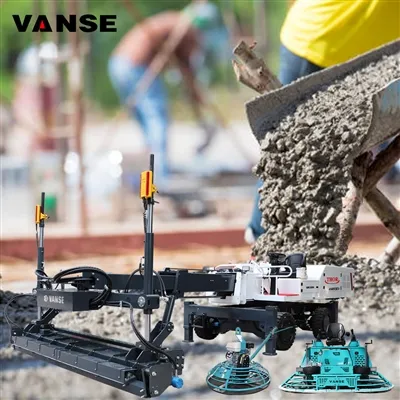
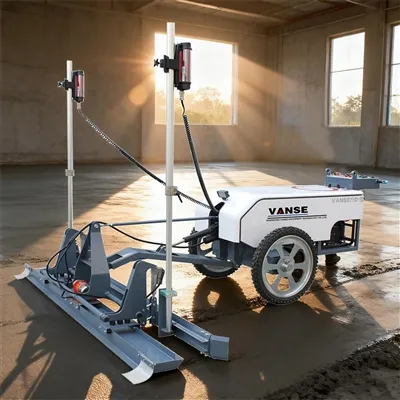
- Compared with traditional leveling machines, the improvement in work efficiency of laser leveling machines varies depending on the construction scenario, equipment model, construction process and other factors, and can usually be improved by 30%~50% or even higher. The following is a comparative analysis of the efficiency differences between the two from multiple dimensions:
1. Comparison of core working principles
| Comparison dimensions | Traditional leveling machine | Laser leveling machine |
| Leveling basis | Relies on manual wire drawing and leveling, with fixed elevation as the benchmark | Based on the horizontal laser surface emitted by the laser transmitter, the leveling accuracy is automatically controlled in real time |
| Power and operation mode | Manually controls the scraper or roller, and adjusts the height based on experience | Hydraulic drive + intelligent control system, automatic leveling and vibration compaction |
| Construction coverage | The width of a single operation is narrow (usually 1~3 meters), and it needs to be repeated back and forth | The single operation width can reach 2~4 meters, or even wider, reducing the number of round trips |
2. Specific manifestations of improved work efficiency
Shandong Vanse Machinery Technology Co.,Ltd
Construction speed: larger coverage area per unit time
Traditional leveling machine: Frequent manual measurement of elevation and adjustment of equipment height are required, and the construction area per hour is about 100~200 square meters due to the limitation of manual operation accuracy. For example, when constructing in large areas (such as parking lots and factory floors), it is necessary to work back and forth multiple times, and it is easy to cause rework due to manual errors.
Laser leveling machine: The laser system calibrates the height in real time, without frequent shutdown and measurement. The hydraulic system automatically adjusts the height of the leveling beam. It can construct 300~500 square meters per hour, and some large equipment can even reach more than 800 square meters. Taking a 10,000 square meter site as an example, traditional equipment takes about 50~100 hours, while laser equipment only takes 20~30 hours, and the efficiency is improved by 50%~100%.
Precision control: reduce time spent on rework
Traditional leveling machines: manual control errors are large (usually ±5~10 mm), prone to unevenness, requiring manual repair later, with a rework rate of about 10%~20%, and additional construction time.
Laser leveling machines: laser positioning accuracy can reach within ±3 mm, with a high one-time molding pass rate and almost no need for rework. For example, when constructing industrial floors with high flatness requirements (such as warehouses and workshops), traditional equipment may be delayed by 2~3 days due to rework, while laser equipment can directly save this part of time.
Labor costs: reduce labor dependence
Traditional leveling machines: require multiple workers (such as surveyors, operators, and auxiliary workers), at least 3~5 people to collaborate, and require high worker experience.
Laser leveling machines: only 1~2 operators are required (responsible for equipment control and laser system calibration), labor costs are reduced by 50%~70%, and efficiency fluctuations caused by labor fatigue are reduced.
Adaptability to complex scenarios: shortening the time spent in special working conditions
Traditional leveling machines: When working on slopes, curved surfaces or sites with large elevation differences, manual adjustments are required, which greatly reduces efficiency (may reduce by more than 30%).
Laser leveling machines: can be programmed to adapt to a variety of terrains (such as slopes and curved surfaces), and the laser system automatically adjusts the elevation. The efficiency advantage is more obvious in complex scenarios, for example, the efficiency can be increased by 40%~60% when working on slopes.
3. Key factors affecting efficiency improvement
Shandong Vanse Machinery Technology Co.,Ltd
Site scale:
Small site (such as a few hundred square meters): The equipment debugging time of the laser leveling machine accounts for a high proportion, and the efficiency is improved by about 30%~40%.
Large site (tens of thousands of square meters): The "scale effect" of laser equipment is significant, and the efficiency can be improved by more than 50%.
Equipment model and configuration:
Small laser leveling machine (such as hand-held): suitable for narrow areas, the efficiency is about 1.5~2 times that of traditional equipment.
Large driving laser leveling machine: equipped with double vibrating device and wide leveling beam, the efficiency can reach 2~3 times that of traditional equipment.
Construction process requirements:
Ordinary floor (low flatness requirement): efficiency is improved by about 30%~40%.
High-precision floor (such as ultra-flat floor): Laser equipment can meet the standard at one time, avoiding multiple leveling of traditional processes, and the efficiency is improved by more than 50%.
4. Actual case reference
Shandong Vanse Machinery Technology Co.,Ltd
Case 1: Industrial plant floor construction
For a 12,000 square meter plant, a traditional leveling machine was equipped with a team of 4 people and took 12 days to complete; the laser leveling machine was operated by only 2 people and completed in 6 days, with an efficiency increase of 50%, and the flatness error was reduced from ±8 mm to ±2 mm.
Case 2: Municipal square construction
A 5,000 square meter square contains a sloped terrain. Due to frequent measurement and adjustment, the traditional equipment can only construct 400 square meters per day; the laser leveling machine can only construct 800 square meters per day, with an efficiency increase of 100%, and the flatness of the slope transition meets the standard.
5. Summary: Core advantages of efficiency improvement
Shandong Vanse Machinery Technology Co.,Ltd
The laser leveling machine fundamentally reduces manual intervention and rework time through "automatic measurement + precise control + wide-width operation", and its advantages are particularly prominent in large-scale, high-precision construction scenarios. For projects that pursue construction period and quality, its efficiency improvement is not only reflected in time reduction, but also in the optimization of comprehensive costs by reducing manpower and reducing errors. If specific data is required, it can be further calculated based on the project scale and equipment model.
Click the below to jump immediately!!!

ARMOUR JOINT

CONCRETE LEVELING MACHINE


POWER TROWEL

SLIPFORM MACHINE


TOPPING SPREADER

Thanks to All the Friends Who Support and Trust Shandong Vanse Machinery Technology Co., Ltd.
If you want to know more about Shandong Vanse Machinery Technology Co., Ltd. or have any questions, please feel free to contact us:
Our Factory
Shandong Vanse Machinery Technology Co., Ltd.








Share this article

About the Author: Shandong Vanse Machinery Technology Co., Ltd.
Shandong Vanse Machinery Technology Co., Ltd. is a high-tech manufacturer specializing in concrete construction machinery, including laser screeds and related equipment. The company integrates R&D, production, and global sales, with products exported to over 60 countries and widely used in infrastructure projects worldwide.
Previous Post
Next Post
Related Articles
You Might Also Like
How to deal with surface bubbles after concrete pavement construction?
– Mechanical surface treatment: Use a trowel to smooth the surface before the concrete is initially set. The rotation and extrusion of the trowel make the concrete surface more compact, squeeze out some bubbles from the surface, and make the surface smoother. The speed and pressure of the trowel should be controlled during operation to avoid excessive pressure causing water seepage or segregation on the concrete surface. – Manual surface treatment: For corners that are difficult to reach with mechanical surface treatment or areas with many local bubbles, manual surface treatment with a trowel is required. Manual surface treatment can trim the concrete surface more carefully, gently crush the bubbles and evenly cover the bubble marks with surface mortar. During the surface treatment process, pay attention to the angle and strength of the trowel, and try to make the surface treatment smooth and uniform. – After the concrete is poured, when a small amount of water seeps out of the concrete surface and it has not yet set, perform secondary vibration. Use a vibrating rod to vibrate the concrete surface. The vibration time should not be too long. Generally, it is appropriate to stop bubbles from appearing on the concrete surface and to seep out cement slurry. Secondary vibration can further expel the bubbles inside the concrete, while enhancing the compactness of the concrete and improving the quality of the concrete surface. However, be careful to avoid inserting the vibrating rod too deep to damage the formed concrete structure. – For larger bubbles, you can use a steel needle or other sharp tools to puncture the bubbles before the concrete sets to expel the gas. Then use a trowel to gently compact the punctured bubble area so that the surrounding concrete mortar fills the gaps left by the bubbles. Needle puncture exhaust should be performed in time to avoid bubbles from forming obvious holes or defects after the concrete hardens. – If bubbles on the concrete surface still leave obvious marks or small potholes after finishing, you can repair the surface after the concrete has finally set. First, clean the surface of the repaired area to remove dust, debris, etc. Then, according to the color and mix ratio of the concrete, mix an appropriate amount of repair material, such as cement mortar or a special concrete repair agent. Apply the repair material to the bubble marks and smooth it with a trowel to make it smooth and consistent with the surrounding concrete surface. After repair, pay attention to the maintenance of the repaired area to avoid the repair material from losing water and drying too quickly and causing cracks. – Reasonable maintenance is also important to reduce the impact of bubbles on the concrete surface. After the concrete is poured, it should be covered with moisturizing materials such as plastic film and geotextile to prevent the water on the concrete surface from evaporating too quickly. At the same time, according to the ambient temperature and humidity, watering maintenance should be carried out in time to keep the concrete surface moist. The maintenance time is generally not less than 7 days. For important concrete pavements or large-volume concrete, the maintenance time should be appropriately extended. Good maintenance can fully hydrate the concrete, improve the strength and density of the concrete, and reduce surface defects caused by water evaporation and concrete shrinkage, including bubble-related problems.What specifications should be followed when operating a concrete laser leveling machine
As a high-precision construction equipment, the standardized operation of the concrete laser leveling machine is the key to ensuring the construction quality, safety and normal operation of the equipment. Operators must strictly follow the following specifications: Operators must undergo professional training , be familiar with the performance, operation methods and safety precautions of the equipment, and can only work after passing the assessment. Unlicensed operation is strictly prohibited. Before operation, the construction site must be surveyed and obstacles in the site (such as stones, steel bars, wires, etc.) must be cleared to ensure that the working area is flat and unobstructed to avoid collisions during equipment operation. Check whether the power supply and water source at the construction site meet the equipment operation requirements. If a generator is used for power supply, ensure that the generator performance is stable and the voltage and frequency meet the equipment requirements. In accordance with the daily maintenance requirements in the equipment maintenance plan, conduct a comprehensive inspection of the equipment, and confirm that all parts of the equipment are normal and fault-free before starting the equipment. When starting the equipment, follow the operating steps in the equipment manual . Turn on the power switch first, and then start the engine after the equipment self-check is completed. During the startup process, the instrument indication and operating sound of the equipment should be closely observed. If there is any abnormality, the equipment should be stopped and checked immediately. When operating the equipment, the operator should concentrate and strictly follow the construction requirements and the instructions of the laser system to keep the equipment running at a constant speed, avoid sudden acceleration, deceleration or sudden turning, so as not to affect the construction flatness. The laser transmitter should be installed in a stable and safe position and properly calibrated to ensure that the laser signal is stable and accurate. The operator needs to pay attention to the signal display of the laser receiver at any time. If the signal is abnormal (such as flickering, interruption, etc.), the machine should be stopped and checked in time. The operation can only be continued after the laser system fault is eliminated. During the operation, the parameters such as the scraper height and vibration frequency of the equipment should be reasonably adjusted according to the slump and thickness of the concrete to ensure the density and flatness of the concrete. When adjusting the parameters, the machine must be stopped first, and then the equipment can be restarted after the adjustment is completed. It is strictly forbidden to repair, maintain or adjust the components while the equipment is running. If the above operations are required, the machine must be stopped first and the power supply of the equipment must be cut off to prevent safety accidents. Obvious warning signs should be set up at the construction site, and unauthorized personnel are strictly prohibited from entering the work area. Operators should wear personal protective equipment (such as safety helmets, non-slip shoes, work clothes, etc.) when working. After the operation is completed, the engine should be turned off first, and then the power switch should be turned off. Clean, inspect and maintain the equipment according to the daily maintenance requirements in the equipment maintenance plan, clean the concrete residue on the surface of the equipment, and check whether the components are damaged or loose. Park the equipment at the designated location. The parking area should be flat and solid , away from fire, water and corrosive substances. If the equipment needs to be parked for a long time, the fuel, hydraulic oil, etc. should be released, the lubrication points of the equipment should be lubricated, and protective measures for the equipment should be taken (such as covering with rainproof cloth). Clean up the debris at the construction site, organize the construction tools and materials, and ensure that the construction site is clean and orderly. Fill in the equipment operation record and construction record, and record the equipment's operating time, operation status, faults and treatment methods in detail, so as to provide a basis for subsequent equipment maintenance and construction summary. Following the above operating specifications can effectively improve the construction quality and safety of the concrete laser leveling machine, reduce equipment failures and extend the service life of the equipment. Click the below to jump immediately!!! ARMOUR JOINT CONCRETE LASER LEVELING MACHINE LIGHT TOWER POWER TROWEL SLIPFORM MACHINE STEEL FIBER TOPPING SPREADER TRACKED MINI DUMPERIn the construction of prefabricated buildings floor slabs, which type of concrete laser leveling is the most suitable?
In the construction of prefabricated building floor slabs, the walk-behind laser leveling (especially the four-wheel walk-behind type with screw conveyor) has the strongest applicability. In some scenarios, it can also be combined with portable laser leveling or small driver-operated laser leveling. The following is a specific analysis: Walk-behind laser levelings (including two-wheel and four-wheel models) have become the preferred choice for prefabricated floor slab construction due to their flexibility, lightness and precision. The specific advantages are as follows: High spatial flexibility: The construction of prefabricated building floor slabs often requires operations between prefabricated components (such as composite slabs and beam-column joints), resulting in narrow Spaces and numerous obstacles. The walk-behind model has a compact body (with a width typically ranging from 2 to 2.5 meters and a weight of 200 to 500 kilograms), allowing it to flexibly move through the gaps between prefabricated components. It is particularly suitable for narrow areas such as the corners of walls and columns and reserved openings for pipelines, enabling precise leveling and avoiding the problem of large equipment getting stuck. Lightweight and suitable for hoisting requirements: In the construction of prefabricated buildings, equipment needs to be transported to the floor through construction elevators or hoisting equipment. The walk-behind models are light in weight (such as two-wheeled models, about 280kg), which is convenient for vertical transportation and exerts less pressure on the floor slab. It will not cause cracking or deformation of the prefabricated floor slab due to the self-weight of the equipment. High-frequency vibration enhances density: Most walk-behind laser leveling machines have a vibration frequency of up to 3000-4000 times per minute, with stable excitation force (about 500N). They can uniformly vibrate the composite layer concrete of prefabricated floor slabs (typically 5-15cm thick), reducing defects such as hollowing and honeycombing. They are particularly suitable for low slump concrete (commonly used in prefabricated construction). The density has been increased by more than 20%. Laser leveling ensures flatness: Its laser measurement and control system can monitor the elevation of the leveling head in real time (10 adjustments per second), is not affected by the vibration of prefabricated formwork, and can directly achieve a leveling accuracy of ±1.5mm in the concrete layer, meeting the strict flatness requirements of prefabricated floor slabs (usually reaching the standards of FF≥35 and FL≥25). Integrated process reduces construction period: By integrating components such as scrapers, vibrators, and flat plates, the leveling, vibration, and compaction processes can be completed in one go, avoiding the waiting time for step-by-step construction. For instance, the 2.5-type walk-behind model can achieve a construction area of 300 square meters per hour and complete 2,500 to 3,500 square meters per day, which is over 50% more efficient than manual leveling. Single-person operation reduces labor costs: It features an automatic control mode, allowing a single person to complete the operation without the need for extensive manual assistance in formwork support (laser elevation control replaces traditional formwork leveling), which can save 30% to 40% of labor costs. Portable laser leveling: If the floor construction area of prefabricated buildings is small (such as less than 1,000 square meters for a single floor) and the layout of prefabricated components is extremely complex, a more compact and portable model (weight < 200kg, width < 2 meters) can be selected. Its advantage is that it can work in extremely narrow Spaces, but its efficiency is relatively low (about 1,500 square meters can be completed in 8 hours), and its leveling accuracy is slightly lower than that of standard walk-behind models. It is suitable for local repairs or small-scale operations. Small driver-operated laser leveling: For large-area prefabricated floor slabs (such as the entire floor area exceeding 5,000 square meters and the spacing of prefabricated components being large), small driver-operated models (with a width of 2.5-3 meters and a weight of 1000-1500kg) can be selected. Its advantage is that the construction efficiency is higher (400-600 square meters per hour), and the operation is less laborious. However, the equipment transportation route needs to be planned in advance (such as reserving hoisting openings) to avoid being unable to enter the operation area due to the large machine body. Note: The parameters provided in this document are for reference only and are not mandatory. Due to differences in technical characteristics between different brands and models of laser levelers, please consult the manufacturer for a suitable solution before actual operation. This reference document assumes no responsibility for any issues arising from failure to follow the manufacturer's instructions.