Technical Knowledge
Laser leveling– summer maintenance notice
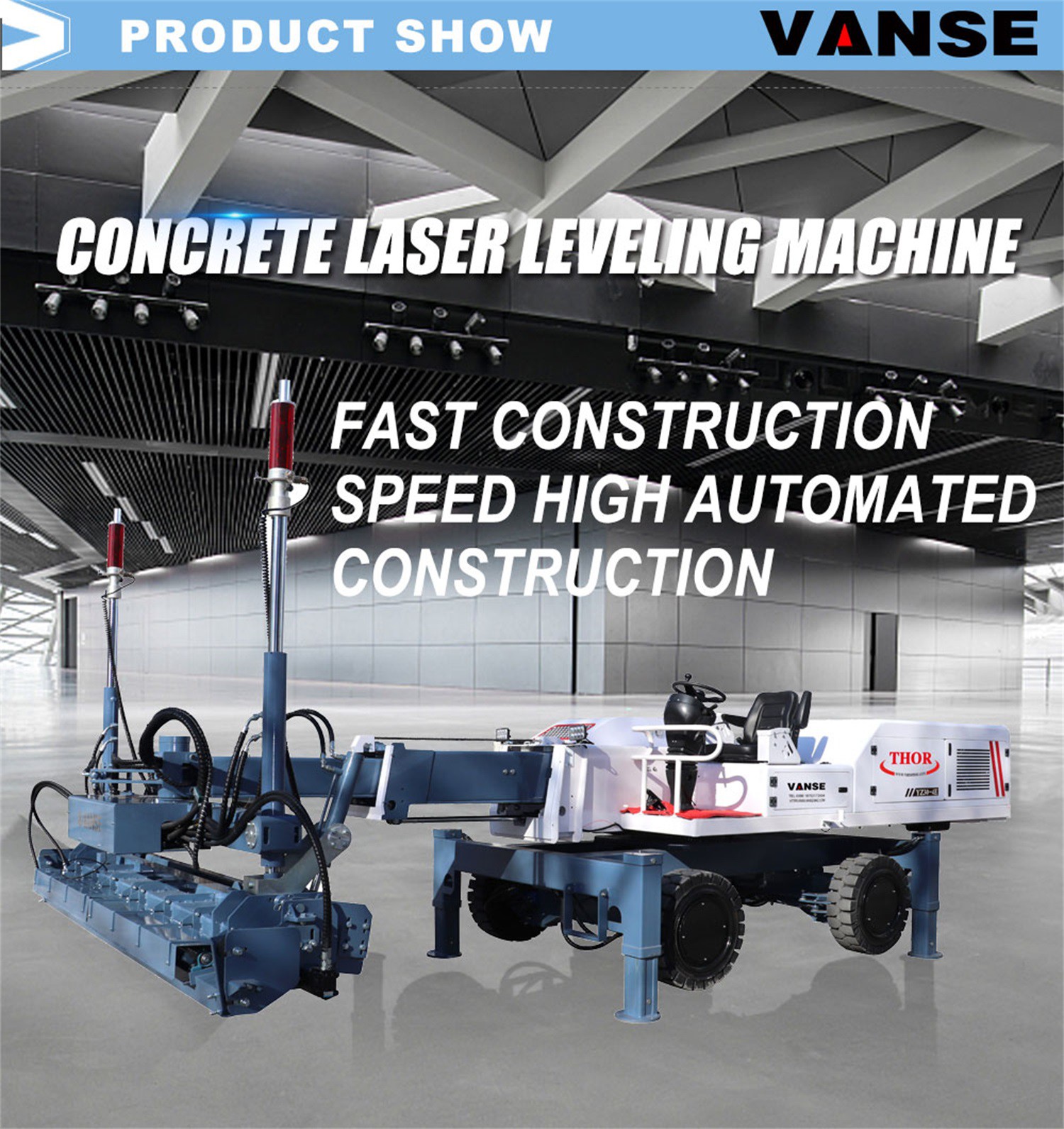
*In summer, the construction must first prevent the engine from overheating. Under normal circumstances, the temperature of the engine should not exceed 95°. If the temperature is too high, you should choose a cooler position to stop the cooling. When the machine is stopped, the hood can be ventilated and cooled.
*It is necessary to detect the amount of cooling water in time. When the water radiator reaches 100°, do not rush to add cooling water. Instead, stop the engine immediately after idling and then add coolant.
*Clean the radiator often. Includes coolant radiator / oil radiator / hydraulic oil radiator to prevent poor heat dissipation.
*The construction temperature is high in summer, and the tire pressure and tire temperature should be checked frequently. If the temperature of the tire is too high, stop it in time and place it in a cool place to cool down. Remember to use the wrong method of deflation or cold water to cool down.
*Maintenance-free batteries need to be checked frequently for their working conditions. The observation hole shows that green represents normal.
*Prevent engine knocking. Before entering the summer, the carbon deposits in the combustion chamber, valve top and other parts should be completely removed to maintain good heat dissipation and normal compression ratio; it is necessary to check and adjust the fuel supply advance angle to prevent engine deflagration.
*Always check the temperature of the hydraulic oil and hydraulic transmission oil. If the temperature is too high, stop it and stop it. Do not operate at high temperatures.
*After the construction is finished, it is necessary to clean the spreader roller in time, otherwise it will cause damage to the machine and affect the spreading effect.
Thanks to All the Friends Who Support and Trust Shandong Vanse Machinery Technology Co., Ltd.
If you want to know more about Shandong Vanse Machinery Technology Co., Ltd. or have any questions, please feel free to contact us:
Our Factory
Shandong Vanse Machinery Technology Co., Ltd.








Share this article

About the Author: Shandong Vanse Machinery Technology Co., Ltd.
Shandong Vanse Machinery Technology Co., Ltd. is a high-tech manufacturer specializing in concrete construction machinery, including laser screeds and related equipment. The company integrates R&D, production, and global sales, with products exported to over 60 countries and widely used in infrastructure projects worldwide.
Previous Post
Next Post
Related Articles
You Might Also Like
VANSE Ride-On Laser Concrete leveling For Sale
The laser leveling machine is a kind of equipment that takes the laser emitted by the transmitter as the reference plane, and controls the leveling head in real time through the laser receiver on the laser leveling machine, so as to achieve high-precision and rapid leveling of concrete. It is indeed a time-saving and labor-saving way to use a concrete laser leveling machine to pave the ground. It is not only fast and effective, but also can save labor to the greatest extent. After the equipment is started, it will level itself according to the height of the ground or after manual leveling. For compaction, both methods can be applied. Main construction process: Civil engineering formwork support (bottom formwork) → steel bar tie-up → concrete pouring and laser leveling device elevation control → laser leveling machine for concrete leveling → professional technicians use scraper bars to level accurately → single-disc troweling machine to lift slurry and smooth → Professionals use scraper bars to accurately level → professional operation of double-disc driving trowel → surface finish → finished product protection 1. Civil engineering formwork (bottom formwork): Civil engineering formwork support (bottom formwork) is strictly controlled in elevation as in normal drawing design and construction specification acceptance standards, and the scaffolding is firmly supported. It should be noted that the "clear water concrete" building (ground) Surface and concrete pouring shall be constructed at the same time. In order to facilitate mechanical construction, there shall be no formwork or supporting elements higher than the building (ground) level, except for the reserved and pre-embedded levels. 2. Reinforcement tie-up: Because the surface layer is a building (ground) surface formed at one time by using the protective layer of reinforced concrete, the reinforcement must ensure that the concrete protective layer is sufficient, and no reinforcement, stirrups or weldments are allowed to be placed The concrete pouring surface layer is exposed, causing the machine to hit the steel bar, which not only destroys the machine but also destroys the surface layer of the building (ground). 3. Laser leveling instrument controls concrete pouring: set the elevation on the column reinforcement before concrete pouring, and lead the accurate elevation to the laser leveling instrument control system, and the concrete pouring personnel will control the elevation to be 5 times higher than the design elevation when scraping – Within the range of 10mm, lay a solid foundation for the leveling of the next laser leveling machine. 4. VANSE laser leveling machine leveling: In the case of accurate elevation setting by professional technicians, mechanical operators will accurately level the concrete surface under the control of the laser sweeper, and VANSE leveling machine will automatically level the surface The machine is calibrated and controlled to ensure the accuracy of the entire plane. 5. Leveling by professionals: This process is to re-measure the puddles with a laser sweeper when the bleeding of the concrete pouring surface is completed, fill the puddles with concrete, and use a scraper bar to rotate the opposite layer 360° to achieve a comprehensive level. Control the flatness and smooth the edge details of the column root formwork, and use the laser sweeper to repeatedly detect until the requirements are met. 6. Single-disk troweling machine for smoothing and lifting slurry: while the concrete is poured in an orderly manner according to the specifications, the concrete poured earlier will reach the initial setting earlier by using the time difference of the concrete construction. 2-3mm footprint), it is convenient to use single-disc troweling machine and troweling disc to perform cross-breaking troweling to ensure the smooth control of the mechanical operation process. facebook linkedin pinterest twitter whatsapp youtube instagramIs there a big difference between hardened floors and ordinary concrete floors?
Hardened floors and ordinary concrete floors are two types of flooring materials commonly used in modern-day construction. While they may look similar, these materials have significant differences that set them apart. In this article, we'll explore the key differences between hardened floors and ordinary concrete floors and why hardened floors are a better option for industrial and commercial facilities. What are hardened floors? Hardened floors are concrete floors that have undergone a specialized process to increase their hardness and durability. This is typically done by adding a surface hardener or a densifier to the concrete mix and then grinding and polishing the surface to a high gloss or matte finish. Hardened floors are available in a vast range of colors and designs, making them a popular flooring choice in commercial and industrial applications. Benefits of hardened floors Improved durability One of the most significant benefits of hardened floors is their improved durability compared to ordinary concrete floors. Hardened floors are much harder and denser than standard concrete flooring, making them resistant to wear and tear caused by heavy foot traffic, vehicle traffic, and machinery. They are also highly resistant to chemicals and staining, which makes them an excellent option for industrial and manufacturing facilities. Easy maintenance Another benefit of hardened floors is that they are incredibly easy to maintain. Unlike traditional concrete floors, hardened floors do not require regular waxing or coatings to keep them looking their best. Instead, they only require daily cleaning with a mild detergent and occasional polishing to maintain their shine. Versatility Hardened floors are available in a broad range of colors and finishes, making them highly versatile. They can be customized to match any design or aesthetic, making them suitable for a wide range of commercial and industrial applications. Additionally, they can be used indoors or outdoors and can withstand extreme weather conditions. Eco-friendliness Hardened floors are an eco-friendly flooring option because they utilize the existing concrete surface. By using the existing surface, there is less waste, fewer resources used, and less carbon emissions from transportation. Hardened floors also have low VOC emissions, making them ideal for eco-conscious facilities. What are ordinary concrete floors? Ordinary concrete floors are typically made up of cement, sand, and aggregates such as gravel and stone. They are poured onto a base layer of subgrade material and then left to cure over time. While traditional concrete floors are highly durable, they lack the strength and resilience of hardened floors. Disadvantages of ordinary concrete floors Susceptibility to damage Ordinary concrete floors are more susceptible to damage than hardened floors. They are prone to cracking and chipping over time, especially in high traffic areas. Additionally, they can be damaged by chemicals, such as oils and solvents and can become stained and discolored. Difficult to maintain Ordinary concrete floors require a lot of maintenance to keep them looking their best. They need to be regularly coated with a wax or sealer to protect them from damage and staining. Additionally, they require frequent cleaning with a specialized detergent and regular polishing to maintain their shine. Limited design options Traditional concrete floors offer limited design options, leaving little room for customization. They usually come in a standard gray color, and attempts to stain or color them can lead to uneven coloring. Conclusion In conclusion, while both hardened floors and ordinary concrete floors are popular flooring options, hardened floors offer significant benefits that make them a better choice for commercial and industrial facilities. With their improved durability, easy maintenance, versatility, and eco-friendliness, hardened floors are the way to go for businesses looking for a long-lasting, low-maintenance, and cost-effective flooring option.What are the methods to repair poor concrete pavement flatness?
– Applicable situations: Applicable to situations where there are small bulges or unevenness in the concrete pavement, the height of the bulge is generally within a few millimeters, and the unevenness is relatively mild. – Operation method: Use a pavement grinder to grind the uneven parts, and grind off the raised parts to make the pavement flat. When grinding, pay attention to controlling the depth and range of grinding to avoid excessive grinding causing the pavement to become thinner or new unevenness. After grinding, clean up the debris and dust on the pavement in time. – Applicable situations: Applicable to situations where there are shallow potholes or local depressions on the pavement, the depth is usually less than 2-3 cm, and the area is not large. – Operation method: First clean the potholes and remove debris, dust and loose concrete fragments. Then use cement mortar or special pavement repair materials with the same or higher strength grade as the pavement concrete to fill them. When filling, the material should be fully compacted and smoothed to ensure that the surface after filling is consistent with the surrounding road surface. In order to ensure the adhesion between the repair material and the original road surface, a layer of interface agent can be applied to the surface of the pothole before filling. – Applicable conditions: When the road surface unevenness is more obvious, the depth of the potholes or depressions is about 3-5 cm, and the area is large, the thin layer repair method can be used. – Operation method: First, cut the area to be repaired into a regular shape. The depth is determined according to the degree of unevenness, generally about 3-5 cm. Then clean up the loose concrete in the cut area and treat the base appropriately, such as compaction, cleaning, etc. Then lay a thin layer of repair material that matches the performance of the original road concrete, such as polymer-modified concrete or high-performance repair mortar. When laying, use tools such as flat vibrators or trowels to vibrate and compact the materials, smooth them, and ensure that the repair layer is tightly combined with the original road surface and the surface flatness meets the requirements. – Applicable situations: Applicable to large areas with poor road flatness, serious unevenness, multiple potholes of varying depths, wavy unevenness, etc. – Operation method: Use a road milling machine to mill off the uneven surface of the road. The milling depth is generally about 5-10 cm, and the specific depth is determined according to the actual situation of the road surface. After milling, clean up the debris and dust, inspect and treat the base layer, and repair and compact any damaged or loose parts. Then re-pave the concrete road surface according to the design requirements, including paving, vibration, troweling and other processes to ensure that the flatness of the newly laid concrete road surface meets the standard. After the concrete is poured, it should be maintained in time to prevent quality problems such as cracks. – Applicable situations: When the concrete pavement is severely broken, sunken or uneven over a large area, and the base is also severely damaged, partial plate replacement is required. – Operation method: First determine the range of the plates that need to be replaced, use a cutting machine to cut the plates neatly around, then remove the broken concrete plates, and clean up the debris and loose materials on the base. Reinforce the base, such as using compaction, replacement and other methods to ensure that the bearing capacity and stability of the base meet the requirements. Then re-pour the concrete plates according to the design requirements, including installing the formwork, tying steel bars (if required), pouring concrete, vibrating and compacting, and smoothing. After pouring, strict maintenance must be carried out, and traffic will be opened after the concrete reaches the design strength. – Applicable situations: If the overall flatness of the concrete pavement is extremely poor, and there are large-scale defects such as severe cracks, potholes, and subsidence, and after evaluation, it is believed that the repair can no longer meet the use requirements, or the repair cost is too high, overall renovation can be considered. – Operation method: First, the original pavement should be demolished, the concrete pavement should be crushed and transported away, and the base layer should be thoroughly inspected and treated. If there are weak soil layers or poor geological conditions, corresponding treatments should be carried out, such as replacement and reinforcement. Then, according to the design plan, the pavement structure should be re-laid, including the base layer, subbase layer, surface layer, etc., and the construction should be carried out in accordance with the construction specifications, and the thickness, compaction and flatness of each layer should be strictly controlled. During the construction process, quality inspection and control should be strengthened to ensure that the performance indicators of the new pavement meet the design requirements. The pavement after overall renovation needs to be maintained and debugged for a period of time. After all indicators are stable, it can be officially opened to traffic. ARMOUR JOINT CONCRETE LASER LEVELING MACHINE LIGHT TOWER STEEL FIBER TRACKED MINI DUMPER POWER TROWEL