Technical Knowledge
Laser leveling machine for concrete paving

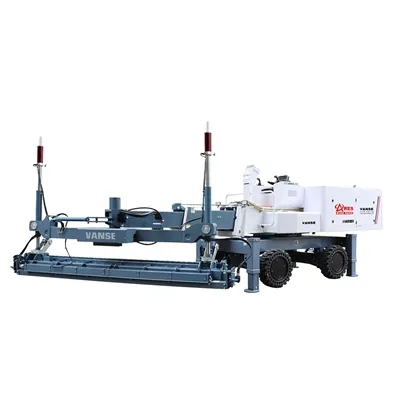
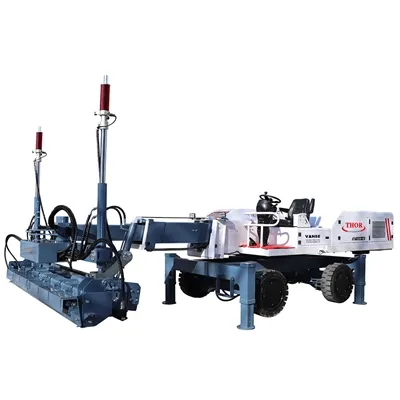
WS740 concrete laser leveling machine: the apparatus guide by laser for concrete leveling.
Laser leveling leveling machine could greatly improve the concrete smoothness and compaction. as well as prolong the service life of concrete floor.
Walk-behind two wheels concrete laser leveling machine, mainly used in large area concrete construction, such as workshop, supermarket, warehouse, airport, playground and so on. This laser leveling can satisfy the construction requirement of large area and high flatness and levelness.
As for laser leveling: A new concrete construction,while construct a large area of concrete floor,use laser leveling machine to vibrate new concrete,leveling and control the standard elevation from ground.
Technical Description:First,set a fixed laser transmitter,the transmitter emits a laser beam rotation forming a laser control plane,using handheld receivers lever floor elevation guide to the leveling head of Tank concrete laser leveling machine,the automatic control system of leveling machine receiver laser signal (10 times/sec frequency) based on the laser leveling head sensed,then adjust the elevation automatic in real-time,because the laser emitter after the set is fixed,so it can make sure does not produce a cumulative error while a large area of ground construction.
Thanks to All the Friends Who Support and Trust Shandong Vanse Machinery Technology Co., Ltd.
If you want to know more about Shandong Vanse Machinery Technology Co., Ltd. or have any questions, please feel free to contact us:
Our Factory
Shandong Vanse Machinery Technology Co., Ltd.








Share this article

About the Author: Shandong Vanse Machinery Technology Co., Ltd.
Shandong Vanse Machinery Technology Co., Ltd. is a high-tech manufacturer specializing in concrete construction machinery, including laser screeds and related equipment. The company integrates R&D, production, and global sales, with products exported to over 60 countries and widely used in infrastructure projects worldwide.
Previous Post
Next Post
Related Articles
You Might Also Like
How to avoid concrete splashing when operating a concrete laser leveling?
When operating a concrete laser leveling, avoiding concrete splashing is an important safety measure to ensure the safety of workers and the efficient operation of the equipment. Here are specific methods and suggestions for avoiding concrete splashing when operating a concrete laser leveling: 1. Suitable concrete mix ratio and consistency The mix and consistency of concrete play a key role in avoiding concrete splashing. Operators should work closely with the concrete supplier to ensure that the concrete mix and consistency are suitable for the laser leveling's operating requirements. Proper consistency reduces the fluidity of the concrete during the leveling process, thereby reducing the potential for splashing. 2. Control pouring speed and distribution uniformity When pouring concrete, operators should control the pouring speed to avoid being too fast or too slow. Too fast a pouring rate can cause concrete to spatter during the leveling process. At the same time, the fabric should be even to avoid accumulation or shortage. Operators can achieve uniform distribution by adjusting the speed of the conveying equipment and the distribution method. 3. Reasonably adjust the operating parameters of the laser leveler The operating parameters of the laser leveling also have an important impact on concrete spatter. The operator should reasonably adjust the scraper height, vibration frequency, driving speed and other parameters of the leveler according to the consistency of the concrete and the working environment. With proper adjustment, the vibration and impact of the concrete during leveling can be reduced, thereby reducing the possibility of splashing. 4. Maintain appropriate working distance and angle When operating the laser leveler, the operator should maintain an appropriate working distance and angle. Too close a distance or too steep an angle can cause concrete to spatter during the leveling process. The operator should reasonably adjust the working distance and angle according to the consistency of the concrete and the performance of the leveling to ensure that the leveling can operate smoothly and evenly. 5. Regular inspection and maintenance of equipment Proper operation of equipment is critical to avoid concrete splashing. Operators should regularly inspect and maintain the laser leveling machine to ensure that all parts of the equipment are in good working order. Particularly easy-to-wear parts such as flat plates, vibrators and tracks should be replaced or repaired in time to maintain the normal operation and leveling effect of the equipment. 6. Improve operational skills and safety awareness Operator skill and safety awareness are equally important to avoid concrete splash. Operators should receive professional training and education to improve their operating skills and safety awareness. During the operation, operators should concentrate, abide by operating procedures and safety requirements, and avoid blind operations or illegal operations. 7. Take necessary protective measures When operating a laser leveling, operators can take some necessary protective measures to reduce the risk of concrete splashing. For example, wear personal protective equipment such as protective glasses, masks, and gloves to reduce damage to the body from splashes. In addition, baffles or fences can be set up around the work area to prevent splashes from spreading to the surrounding environment. 8. Pay attention to the working environment and weather conditions The working environment and weather conditions will also have an impact on concrete splashing. Operators should pay close attention to changes in the working environment and avoid working under unfavorable conditions such as high temperature, strong winds or moisture. Under high temperature conditions, concrete is prone to drying and hardening, which may Increased risk of splashing; in windy conditions, the wind may blow the concrete surface, causing splashing; in wet conditions, the concrete surface may slide, causing the leveling to become unstable, thereby increasing the possibility of splashing. 9. Clean and maintain the work area in a timely manner Cleaning and maintenance of the working area is equally important to avoid concrete splashing. Before operation, the operator should clean up debris and accumulated water in the working area to ensure that the working surface is flat and dry. After the operation is completed, the concrete surface should be maintained in time. and protection from surface cracking or breakage. Maintenance measures can include watering, covering with moisturizing materials, etc. to keep the concrete surface moist and stable. Summarize: Avoiding concrete splash is an important task when operating a concrete laser leveling. By controlling the mix ratio and consistency of concrete, adjusting the pouring speed and distribution uniformity, reasonably adjusting the operating parameters of the laser leveling, maintaining appropriate operating distances and angles, regularly inspecting and maintaining equipment, improving operating skills and safety awareness, and taking necessary measures Protective measures, paying attention to the working environment and weather conditions, and timely cleaning and maintenance of the working area can effectively reduce the risk of concrete splashing. Operators should comprehensively consider these factors and ensure that safety regulations and operating procedures are strictly followed during operation to ensure safe and efficient operations. At the same time, continuous learning and summarizing experience, improving operating skills and safety awareness are also the keys to avoiding concrete splashing.What are the maintenance methods for laser concrete leveling machines?
The maintenance method of concrete laser leveling machine is crucial to the normal operation and service life of the equipment. The following will introduce the maintenance methods of concrete laser leveling machine. 1. Daily maintenance After daily use, routine maintenance should be performed to ensure the normal operation of the equipment and extend its service life. Routine maintenance mainly includes the following aspects: ▼Clean the dust and debris on the surface of the equipment and keep the surface of the equipment clean. ▼Check whether the various connection parts of the equipment are loose or falling off, and tighten them in time. ▼Check whether the running parts of each part are flexible and reliable, and apply grease regularly to prevent parts from wearing out. ▼Check whether the photoelectric sensor is clean and sensitive, and remove dust and debris in time to prevent photoelectric sensor failure. ▼Check whether the power supply, control circuit and other components are normal, and repair them in time if there are any abnormalities. 2. Regular inspection and maintenance Regular inspection and maintenance are important measures to ensure the long-term normal operation of the concrete laser leveling machine. Regular inspection and maintenance mainly include the following aspects: ▼Regularly check whether the power cords, control lines and other lines are damaged or aged, and repair or replace them in time if necessary. ▼Regularly check the wear of various components, such as bearings, gears and other components, and replace seriously worn components in a timely manner. ▼Regularly check the accuracy and stability of equipment, such as laser heads, sensors and other components, and adjust or replace components in a timely manner. ▼Regularly check whether the electrical components of the equipment are working properly, such as electrical control boxes, motors and other electrical components, and replace damaged electrical components in a timely manner. ▼Perform regular comprehensive inspections and maintenance of equipment to ensure normal operation and extend service life of the equipment. 3.Special maintenance Special maintenance is a deeper maintenance based on daily maintenance and regular inspection and maintenance. Special maintenance mainly includes the following aspects: ▼Carry out comprehensive cleaning and maintenance of the equipment to remove dirt and debris on the surface of the equipment to ensure the normal operation of the equipment. ▼Disassemble and clean the equipment, remove debris and dust inside the equipment, and ensure the normal operation of the equipment. ▼Carry out comprehensive inspection and maintenance of the electrical components of the equipment, remove dust and debris on the surface of the electrical components to ensure the normal operation of the electrical components. ▼Inspect and maintain the hydraulic system of the equipment, remove debris and dust inside the hydraulic system to ensure the normal operation of the hydraulic system. ▼Inspect and maintain the laser head of the equipment, remove dirt and debris on the surface of the laser head, and ensure the normal operation of the laser head. To sum up, the maintenance methods of concrete laser leveling mainly include daily maintenance, regular inspection and maintenance and special maintenance. In order to ensure the normal operation of the equipment and extend its service life, operators should be proficient in maintenance methods and perform maintenance in strict accordance with the requirements. At the same time, the daily use and storage of equipment should be strengthened to avoid unnecessary damage and waste.How should the bearings of the power trowel be checked during operation?
– Normal sound characteristics: When the concrete trowel is running, the normal sound of the bearing is a smooth and slight "buzzing" sound. This sound should be continuous and uniform, without sharp noises, knocks or irregular changes. For example, when the trowel is running at normal speed on a flat concrete surface, the sound of the bearing should be clearly distinguishable above the background noise, but not too harsh. – Abnormal sound judgment: If you hear a "squeaking", "clicking" or sharp "hissing" sound from the bearing, it usually means that there is a problem with the bearing. The "squeaking" sound may be caused by the wear of the balls or raceways inside the bearing, resulting in an uneven surface, friction and collision during operation; the "clicking" sound may be caused by foreign matter entering the bearing, hindering the normal rolling of the balls; the sharp "hissing" sound may be caused by poor bearing lubrication and increased friction between the balls and raceways. – Normal temperature range: After the trowel has been running normally for a period of time (for example, 30-60 minutes of continuous operation), touch the area near the bearing seat with your hand (be careful to avoid touching moving parts), and it should feel warm but not hot. Generally speaking, the normal operating temperature of the bearing is usually around 40℃-70℃, and the specific temperature may vary slightly depending on factors such as the bearing specifications, load and operating environment. – Abnormal temperature: If the bearing seat feels very hot when touched, which is significantly higher than the normal temperature range, this may be a sign of bearing failure. Excessive temperature may be due to excessive friction inside the bearing, caused by insufficient lubrication, too tight bearing assembly or excessive load. For example, when the trowel blade of the trowel machine is subject to greater resistance (such as uneven concrete surface or hard lumps), the load on the bearing increases. If the lubrication is poor at this time, it is easy to cause the bearing temperature to rise sharply. – Normal vibration level: When the trowel machine is running, the normal vibration of the bearing is very small and almost imperceptible. You can gently place your hand on the body of the trowel (near the bearing) to feel the vibration. Under normal circumstances, only slight and uniform vibrations will be felt, which are normal vibrations caused by the operation of the trowel itself and the contact with the ground. – Abnormal vibration judgment: If you feel obvious and irregular vibrations, especially sudden changes in vibration frequency and amplitude, this may be a sign of bearing damage. For example, when the ball of the bearing is damaged or the outer ring of the bearing is cracked, it will cause the rotating parts to lose balance, causing the trowel to vibrate more. This vibration will not only affect the troweling effect, but may also further damage other parts. – Observe the grease status: When checking the bearing, pay attention to the grease of the bearing. Under normal circumstances, the grease should be evenly distributed inside and around the bearing, and the color and texture remain relatively stable. If the grease is found to be black, dry, or there are obvious impurities mixed in, this may affect the lubrication effect of the bearing. For example, when the grease turns black, it may be because the wear particles generated during the operation of the bearing are mixed in, resulting in a decrease in lubrication performance. – Grease leak check: Also check for grease leaks. If you see grease seeping around the bearing seat, this could be due to a damaged seal or too much grease. Grease leaks are not only wasteful, but can also contaminate the concrete surface and cause the bearing to fail due to insufficient lubrication.