Technical Knowledge
What are the construction characteristics of laser leveling machine?
What are the construction characteristics of laser leveling machine?
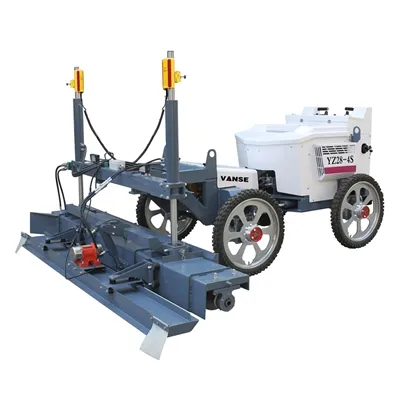
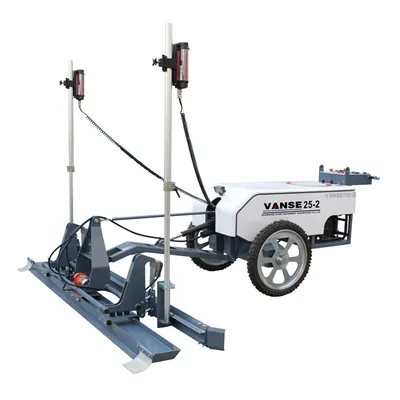
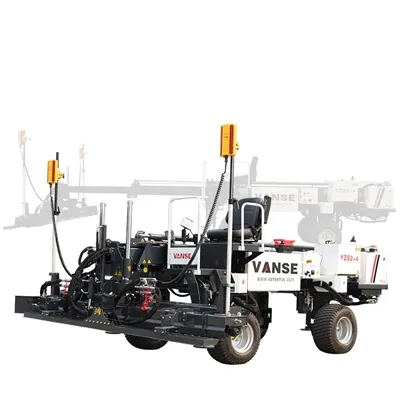
The precision laser leveling machine is developed according to the increasing demand for ground quality such as strength, flatness, levelness, etc. of modern industrial plants, large shopping malls, warehouses and other large-area cement concrete floors. The leveled cement concrete floor is paved with the VANSE precision laser leveling machine, and the quality of the ground paved by conventional methods is much better – the flatness and levelness of the ground are increased by more than 3 times, and the compactness and strength are increased by 20% above.
At the same time, it can also improve work efficiency by more than 50%, and save about 35% of labor. In addition, it can easily place high-strength concrete, low-slump concrete and fiber cement concrete. Its laser system is equipped with a variety of automatic control components to monitor the elevation of the leveling head in real time at a frequency of 10 times per second to ensure that the flatness and levelness of the ground for paving are effectively controlled. At the same time, the vibrating frequency of its powerful vibrator reaches 3000 times/min, which ensures that the concrete is vibrated and compacted, so that the entire paved concrete matrix is homogeneous and dense.
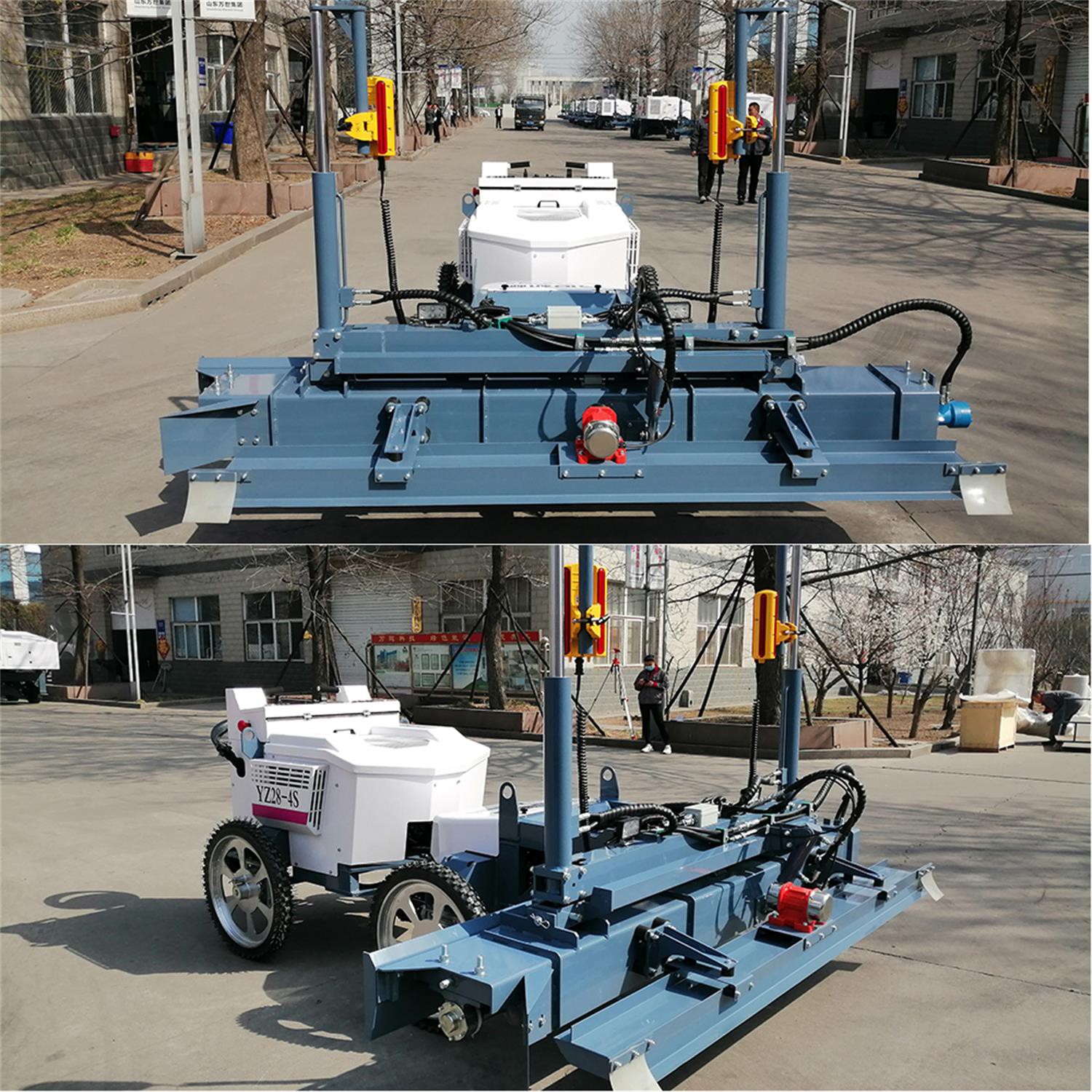

Laser leveling machine features:
The leveling principle of the laser leveling machine is realized under the automatic control of the computer by using precision laser technology, closed-loop control technology and highly precise hydraulic system. This is the most prominent difference between it and other floor construction processes. specialty.
The leveling principle of the precision laser leveling machine is to rely on the leveling head driven by hydraulic power, cooperate with the laser system and the computer control system to complete the leveling work while automatically leveling. The leveling head is equipped with an integrated scraper, vibrator and leveling plate, which integrates all leveling, leveling, vibration and compaction work, and completes it at one time. The computer control system automatically adjusts the elevation 10 times per second in real time, and the vibration frequency of the vibrator with a balanced design reaches 3000 times per minute. The leveling accuracy is 40 extension meters and the control is below 3mm
The laser transmitter used to control the ground level is arranged independently, so that the level of the ground is not controlled by the template, and no cumulative error will occur.
The laser leveling machine can also automatically control the longitudinal and transverse slopes, which is also completed by the laser system, computer system, hydraulic system, and mechanical system. For complex-shaped ground with high requirements such as drainage, a three-dimensional special-shaped ground treatment system can also be selected to achieve it.
The above was introduced by VANSE Machinery, I hope it can help you understand, if you have any questions, you can browse our website more, and you can also communicate with our technical staff.
Thanks to All the Friends Who Support and Trust Shandong Vanse Machinery Technology Co., Ltd.
If you want to know more about Shandong Vanse Machinery Technology Co., Ltd. or have any questions, please feel free to contact us:
Our Factory
Shandong Vanse Machinery Technology Co., Ltd.








Share this article

About the Author: Shandong Vanse Machinery Technology Co., Ltd.
Shandong Vanse Machinery Technology Co., Ltd. is a high-tech manufacturer specializing in concrete construction machinery, including laser screeds and related equipment. The company integrates R&D, production, and global sales, with products exported to over 60 countries and widely used in infrastructure projects worldwide.
Previous Post
Next Post
Related Articles
You Might Also Like
Concrete laser leveling technology is used in floor slab construction
Discussion on the use of concrete laser leveling technology in floor slab construction 1. Introduction: Current status of floor slab construction With the rapid development of modern construction technology, the quality and efficiency of floor slab construction have become key factors affecting the overall performance and construction cycle of buildings. Traditional floor slab construction methods often rely on manual operation, which not only makes it difficult to ensure construction accuracy, but also has low construction efficiency, making it difficult to meet the high-precision and high-efficiency requirements of modern buildings. Therefore, seeking a new floor slab construction technology to improve construction quality and efficiency has become an urgent problem to be solved in the current construction industry In recent years, laser leveling technology, as an advanced construction technology, has been widely used in floor slab construction. This technology uses the laser beam plane as the control reference and realizes high-precision control of floor slab construction through high-precision measurement and positioning tools. This paper aims to explore the specific application and advantages of concrete laser leveling technology in floor slab construction, in order to provide a useful reference for the development of the construction industry. 2. Overview of laser leveling technology Laser leveling technology is an advanced construction technology that uses the laser beam plane to replace the human visual control reference in conventional mechanical leveling. It controls the leveling and scraping machinery through the same hydraulic system to achieve the refinement and automation of land leveling operations. This technology combines high-tech laser control technology with conventional mechanical leveling technology, which can greatly improve construction accuracy and efficiency. In floor slab construction, concrete laser leveling technology can achieve high-precision leveling of the floor slab surface, effectively eliminate surface unevenness, and improve the overall performance of the floor slab. Compared with traditional construction methods, laser leveling technology has the advantages of high construction accuracy, high efficiency, and stable quality, so it has been widely used in floor slab construction. 3. Preparation and requirements before construction Before using concrete laser leveling technology for floor slab construction, full preparation is required. First, a detailed construction plan should be made to clarify the construction method, material selection, construction plan, etc. Secondly, determine the type and quantity of materials required according to the construction plan, and purchase and distribute them to ensure that there is enough material supply during the construction process. At the same time, it is also necessary to clean and level the construction site to ensure that there is no debris, dust, etc. on the construction site to create a good environment for construction. In addition, the requirements for construction personnel are relatively high. Construction personnel need to have certain professional skills and experience, and be able to master the operation methods and techniques of laser leveling technology. At the same time, it is also necessary to pay enough attention to safety issues during the construction process and take corresponding safety protection measures to ensure the safe and smooth progress of the construction. 4. Detailed explanation of the construction process The application of concrete laser leveling technology in floor slab construction mainly includes the following steps: ❶ Formwork installation and adjustment: According to the requirements of the building design, the formwork is set up and adjusted according to the construction plan. Ensure that the level and slope of the formwork meet the design requirements, laying the foundation for subsequent concrete pouring and leveling work. ❷ Concrete pouring: After the formwork is installed, the concrete is poured. During the pouring process, attention should be paid to controlling the field fall and uniformity of the concrete to ensure the stability of the quality of the concrete. ❸ Laser leveling machine operation: After the concrete is initially set, use a laser leveling machine to level the surface of the floor slab. The laser leveling machine uses the laser beam plane as the control reference to achieve high-precision leveling of the floor slab surface. The operator needs to make precise adjustments and operations according to the instructions of the laser leveling machine to ensure that the flatness of the floor slab surface meets the requirements. ❹ Maintenance and finished product protection: After the floor slab construction is completed, proper maintenance work is required to improve the strength and durability of the concrete. At the same time, the finished product needs to be protected to prevent damage or contamination during subsequent construction. 5. Quality control and testing When using concrete laser leveling technology in floor slab construction, quality control and testing are key links to ensure construction quality and performance. First, each link in the construction process must be strictly monitored and managed to ensure that the construction operation meets the specifications and requirements. Secondly, after the construction is completed, the floor slab needs to be fully inspected for quality. Quality inspection mainly includes the following aspects: First, surface flatness inspection. Use a ruler or level to inspect the flatness of the floor slab surface to ensure that the surface is flat without ripples, protrusions or depressions; Second, size and thickness inspection. Use measuring instruments to measure the length, width and thickness of the floor slab to ensure accurate size and uniform thickness; Third, strength and durability inspection. Through sampling testing and experimental analysis, evaluate whether the strength and durability of concrete meet the design requirements. Through comprehensive quality control and testing, the stable quality and reliable performance of floor slab construction can be effectively ensured, providing strong guarantee for the safe use and long-term maintenance of buildings. 6. Technical advantages and cost-effectiveness Concrete laser leveling technology has significant technical advantages and cost-effectiveness in floor slab construction. First, this technology can achieve high-precision leveling of the floor slab surface, effectively eliminate surface unevenness, and improve the overall performance and service life of the floor slab. Secondly, laser leveling technology can greatly improve construction efficiency, reduce manpower and time investment, and shorten the construction cycle. In addition, this technology can also reduce material waste and loss during construction, improve material utilization, and further reduce construction costs. In the long run, floor slab construction using concrete laser leveling technology can also bring many benefits to the use and maintenance of buildings. For example, a flat floor slab surface can reduce the workload of cleaning and maintenance and reduce maintenance costs; at the same time, high-quality floor slabs can also improve the sound insulation, heat insulation and other properties of the building, and improve the comfort of living and use. 7. Practical application case analysis In practical applications, concrete laser leveling technology has been successfully applied in multiple floor slab construction projects. Taking a high-rise residential project as an example, the project used concrete laser leveling technology for floor slab construction, which effectively improved the construction quality and efficiency. During the construction process, through precise laser control and automated mechanical equipment operation, the flatness of the floor slab surface was significantly improved, meeting the design requirements. At the same time, the construction period was greatly shortened, reducing labor costs and time costs. In addition, the project cost was effectively controlled due to the reduction of material waste and loss. In another commercial complex project, concrete laser leveling technology also played an important role. The floor slab area of this project is large and the construction requirements are high, which is difficult to meet with traditional construction methods. By introducing laser leveling technology, not only the construction accuracy and efficiency are improved, but also the quality of the floor slab is stable. After the completion of the project, it has received unanimous praise from the owner and the supervision unit These practical application cases fully demonstrate the advantages and value of concrete laser leveling technology in floor slab construction, and provide useful reference and reference for the construction of similar projects. 8. Future development and prospects With the continuous advancement of science and technology and the continuous development of the construction industry, concrete laser leveling technology will play a more important role in floor slab construction. In the future, this technology will further realize the development of personalization and multifunctionality, adapting to the needs of different engineering categories, materials and construction environments. At the same time, with the trend of extending both miniaturization and large-scale, laser leveling machinery and equipment will be more flexible and diverse, meeting the construction needs of different scales and complexities. In addition, as the concepts of green building and sustainable development are deeply rooted in the hearts of the people, concrete laser leveling technology will also pay more attention to environmental protection and energy saving. By optimizing the construction process and equipment configuration, reducing energy consumption and emissions, improving the efficiency of stealing source utilization, and realizing the green and sustainable development of floor slab construction. In short, concrete laser leveling technology has broad application prospects and huge development potential in floor slab construction. With the continuous innovation of technology and the continuous expansion of the market, it is believed that this technology will bring more opportunities and challenges to the development of the construction industry in the future. In summary, as an advanced floor slab construction method, warm-melting soil laser leveling technology is gradually replacing traditional construction methods with its advantages of high precision, high efficiency, high quality and low cost. Through the discussion of this article, we have an in-depth understanding of the principles, application processes, quality control and actual application cases of laser leveling technology, and fully demonstrated its advantages and value in floor slab construction. In the future, with the continuous advancement of technology and the continuous expansion of the market, concrete laser leveling technology will play a more important role in floor slab construction and inject new vitality into the development of the construction industry. Of course, we must also see that there are still some challenges and problems in the actual application of laser leveling technology, such as high equipment cost and strict operating technical requirements. Therefore, we need to further increase research and development efforts, improve the performance and stability of equipment, reduce the cost of use, and at the same time strengthen the training and education of operators, improve their skills, and ensure that laser leveling technology can better serve the floor slab construction work. In addition, we should also pay attention to the integration and application of laser leveling technology with other new technologies. For example, it can be combined with intelligent control technology, Internet of Things technology, etc. to realize the intelligence and automation of floor slab construction, and further improve construction efficiency and quality. At the same time, it is also possible to explore the application of laser leveling technology in other fields, such as road paving, water conservancy projects, etc., to expand its application scope and market prospects. In short, as an innovative method for floor slab construction, concrete laser leveling technology has broad development space and huge application potential. Through continuous technological innovation and market expansion, I believe it will bring a better future for the development of the construction industry.The secret of Shandong Vanse laser leveling machine’s hot sales
According to analysis, in 2017, Shandong Vanse Machinery's concrete laser leveling machine sales market share was four layers, and the turnover ratio was three layers, which is unmatched by any other leveling machine at present. What is the reason why the concrete laser leveling machine is so popular with customers? Today we will analyze the "tellable" secret behind the hot sales of laser leveling machines. Concrete laser leveling machine is used for large-area floor concrete construction. The ground elevation is easy to control and the ground flatness error is extremely small. Because of the use of laser point-to-point, the entire floor only needs 1-2 accurate point elevations, which can reduce the error caused by multiple accurate points; Laser transmitters are arranged independently, and the floor elevation is always controlled by the plane formed by the rotating light beam emitted by the laser transmitter. As long as the laser transmitter is not disturbed, no matter where the concrete laser leveling machine goes, it can ensure that the overall elevation of the paved ground is not affected, so that large-area one-time paving can be achieved in floor construction, and the levelness and flatness of the entire floor can be guaranteed; Concrete laser leveling machine uses laser measurement and control system to control the elevation in real time. There is no need to pull control lines for leveling, and there is no need to support side templates in the middle to control the ground elevation, thus avoiding the elevation error caused by the vibration of the template (channel steel) during the construction process, and also reducing the elevation error caused by traditional manual block support. Concrete laser leveling machine, applied to floor construction, is very easy to achieve one-time overall paving of large-area floor. This paving technology can be divided into blocks as needed, and the whole floor can be completed continuously (see Figure 7 for block construction diagram), making the ground integrity better, which is impossible to achieve with traditional construction technology. Traditional construction technology, one day of formwork and one day of concrete pouring, can only be skipped one by one, which has great limitations, cannot be operated continuously, and has poor integrity, which easily causes cumulative errors in construction joints. When leveling the concrete, the concrete laser leveling machine is always in a uniform speed construction state, with a high-frequency vibrator of 4000 times per minute, so that the vibration plate of the leveling head produces uniform high-frequency vibration, making the concrete floor more dense and uniform. Concrete laser leveling machine is used in large-area floor construction, and the operation efficiency is greatly improved. A construction team of about 6 workers can complete 300 square meters of paving work per hour, and an average of 2500-3500 square meters can be completed in a single shift. It is particularly suitable for projects with tight schedule requirements, large paving areas, and high quality requirements. In large-area floor construction, the number of workers in the traditional manual construction team is about 15, and the workload completed in a single shift is about 700 square meters. Concrete laser leveling machine is a hand-held type that can be operated. It is used in concrete floor construction, which changes heavy physical labor into mechanical paving, vibration, leveling, slurry lifting, and plastering, which greatly reduces the number of operators and greatly reduces labor intensity. The realization of large-area one-time paving construction makes it unnecessary to support the formwork in the middle of the block. While reducing the formwork and channel steel, it also further reduces the construction process and speeds up the construction progress. Concrete laser leveling machine is used in large-area floor construction. While reducing construction joints, it can also effectively solve the problems of hollowing, peeling, cracking and inequality on the ground, greatly reducing the later maintenance cost of the floor. Shandong Vanse Machinery Co., Ltd. has always been committed to the principle of "taking customer interests as the premise, leading in technology, operating with integrity, and creating a well-known brand". It has been highly recognized and praised by customers. The company has been awarded many honorary titles such as contract-abiding and credit-worthy unit and high-tech enterprise. If you need laser leveling machines, please visit our company for negotiation.Establish standard operating procedures for the daily cleaning and regular deep maintenance of concrete laser leveling
Standardize the daily cleaning and regular maintenance of concrete laser leveling machines to ensure that the equipment is in the best technical condition, prevent abnormal wear and failure, improve equipment utilization and economic benefits, and eliminate potential safety hazards. This program is applicable to all operators, maintenance personnel and equipment managers of concrete laser leveling machines. All cleaning and maintenance work must be carried out after the equipment has completely stopped, the engine has been turned off, and the key has been removed. For the operation of hydraulic and electrical systems, it must be confirmed that the system has been completely depressinized. Wear appropriate personal protective equipment, including but not limited to: protective gloves, safety glasses, and anti-crush work shoes. When working under the equipment, it is essential to use safety brackets or jack brackets for reliable support to prevent the equipment from accidentally falling. A warning sign reading "Under maintenance, Do not start" must be placed on site. Objective: Remove the dirt accumulated on the day, inspect the basic condition, and get ready for the next day's work. Serial number Assignment project Standards and Requirements 1 Preliminary cleaning of the entire machine Use high-pressure water guns or manual tools (scrapers, brushes) to remove large blocks of concrete and mud adhering to the chassis, scrapers, vibrators, walking tracks/wheels. Note: Avoid directly flushing the engine air intake, radiator, bearing housing, electrical interfaces and laser receiver with high-pressure water. 2 Fine cleaning of key areas Under the scraper and vibrator: They must be thoroughly cleaned to ensure there is no hard concrete buildup, guaranteeing no resistance during the next start-up. • Laser receiver sensor: Wipe it clean with a soft cloth to ensure there is no dirt blocking it. • Piston rods of each cylinder: Before retracting, wipe their surfaces clean with a soft cloth to prevent cement particles from scratching the seals. 3 Cleaning of the walking system • Crawler type: Clean the crushed stones and mud blocks in the crawler chain links, drive wheels and guide wheels. • Wheel type: Remove debris from the tire treads. 4 Post-operation inspection • Leakage inspection: Visually inspect the hydraulic pipelines, joints, and cylinders for any oil leakage. • Loosening check: Inspect whether the main connecting bolts (such as scraper and vibrator mounting seats) are loose. • Visual inspection: Check for obvious cracks or deformations in structural components. 5 Park Park the equipment on a flat and solid ground. Retract the cylinder to lift the scraper off the ground. Disconnect the power supply (if any). Objective: Conduct systematic inspection, adjustment, lubrication and component replacement to fundamentally maintain equipment performance. Note: The following cycles are general recommendations. Please be sure to refer to the final regulations in the equipment manufacturer's manual. The maintenance cycle should be shortened under harsh working conditions. Maintenance cycle Maintenance items Standards and Requirements 50 working hours per week 1. Lubrication and maintenance Apply the specified lithium-based grease to all lubrication nozzles (grease nozzles) until the new grease is squeezed out from the seal. Key points include: All bearing housings (vibrator bearings, walking wheel bearings). All pins and joint joints (lifting connecting rods, adjusting mechanisms). • Clean up any spilled old butter and keep it clean. 2. Fastening inspection Use a torque wrench to check and tighten the key bolt connections according to the specified torque value. 3. Hydraulic system inspection Check the oil level in the hydraulic oil tank. If it is insufficient, add hydraulic oil of the same grade. Check whether the color and smell of the hydraulic oil are normal. 250 working hours per month 1. Hydraulic oil breathing filter Clean or replace the air breather filter element on the top of the fuel tank. 2. Electrical system inspection Check whether the battery terminals are corroded or loose and clean them. Check whether the joints of each line are firm and whether the wire harnesses are worn or aged. Check whether all control switches and sensors are working properly. 3. Laser system calibration Check the consistency between the laser emitter and the control system of the leveling machine, and calibrate it if necessary. Every six months / 1,000 working hours 1. Replacement of hydraulic oil and filter elements Completely replace all the hydraulic oil. All hydraulic filter elements (suction oil filter, return oil filter, pressure oil filter) should be replaced simultaneously. • Clean the interior of the hydraulic oil tank (a special cleaner and dough can be used for adhesion). 2. Engine maintenance • Replace the engine oil, oil filter, fuel filter and air filter. Check and adjust the tension of the fan belt. 3. Inspection of the walking system Check the wear of the tracks/tires and adjust the tension of the tracks. • Check the drive motor and reducer. 4. In-depth inspection Check the installation and tightness of major components such as hydraulic pumps, motors, and multi-way valves. Check whether there are any scratches or rust on the surface of the piston rods of each cylinder and whether the seals are intact. 2,000 working hours per year Comprehensive and systematic inspection and calibration It is recommended to be carried out by professional service engineers, including: Check whether the pressure and flow rate of the hydraulic system meet the standards. • Conduct a comprehensive inspection of the electrical control system and sensors. • Conduct flaw detection on structural components (if necessary). Thorough cleaning: Wash thoroughly according to the daily procedure and dry completely. Rust prevention treatment: Apply rust prevention grease to all exposed metal surfaces (such as cylinder piston rods, guide rails, bolt threads). Oil protection: Add hydraulic oil to the upper limit and carry out anti-rust treatment on the engine crankcase and fuel system. Tires/Tracks: Lift the equipment up to lift the tires/tracks off the ground. Battery: Disconnect the negative terminal of the battery, take it out and store it in a dry and well-ventilated place, and charge it regularly. Parking environment: Store in a dry and well-ventilated indoor area and cover with tarpaulin to prevent dust. After each cleaning and maintenance is completed, the date, working hours, maintenance content, replaced parts and the person who performed the task must be recorded in detail on the "Equipment Maintenance Record Form". The operator is responsible for daily cleaning and inspection, while the mechanic or equipment administrator is responsible for regular deep maintenance. Managers should regularly check the completeness and authenticity of maintenance records. Establishing and strictly implementing this standard operating procedure can transform the management of concrete laser leveling machines from "passive maintenance" to "active prevention", which is the core link to achieve refined equipment management and cost reduction and efficiency improvement. Please combine this program with the manufacturer's manual of your specific device model for the best results. Note: The parameters provided in this document are for reference only and are not mandatory. Due to differences in technical characteristics between different brands and models of laser levelers, please consult the manufacturer for a suitable solution before actual operation. This reference document assumes no responsibility for any issues arising from failure to follow the manufacturer's instructions.