Technical Knowledge
How to do a good job of laser leveling machine construction cooperation ?
In order to ensure the construction quality of concrete floors, more and more construction units are choosing to use precision laser leveling machines to lay concrete floors. However, in the process of actual construction work, because some enterprises do not cooperate in the construction work in place, or do not strictly follow the regulations and operate correctly, the problem of low construction quality of concrete floors sometimes occurs. In order to avoid the recurrence of this kind of situation, our company has detailed some construction cooperation matters during the construction process of the laser leveling machine as follows, and we hope that the relevant construction personnel must keep in mind.
❖Wire setting and leveling at the wall:
Since the laser leveling machine at the wall cannot be touched, manual leveling is required within 200mm from the wall, so line setting is required as a reference for manual leveling. At the same time, 2 to 3 benchmark points (ground design elevation, ie ±0.0) that will not be disturbed during the construction period are set up for the laser leveling machine at one time, and good communication with each other is required. Bench point accuracy ±1mm.
❖Set formwork (steel formwork, position according to design requirements) along the periphery of the column to form separation joints. The elevation of the top surface of the formwork should be controlled within +0mm and -2mm, so as not to affect the flatness of the joints.
❖Install the construction joint formwork (steel formwork is recommended) along the range to be poured on the day, and the formwork should reserve holes with a spacing of 300mm for the insertion of dowel bars. The elevation of the top surface of the formwork should be controlled within +0mm and -2mm, so as to avoid large deviations in the flatness of the joints of different warehouses.
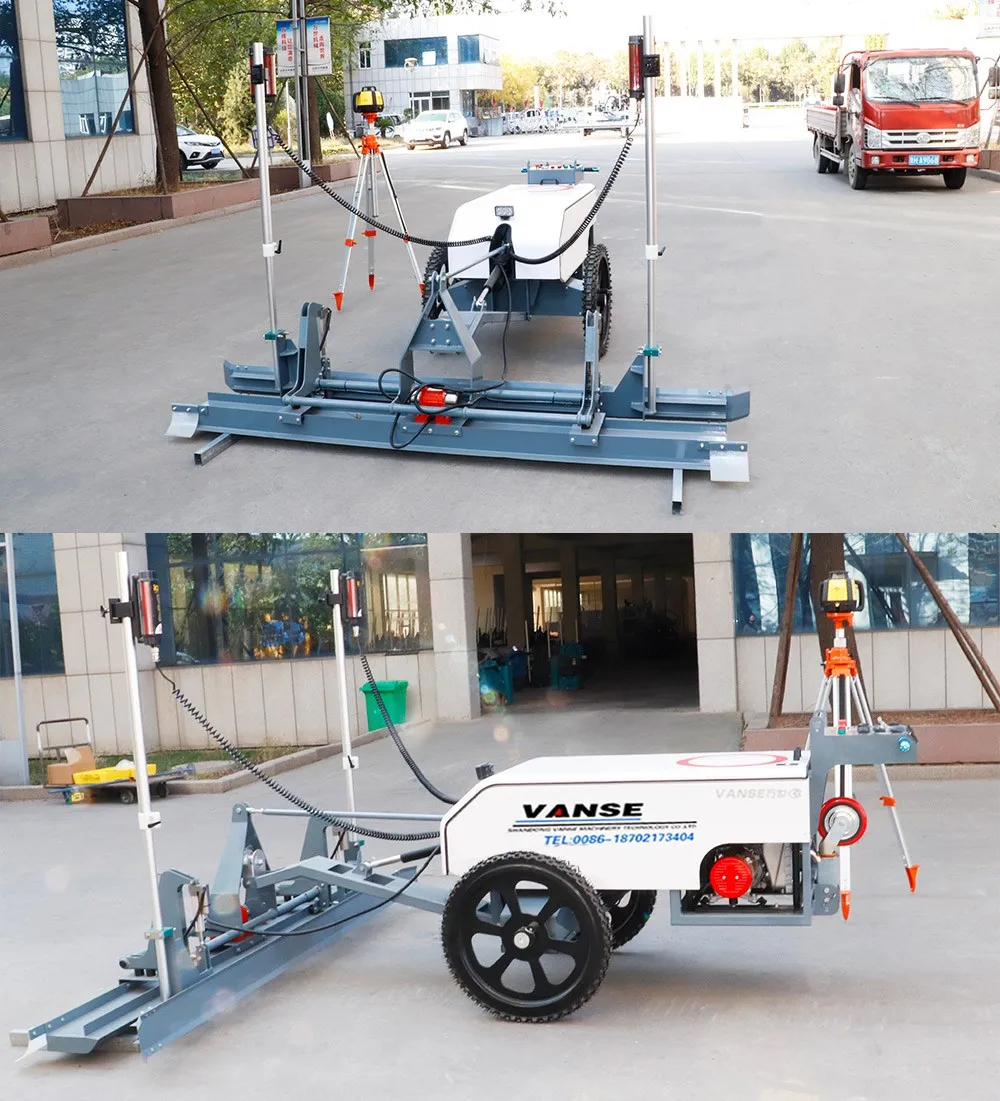
❖Establishment of the laser transmitter:
It is intended to be erected on the column. The specific position should be set in a better position according to the amount of shop injection on the day. If it cannot be erected on the column, it should be erected on a special tripod.
❖In order to ensure the quality of concrete floor paving, each group needs to arrange 10-12 workers to cooperate to level the surface of the concrete paved on the ground, so that the stacking height is slightly higher than the design level (about 20-30mm). At the same time, for the parts near the wall, the outcropping pipeline and the surrounding formwork, arrange 2 workers to manually smooth the concrete material about 20~30cm away from the wall (formwork) side (using a 2m scraper and an iron trowel). Workers responsible for plastering must be trained skilled plasterers. These workers must obey the command and follow the arrangement in order to ensure the quality of the construction.
❖Since the thickness of the concrete reaches 200mm, and due to the setting of steel mesh, in order to ensure that the concrete is compacted by vibration, this project needs to arrange a vibrator to cooperate with the vibration. At the same time, in order to ensure that the protective layer of steel mesh reaches the thickness required by the design (70mm), it is necessary to arrange in advance to manually lift the steel mesh and place support blocks in the area to be laid.
❖The width of the concrete material laid on the platform is required to be no more than 5m each time, and the length is subject to the formwork boundary. The construction direction is from left to right (along the short side direction), from front to back (along the long side direction). The daily injection volume is recommended to be 1200~1500㎡. Calculated on the basis of 12 hours of working time per day, this requires a feed rate of 30 to 40m³.
❖Others:
In order to ensure the flatness of the ground, special attention should be paid during the construction of the laser leveling machine: the slump of the concrete sent to the platform must be consistent each time; the concrete feeding speed must reach 40m/h or above, and each batch of concrete The initial setting time must be consistent; ensure that the formwork elevation is accurate, and cannot be disturbed during construction; the environment is coordinated. The concrete floor that has just been constructed cannot be exposed to sunlight, wind, rain, etc. that are unfavorable to concrete health.
Thanks to All the Friends Who Support and Trust Shandong Vanse Machinery Technology Co., Ltd.
If you want to know more about Shandong Vanse Machinery Technology Co., Ltd. or have any questions, please feel free to contact us:
Our Factory
Shandong Vanse Machinery Technology Co., Ltd.








Share this article

About the Author: Shandong Vanse Machinery Technology Co., Ltd.
Shandong Vanse Machinery Technology Co., Ltd. is a high-tech manufacturer specializing in concrete construction machinery, including laser screeds and related equipment. The company integrates R&D, production, and global sales, with products exported to over 60 countries and widely used in infrastructure projects worldwide.
Previous Post
Next Post
Related Articles
You Might Also Like
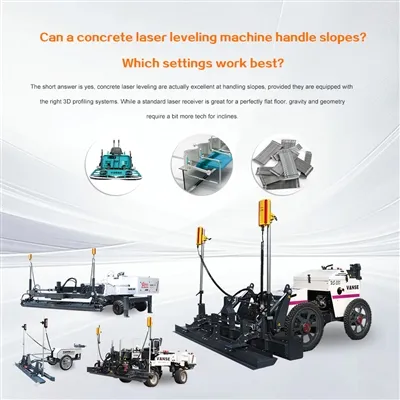
Can a concrete laser leveling machine handle slopes? Which settings work best?
The short answer is yes, concrete laser leveling are actually excellent at handling slopes, provided they are equipped with the right 3D profiling systems. While a standard laser receiver is great for a perfectly flat floor, gravity and geometry require a bit more tech for inclines. Standard laser leveling uses a rotating laser transmitter on a tripod and receivers on the machine. This creates a flat "plane" of light. Single/Dual Slopes (2D): If you are doing a simple parking lot ramp or a consistent drainage slope, you can physically tilt the laser transmitter on its tripod to a specific percentage (e.g., a 1% grade). The machine will then follow that tilted plane.Complex Contours (3D): For complex curbs, valleys, or multi-directional slopes, the machine uses 3D Profiling Systems (often involving a Total Station or GPS). This allows the leveling to automatically adjust the head height based on its exact coordinate position on a digital map. To get the best finish on a slope, you can't just "set it and forget it." You need to account for the way wet concrete behaves under gravity. On a slope, concrete tends to "slump" or migrate downward. Setting: Keep the auger speed high enough to move excess material but not so fast that it creates a "wave" of concrete that pulls away from the high side. The vibrator is what settles the aggregate and brings the "cream" to the top. Setting: On steep slopes, lower the vibration frequency slightly. Over-vibrating on an incline can cause the concrete to fluidize too much, leading it to slide down the hill before it sets (slumping). Best Practice: Generally, you want to pull the machine up the slope or work across the fall. Pulling downhill can lead to "shingling," where the leveling head pushes too much material in front of it, resulting in an uneven thickness. If your machine has slope compensation software, ensure it is toggled on. This adjusts the hydraulic response time to ensure the leveling head reacts instantly to changes in elevation without "hunting" or bouncing, which happens more often on uneven grades. Factor Standard Flat Setting Slope Setting Laser Mode Horizontal / Level Grade / Manual Slope Vibration High / Normal Reduced (to prevent slump) Travel Speed Faster Slower & More Consistent Concrete Slump 4" – 5" 3" – 4" (Lower is better for slopes) Note: The parameters provided in this document are for reference only and are not mandatory. Due to differences in technical characteristics between different brands and models of laser levelers, please consult the manufacturer for a suitable solution before actual operation. This reference document assumes no responsibility for any issues arising from failure to follow the manufacturer's instructions.How to deal with the existing cracks in the diamond wear-resistant floor?
How to deal with existing cracks in diamond wear-resistant flooring Diamond wear-resistant flooring has been widely used in industrial plants, warehouses, parking lots and other places due to its high wear resistance, high strength and beautiful appearance. However, during use, cracks may appear in the floor due to the influence of various factors such as materials, construction, and environment. Cracks not only affect the aesthetics of the floor, but also the durability and performance of the floor. Therefore, for cracks in diamond wear-resistant flooring that have already appeared, appropriate treatment methods must be adopted. This article will combine actual cases to explore how to deal with cracks in diamond wear-resistant flooring that have already appeared. 1. Crack type and cause analysis Before dealing with cracks in diamond wear-resistant flooring, it is necessary to first analyze the types and causes of cracks. Crack types mainly include transverse cracks, longitudinal cracks, mesh cracks and irregular cracks. The causes of these cracks are varied, and may involve various factors such as material quality, construction technology, temperature changes, humidity changes, foundation settlement, etc. Therefore, different treatment methods are needed for cracks of different types and causes. 2. Preparation before crack treatment Before treating the cracks in the diamond wear-resistant floor, a series of preparations need to be carried out. First, the cracks need to be inspected and recorded in detail, including the length, width, depth and distribution of the cracks. Secondly, it is necessary to clean up the debris and oil in the cracks to ensure that the surface of the cracks is clean and dry. Finally, according to the type and cause of the cracks, a suitable treatment plan is formulated. 3. Crack treatment method ☑ Filling method For cracks with smaller width and shallower depth, the filling method can be used for treatment. First, select the filling material suitable for the floor material, such as elastic caulking agent, polyurethane sealant, etc. Then, apply the filling material evenly on the crack surface to ensure that the filling material fully fills the crack. Finally, use a sharp plate to level the excess filling material so that it is flush with the floor surface. The filling method is simple to operate and low in cost, and is suitable for treating minor cracks. ☑ Expansion method For cracks with larger width and deeper depth, the filling method may not be effective. At this time, the expansion method can be used for treatment. First, use a cutting machine or a drilling machine to widen and deepen the profile joint so that the profile joint forms a V-shaped groove. Then, fill the special floor repair material into the V-shaped groove to ensure that the repair material fully fills the entire crack. Finally, use a scraper to scrape off the excess repair material and maintain it until the repair material is completely solidified. The crack expansion method can effectively improve the quality of crack repair, but the operation is relatively complicated and the cost is high. ☑ Pressure grouting method For cracks with larger width and deeper depth, the crack position is more special, and it is difficult to expand the crack, the pressure grouting method can be used. First, set a grouting hole at one end of the crack and an exhaust hole at the other end. Then, use a grouting machine to inject special grouting materials (such as epoxy resin, polyurethane, etc.) into the crack through the grouting hole. During the grouting process, the grouting pressure and grouting speed are controlled to make the grouting material fully fill the crack. Finally, after the grouting material is solidified, the crack surface is polished and processed. Pressure grouting can effectively improve the density and strength of crack repair, but the operation is difficult and requires professional equipment and personnel. 4. Maintenance and precautions after crack treatment ☑ Maintenance After the crack treatment is completed, the repaired part needs to be maintained. During the maintenance period, heavy objects should be avoided from rolling over and sharp objects should be avoided from scratching the repaired part to avoid affecting the repair effect. At the same time, the repaired part should be kept dry and clean to avoid water or other liquids from penetrating into the repaired part. The maintenance time is generally determined by the curing time of the repair material and environmental conditions. ☑ Precautions (1) When dealing with cracks, the appropriate treatment method should be selected according to the type and cause of the cracks. Avoid blind treatment or inappropriate treatment methods that may cause crack expansion or poor repair effect. (2) When selecting repair materials, ensure that the performance of the repair materials matches the original floor materials. Avoid using inferior or incompatible repair materials that may cause problems such as falling off and cracking at the repaired part. (3) When dealing with cracks, safety protection measures should be taken. Avoid dust and splashes generated during the treatment process that may cause harm to personnel and the environment. At the same time, relevant safety operating procedures must be followed to ensure the safety and stability of the construction process. 5. Case Analysis After a period of use, the diamond wear-resistant floor of a large industrial plant had multiple horizontal cracks and mesh cracks. After a detailed inspection and cause analysis of the cracks, it was found that the cracks were mainly caused by factors such as temperature changes, humidity changes and foundation settlement. In response to this situation, the expansion method was adopted for treatment. First, the cracks were widened and deepened to form a V-shaped groove. Then, a special floor repair material was used to fill the V-shaped groove to ensure that the repair material fully filled the entire crack. Finally, the repaired part was maintained and polished. After treatment, the cracks were effectively repaired, and the flatness and aesthetics of the floor were restored. 6. Summary and Outlook The treatment of diamond wear-resistant floor cracks is a complex and important task. By analyzing the types and causes of cracks and selecting appropriate treatment methods, the quality of crack repair and the performance of the floor can be effectively improved. At the same time, attention should be paid to safety protection and maintenance work during the crack treatment process to ensure the safety of the construction process and the durability of the repair effect. With the continuous advancement of science and technology and the emergence of new materials, the crack treatment technology of diamond wear-resistant floor will be more mature and perfect in the future. For example, advanced non-destructive testing technology can be used to accurately measure and locate cracks to improve the accuracy and efficiency of treatment: more excellent repair materials can be developed to improve the strength and durability of the repaired parts: more environmentally friendly and energy-saving crack treatment methods can be explored to reduce the impact on the environment during the treatment process. In addition, in addition to crack treatment, daily maintenance and care are also the key to keeping diamond wear-resistant floor in good condition. The floor should be cleaned and maintained regularly, and small cracks and damage should be discovered and treated in time to prevent them from expanding and deteriorating. At the same time, care should be taken to avoid collisions with heavy objects and scratches with sharp objects to avoid damage to the floor. In summary, the treatment of diamond wear-resistant floor cracks is a systematic project, which requires comprehensive consideration of the types, causes, treatment methods and daily maintenance of cracks. Only by scientific analysis, reasonable treatment and careful maintenance can the long-term use effect and aesthetics of diamond wear-resistant floor be ensured. In practical applications, we also need to constantly sum up experience and lessons, combine specific engineering practices, and explore crack treatment methods that are more suitable for different environments and needs. At the same time, strengthening the training and education of relevant personnel and improving their professional skills and operation level are also important measures to ensure the quality and effect of crack treatment. In the future, with the continuous advancement of science and technology and the continuous development of floor materials, we have reason to believe that the treatment of diamond wear-resistant floor cracks will become simpler, more efficient and more reliable. This will provide safer, more beautiful and more durable floor solutions for industrial plants, warehouses, parking lots and other places, and provide a more comfortable and convenient environment for people's production and life. In the process of crack treatment, in addition to the traditional methods such as the expansion method and pressure grouting method mentioned above, some new technical means can also be tried. For example, using drones or robots to automatically detect and identify cracks, accurately determine the location and size of cracks through image recognition technology, and improve processing efficiency and accuracy. In addition, it is possible to consider the use of new self-healing materials that can automatically fill and repair cracks when they occur, thereby extending the service life of the floor. At the same time, with the continuous improvement of environmental awareness, attention should also be paid to environmental protection and sustainable development in the process of crack treatment. Select repair materials with excellent environmental performance, reduce waste and pollutants generated during the treatment process, and ensure that the impact of the treatment process on the environment is minimized. In addition, energy-saving technologies should be actively promoted and applied to reduce energy consumption in the treatment process and improve resource utilization efficiency. In short, the treatment of cracks in diamond wear-resistant floor is a field that is constantly developing and improving. Through continuous exploration of new technical means, improving treatment efficiency and accuracy, and focusing on environmental protection and sustainable development, we are expected to provide more high-quality, efficient and environmentally friendly solutions for the treatment of cracks in diamond wear-resistant floor. This will bring a better experience to industrial production and people's daily life. Before ending this article, it should be emphasized that for the treatment of cracks in diamond wear-resistant floor, prevention is always better than treatment. Therefore, in the design and construction stages, factors such as material selection, construction technology, and foundation treatment should be fully considered to avoid the occurrence of cracks as much as possible. At the same time, during use, the maintenance and care of the floor should be strengthened, potential problems should be discovered and dealt with in a timely manner, and the long-term stable operation of the floor should be ensured. Looking to the future, with the advancement of science and technology and the development of floor materials, we look forward to seeing more innovative solutions applied to the treatment of cracks in diamond wear-resistant floor. This will bring a broader development prospect to the flooring industry and make greater contributions to the sustainable development of society. In summary, the treatment of diamond wear-resistant flooring is a complex process that requires comprehensive consideration of multiple factors. Through scientific analysis, reasonable treatment methods and careful maintenance, we can effectively solve this problem and ensure the long-term stable operation and aesthetics of the floor. At the same time, we should also pay attention to the application of new technologies and new materials to promote the continuous innovation and development of the flooring industry. This article discusses in detail the treatment methods, precautions, case analysis and future prospects of diamond wear-resistant floor cracks, and strives to provide readers with a comprehensive and in-depth understanding. It is hoped that this article can provide certain reference and reference value for practitioners and researchers in related fields, and jointly promote the continuous progress and development of diamond wear-resistant floor crack treatment technology.How can maintenance of concrete laser leveling machines improve construction efficiency and quality
As a core piece of equipment for concrete surface leveling, the quality of a concrete laser leveling directly impacts construction efficiency and concrete quality. Scientific maintenance can directly and indirectly improve overall construction efficiency by reducing equipment failures, stabilizing operational performance, and extending equipment life. The specific mechanisms are as follows: Concrete construction is highly continuous and time-sensitive (for example, leveling must be completed before initial setting of concrete, otherwise construction joints and reduced strength are likely to occur). A laser leveling failure during construction not only interrupts the current process but can also delay subsequent steps (such as finishing and curing) and even result in wasted concrete material. Scientific maintenance can avoid such problems through "preventive maintenance", which is specifically reflected in: Regularly inspect key components, such as the laser transmitter's calibration accuracy, the hydraulic system's tightness (e.g., leaks in the oil pipes and cylinders), the wear of the travel wheels, and the lubrication status of the motor and reducer. This can proactively identify potential problems (such as insufficient hydraulic oil or laser head misalignment) and prevent sudden equipment downtime during construction. For example, if worn travel wheels are not replaced promptly, the equipment may stall. Leveling an area that normally takes one hour may take two to three hours, directly reducing construction efficiency. Complete maintenance records (recording equipment model, replacement cycles for wearing parts, and historical faults) help maintenance personnel quickly identify the cause of a fault. For example, if the hydraulic filter of a certain laser leveler needs to be replaced every 300 hours, stocking spare parts in advance and replacing them on schedule can avoid long downtime caused by waiting for spare parts. The core function of a laser leveling is to achieve high concrete surface flatness (error is typically required to be ≤3mm/2m) through laser positioning and hydraulic leveling. The stability of the equipment's performance directly determines the leveling quality, and maintenance is key to ensuring stable performance: The laser transmitter is the core benchmark for leveling accuracy. If it's not calibrated for an extended period, the laser line may deviate. Regularly calibrating the laser transmitter and checking its signal strength (for example, before daily construction and every 100 hours) ensures the laser line is always level, preventing uneven concrete surfaces caused by laser deviation. For example, a miscalibrated laser head on a project resulted in a 5mm uneven surface. This required manual grinding to correct the problem, increasing rework costs and potentially affecting the wear resistance and aesthetics of the concrete surface. The hydraulic system controls the lift and pressure of the leveling blades. If the hydraulic oil is contaminated or the oil lines are clogged, uneven lift speed and insufficient pressure can occur, leading to problems like sanding and denting on the leveling surface. Repair, maintenance, or adjustment of working components such as the roller and scraper blades is strictly prohibited while the equipment is operating. Regularly changing the hydraulic oil (usually every 500 hours, as recommended by the manufacturer), cleaning the hydraulic filter, and checking the oil line seals ensures stable hydraulic system pressure. This allows the scrapers to apply uniform pressure, ensuring even distribution of concrete aggregate and consistent surface density, thereby improving the strength and smoothness of the finished concrete. Uneven travel speeds (e.g., faster on one side and slower on the other) can cause inconsistent rubbing force from the leveling blades on the concrete, resulting in surface ripples. Regularly checking the travel motor speed, drive wheel engagement, and track tension will ensure a uniform travel speed and ensure a consistent and smooth surface. High-quality laser leveling machines are expensive (typically tens to hundreds of thousands of yuan). Extending equipment life through effective maintenance can reduce the frequency of equipment upgrades, lowering long-term investment costs and indirectly ensuring construction efficiency (avoiding process continuity issues caused by frequent equipment replacements due to aging). Reduce wear on core components: For example, regularly adding specialized lubricants to motors and reducers can reduce frictional losses in mechanical components. This can extend the lifespan of equipment from five years to seven to eight years through maintenance. Prevent minor problems from becoming major ones: Ignoring minor faults (such as minor oil leaks or unusual noises) can lead to escalating problems (e.g., hydraulic pump damage due to oil depletion), increasing repair costs from a few hundred yuan to tens of thousands of yuan, while also causing extended downtime and impacting the overall project schedule. Maintenance and repair priorities Impact on construction efficiency Impact on construction quality Laser system calibration Avoid rework due to precision issues, shortening construction time Ensures surface leveling tolerances meet specifications Hydraulic system maintenance Reduce downtime, ensuring process continuity Avoids surface dents and sanding, improving density Travel system inspection Ensure consistent equipment operation, improving individual machine efficiency Avoids surface ripples, ensuring flatness Regular replacement of wearing parts Shorten maintenance time, reducing unplanned downtime Maintains stable equipment output and consistent quality In summary, the maintenance of concrete laser leveling machines is not an "extra cost", but directly improves construction efficiency and ensures quality by "preventing failures, stabilizing performance, and extending life". It is an indispensable core link in concrete construction. Note: The parameters provided in this document are for reference only and are not mandatory. Due to differences in technical characteristics between different brands and models of laser levelers, please consult the manufacturer for a suitable solution before actual operation. This reference document assumes no responsibility for any issues arising from failure to follow the manufacturer's instructions.