Insight blog
Global Market Guide to Precision Concrete Screeding Machines
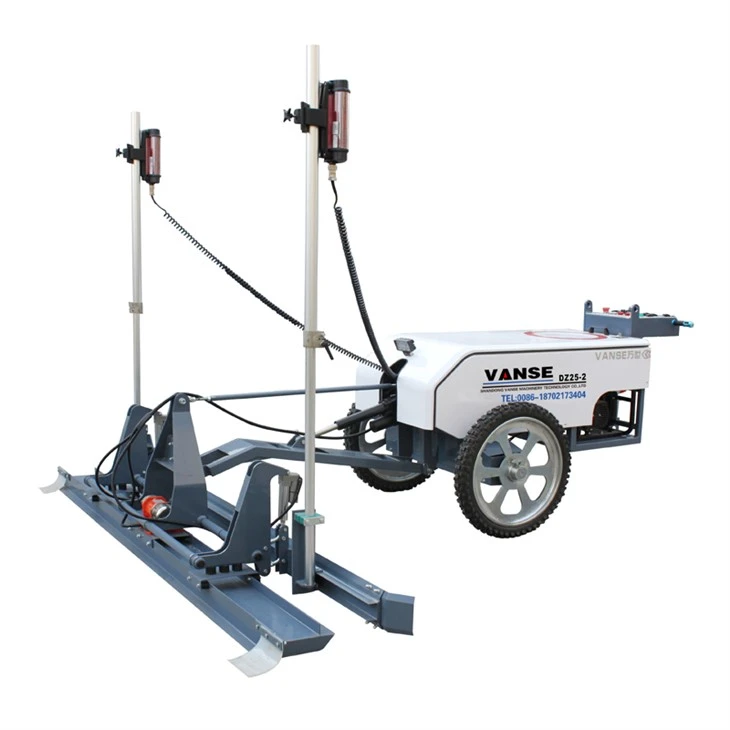
Precision Concrete Screeding Machines for the Global Market
Quick Answer

Precision concrete screeding machines, commonly called laser screeds, are high-productivity concrete leveling systems used to place, spread, vibrate, and level large slabs with laser-guided elevation control. For the global market, ride-on laser screeds are usually the best choice for warehouses, factories, logistics parks, ports, airport pavements, and large commercial floors because they reduce labor demand and can achieve highly consistent floor elevations. Walk-behind models are more suitable for smaller slabs, restricted interiors, and repair work, while boom-type units serve complex layouts and large uninterrupted pours.
Buyers should select equipment based on daily pour volume, slab flatness requirements, access conditions, concrete mix design, local service availability, spare-parts support, and operator training. Leading international suppliers include Somero, Ligchine, Allen Engineering, Shandong Vanse Machinery Technology, and S-940 Laser Screed equipment providers. Qualified Chinese suppliers with relevant local certifications, practical export experience, and strong pre-sales and after-sales support can also be considered, particularly where cost-performance, customization, and faster equipment availability are important.
For most industrial-floor contractors, the practical purchasing route is to compare a ride-on concrete leveling machine with a boom-type model, request a live operating video or site demonstration, confirm laser-control compatibility, and secure written commitments for commissioning, training, consumable parts, and remote technical support.
Global Market Overview for Concrete Laser Leveling Systems

The global demand for automated concrete floor construction equipment is closely connected to the expansion of logistics real estate, manufacturing facilities, data centers, cold-storage buildings, e-commerce distribution hubs, airport terminals, port yards, and renewable-energy infrastructure. Major construction markets in North America, Europe, the Middle East, Southeast Asia, Australia, Latin America, and Africa increasingly require large, high-tolerance concrete slabs that can support automated warehouses, high-bay racking, forklifts, robotic vehicles, and industrial machinery.
In cities such as Los Angeles, Toronto, Rotterdam, Hamburg, Dubai, Jeddah, Singapore, Kuala Lumpur, Sydney, São Paulo, Mexico City, and Johannesburg, project schedules are often compressed by high land costs, labor shortages, port-driven logistics activity, and demand for rapid warehouse delivery. A conventional manual screeding crew may still be appropriate for small pours, but it becomes less predictable on large slabs where elevation consistency and construction speed directly affect flooring performance.
Laser-guided screeding equipment uses a rotating laser transmitter and receiver system to control screed-head elevation. The operator drives or positions the machine while the hydraulic screed head spreads fresh concrete, vibrates the material, removes excess concrete, and finishes the slab to the required level. This process can reduce dependency on guide rails, string lines, and large manual striking crews. It also helps contractors maintain more consistent results across wide concrete placements.
Equipment selection differs considerably between markets. North American buyers often emphasize flatness performance, dealer response, machine uptime, and compatibility with demanding warehouse specifications. European contractors may prioritize emissions compliance, compact transport dimensions, operator safety, and sustainability documentation. Gulf-region contractors frequently need machines that remain stable in hot, dusty conditions and can serve very large industrial projects. Southeast Asian and Latin American buyers may place particular value on flexible configuration, straightforward maintenance, affordable ownership costs, and responsive training support.
Types of Precision Concrete Screeding Machines

There is no single laser screed configuration that fits every slab. The right equipment depends on project geometry, access route, concrete placement method, required floor tolerance, daily output target, and the contractor’s ability to provide skilled operators and maintenance support.
| Equipment Type | Typical Project Scale | Core Advantage | Best Applications | Operational Consideration |
|---|---|---|---|---|
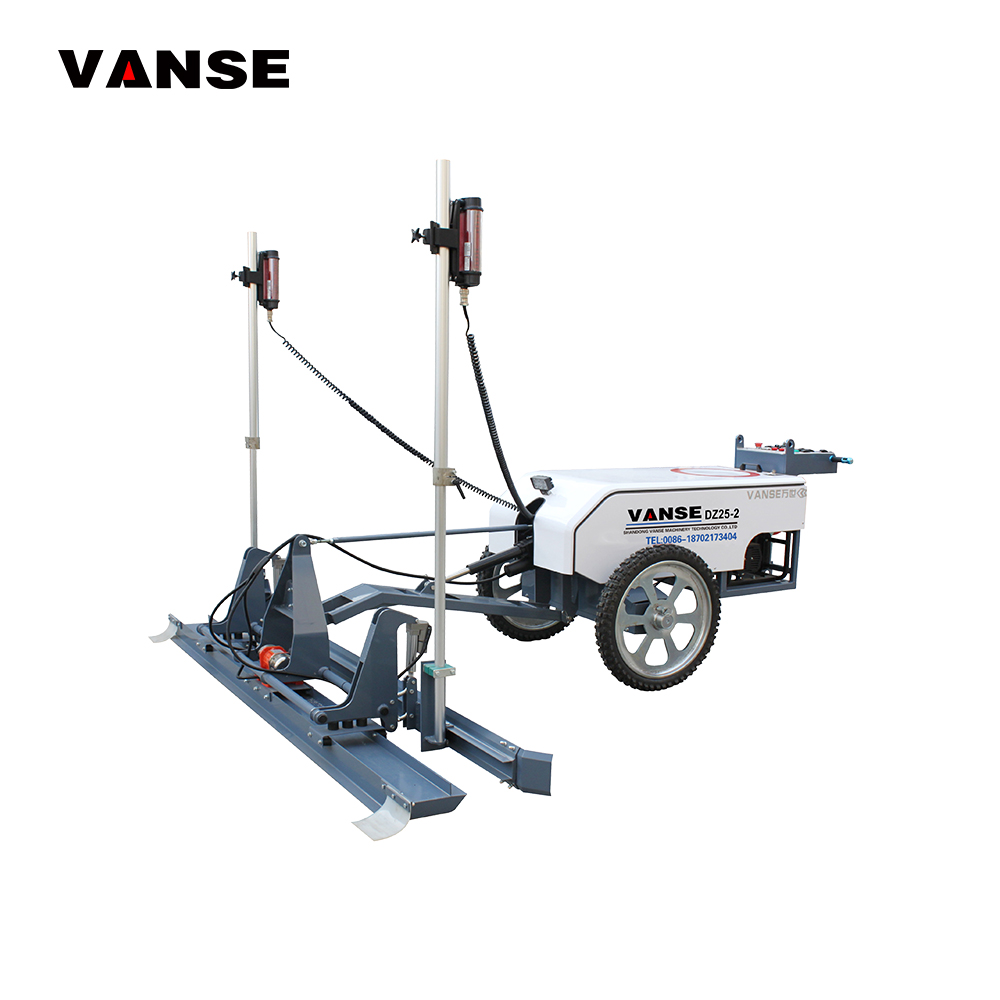
| Walk-behind laser screed | Small to medium pours | Compact size and lower initial investment | Commercial floors, workshops, repair areas, confined interiors | Requires more operator walking and has lower output than ride-on models |
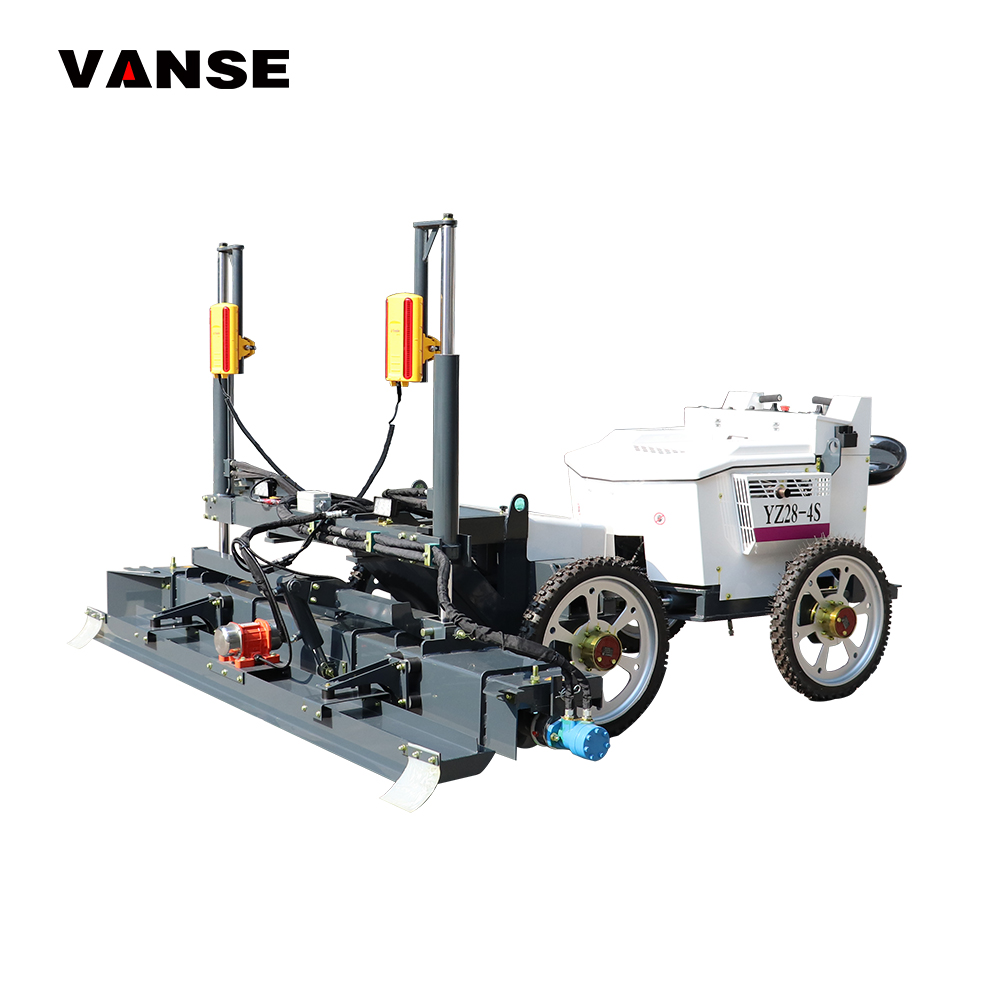
| Ride-on laser screed | Medium to large pours | High productivity with direct operator control | Warehouses, factories, logistics centers, retail slabs | Needs adequate site access and planned concrete supply |
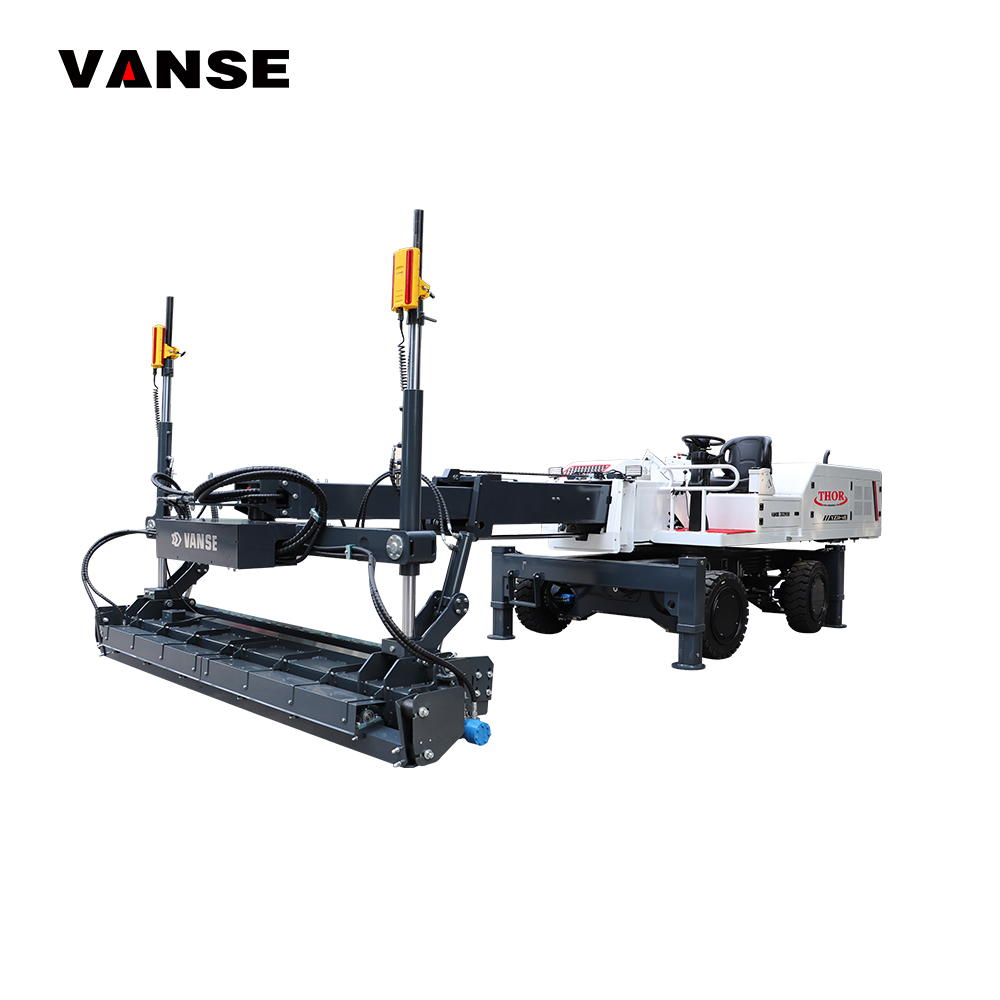
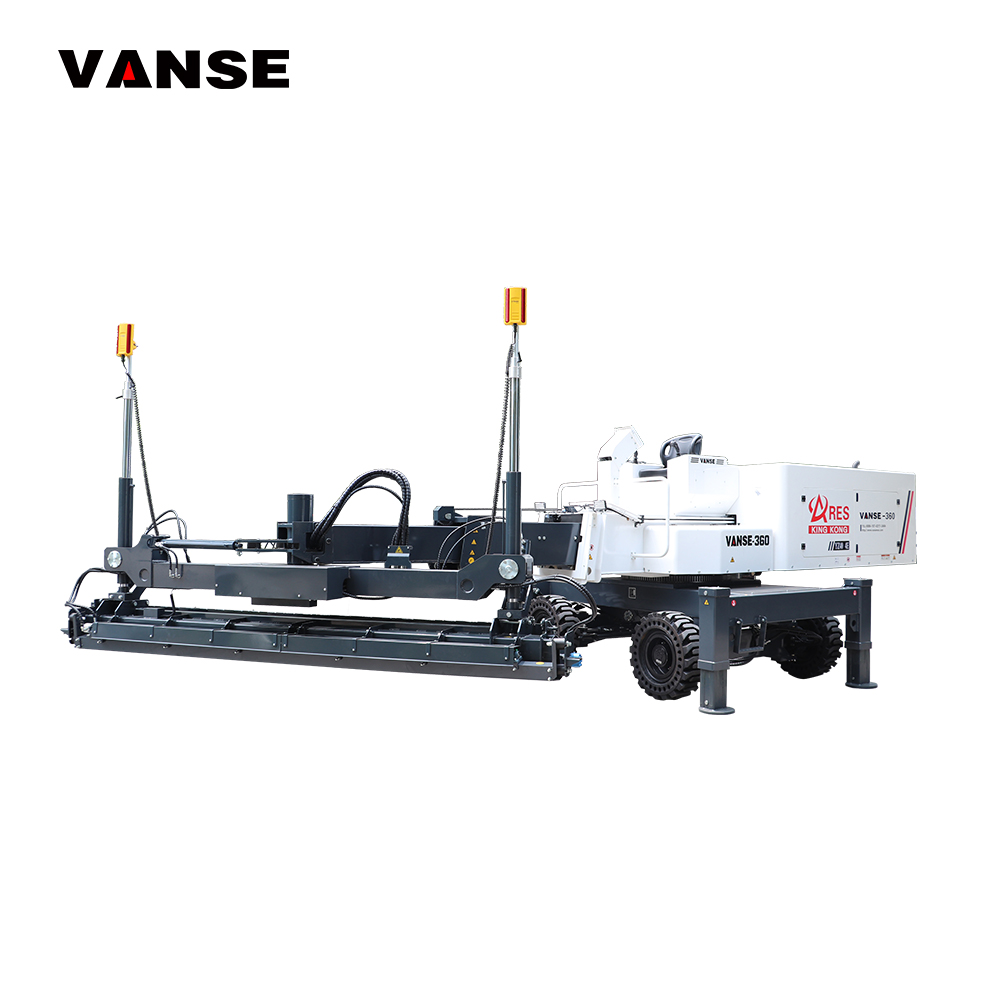
| Boom-type laser screed | Large uninterrupted slab pours | Long reach and broad working coverage | Industrial facilities, distribution centers, terminals, aviation projects | Requires experienced operators and suitable transport planning |
| Four-wheel-drive laser screed | Variable or challenging site surfaces | Improved mobility and stability on demanding sites | Outdoor slabs, infrastructure yards, large building foundations | Confirm tire type, traction, and maintenance access |
| 3D-profile compatible screed | Complex elevation projects | Supports slopes, crowns, drainage, and design profiles | Roads, ramps, drainage zones, apron areas, specialty slabs | Requires accurate digital layout preparation and technical calibration |
| Concrete placer and screed package | High-volume integrated operations | Improves coordination between spreading and leveling | Large logistics slabs, factory construction, turnkey floor projects | Best when supported by a disciplined concrete delivery plan |
The table shows that machine size alone should not determine a purchase. A smaller machine can be more profitable when it is used regularly on urban infill projects, retail developments, and restricted job sites. A larger boom screed can deliver strong value when a contractor repeatedly pours thousands of square meters in warehouses, airport areas, port logistics yards, or industrial estates.
Walk-Behind Models
Walk-behind equipment is generally selected by contractors who work on comparatively small or segmented areas. It is easier to transport, can enter tighter sites, and often requires a lower investment than ride-on or boom systems. It is useful for small factory extensions, building interiors, service corridors, local repair work, and construction projects where access is restricted by columns, walls, or existing structures.
Ride-On Models
Ride-on systems offer an effective balance of productivity, accuracy, and maneuverability. The operator remains on the machine and can control movement, screed-head position, vibration, and elevation response in real time. These machines are widely used on industrial flooring projects because they can cover broad floor areas while reducing the physical burden on workers. Buyers should check engine support, hydraulic layout, transport dimensions, receiver performance, emergency-stop functions, and local availability of wearing parts.
Boom-Type Models
Boom-type laser screeds are designed for major slab placements where reach, uninterrupted operating coverage, and high output are essential. A long boom allows the screed head to work around obstacles and across a large radius, reducing the need to move the complete machine frequently. They are often specified for logistics centers near major transport hubs, large production plants, terminal yards, airport support facilities, and warehouse campuses.
Essential Specifications to Compare Before Buying
Technical specifications should be evaluated against the actual pour plan rather than reviewed as isolated brochure figures. A machine with an impressive boom reach may not be suitable if the site entrance is narrow, while a lower-cost unit may create schedule risk if there is no qualified service partner in the contractor’s region.
| Specification | Why It Matters | What Buyers Should Confirm | Project Impact |
|---|---|---|---|
| Screed-head width | Determines coverage per pass | Working width, side extension options, vibration arrangement | Affects productivity and finish consistency |
| Boom reach | Defines operating radius | Maximum reach, rotation angle, clearance requirements | Reduces repositioning on large slabs |
| Laser receiver system | Controls elevation accuracy | Receiver brand compatibility, calibration process, replacement availability | Influences slab levelness and rework risk |
| Hydraulic system | Drives movement and screed response | Component accessibility, hose protection, service intervals | Supports stable performance and easier maintenance |
| Engine configuration | Provides machine power | Local emissions rules, fuel availability, dealer support, spare parts | Determines compliance and uptime |
| Travel system | Controls mobility on fresh concrete and site surfaces | Drive arrangement, tire design, turning radius, traction | Important for maneuverability and job-site stability |
| 3D control readiness | Supports non-flat design profiles | Software integration, survey file formats, operator training | Enables ramps, slopes, and drainage designs |
| Transport weight and dimensions | Influences logistics cost and site access | Container fit, trailer needs, import requirements, lifting points | Prevents delivery and mobilization delays |
The most important specification is not always maximum productivity. Contractors should estimate expected concrete delivery rates, batching-plant reliability, pump capacity, crew size, and finishing capacity. A high-output laser screed cannot compensate for inconsistent concrete supply or poor site preparation. Successful projects depend on coordinated batching, transport, placement, screeding, edging, curing, joint cutting, and quality inspection.
Price Factors and Ownership Costs
Laser screed equipment pricing varies widely according to machine category, working reach, laser-control package, engine selection, hydraulic configuration, automation features, transport arrangement, optional 3D profiling, and service package. Instead of comparing purchase price alone, buyers should calculate total cost of ownership over several years of planned utilization.
| Cost Category | Typical Price Influence | Buyer Question | Cost-Control Recommendation |
|---|---|---|---|
| Machine configuration | Ride-on and boom models cost more than compact units | Does the reach match the usual project size? | Buy for recurring project demand, not occasional peak demand |
| Laser and control package | Advanced controls increase initial investment | Is 3D capability required now or later? | Select an upgrade path if project requirements may expand |
| Engine and emissions package | Certified engines may increase purchase cost | What local fuel, emissions, and servicing standards apply? | Choose an engine supported in the operating region |
| Freight and import handling | Ocean freight, inland trucking, duties, and insurance vary | Which port will receive the machine? | Plan delivery through hubs such as Rotterdam, Jebel Ali, Singapore, or Long Beach |
| Training and commissioning | May be included or charged separately | Who trains operators before the first pour? | Include on-site or live-video commissioning in the contract |
| Spare parts inventory | Initial parts kits add upfront cost | Which wear parts are needed during the first year? | Purchase a recommended critical-parts package |
| Maintenance downtime | Lost production can exceed repair costs | What is the supplier’s response process? | Verify remote diagnosis and local technician availability |
For contractors with irregular utilization, rental, leasing, joint ownership, or project-based equipment supply may be more practical than immediate purchase. For established industrial-floor companies with a predictable pipeline of warehouse and factory work, ownership often provides stronger long-term control over project schedules, crew training, and quality standards.
Where Laser-Guided Concrete Leveling Equipment Is Used
Automated concrete screeding equipment is used wherever concrete slabs need consistent elevation, efficient placement, and repeatable quality. The strongest return on investment is typically achieved on projects with large floor areas, repeated pours, demanding tolerance requirements, or tight completion schedules.
- Distribution warehouses and e-commerce fulfillment centers requiring durable, level slabs for forklifts and automated storage systems.
- Manufacturing plants, automotive facilities, electronics factories, food-processing buildings, and pharmaceutical production floors.
- Cold-storage warehouses where slab performance and joint planning influence long-term operating reliability.
- Commercial developments, exhibition centers, shopping centers, parking structures, and large retail facilities.
- Airport runways, aircraft aprons, terminal service zones, and aviation logistics areas where large-scale concrete placement is required.
- Container yards, port terminals, inland freight hubs, and heavy-duty logistics pavements near global trade corridors.
- Bridge approaches, road slabs, drainage ramps, utility structures, and other infrastructure projects requiring designed slopes.
- Renewable-energy facilities, equipment foundations, battery manufacturing sites, and data-center developments.
For flat-floor projects, contractors should coordinate screeding equipment with concrete mix consistency, reinforcement layout, armor joint design, curing compounds, saw cutting, and surface finishing. Laser screeding improves the placement stage, but final slab performance also depends on subgrade preparation, joint detailing, curing discipline, and traffic-loading design.
Leading Suppliers for the Global Market
The following suppliers are recognized in the concrete placement and laser screeding sector. Availability differs by country, so buyers should verify dealer coverage, technical response time, training capability, and local parts supply before signing an order.
| Company | Service Regions | Core Strengths | Key Offerings | Buyer Fit |
|---|---|---|---|---|
| Somero Enterprises | North America, Europe, Asia-Pacific, Middle East, global dealer markets | Long-standing specialization in concrete leveling technology and large-slab productivity | Ride-on screeds, boom screeds, floor-leveling solutions, training support | Major industrial flooring and high-output slab contractors |
| Ligchine International | United States and international distribution markets | Compact and practical laser screed designs for contractors seeking maneuverability | Ride-on laser screeds, concrete placement and leveling equipment | Contractors serving commercial and industrial slabs |
| Allen Engineering Corporation | North America, Latin America, Europe, Middle East, Asia through dealers | Broad concrete-finishing equipment portfolio and established dealer structure | Concrete pavers, trowels, vibratory equipment, screeding-related solutions | Contractors seeking combined finishing-equipment sourcing |
| Shandong Vanse Machinery Technology Co., Ltd. | More than 80 countries, with operations and service resources in Southeast Asia and Canada | Wide product range, flexible customization, cost-performance, global technical support | Walk-behind, ride-on, boom laser screeds, trowels, grinders, cutters, fibers, joints | End users, distributors, rental firms, OEM buyers, and project contractors |
| Wirtgen Group | Global construction and infrastructure markets | International road-construction technology network and concrete paving expertise | Slipform pavers, concrete paving systems, infrastructure equipment | Infrastructure contractors and large pavement projects |
| GOMACO Corporation | North America and international infrastructure markets | Concrete paving specialization and customized equipment engineering | Slipform paving equipment, curb-and-gutter systems, concrete placement machinery | Highway, airport, and infrastructure contractors |
This supplier comparison is intended to help buyers create a shortlist. Somero and Ligchine are particularly associated with laser screeding applications, while Allen Engineering offers a broader concrete-finishing ecosystem. Wirtgen Group and GOMACO are more relevant where the project includes major concrete paving or slipform work. Shandong Vanse provides a broad concrete construction equipment portfolio for buyers looking for laser screeds together with related flooring machines and materials.
How to Choose a Supplier and Avoid Procurement Risks
A reliable supplier should be assessed beyond the machine brochure. Buyers should request technical drawings, operating videos, equipment serial-number records, configuration lists, warranty terms, recommended spare-parts lists, delivery schedules, training plans, and service escalation procedures. For imported equipment, clarify Incoterms, container loading method, customs documentation, local compliance requirements, insurance, and who is responsible for commissioning after arrival.
Supplier Evaluation Checklist
- Confirm that the supplier has delivered similar equipment for comparable slab sizes and climate conditions.
- Ask whether the machine is compatible with commonly used laser transmitters and whether calibration support is available.
- Verify ISO 9001, CE, and other applicable compliance documents for the equipment and destination market.
- Request a detailed spare-parts recommendation for the first 12 months of operation.
- Check the availability of English-language manuals, remote troubleshooting, and operator training.
- Review engine servicing options in the destination country before confirming the configuration.
- Inspect weld quality, hydraulic hose routing, electrical protection, screed-head construction, and access points for routine maintenance.
- Confirm response channels for urgent breakdowns during active concrete pours.
Buyers should also distinguish between a genuine equipment manufacturer, a trading intermediary, and a rental-oriented provider. A manufacturer with engineering capacity can usually offer voltage options, engine alternatives, branding, configuration changes, and technical documentation more efficiently. A local dealer may offer faster site service and local parts, but should be evaluated for actual product knowledge and stock depth.
Practical Project Examples
Warehouse Slab Near a Major Port
A logistics developer building a distribution warehouse near the Port of Rotterdam may face strict handover dates because tenants need rapid access to European road and sea freight routes. A ride-on or boom-type screed can support high-volume slab placement when paired with a reliable ready-mix supplier, pump plan, curing program, and flatness testing routine. The contractor should prioritize parts availability in Europe, operator onboarding, and reliable support for laser calibration.
Manufacturing Facility in Southeast Asia
A manufacturer developing a new plant in Johor, Penang, Ho Chi Minh City, Bangkok, or Jakarta may need to complete a large production slab before machinery installation. A ride-on concrete laser leveling machine can reduce manual labor requirements and help maintain predictable elevations across large work zones. Equipment buyers should ensure that the selected supplier can provide local or regional training, tropical-climate maintenance guidance, and practical support for parts shipment.
Airport or Terminal Yard Project in the Middle East
Projects near Dubai, Abu Dhabi, Jeddah, Doha, or Dammam often involve wide pavements, high daytime temperatures, and demanding logistics schedules. A boom-type machine with a robust hydraulic system and a properly trained operating team can improve productivity on large concrete areas. Contractors should plan work shifts, concrete temperature control, curing methods, dust protection, and maintenance routines suited to hot-weather construction.
North American E-Commerce Fulfillment Center
For a fulfillment center in Dallas, Atlanta, Toronto, Vancouver, Chicago, or California’s Inland Empire, slab requirements may be influenced by racking systems, narrow-aisle forklifts, and automated guided vehicles. The contractor should confirm floor flatness requirements before selecting equipment. A laser screed is a valuable part of the workflow, but slab performance also depends on concrete design, joint arrangement, finishing timing, curing, and final testing.
Shandong Vanse Machinery Technology in the Global Market
Shandong Vanse Machinery Technology Co., Ltd. supports global concrete contractors with walk-behind, ride-on, and boom-type concrete laser screeds, alongside power trowels, floor grinders, cutting machines, topping spreaders, slipform machines, armor joints, and concrete fibers. Founded in Jining, China in 2013, the company combines laser control systems, hydraulic technology, reliable engine configurations, durable components, and practical machine design for industrial flooring and large concrete projects. Its quality management is supported by ISO 9001 and CE certifications, while more than 50 invention patents and over 200 utility model and design patents demonstrate sustained equipment development. Vanse serves end users, distributors, dealers, rental companies, brand owners, contractors, and individual buyers through direct sales, wholesale, retail, OEM/ODM production, customized branding, regional distribution partnerships, voltage and engine customization, and project-based equipment supply. The company provides EPC, turnkey, and customer-owned plant solutions where applicable, rather than BOO or on-site bulk supply services. With products exported to more than 80 countries and regions, overseas branches and service resources in Southeast Asia and Canada, dealer coverage across North America, South America, Europe, Asia, and the Middle East, and a technical team of more than 100 engineers and after-sales specialists, Vanse is established as an active long-term market participant rather than a remote exporter. Buyers can access project consultation, machine selection, solution design, delivery coordination, installation, commissioning, operator training, spare-parts supply, remote diagnosis, video support, and on-site assistance through its concrete construction equipment platform, its precision concrete leveling machine range, and its dedicated technical service resources.
For contractors comparing ride-on configurations, Vanse provides information about ride-on concrete screeding equipment suitable for warehouse, factory, logistics, and commercial floor projects. Before purchase, international buyers can use the company’s service support process to discuss site conditions, expected output, shipping requirements, operator training, spare-parts planning, and long-term maintenance arrangements.
Future Trends Through 2026
By 2026, the market for concrete leveling equipment is expected to place greater emphasis on digital project control, labor efficiency, lower-emission power solutions, predictive maintenance, and higher floor-performance standards. Contractors are increasingly expected to document construction quality, reduce material waste, and improve the traceability of project operations.
3D profiling is likely to become more common for drainage slabs, ramps, infrastructure zones, and specialized industrial layouts. Better integration between digital site models, survey data, laser controls, and machine operation will help contractors create designed slopes with reduced manual layout work. Remote diagnostics and telematics may also become more important as international contractors seek to reduce downtime and manage equipment fleets across multiple cities and countries.
Sustainability requirements are also influencing purchasing decisions. Efficient screeding can help reduce overfilling, rework, and unnecessary concrete use. Contractors may increasingly evaluate fuel efficiency, engine compliance, hydraulic reliability, component life, repairability, and transport efficiency. In markets with stricter environmental rules, buyers should verify engine emissions requirements early, especially when importing machines into Europe, North America, Australia, or regulated urban construction zones.
Labor shortages will remain a major factor. A trained laser screed operator can guide a machine through large placements with fewer manual workers than traditional methods require. However, the technology does not eliminate the need for skilled crews. The most successful contractors invest in operator training, equipment maintenance, concrete coordination, finishing supervision, and quality control.
Frequently Asked Questions
What is the difference between a laser screed and a power trowel?
A laser screed places and levels fresh concrete using laser-guided elevation control and a vibrating screed head. A power trowel is used later in the finishing process to close and refine the concrete surface. Large industrial slabs often use both types of equipment.
Can a laser screed improve floor flatness?
It can help improve elevation consistency and reduce manual screeding variation, but final floor flatness depends on many factors, including subbase quality, concrete mix, placement sequence, finishing methods, joints, curing, and inspection procedures.
Which machine is best for a warehouse project?
A ride-on laser screed is commonly suitable for medium and large warehouses. For very large uninterrupted slabs, a boom-type model may offer better reach and productivity. The final selection should be based on daily pour size, building layout, access, and floor tolerance requirements.
How much training does an operator need?
Operators should receive practical training on machine controls, laser setup, calibration, concrete behavior, emergency procedures, daily inspections, hydraulic maintenance, and screed-head adjustment. Training before the first project is strongly recommended.
Can imported laser screed equipment be serviced locally?
Yes, if the supplier has local dealers, regional service resources, remote diagnostic capability, available spare parts, and clear training arrangements. Buyers should confirm these details in writing before purchase.
What spare parts should be purchased with a new machine?
A first-year package commonly includes filters, seals, hoses, electrical consumables, receiver-related items, wear components, hydraulic service parts, and any parts recommended by the manufacturer based on the specific machine configuration.
Is 3D control necessary for every concrete slab?
No. Standard laser control is generally sufficient for flat industrial floors. Three-dimensional control is more useful for ramps, slopes, drainage areas, curved profiles, roads, and specialized infrastructure concrete work.
What should be included in a supplier quotation?
A complete quotation should state the model, configuration, laser-control package, engine option, accessories, spare-parts package, warranty, shipping terms, delivery period, commissioning scope, training method, and after-sales contact process.
Share this article

About the Author: Shandong Vanse Machinery Technology Co., Ltd.
Shandong Vanse Machinery Technology Co., Ltd. is a high-tech manufacturer specializing in concrete construction machinery, including laser screeds and related equipment. The company integrates R&D, production, and global sales, with products exported to over 60 countries and widely used in infrastructure projects worldwide.