Insight blog
Global Market Guide to Battery-Operated Concrete Laser Screeds
Battery-Operated Concrete Laser Screed Guide for the Global Market
Quick Answer

A battery-operated concrete laser screed is a laser-guided concrete leveling machine powered partly or fully by rechargeable electric batteries rather than a conventional diesel or gasoline engine. For the Global Market, it is most suitable for indoor industrial slabs, enclosed warehouses, food-processing facilities, logistics centers, data centers, clean construction sites, and projects where low noise, reduced local emissions, and precise floor flatness are priorities.
Buyers should select the machine according to slab area, access width, required flatness, battery runtime, charging infrastructure, service availability, and local electrical standards. Walk-behind battery laser screeds are generally practical for smaller rooms and restricted zones, while ride-on and boom-type machines are better for large warehouses, factories, airport support buildings, and distribution hubs. A qualified international supplier, including Chinese manufacturers with applicable local certifications, proven export experience, and strong pre-sales and after-sales support, can be a competitive option because of its cost-performance advantage and customization flexibility.
For most contractors, the best decision is not simply to purchase the lowest-priced electric screed. Confirm the laser system, hydraulic components, battery chemistry, charger type, spare-parts plan, operator training, and local technical response time before signing a purchase order.
Global Market Overview for Electric Concrete Leveling Equipment

The Global Market for concrete floor construction equipment is being shaped by industrial expansion, urban logistics, e-commerce warehousing, advanced manufacturing, semiconductor facilities, cold-storage construction, port-area logistics buildings, and infrastructure modernization. Large slabs still require fast placement and accurate elevation control, but contractors increasingly face restrictions on noise, ventilation, fuel storage, indoor combustion emissions, and carbon reporting.
Battery-powered and hybrid laser screed concepts are becoming more relevant in major construction hubs such as Dubai, Singapore, Toronto, Los Angeles, Rotterdam, Frankfurt, São Paulo, Melbourne, Riyadh, Kuala Lumpur, and Seoul. In these cities, contractors frequently work inside enclosed facilities where exhaust extraction is costly or impractical. Electric operation can reduce local operating emissions and noise, while laser control supports more consistent slab elevation than manual leveling methods.
However, the battery-powered segment remains technically demanding. A laser screed requires sufficient energy for travel, hydraulic pumps, auger rotation, vibrating screed heads, laser receivers, control electronics, and boom movement. As a result, some machines are fully electric, while others use battery-electric auxiliary systems, hybrid drive arrangements, or grid-connected charging solutions. Buyers should request a written duty-cycle estimate based on real concrete placing conditions rather than relying only on a nominal battery capacity figure.
Global buyers also need to consider freight and service realities. Equipment entering North America may move through Los Angeles, Long Beach, Houston, Vancouver, Toronto, or Savannah. European deliveries commonly route through Rotterdam, Antwerp, Hamburg, Barcelona, or Genoa. Middle East projects may use Jebel Ali, Dammam, or Jeddah, while Southeast Asian deliveries often move through Singapore, Port Klang, Jakarta, Ho Chi Minh City, or Laem Chabang. The best supplier is one that can match machine configuration, documentation, parts planning, and commissioning support to the destination market.
How a Battery-Operated Concrete Laser Screed Works

A battery-operated concrete laser screed combines rechargeable power, electro-hydraulic motion, laser elevation control, and a leveling head to place freshly poured concrete at a specified height. A rotating laser transmitter establishes a reference plane. Receivers mounted on the screed mast detect deviations from the reference, and the controller automatically raises or lowers the screed head. The auger moves concrete into low areas, while the vibrating head consolidates and strikes off the surface.
On modern projects, the system can work with one-dimensional slope control, dual-slope laser transmitters, or 3D profiling systems. A 3D configuration is useful for drainage slopes, ramps, loading zones, parking decks, aircraft apron areas, and complex industrial floors where elevation changes are designed into the slab. For conventional flat warehouse floors, a standard laser transmitter and receiver arrangement may be sufficient.
Battery systems typically use lithium-ion battery packs, although chemistry and pack architecture vary by supplier. Important questions include usable energy capacity, battery protection rating, operating temperature range, charge cycles, charger compatibility, emergency isolation, thermal management, and replacement lead time. A practical machine must deliver stable hydraulic output through a full pour cycle, not merely travel between work areas.
Types of Battery-Powered Laser Screeds
The right type depends on project size, concrete volume, internal access, edge work, and expected daily output. Buyers should compare not only machine dimensions but also screed-head reach, turning radius, operating weight, wheel or track loading, and the availability of remote technical support.
| Machine Type | Typical Project Scale | Main Benefits | Common Limitations | Best-Fit Applications |
|---|---|---|---|---|
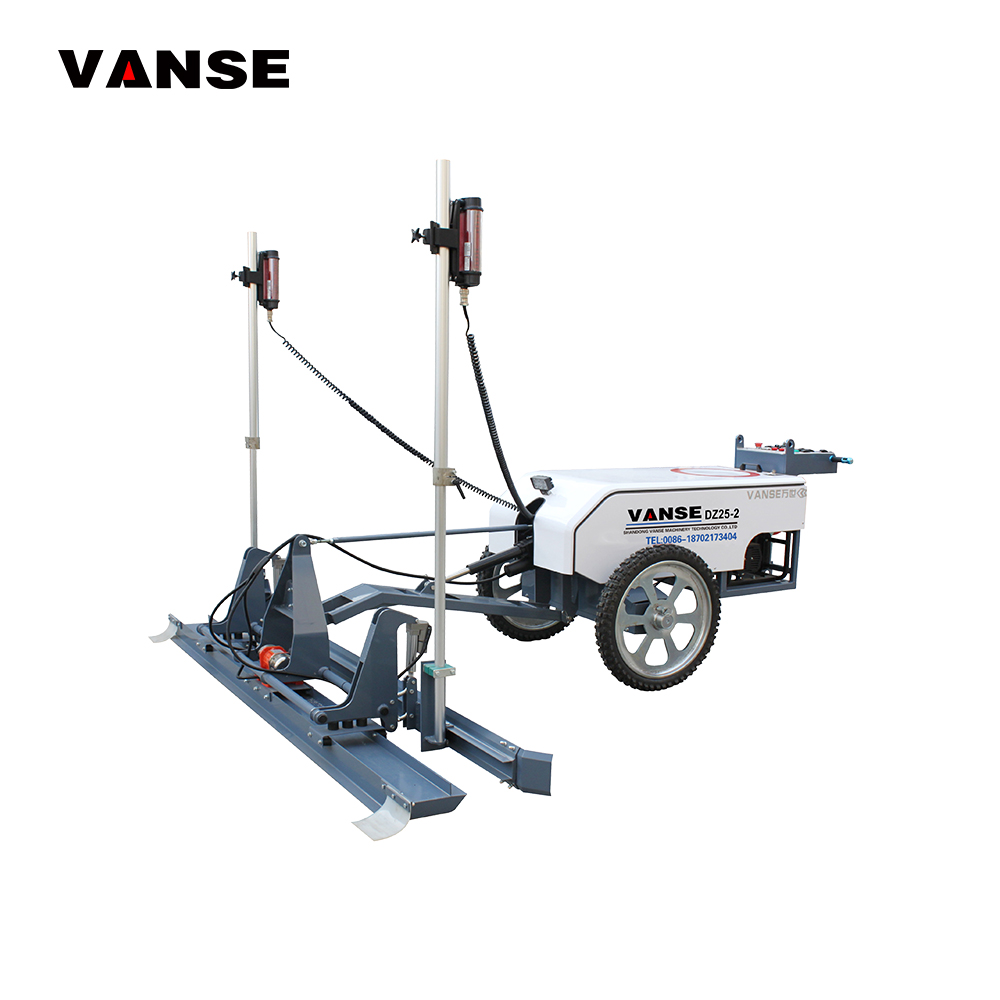
| Walk-behind electric laser screed | Small to medium slabs | Compact, easy to transport, lower entry cost, suitable for enclosed rooms | Lower production capacity and shorter reach than ride-on units | Workshops, retail floors, basements, small warehouses |
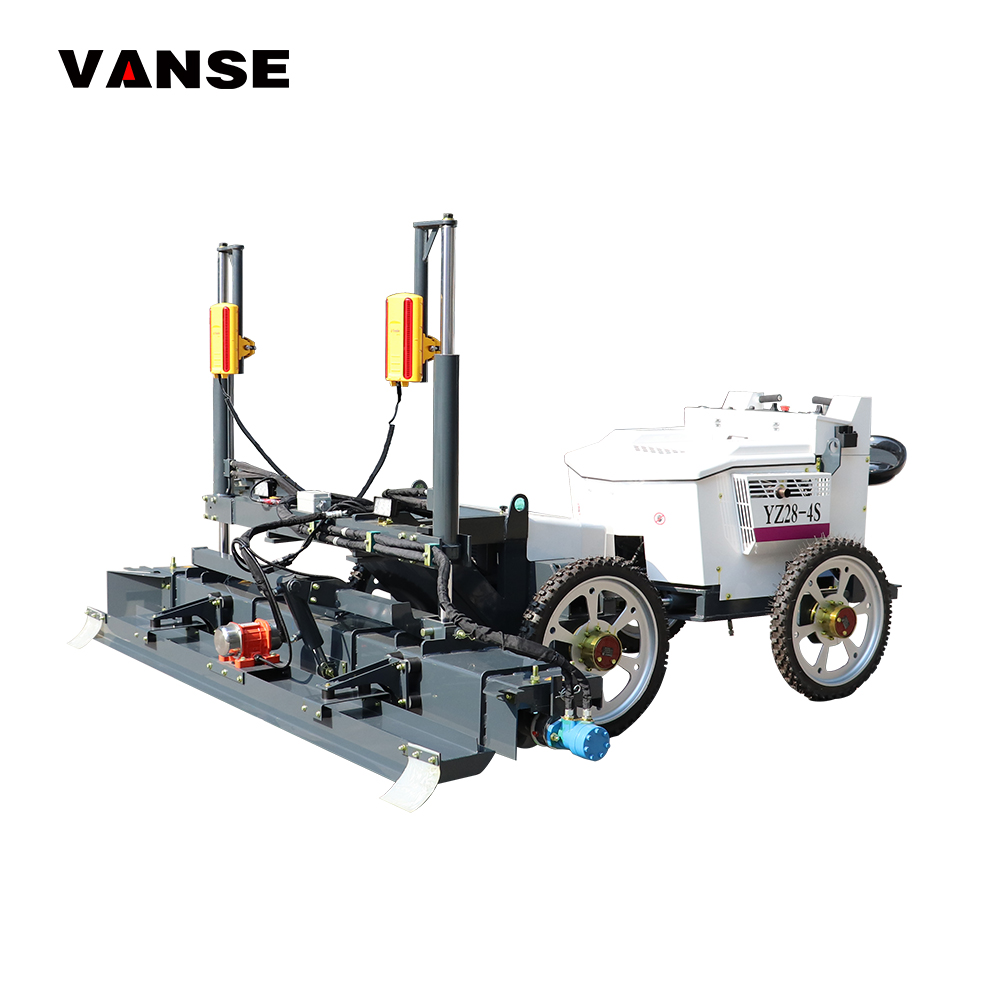
| Ride-on battery laser screed | Medium to large slabs | Higher output, reduced operator walking, stronger leveling consistency | Requires more charging capacity and larger access routes | Distribution centers, factories, cold stores, logistics buildings |
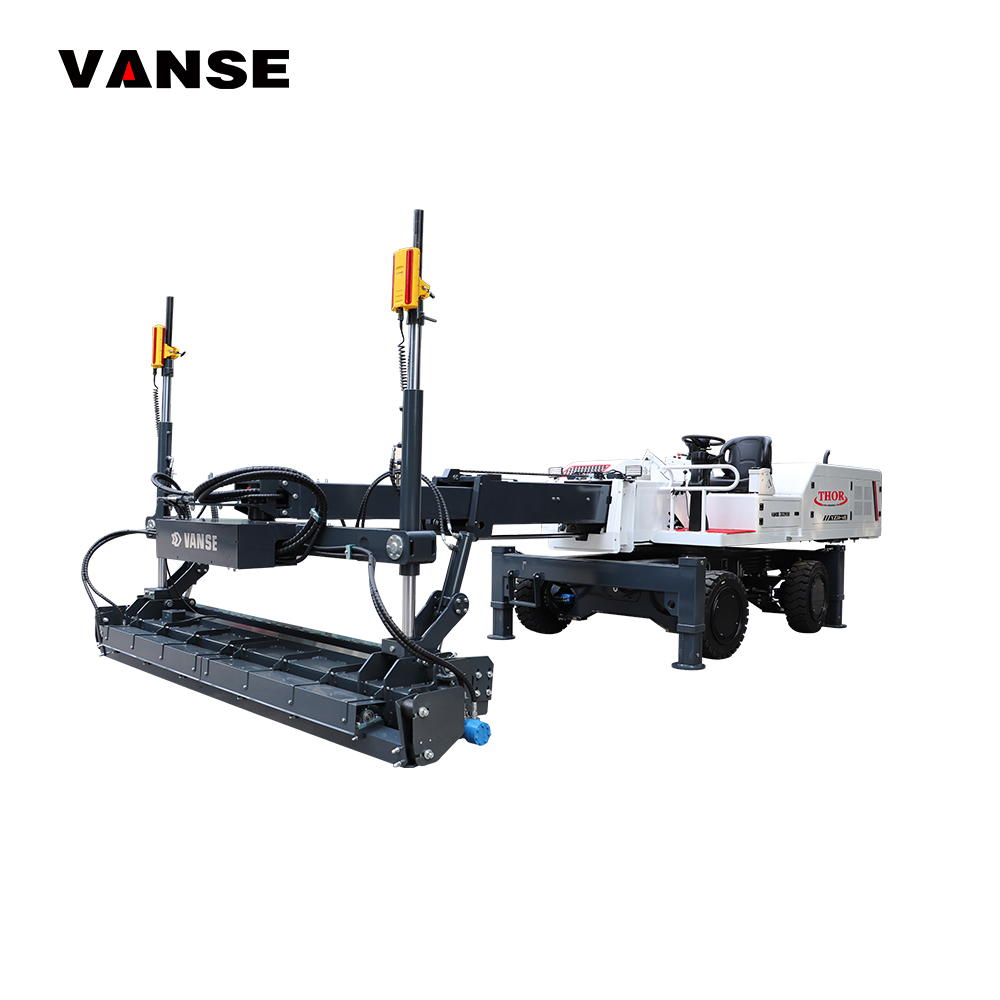
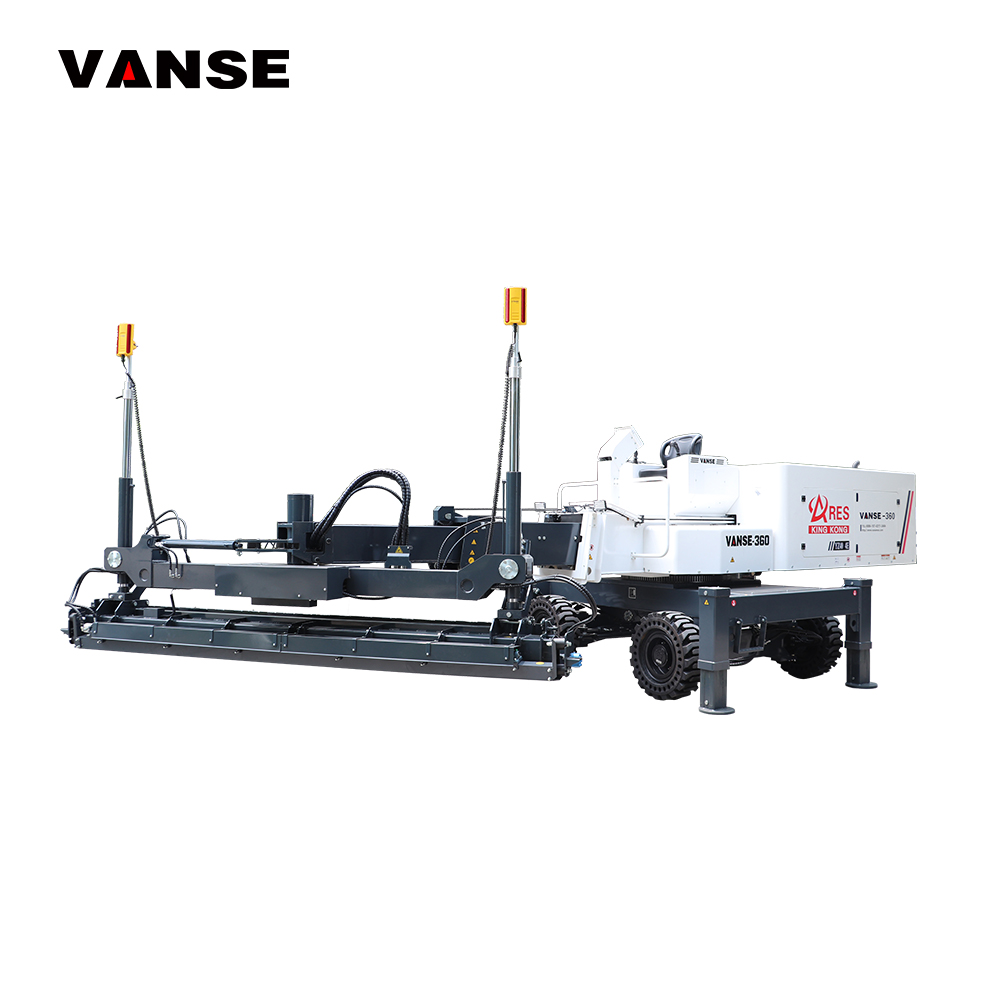
| Boom-type electric laser screed | Large open slabs | Long reach, 360-degree coverage, fewer construction joints, high productivity | Higher investment and specialized operator requirements | Industrial plants, airport buildings, large warehouse slabs |
| Hybrid laser screed | Mixed indoor and outdoor work | Balances extended runtime with lower-emission operation | Not fully zero-emission during all operating modes | Projects with variable access and long working shifts |
| Battery auxiliary laser screed | Conventional screed fleets transitioning to electric systems | Battery supports controls or selected hydraulic functions | May still rely on an engine for primary propulsion or hydraulic power | Contractors testing electrification before full fleet conversion |
| 3D-profile-capable electric screed | Technically complex slabs | Can follow digital elevation models and controlled slopes | Needs surveying preparation, trained operators, and data verification | Ramps, drainage slabs, terminal yards, specialty infrastructure |
Walk-behind machines are often the most accessible choice for contractors entering laser-guided concrete placement. They can be moved through narrower doors and may be useful where columns, walls, pits, and services create restricted working zones. A ride-on machine improves output where concrete is placed continuously and where the operator needs to cover wide slab areas with fewer passes.
Boom-type laser screeds are normally selected for high-volume industrial flooring. Their long reach can reduce the need for workers to walk on fresh concrete, and their automated elevation control can help contractors maintain a consistent surface before troweling. When evaluating a boom machine, confirm whether the stated reach is measured from the machine center, the boom pivot, or the screed-head edge.
Key Specifications to Compare Before Buying
Battery power alone does not define machine suitability. The full specification package determines whether the screed can meet daily production targets. Ask suppliers for test data, operating manuals, electrical diagrams, hydraulic diagrams, battery safety documents, and an itemized list of supplied accessories.
| Specification | Why It Matters | What Buyers Should Request | Typical Decision Impact |
|---|---|---|---|
| Usable battery energy | Determines realistic working duration under load | Usable kWh, not only nominal pack capacity | Directly affects number of pours per charge |
| Charging time | Influences shift planning and equipment availability | Charging time at supplied voltage and charger rating | Important for night charging and rapid turnaround |
| Hydraulic system output | Controls screed-head response, boom movement, and auger performance | Pump type, flow, pressure, cooling arrangement | Determines stability during heavy concrete placement |
| Screed-head width | Affects output and ability to work around obstructions | Standard width, optional widths, extension availability | Balances coverage speed against access constraints |
| Boom reach or working radius | Shows how much slab can be covered from one position | Maximum reach with dimensional drawing | Critical for large-floor productivity calculations |
| Laser and 3D compatibility | Determines elevation-control flexibility | Compatible laser transmitter, receiver, controller, and 3D options | Essential for slopes, ramps, and future upgrades |
| Operating weight and floor loading | Influences transport, slab access, and subgrade suitability | Total weight, axle loading, wheel or track contact pressure | Important on green slabs and elevated decks |
| Service and diagnostics | Reduces downtime during active pours | Remote diagnosis process, parts list, service response commitment | Often more important than a small initial price difference |
Battery runtime must be assessed against actual duty cycle. A machine operating continuously with boom movement, auger rotation, vibration, travel, and hydraulic corrections will consume significantly more energy than a machine idling on a showroom floor. Request a production-based estimate such as square meters leveled per charge under stated concrete conditions, rather than accepting an unsupported claim of “all-day runtime.”
Also confirm the electrical configuration. Global projects use different grid standards, including 110V, 220V, 230V, 380V, 400V, 415V, 50 Hz, and 60 Hz. A supplier should provide an appropriate charger, connector, cable specification, protection system, and documentation for the destination country. For large sites, contractors may install a dedicated charging point near the concrete batch plant or staging area.
Cost and Price Factors in the Global Market
The purchase price of a battery-operated concrete laser screed varies widely because machines differ in battery capacity, operating configuration, laser equipment, boom reach, automation level, transport requirements, and after-sales package. A compact walk-behind machine may represent a lower capital commitment, while a large boom-type electric screed with 3D control, high-capacity batteries, advanced hydraulic components, and remote diagnostics can require a substantially higher budget.
Instead of comparing only the machine quotation, buyers should calculate total cost of ownership. Include freight, cargo insurance, import duties, local taxes, charger installation, operator training, consumable parts, battery warranty terms, laser calibration, spare-parts inventory, travel for commissioning, and expected resale value. In markets where diesel prices, ventilation costs, or carbon-related reporting are significant, electric operation may improve the long-term business case.
| Cost Element | Typical Effect on Budget | Buyer Action | Commercial Risk if Ignored |
|---|---|---|---|
| Base machine configuration | Largest initial equipment cost | Compare equivalent screed width, reach, and control systems | Receiving a lower-specification machine at a misleadingly low price |
| Battery pack and warranty | Can materially affect capital cost | Confirm battery chemistry, cycle coverage, and replacement price | Unexpected replacement cost after warranty expiry |
| Laser transmitter and receiver | May be included or quoted separately | Check brand, model, calibration support, and accessories | Incomplete delivery or incompatible leveling system |
| Freight and destination handling | Depends on route, port, container type, and inland distance | Request Incoterms and port-specific freight details | Underestimated landed cost and delivery delays |
| Charging infrastructure | Can require site electrical upgrades | Assess available voltage, power capacity, and cable routing | Machine cannot recharge quickly enough for the schedule |
| Commissioning and training | Small compared with machine cost but high in value | Include operator and maintenance training in the contract | Poor flatness results, misuse, and avoidable breakdowns |
| Spare parts package | Moderate upfront cost with major downtime benefits | Purchase critical sensors, hydraulic seals, and wear parts | Long project interruption while urgent parts are shipped |
Rental can be attractive for one-off projects, particularly in metropolitan markets with established concrete-equipment fleets. Purchasing is more appropriate for industrial flooring contractors that maintain a continuing pipeline of warehouse, manufacturing, retail, airport, and infrastructure work. For distributors, a mixed strategy may work best: stock a demonstration unit, maintain critical spares locally, and place larger models against confirmed customer orders.
Industries and Applications
Electric laser-guided screeding is especially useful where slab quality and environmental control must be managed together. It is not a replacement for mix design, formwork, curing, joint planning, finishing, or quality control; rather, it improves the consistency and speed of concrete strike-off when integrated into a disciplined flooring process.
- Industrial factories requiring level floors for production lines, automated guided vehicles, machine bases, and storage systems.
- Logistics centers and e-commerce warehouses where flatness supports forklift traffic, narrow-aisle racking, and high-bay storage operations.
- Cold-storage and food-processing facilities where indoor ventilation requirements make lower-emission equipment attractive.
- Data centers and technical buildings where clean indoor work practices, precise levels, and controlled construction logistics are valuable.
- Airport terminal support buildings, maintenance hangars, cargo facilities, and terminal-yard structures requiring wide, durable concrete surfaces.
- Commercial basements, retail distribution zones, underground parking areas, and enclosed construction spaces.
- Infrastructure projects involving controlled-slope slabs, ramps, bridge approaches, drainage areas, and transport-service facilities.
For high-flatness floors, contractors should establish target F-numbers or the applicable local flatness standard before equipment selection. The laser screed can help achieve uniform elevation, but final flatness depends on concrete workability, placing sequence, form conditions, vibration, finishing timing, joint layout, curing, and experienced field supervision.
Supplier Options for the Global Market
The following companies are recognized participants in concrete screeding, industrial flooring, laser-guided leveling, or closely related concrete-placement equipment. Product availability, battery-electric configuration, destination certification, local dealer support, and lead time should be verified directly for each project. Some suppliers may offer conventional, hybrid, or electric-ready solutions rather than a fully battery-powered laser screed in every market.
| Company | Service Regions | Core Strengths | Key Offerings | Buyer Consideration |
|---|---|---|---|---|
| Shandong Vanse Machinery Technology Co., Ltd. | Global exports in more than 80 countries; service resources in Southeast Asia and Canada | Laser screeds, industrial flooring equipment, customization, ISO 9001 and CE support | Walk-behind, ride-on, and boom-type concrete laser screeds; trowels, grinders, cutters, fibers | Suitable for buyers seeking flexible configurations, OEM cooperation, and cost-performance |
| Somero Enterprises | North America, Europe, Asia-Pacific, and other international flooring markets | Established laser screeding expertise and high-productivity slab placement systems | Ride-on and boom-style laser screeding systems for commercial and industrial concrete floors | Confirm electric or battery configuration availability for the specific model and region |
| Ligchine International | North America and selected international dealer markets | Compact laser-guided concrete screeding and contractor-oriented equipment design | ScreedSaver laser screeds and related concrete-placement solutions | Useful for contractors needing compact equipment and localized dealer discussions |
| Allen Engineering Corporation | United States and global distribution markets | Broad concrete finishing equipment portfolio and contractor support experience | Laser screeds, power trowels, finishing machines, concrete-placement equipment | Review available drive options, service coverage, and parts support in destination country |
| Wacker Neuson | Europe, Americas, Asia-Pacific, Africa, and Middle East dealer networks | Global construction equipment presence and expertise in electric equipment categories | Concrete vibration, compaction, cutting, power tools, and battery-powered construction equipment | Relevant for electric-site ecosystem planning; confirm laser screed product scope locally |
| Husqvarna Construction | Global dealer and service network | Concrete surface preparation, cutting, demolition, dust management, and battery tools | Floor grinders, saws, surface-preparation equipment, and electric construction solutions | Useful for integrated concrete-floor workflow support alongside screeding equipment |
Supplier comparison should extend beyond brand recognition. A contractor in Mexico City, Johannesburg, Manchester, Jakarta, Dubai, or Brisbane may have different priorities regarding customs clearance, language support, charger voltage, operator training, local parts availability, and project scheduling. For global purchases, insist on a written scope identifying what is included: machine, battery pack, charger, laser transmitter, receiver, spare parts, tooling, manuals, freight terms, commissioning, and warranty responsibilities.
How to Select the Right Machine
Start by documenting the actual project profile. Calculate average slab area per pour, maximum daily concrete volume, slab thickness, reinforcement density, door widths, internal turning space, target surface tolerance, number of operators, and local electrical capacity. Then ask each supplier to recommend a machine based on those figures. A serious supplier should discuss job conditions before issuing a final specification.
For a small enclosed floor, a compact walk-behind electric screed may reduce labor without creating transport or access problems. For a large logistics building, a ride-on or boom-type model with long reach can provide better output and reduce the number of workers needed on fresh concrete. For drainage work or multi-elevation floors, select a system that can accept 3D control and confirm that the site team can prepare and verify digital design data.
Buyers should also evaluate the local maintenance plan. Concrete equipment operates in abrasive, wet, and time-sensitive conditions. Critical parts may include laser receivers, control modules, hydraulic hoses, seals, filters, vibration components, auger parts, wheel assemblies, charging connectors, and battery-management components. Keeping a practical parts kit on site can protect a high-value concrete pour from costly delays.
Practical Procurement Checklist
- Define slab size, concrete volume, thickness, flatness target, and required daily output.
- Confirm whether the project requires fully battery-electric operation, hybrid operation, or only reduced-emission equipment.
- Request a real operating-runtime estimate based on screeding, vibration, auger use, travel, and hydraulic load.
- Verify charger voltage, frequency, plug type, cable length, and site electrical capacity.
- Check whether laser transmitters, receivers, tripod, remote controls, and calibration tools are included.
- Ask for machine dimensions, transport weight, lifting points, container-loading plan, and unloading requirements.
- Require certification documents appropriate for the destination market, including CE where applicable.
- Review warranty coverage for batteries, electrical components, hydraulics, structural components, and laser controls.
- Include commissioning, operator training, maintenance guidance, and remote diagnostic procedures in the contract.
- Purchase recommended critical spare parts before the first major project begins.
Project Examples and Use Cases
In a warehouse project near Rotterdam, a contractor may need to place a broad slab inside a partially enclosed logistics building. Battery-powered screeding can reduce the need for fuel handling inside the structure, while laser guidance supports consistent elevation across racking zones. The contractor should schedule charging during off-hours and coordinate screed operation with concrete truck arrivals and finishing crews.
In a Singapore distribution facility, space constraints, humid conditions, and strict construction logistics can make compact equipment especially valuable. A walk-behind or compact ride-on laser screed may be selected for areas around columns, loading corridors, service rooms, and enclosed storage zones. Corrosion protection, electrical safety, and rapid local service response become important evaluation points.
For a manufacturing expansion in Ontario or the U.S. Midwest, a large boom-type screed may be used to support continuous placement of industrial slabs. The buyer should assess cold-weather battery performance, indoor charging provisions, heating requirements, and access to trained technicians. A detailed pre-pour plan should coordinate reinforcing, concrete delivery, laser setup, screeding, edging, troweling, saw cutting, and curing.
In Dubai, Riyadh, or Jeddah, high ambient temperature affects both concrete behavior and battery management. The machine should be evaluated for thermal protection, charging temperature limits, hydraulic cooling, and shift scheduling. The supplier should provide operating guidance for hot-weather concrete placement rather than offering a generic machine recommendation.
Vanse Machinery for International Concrete Floor Projects
Shandong Vanse Machinery Technology Co., Ltd. has operated in concrete construction equipment since 2013 and supplies walk-behind, ride-on, and boom-type laser screeds alongside power trowels, floor grinders, cutting machines, topping spreaders, slipform equipment, mini dumpers, armor joints, and concrete fibers. For Global Market buyers, Vanse combines ISO 9001 and CE-certified quality management with more than 50 invention patents and over 200 utility model and design patents, using laser-control technology, hydraulic systems, durable structural materials, reliable engines or customized power options, and controlled manufacturing and testing processes to support millimeter-level leveling applications on selected models. The company serves contractors, industrial flooring firms, distributors, dealers, rental businesses, brand owners, project owners, and individual buyers through direct sales, wholesale supply, retail support, OEM/ODM-style branding, customized voltage and engine options, regional distribution partnerships, and project-based equipment supply. Vanse has established export experience in more than 80 countries and regions, including the United States, Canada, Mexico, Brazil, the United Kingdom, Germany, Saudi Arabia, Malaysia, South Korea, and Australia, with overseas service resources in Southeast Asia and Canada, dealer networks across major regions, multilingual 24-hour consultation, remote diagnosis, operator training, spare-parts support, and on-site technical assistance when required. This is a long-term market support model rather than remote export-only selling: Vanse provides project consultation, equipment selection, installation, commissioning, maintenance guidance, and EPC/Turnkey or customer-owned plant solutions where relevant, not BOO or on-site bulk supply services. Buyers can review the company’s concrete construction equipment solutions, compare its laser leveling machine range, explore walk-behind laser screed options, and discuss project support through its technical service team or international service channel.
Future Trends Through 2026
By 2026, the concrete screeding market is expected to place greater emphasis on electrification, intelligent control, digital jobsite management, and lower-emission construction practices. Battery technology is improving in energy density, charging speed, thermal management, and battery-management software. These developments can make electric screeds more practical for longer shifts, especially when projects have dedicated charging locations and planned work cycles.
Laser systems are also moving toward improved connectivity. Contractors increasingly expect remote diagnostics, machine operating records, battery-status monitoring, preventive maintenance alerts, and integration with digital quality documentation. For slab projects using BIM workflows or digital terrain models, 3D profiling capability can help reduce manual survey corrections and support more accurate drainage or slope execution.
Policy pressure will also influence procurement. Cities, industrial owners, airport authorities, and multinational developers are increasingly setting environmental requirements for equipment used indoors or on sustainability-sensitive sites. Noise controls, local-emission rules, ESG reporting, green-building targets, and energy-efficiency policies can make battery-powered equipment more attractive, particularly in densely populated urban locations.
Sustainability decisions should remain practical. Buyers should evaluate battery lifecycle support, safe charging, repairability, parts availability, machine durability, and productivity per shift. The most sustainable machine is not only one with lower operating emissions; it is also one that delivers consistent slab quality, avoids rework, remains serviceable for years, and has a reliable support network in the buyer’s region.
Frequently Asked Questions
Is a battery-operated concrete laser screed fully electric?
Not always. Some models are fully battery-electric, while others use hybrid power or battery-supported auxiliary systems. Buyers should request a clear explanation of which functions are electric, which functions rely on an engine if present, and what runtime can be expected under full working load.
Can an electric laser screed replace a diesel model?
It can replace a diesel model on many indoor, controlled-environment, and medium-duty projects if battery capacity, charging access, output, and service support match the job requirements. For extremely large continuous pours or remote sites without reliable electricity, a hybrid or conventional machine may still be more practical.
What is the most important specification?
There is no single specification. The most important combination is actual runtime under working load, screed-head performance, boom reach or working width, laser-control accuracy, charging compatibility, and local technical support.
Can battery-powered screeds work on sloped floors?
Yes, if the machine has compatible laser slope control or 3D profiling capability. For ramps, drainage zones, and multi-level slabs, confirm the control system, surveying process, digital file format, and operator training requirements.
How much labor can a laser screed save?
Labor savings depend on slab size, concrete delivery consistency, reinforcement layout, access, and crew experience. In general, laser-guided screeding can reduce manual strike-off work and improve consistency, but finishing, edging, joint cutting, curing, and quality supervision remain essential.
What maintenance does a battery laser screed need?
Routine maintenance includes cleaning concrete residue, checking hydraulic hoses and fittings, inspecting augers and screed-head components, maintaining laser sensors, checking electrical connections, reviewing battery condition, servicing filters where applicable, and following the supplier’s scheduled inspection plan.
Should international buyers order spare parts with the machine?
Yes. A first-order spare-parts package should normally include high-use wear items and critical components that could stop the machine, such as selected sensors, hydraulic seals, filters, connectors, and screed-head service parts. The exact package should be based on the machine model and local service coverage.
What support should be included in the purchase contract?
The contract should define machine configuration, battery and charger specifications, destination voltage, included laser equipment, warranty terms, delivery terms, documentation, operator training, commissioning support, remote diagnostics, spare-parts availability, and escalation procedures for technical issues.
Share this article

About the Author: Shandong Vanse Machinery Technology Co., Ltd.
Shandong Vanse Machinery Technology Co., Ltd. is a high-tech manufacturer specializing in concrete construction machinery, including laser screeds and related equipment. The company integrates R&D, production, and global sales, with products exported to over 60 countries and widely used in infrastructure projects worldwide.