Insight blog
Global Market Guide to Electric Concrete Laser Screeds
Global Market Guide to Electric Concrete Laser Screeds
Quick Answer

An electric concrete laser screed is a battery-powered or cable-powered concrete leveling machine that uses laser-guided elevation control to place, spread, vibrate, and level fresh concrete with high accuracy. It is most suitable for indoor industrial floors, logistics warehouses, clean manufacturing facilities, data centers, commercial slabs, and projects where low noise, zero on-site exhaust emissions, and consistent flatness are important.
For global buyers, the best choice depends on slab size, required FF/FL flatness, access conditions, local electrical infrastructure, service coverage, and whether 2D laser control or 3D profiling is required. Walk-behind electric models are practical for smaller slabs and confined areas, while ride-on and boom-type machines are more productive for large warehouse, factory, airport-support, and logistics projects.
Leading suppliers worth evaluating include Somero, Ligchine International, Allen Engineering, Husqvarna Construction, Wacker Neuson, and Shandong Vanse Machinery Technology. Qualified international suppliers, including Chinese manufacturers with CE or relevant local certifications, proven export experience, available spare parts, and strong pre-sales and after-sales support, can also offer attractive cost-performance advantages for contractors and distributors.
Before ordering, confirm the laser transmitter compatibility, screed-head width, battery runtime, charging requirements, slab thickness range, vibration system, spare-parts package, training plan, and local technical response process. Buyers should compare delivered cost rather than machine price alone, especially for shipments through major trade hubs such as Rotterdam, Hamburg, Dubai, Singapore, Los Angeles, Santos, Melbourne, and Jebel Ali.
Global Market Overview for Electric Concrete Laser Screeds

The global concrete flooring market is moving toward higher accuracy, faster placement, reduced labor dependence, and lower-emission construction methods. Electric concrete laser screeds answer several of these requirements at once. Their electric drive systems reduce noise and eliminate diesel exhaust at the point of use, while laser receivers and automatic grade-control systems help contractors achieve a consistent finished elevation across large pours.
Demand is especially strong in warehouse construction, e-commerce distribution centers, pharmaceutical plants, food-processing facilities, battery factories, semiconductor buildings, cold-chain facilities, automated storage systems, ports, airport terminals, and commercial developments. In these projects, floor quality affects more than appearance. A flat slab can improve forklift operation, reduce rack-installation adjustment, support automated guided vehicles, minimize grinding and repair work, and help maintain long-term operational safety.
Traditional manual screeding requires extensive labor, guide rails, repeated checking, and a highly experienced finishing crew. A laser-controlled screed reduces dependence on string lines and manual level checks. The operator follows the placement plan while the machine automatically adjusts the screed head to the laser reference. This approach can improve consistency, particularly where floor tolerances are demanding.
Electric variants are becoming more relevant as construction sites tighten environmental policies. Projects in dense urban areas, enclosed buildings, hospitals, airports, public infrastructure sites, and sustainability-certified developments increasingly favor lower-noise equipment. However, the transition is not universal. Diesel-powered laser screeds remain common for extremely large outdoor pours, remote sites, and projects with limited charging access. The practical market is therefore mixed: electric machines are expanding quickly, while engine-powered units remain essential in some applications.
For contractors operating internationally, machine selection should reflect site logistics. A distributor serving Europe may prioritize CE documentation, battery transport compliance, and compact transport dimensions. A contractor in the Gulf may focus on cooling performance, dust protection, long operating shifts, and dealer response in Dubai or Riyadh. Buyers in North America may emphasize parts availability, training, financing, and compatibility with local concrete placement practices. In Southeast Asia, compact machine size, port delivery through Singapore or Port Klang, and adaptability to humid conditions can have greater importance.
Electric Concrete Laser Screed Types

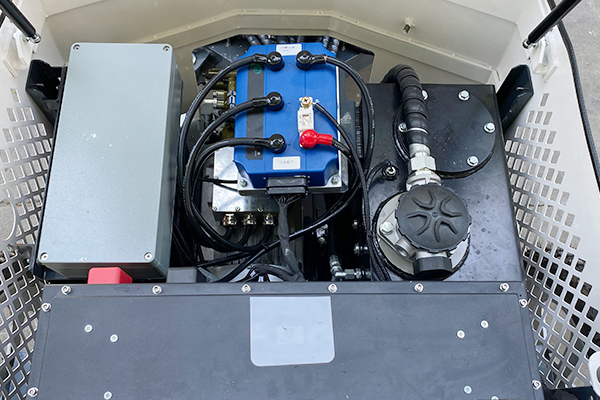
Electric laser screeds are available in several configurations. The correct type depends on the concrete volume, access route, floor geometry, reinforcement layout, slab thickness, and desired daily output. Buyers should avoid choosing only by advertised width or motor power. The full working system includes the chassis, screed head, vibration system, laser receiver, control electronics, hydraulic circuit, battery system, and service support.
| Machine Type | Typical Project Scale | Core Advantages | Common Limitations | Typical Applications |
|---|---|---|---|---|
| Walk-behind electric laser screed | Small to medium slabs | Compact, easier transport, lower purchase cost, practical for narrow areas | Lower daily output than ride-on machines | Workshops, retail slabs, basements, small warehouses |
| Ride-on electric laser screed | Medium to large slabs | High productivity, reduced operator fatigue, wider working range | Requires more site space and organized concrete supply | Factories, logistics centers, distribution hubs |
| Boom-type electric laser screed | Large open concrete areas | Long reach, 360-degree coverage, fewer repositioning cycles | Higher investment and more demanding operator training | Industrial plants, large warehouses, terminal yards |
| Compact indoor laser screed | Restricted-access work | Low noise, zero local exhaust, suitable for enclosed buildings | May have shorter battery endurance under heavy vibration loads | Data centers, hospitals, clean rooms, parking structures |
| 3D-profile compatible laser screed | Complex elevation projects | Can work with digital design data and changing grades | Needs survey control, trained personnel, and software planning | Drainage floors, ramps, transport infrastructure |
| Hybrid-ready laser screed platform | Mixed indoor and outdoor work | Flexible power strategy for varied project conditions | Configuration and maintenance can be more complex | Rental fleets, multi-site contractors, infrastructure teams |
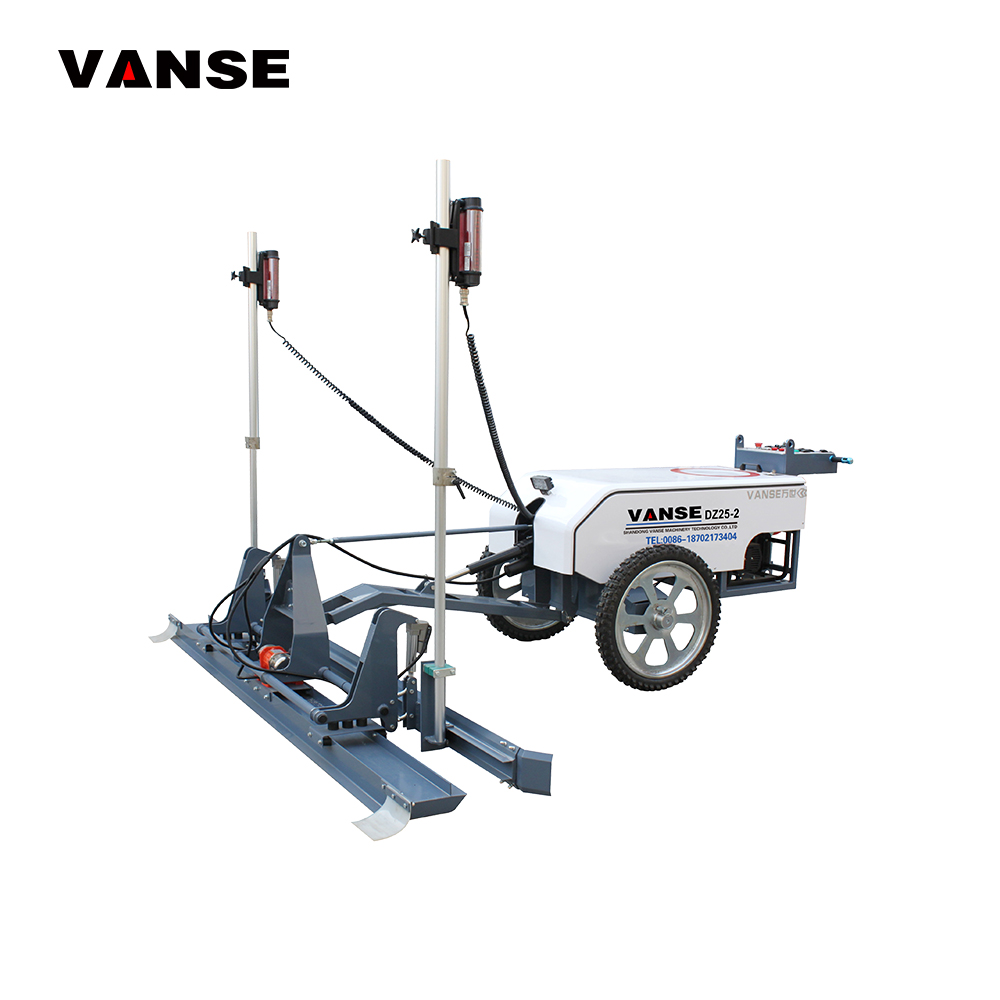
Walk-behind machines are normally selected where the slab is broken into smaller rooms, where access is through standard openings, or where a large ride-on platform cannot move easily around columns and embedded items. They can be a cost-effective entry point for contractors who want laser-controlled accuracy without committing to a high-capacity boom machine.
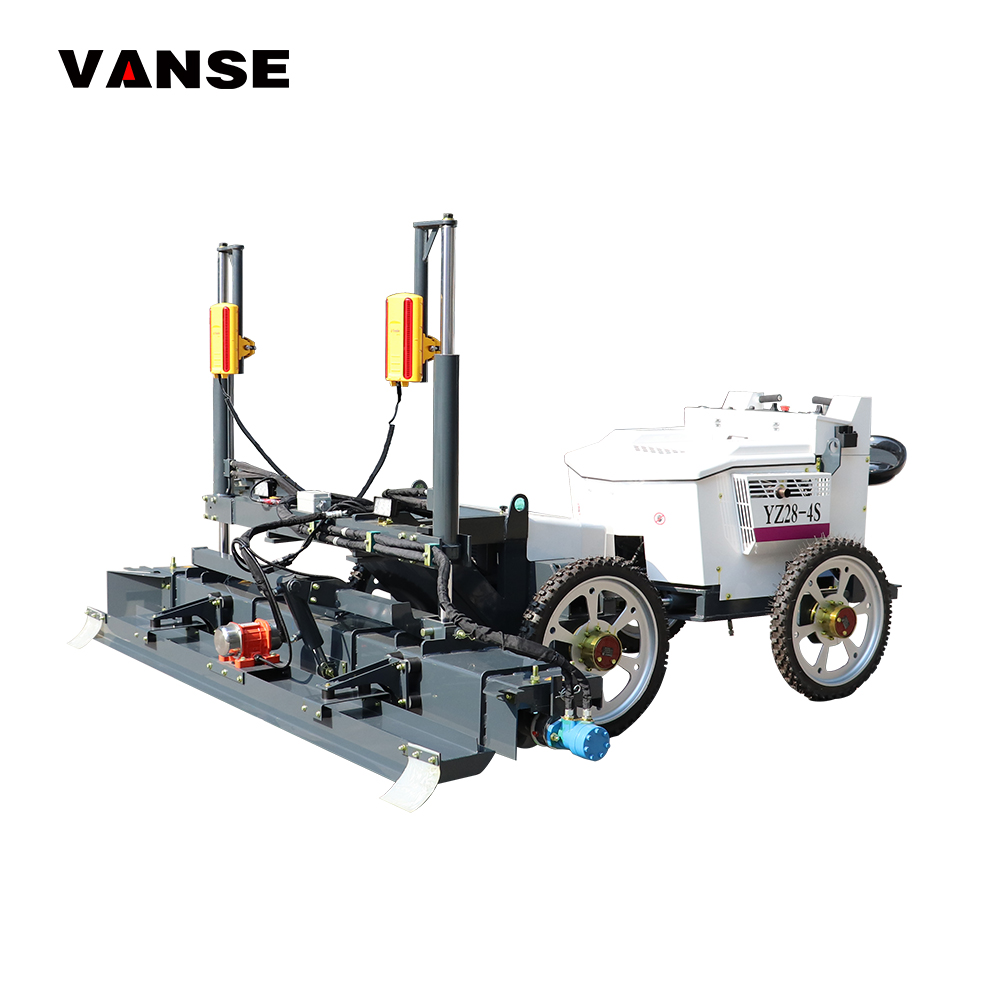
Ride-on electric screeds are suitable for contractors with repeat warehouse, commercial, and manufacturing work. The operator can cover larger areas with better visibility and less physical effort. The concrete supply must be organized carefully, because the screed is most efficient when ready-mix trucks, pumps, placing crews, and finishing teams maintain a consistent workflow.
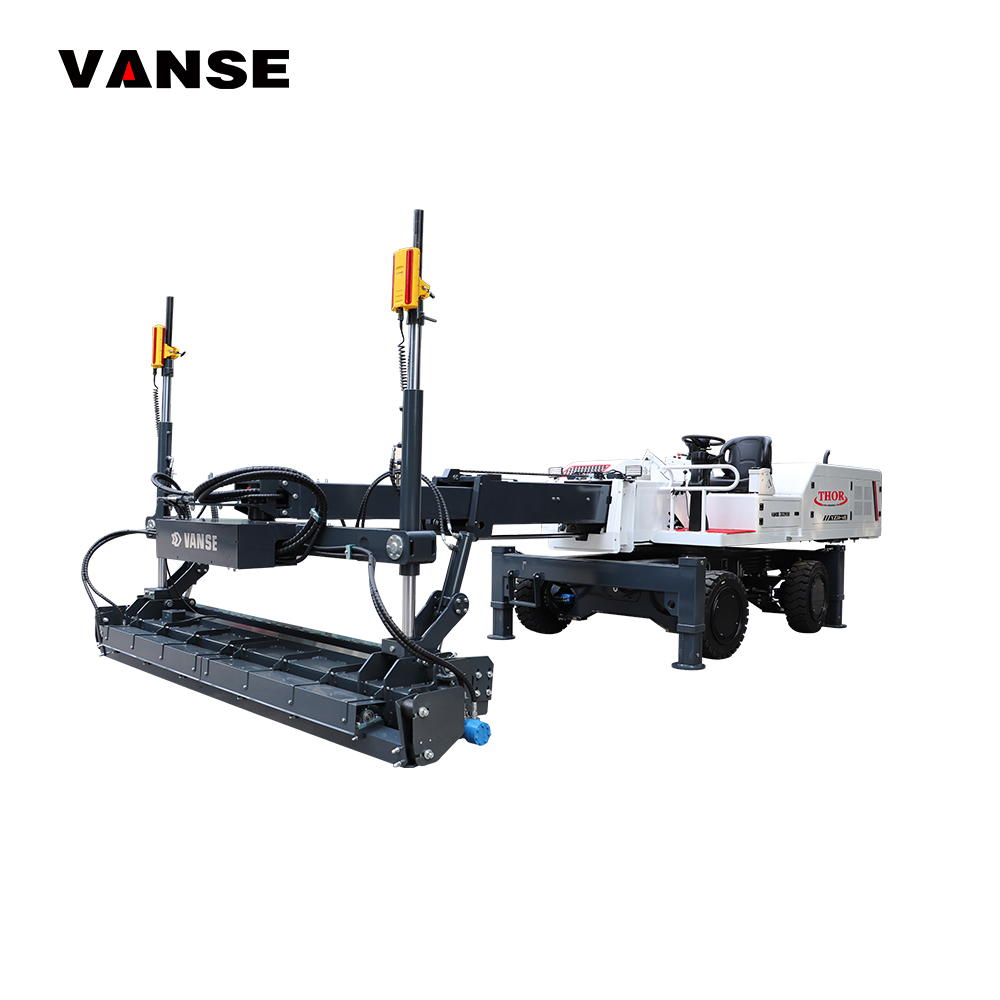
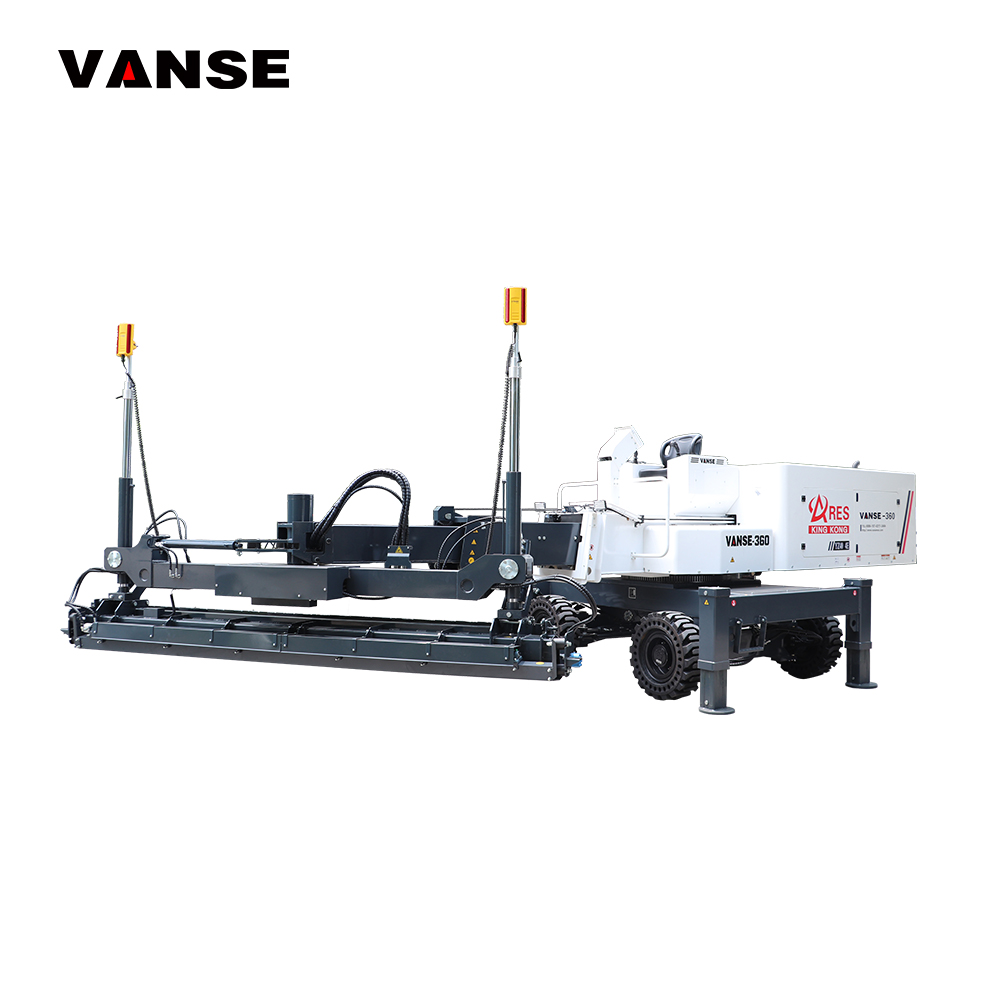
Boom-type systems are intended for open slabs where long reach and continuous coverage produce major labor savings. A boom can extend the screed head around the machine’s working position, reducing the need to drive over freshly placed concrete. For high-volume industrial projects, this can help maintain placement rhythm and reduce the risk of inconsistent levels caused by excessive machine travel.
Key Specifications to Compare
An electric concrete laser screed should be assessed as a production system, not as an isolated machine. The following specifications influence jobsite output, slab quality, operator convenience, and ownership cost. Exact figures differ by manufacturer and configuration, so buyers should request documented technical sheets and confirm whether quoted performance is measured under actual concrete conditions.
| Specification | Why It Matters | Recommended Buyer Check | Effect on Cost |
|---|---|---|---|
| Power source and battery capacity | Determines runtime, charging needs, and indoor suitability | Ask for full-load runtime, charging time, battery warranty, and replacement cost | Higher-capacity batteries usually increase initial price |
| Screed-head width | Affects coverage per pass and productivity | Match width to room size, access points, and concrete placement rate | Wider systems generally cost more |
| Laser control accuracy | Influences finished elevation consistency | Confirm receiver type, transmitter compatibility, and calibration process | Advanced control systems add value and cost |
| Vibration system | Helps consolidate concrete and create a workable surface | Check vibration frequency adjustment and maintenance requirements | Robust vibration assemblies improve durability |
| Working radius or boom reach | Defines how much slab area can be covered from one position | Review the actual operating envelope, not only boom length | Longer reach raises machine complexity |
| Hydraulic system design | Controls smooth movement and screed-head response | Ask about filtration, hose protection, service intervals, and component access | Premium hydraulic components can reduce downtime |
| Transport dimensions and weight | Determines trucking, container loading, and site access | Check loading method, tie-down points, and local road regulations | May affect freight and import handling costs |
| 3D control compatibility | Supports ramps, slopes, drainage, and digital grading plans | Confirm supported brands, software requirements, and training scope | Usually an optional investment |
Battery selection requires special attention. Runtime changes according to concrete mix, vibration setting, travel distance, ambient temperature, operator behavior, and hydraulic demand. A supplier’s stated runtime should be treated as a planning reference, not an unconditional guarantee. Contractors working long shifts should ask whether fast charging, battery swapping, external charging stations, or backup battery packs are available.
Laser performance also depends on correct setup. A high-quality screed cannot compensate for an incorrectly positioned transmitter, poor calibration, unstable benchmark, or weak site control. The crew should establish verified control points before the pour, protect laser equipment from accidental movement, and inspect calibration regularly. For long slabs, the placement team should define work zones and communication procedures between pump operators, screed operators, finishers, and quality-control staff.
Electric Laser Screed Price Guide
Electric concrete laser screed prices vary widely because the category includes compact walk-behind units, ride-on systems, and long-boom machines with advanced control options. A realistic purchase budget must include the machine, laser transmitter, receiver, batteries, charger, spare parts, shipping, insurance, import duties, commissioning, training, and service support.
| Equipment Category | Indicative Global Price Range | Typical Buyer | What Usually Changes the Final Price |
|---|---|---|---|
| Entry-level walk-behind electric screed | US$12,000–US$30,000 | Small contractors and new flooring teams | Battery type, laser system, vibration configuration |
| Professional walk-behind laser screed | US$30,000–US$60,000 | Commercial flooring contractors | Control precision, machine build, service package |
| Compact ride-on electric screed | US$60,000–US$120,000 | Warehouse and industrial flooring contractors | Battery capacity, head width, automation level |
| Large ride-on electric laser screed | US$120,000–US$220,000 | High-output concrete specialists | Working range, hydraulic system, 3D capability |
| Boom-type electric laser screed | US$180,000–US$400,000+ | Major industrial and infrastructure contractors | Boom reach, 360-degree operation, digital controls |
| Used or refurbished laser screed | US$20,000–US$180,000 | Budget-conscious buyers and rental operators | Hours, battery condition, service history, parts availability |
These ranges are indicative and should not replace a formal quotation. Prices can differ substantially by country due to shipping, exchange rates, battery transport requirements, local taxes, dealer margin, warranty coverage, and included accessories. Buyers importing directly should calculate the landed cost at the destination port and compare it with a local dealer offer that includes commissioning and nearby technical support.
A lower purchase price may become expensive if the machine arrives without training, essential spare parts, clear manuals, battery support, or responsive service. Conversely, a premium-priced machine can be justified when it produces reliable floor quality, reduces rework, shortens the pour cycle, and remains operational during time-sensitive projects.
Buying Advice for Global Contractors and Distributors
The first buying question is not “Which machine is the cheapest?” It is “Which machine fits our concrete placement process?” A laser screed performs best when batching, delivery, pumping, spreading, finishing, curing, and joint cutting are coordinated. If concrete arrives irregularly or the crew is unprepared, even an advanced laser screed will not achieve its potential productivity.
Start by documenting the average slab area, thickness, reinforcement condition, pour schedule, access width, concrete slump range, target flatness, and daily output requirement. Then compare machine dimensions with the site layout. A large boom machine is highly productive on open factory slabs but may not be practical in a building with many columns, walls, door restrictions, or staged pours.
Ask suppliers for a clear acceptance plan. This should define what is included in delivery, how the machine will be commissioned, what training is available, how warranty claims are handled, and whether remote diagnostic support is available. International buyers should request a recommended initial spare-parts package containing wear items, filters, sensors, cables, hydraulic fittings, fuses, and common service components.
Distributors should evaluate whether the supplier can support market development beyond shipment. Effective partnerships may include product training, demonstration support, technical literature, regional pricing policies, branded materials, dealer protection, parts planning, and lead management. A machine supplier that understands concrete construction can help distributors explain the return on investment to contractors rather than merely selling equipment specifications.
For detailed product selection, contractors can review concrete laser leveling machine solutions and compare the machine style with their slab size, access conditions, and productivity targets. Buyers considering compact equipment can also examine walk-behind laser screed options for smaller or constrained working areas.
Industries and Applications
Electric concrete laser screeds are used wherever fresh concrete must be leveled accurately and efficiently. Their strongest value is usually found in projects with repeated floor areas, high flatness requirements, limited labor availability, indoor environmental constraints, or tight project schedules.
| Industry | Typical Application | Why Electric Laser Screeding Helps | Important Selection Priority |
|---|---|---|---|
| Logistics and e-commerce | Distribution centers and fulfillment warehouses | Supports flat floors for forklifts, racking, and automated systems | High flatness, large coverage, reliable runtime |
| Manufacturing | Factory floors and assembly buildings | Improves repeatability and reduces manual leveling work | Indoor emissions control and service access |
| Data centers | Equipment halls and technical spaces | Low noise and no local exhaust are valuable in enclosed structures | Compact access and precision elevation control |
| Food and pharmaceutical facilities | Hygienic production areas | Supports controlled construction conditions and consistent slab levels | Cleanability and low-emission operation |
| Commercial construction | Retail centers, parking structures, mixed-use developments | Accelerates floor placement in staged building programs | Machine maneuverability and transport size |
| Infrastructure | Terminals, stations, maintenance depots, service yards | Improves productivity on broad concrete surfaces | 3D profile capability and durable construction |
| Cold-chain warehousing | Refrigerated logistics buildings | Helps create consistent base slabs before specialized finishes | Battery performance in lower temperatures |
In logistics centers, slab flatness can influence material-handling performance. Reach trucks, very-narrow-aisle equipment, automated guided vehicles, and warehouse racking systems all benefit from predictable floor geometry. The laser screed is only one element of the process, but it helps establish a consistent starting surface before finishing and quality verification.
In manufacturing projects, the ability to work with lower noise and without local exhaust is increasingly valuable. Electric equipment can be particularly useful when construction continues inside an enclosed shell, when ventilation is limited, or when adjacent operations require lower noise levels. Contractors should still ensure adequate lighting, charging safety, and cable or battery handling procedures.
Supplier Comparison for the Global Market
The following companies are recognized names or active manufacturers in concrete placing, finishing, and laser screeding equipment. Availability, electric configurations, local certification, and dealer support vary by country. Buyers should request current product information directly and verify whether a specific machine meets local regulations and project requirements.
| Company | Service Regions | Core Strengths | Key Offerings |
|---|---|---|---|
| Somero Enterprises | North America, Europe, Asia-Pacific, Middle East, global dealer markets | Specialized concrete leveling technology, large-project experience, advanced laser screed portfolio | Boom screeds, ride-on screeds, 3D-profile solutions, training support |
| Ligchine International | North America and international distribution markets | Concrete laser screeding focus, contractor-oriented machine designs | Laser-guided screeds, compact and production-oriented systems |
| Allen Engineering | United States, Canada, Latin America, global dealer network | Concrete finishing heritage, broad contractor equipment range | Concrete placing equipment, power trowels, finishing accessories |
| Husqvarna Construction | Europe, North America, Asia-Pacific, Middle East, global markets | Global service infrastructure and established construction-equipment channels | Floor preparation, cutting, compacting, concrete surface equipment |
| Wacker Neuson | Europe, North America, Asia-Pacific, global dealer markets | Strong compact-equipment support and established rental relationships | Concrete vibration, compaction, power systems, site equipment |
| Shandong Vanse Machinery Technology | More than 80 countries including North America, Europe, Asia, Middle East, South America, and Australia | Broad laser screed range, customization, concrete-flooring equipment integration, global technical support | Walk-behind, ride-on and boom-type laser screeds, power trowels, grinders, cutters, fibers, joints |
Somero is widely known for laser screeding and large-scale concrete slab applications. It is frequently considered by contractors requiring high-output systems, extensive industry experience, and equipment for demanding industrial floor projects. Buyers should evaluate local dealer availability, training capacity, and specific machine configuration for electric or low-emission requirements.
Ligchine International is a well-known laser screed supplier in the North American market and is often considered by concrete contractors looking for specialized slab-placement equipment. Its machine suitability should be evaluated based on project scale, local support, and desired operating configuration.
Allen Engineering has a strong presence in concrete finishing equipment and serves many contractors through dealer channels. While buyers should confirm current laser screed availability in their region, its broader concrete equipment portfolio can be relevant for contractors building a complete placement and finishing fleet.
Husqvarna Construction and Wacker Neuson are important global equipment brands with broad dealer networks, especially for complementary concrete work. They may be relevant where a contractor needs surface preparation, vibration, cutting, compacting, power supply, and fleet support alongside laser screed procurement.
Vanse Electric Laser Screed Solutions
Shandong Vanse Machinery Technology Co., Ltd. supports global concrete contractors, distributors, rental companies, project owners, brand partners, and individual buyers with concrete construction equipment developed since its founding in Jining, China in 2013. Vanse manufactures walk-behind, ride-on, and boom-type laser screeds alongside power trowels, grinding machines, cutting machines, topping spreaders, slipform equipment, mini dumpers, concrete armor joints, steel fibers, and synthetic fibers. Its equipment development combines laser control systems, hydraulic technology, durable components, practical machine structures, and strict production and testing practices; the company holds ISO 9001 and CE certifications, more than 50 invention patents, and more than 200 utility model and design patents. For global customers, Vanse provides direct sales, wholesale supply, retail support, OEM and ODM cooperation, customized branding, voltage and engine options, regional distribution partnerships, and long-term technical cooperation. It has served customers in more than 80 countries and regions, including the United States, Canada, Mexico, Brazil, the United Kingdom, Germany, Saudi Arabia, Malaysia, South Korea, and Australia, supported by overseas service resources in Southeast Asia and Canada, regional dealers, spare-parts support, and a technical team of more than 100 engineers and after-sales specialists. Vanse provides online and offline consultation, solution design, production, delivery, installation, commissioning, operator training, remote diagnosis, maintenance guidance, spare-parts supply, and on-site support. The company offers EPC, turnkey, and customer-owned plant solutions for applicable concrete construction requirements, rather than BOO or on-site bulk supply services. Buyers can learn more through the Vanse company profile and contact the team for technical service and project support.
Practical Project Examples
A logistics warehouse project near Rotterdam may require a large open slab designed for forklift traffic and high-bay racking. In this case, a ride-on or boom-type laser screed can help the contractor maintain a consistent placement rhythm. The project team should coordinate ready-mix delivery, pump capacity, finishing access, joint layout, curing, and floor flatness testing. The most important machine factors are working radius, reliable laser control, service support, and availability of critical spare parts.
A data center project in Singapore may prioritize indoor emissions, noise control, compact access, and precision. A compact electric or battery-powered laser screed can be attractive where the building is enclosed and ventilation is limited. The buyer should verify battery transport procedures, charging arrangements, fire-safety protocols, and access routes through loading bays or service corridors.
An industrial plant expansion near Dubai may face high ambient temperatures and long workdays. Equipment selection should include a review of battery thermal performance, hydraulic cooling, dust protection, shade and charging infrastructure, local technical support, and the availability of trained operators. A supplier with regional service planning can reduce downtime during critical pours.
A distribution facility in Toronto or Vancouver may require a machine capable of operating reliably under seasonal conditions and within strict project scheduling. Contractors should assess battery storage requirements in cold weather, local parts supply, training availability, and the ability to schedule commissioning before the first major pour.
Electric Laser Screed Maintenance Checklist
Preventive maintenance protects floor quality and reduces the risk of machine failure during a concrete pour. Because fresh concrete placement is time-sensitive, a small electrical, hydraulic, or sensor problem can create disproportionate costs. Maintenance should be assigned to trained personnel and documented in a site log.
- Inspect battery charge level, connector condition, cable protection, and charging equipment before every shift.
- Check laser receiver cleanliness, mounting position, calibration status, and transmitter stability.
- Inspect screed-head wear surfaces, vibration components, fasteners, and hydraulic hoses.
- Confirm that emergency stops, travel controls, warning indicators, and safety devices work correctly.
- Clean concrete residue from the machine immediately after each pour, following the manufacturer’s guidance.
- Monitor hydraulic fluid condition, filters, leaks, and hose routing at scheduled service intervals.
- Keep critical consumables and commonly replaced electrical parts in the site or regional spare-parts inventory.
- Schedule annual inspection and operator refresher training, particularly before large industrial projects.
2026 Trends: Technology, Policy, and Sustainability
By 2026, electric concrete laser screed development will be shaped by battery technology, automation, digital construction workflows, and environmental requirements. Contractors are expected to place greater value on machines that can operate inside enclosed buildings without local exhaust, while still delivering the hydraulic power and vibration performance needed for high-volume concrete work.
Battery systems will likely improve in energy density, charging speed, thermal management, and onboard diagnostics. Fleet owners will increasingly request battery-health reporting, planned replacement schedules, and remote alerts. This is important because battery condition directly affects operational planning, especially on large pours where machine interruption can affect concrete finishing quality.
3D control and digital project integration will become more common. Rather than working only from a fixed laser plane, more contractors will use digital grading information for ramps, drainage slopes, industrial process floors, transport hubs, and specialized infrastructure. This trend requires better collaboration between survey teams, BIM coordinators, concrete contractors, and equipment operators.
Policy pressure will also influence purchasing. More cities and project owners are introducing rules or incentives related to construction noise, air quality, carbon reporting, and low-emission equipment. Although requirements differ across countries, electric equipment can help contractors compete for projects with sustainability targets, green-building certification goals, or indoor air-quality restrictions.
Sustainability is not limited to power source. Buyers will increasingly examine machine longevity, repairability, recyclable battery programs, efficient logistics, durable wear components, and the ability to use one machine across multiple project types. A well-supported electric screed that remains productive for years can reduce both operating cost and material waste from slab rework.
Frequently Asked Questions
What is an electric concrete laser screed?
An electric concrete laser screed is a machine that uses electric power and laser-guided controls to spread, vibrate, and level fresh concrete to a predetermined elevation. It is commonly used for industrial, commercial, warehouse, and infrastructure slabs.
Is an electric laser screed better than a diesel laser screed?
Neither is universally better. Electric models are particularly useful for indoor work, low-noise projects, and sites with emissions restrictions. Diesel models may remain more practical for remote, outdoor, or extremely high-output jobs where charging infrastructure is limited.
How accurate is laser screeding?
Accuracy depends on machine condition, laser setup, calibration, operator skill, concrete behavior, and quality-control procedures. Well-managed laser screeding can achieve millimeter-level elevation control, but final floor performance also depends on finishing, curing, jointing, and testing.
Can one operator run an electric laser screed?
One trained operator can normally operate the machine, but successful concrete placement still requires a coordinated crew for concrete supply, placing, edge work, finishing, quality checks, curing, and safety management.
What should be included in an international purchase order?
The purchase order should specify machine model, power configuration, laser equipment, battery and charger details, accessories, spare-parts package, training, warranty, delivery terms, documentation, commissioning scope, and technical-support process.
Can distributors sell electric laser screeds under their own brand?
Yes, some manufacturers support OEM or ODM cooperation, customized branding, voltage choices, regional product development, and distributor partnerships. Buyers should confirm minimum order quantities, branding scope, warranty responsibilities, and parts-stock requirements.
Which projects benefit most from a boom-type screed?
Boom-type screeds are best suited to large, open concrete slabs such as warehouses, factories, logistics centers, terminal yards, and broad infrastructure surfaces where long reach and reduced repositioning improve productivity.
How can buyers reduce downtime?
Choose a supplier with training, remote diagnostics, accessible documentation, local or regional parts support, and a defined maintenance plan. Keep critical wear parts and electrical service items available before major pours begin.
Final Buying Recommendation
For the global market, an electric concrete laser screed is a strong investment when projects require accurate slab elevation, lower on-site emissions, reduced noise, labor efficiency, and repeatable concrete-floor quality. Walk-behind models fit smaller and restricted sites, ride-on machines suit regular industrial pours, and boom-type systems provide the highest productivity on large open slabs.
Buyers should shortlist suppliers based on proven equipment design, certifications, training, parts support, and regional service capability rather than price alone. Compare the full delivered package, request technical documentation, inspect service commitments, and ensure the selected model matches the concrete placement process. For contractors, distributors, and project owners seeking a complete equipment partner, Vanse concrete construction equipment solutions can provide machine selection, customization, technical consultation, and long-term support for international concrete-floor projects.
Share this article

About the Author: Shandong Vanse Machinery Technology Co., Ltd.
Shandong Vanse Machinery Technology Co., Ltd. is a high-tech manufacturer specializing in concrete construction machinery, including laser screeds and related equipment. The company integrates R&D, production, and global sales, with products exported to over 60 countries and widely used in infrastructure projects worldwide.