Technical Knowledge
Jointing Process between Manual Trowel and Mechanical Troweling in Edge Areas
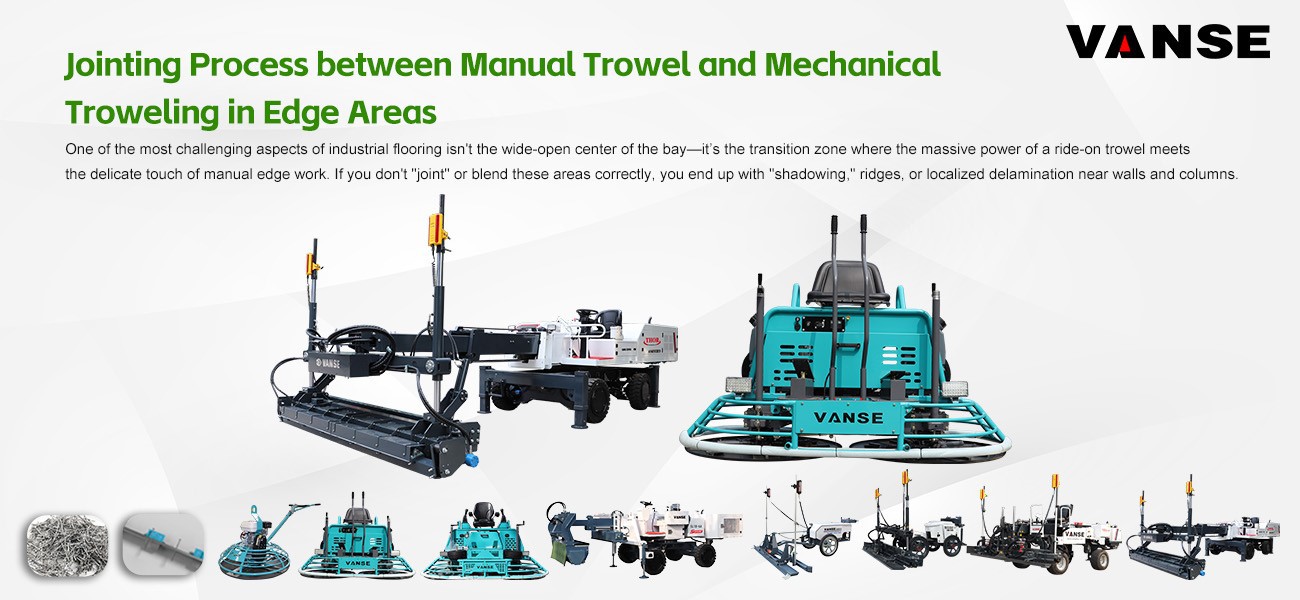
One of the most challenging aspects of industrial flooring isn't the wide-open center of the bay-it’s the transition zone where the massive power of a ride-on trowel meets the delicate touch of manual edge work. If you don't "joint" or blend these areas correctly, you end up with "shadowing," ridges, or localized delamination near walls and columns.
To achieve a seamless, professional finish that passes high-spec inspections, you need a workflow that bridges the gap between manual precision and mechanical force. Here is the pro’s guide to mastering the edge transition using the Vanse professional fleet.
1. Precision Placement: The "Zero-Spill" Edge
The transition starts before the concrete is even poured. If you have "mounds" of concrete near the formwork, the manual crew has to work twice as hard to get it flat.
The Vanse Workflow: Use a Vanse Concrete Distributor to place an even ribbon of material along the edges. For tight corners or indoor pillars where a truck can't reach, the Vanse Mini Dumper is the perfect "last-mile" tool. It allows you to dump concrete with surgical precision right up to the edge, reducing the manual labor needed to "pull" the concrete into place.
2. The Leveling Baseline: Getting Close to the Form
If the edge isn't level, the power trowel will "hop" when it hits the transition, creating a visible ridge.
The Vanse Workflow: A Vanse Concrete Laser Leveling Machine (like the agile YZ25-4) is designed to get incredibly close to the formwork. The high-frequency vibration consolidates the edges just as effectively as the center. This creates a uniform "baseline" flatness, so the manual crew only has to focus on the final 15cm of finish rather than trying to fix the level.
3. Integrated Hardening: Don't Forget the Boundaries
A common failure point is the "soft edge"-where the center of the floor is hard as iron but the edges are dusty because the dry-shake wasn't applied correctly.
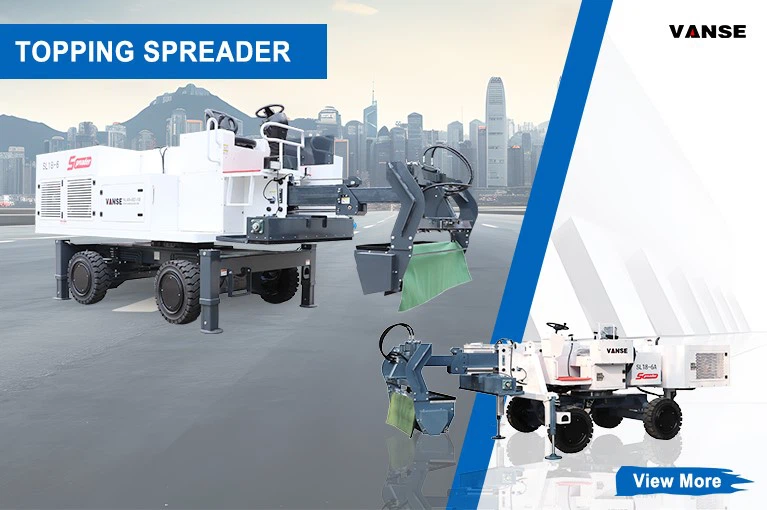
The Vanse Workflow: The Vanse Automatic Topping Spreader ensures that your wear-resistant hardener is applied uniformly right up to the boundary lines. This means the manual troweling in the edge area will have the same material density as the mechanically troweled center.
4. The "Seamless Blend" Troweling Technique
This is the critical "jointing" phase. The goal is to make it impossible to tell where the manual work ends and the machine work begins.
The Strategy: As the manual crew finishes the edges with hand floats, the Power Trowel operator (using a machine like the Vanse VS836 walk-behind or the VS1046H ride-on) must overlap the manual work by at least 15-20cm.
Vanse Edge-Friendly Tech: Vanse power trowels feature precision pitch control and balanced rotor designs. This allows the operator to "feather" the edge of the trowel pass, slowly decreasing the blade angle as they approach the manual work to create a perfectly flat, blended transition without "digging" into the fresh edge.
5. Final Stress Relief: The Clean Cut
Once the transition is blended, the edge area is under a lot of stress during the drying phase.
The Vanse Workflow: Use a Vanse Concrete Cutting Machine (Floor Saw) to execute the contraction joints near walls and columns. A stable, high-speed cut ensures that any shrinkage stress is relieved exactly where you want it, preventing "random cracks" from ruining your beautiful edge work.
Comparison: Manual vs. Mechanical Transition
| Stage | Manual Edge Focus | Vanse Mechanical Support |
| Placement | Pulling concrete by hand. | Mini Dumper / Distributor precision. |
| Leveling | Manual leveling (variable). | Laser Leveling Machine (±1mm accuracy). |
| Hardening | Hand-throwing (uneven). | Automatic Topping Spreader (uniform). |
| Finishing | Hand troweling (lower density). | High-Torque Power Trowel (dense/burnished). |
| Jointing | Hand-tooling joints. | Concrete Cutting Machine (clean/straight). |
Final Word
The quality of a floor is judged by its weakest point-which is usually the edges. By utilizing a complete "system" from Vanse Machinery (www.vansemac.com), you ensure that your edges aren't just an afterthought. They become a seamless extension of the superflat floor you’ve worked so hard to create.
Tired of "shadowed" edges? Visit Vanse today to see how our fleet can perfect your next project from center to boundary.
Note: The parameters provided in this document are for reference only and are not mandatory. Due to differences in technical characteristics between different brands and models of laser levelers, please consult the manufacturer for a suitable solution before actual operation. This reference document assumes no responsibility for any issues arising from failure to follow the manufacturer's instructions.
Thanks to All the Friends Who Support and Trust Shandong Vanse Machinery Technology Co., Ltd.
If you want to know more about Shandong Vanse Machinery Technology Co., Ltd. or have any questions, please feel free to contact us:
Our Factory
Shandong Vanse Machinery Technology Co., Ltd.




Share this article

About the Author: Shandong Vanse Machinery Technology Co., Ltd.
Shandong Vanse Machinery Technology Co., Ltd. is a high-tech manufacturer specializing in concrete construction machinery, including laser screeds and related equipment. The company integrates R&D, production, and global sales, with products exported to over 60 countries and widely used in infrastructure projects worldwide.
Previous Post
Next Post
Related Articles
You Might Also Like
Frequent errors in repairing concrete laser leveling machines, are you using the wrong method?
When the concrete laser leveling machine fails, it needs to be repaired. Generally speaking, maintenance is a good way to help the leveling machine recover its health. However, some leveling machines still have many minor problems after maintenance. What's the matter? In fact, it is because some maintenance personnel made mistakes when repairing the concrete laser leveling machine. The following mistakes should not be made again when repairing the concrete laser leveling machine. When repairing the concrete laser leveling machine, the phenomenon of misusing bolts is still more prominent. Because the performance and quality of the bolts do not meet the technical requirements, mechanical failures occur frequently after maintenance. However, in actual maintenance, most of them use ordinary nuts, which are very difficult to disassemble after a long time. Some technical requirements stipulate that new bolts must be replaced after several disassembly and assembly. Because the maintenance personnel do not understand these situations, repeated use of unqualified bolts can easily lead to failures or accidents of the concrete laser leveling machine. Therefore, when repairing the concrete laser leveling machine, when the bolts are damaged or lost, they should be replaced with bolts that meet the requirements in time, and they should not be misused. Most of the fixing or connecting bolts of various parts of the concrete laser leveling machine have tightening torque requirements, such as injector fixing bolts, cylinder head bolts, connecting rod bolts, flywheel bolts, etc. Some specify tightening torque, some specify tightening angles, and also specify tightening sequences. Some maintenance personnel use the force rod at will and tighten by feeling, resulting in a large difference in tightening torque. Therefore, when repairing the concrete laser leveling machine, the bolts must be tightened according to the specified torque and sequence to prevent mechanical failure due to excessive, too small or improper bolt tightening torque. The clearance between the piston and the cylinder liner of the diesel engine of the concrete laser leveling machine, the "three gaps" of the piston ring, the clearance between the valve stem and the valve guide, etc., all types of models have strict requirements, which must be measured during maintenance, and parts that do not meet the clearance requirements must be adjusted or replaced. Thank you for reading the article in your busy schedule. I hope that all the content shared on our website can help you solve different problems. This is all I have to say about the common mistakes made when repairing concrete laser leveling machines. If you want to know more information, please call us or go directly to our official website.Methods for cleaning, grinding & renovation of terrazzo floors and emery floors
Methods for cleaning, grinding and renovation of terrazzo floors and emery floors With the development of modern architecture and industry, floor materials, as an important part of indoor floors, not only carry the functions of daily use, but also directly affect the beauty and comfort of the overall environment. Terrazzo floors and emery floors are common types of floors, and are widely used in various places because of their wear resistance, anti-slip, and beautiful characteristics. However, over time, these floor materials will also lose their original luster and performance due to wear, pollution and other reasons. Therefore, cleaning, grinding and renovation to restore their original beauty and performance has become an important maintenance work. ☑ Overview of floor material characteristics Terrazzo floor is a floor decoration material made of cement, stone particles and other raw materials through grinding, polishing and other processes. It has a hard texture, bright color, anti-slip and wear-resistant waiting points, and is often used in commercial and residential places. Emery floor is a floor paved with emery aggregate as the main component and added with special gelling materials. It has high wear resistance, compressive strength and anti-slip properties, and is suitable for heavy-load places such as industrial plants and warehouses. ☑ Cleaning methods and precautions Before cleaning, grinding and renovating terrazzo floors and diamond sand floors, the floor must be thoroughly cleaned first. The purpose of cleaning is to remove dirt, oil, old layers and other impurities on the floor surface, providing a good foundation for subsequent grinding and renovation work. When cleaning, you can choose to use a high-pressure water gun or a professional cleaning machine, and choose the appropriate cleaning agent and tools according to the degree and type of stains on the floor surface. At the same time, it should be noted that the choice of cleaning agent should avoid corrosion or damage to the floor material. During the cleaning process, it is also necessary to control the concentration and amount of cleaning agent to avoid pollution to the environment. In addition, the following points should be noted when cleaning: 1. Before cleaning, check whether the floor has problems such as damage or cracks. If necessary, repair it first. 2. When cleaning, the site should be well ventilated to avoid harmful gases generated by the volatilization of the cleaning agent from causing harm to the human body. 3. After cleaning, it should be rinsed with clean water in time, and the floor surface should be made dry to avoid residues from affecting subsequent work. ☑ Grinding steps and skills After cleaning, the next step is to grind the floor. The purpose of grinding is to remove the old coating, scratches and uneven parts on the floor surface, so that the floor surface can be restored to a flat and smooth state. When grinding, you can choose the appropriate grinding machine and grinding disc according to the actual situation of the floor. Generally speaking, you can first use a coarse grinding disc for preliminary grinding to remove large particles of impurities and uneven parts on the floor surface; then use a fine grinding disc for fine grinding to make the floor surface smoother and more delicate. During the grinding process, you need to pay attention to the following tips: 1. When grinding, you should maintain uniform force and speed to avoid excessive damage to the floor or uneven grinding. 2. During the grinding process, you should clean up the dust and debris generated by grinding in time to keep the site clean. 3. After grinding, check whether the floor surface is flat and smooth. If there are local unevenness or scratches, local treatment is required. ☑ Renovation and material selection After grinding, the last step is to renovate the floor. The purpose of renovation is to further improve the aesthetics and performance of the floor so that it is more in line with the requirements of use. During the renovation process, appropriate renovation materials and processes can be selected according to the actual situation of the floor. For terrazzo floors, you can choose to use professional terrazzo renovation agents for brushing or polishing to restore its original gloss and color. For diamond flooring, you can choose to use wear-resistant coatings or ring floor paints for brushing to enhance the wear resistance and aesthetics of the floor. When choosing renovation materials, you need to pay attention to the following points: 1. The materials should comply with relevant standards and specifications and have good environmental performance and durability. 2. The color and gloss of the materials should match the original floor to ensure the consistency of the overall effect after renovation 3. The materials should have good adhesion and wear resistance, and can maintain the beauty and performance of the floor for a long time ☑ Construction site safety management Safety management is essential when cleaning, grinding and renovating terrazzo floors and diamond floors. Obvious safety warning signs should be set up at the construction site to ensure the safety of construction workers and surrounding personnel. At the same time, construction workers should wear appropriate safety protection equipment, such as gloves, masks, safety shoes, etc., to avoid the dust and harmful gases generated during the construction process from affecting their health. In addition, the normal operation and maintenance of construction equipment should be ensured to avoid safety accidents caused by equipment failure. ☑ Quality control and effect evaluation In order to ensure the quality of cleaning, grinding and renovation work, strict quality control is required. During the construction process, the cleaning and grinding effects should be checked regularly to ensure that each link achieves the expected effect. At the same time, after the renovation is completed, an effect evaluation should be carried out to check whether the gloss, flatness, wear resistance and other indicators of the floor meet the requirements. If there are unqualified areas, they should be repaired and processed in time to ensure that the overall effect meets the requirements. ☑ Post-maintenance and maintenance suggestions After completing the cleaning, grinding and renovation work, post-maintenance and maintenance are equally important. For terrazzo floors and diamond sand floors, it is recommended to clean and maintain them regularly to avoid damage to the floor caused by the accumulation of stains and debris. At the same time, scratches and collisions with heavy objects and sharp objects should be avoided to avoid damage to the floor. In addition, regular maintenance and repair work should be carried out according to the use and wear of the floor to ensure the long-term service life and stable performance of the floor. ☑ Summary The cleaning, grinding and renovation of terrazzo floors and gold sand floors is a highly comprehensive work. It is necessary to fully consider the characteristics and usage scenarios of the floor materials, and select appropriate cleaning and grinding methods and renovation materials to ensure that the renovated floor is both beautiful and durable. Through the introduction of this article, we have learned about the basic characteristics of terrazzo floors and diamond sand floors, cleaning methods and precautions, grinding steps and techniques, renovation treatment and material selection. At the same time, we also recognize the importance of construction site safety management and the necessity of quality control and effect evaluation. In actual operation, we should flexibly apply this knowledge according to the specific situation to ensure the smooth progress of renovation work. For example, during the cleaning process, you can choose the appropriate cleaning agent and tools according to the type and degree of dirt on the floor surface: during the grinding process, you can choose the appropriate grinding disc and grinding intensity according to the material and wear of the floor. In addition, when choosing renovation materials, full consideration should be given to their environmental protection, durability and matching degree with the original floor. At the same time, later maintenance and care are also links that cannot be ignored. Regular cleaning and maintenance of the floor can extend its service life and maintain its beauty. For local wear or damage, it should be repaired and treated in time to avoid the problem from expanding. In addition, with the continuous development of science and technology, more and more new technologies and new materials are being applied to the field of floor renovation. For example, the application of some new environmentally friendly cleaning agents and high-efficiency grinding equipment can further improve the effect and efficiency of cleaning and bending: some new materials and technologies can also better improve the performance and beauty of the floor. Therefore, we should keep an eye on and understand new technologies and new materials so that we can better apply them in the renovation work. In summary, the cleaning, grinding and renovation of terrazzo floors and diamond sand floors is a complex and important task. By mastering relevant knowledge and skills and paying attention to safety management and quality control of the construction site, we can ensure the smooth progress of renovation work and achieve good results. At the same time, with the continuous emergence of new technologies and new materials, we should also constantly update our knowledge and skills to adapt to the changing market needs and technological development. In the future floor renovation field, as people's requirements for beauty and performance continue to increase, and the concepts of environmental protection and sustainable development are deeply rooted in the hearts of the people, we believe that more innovative technologies and materials will be applied to this field. For example, some floor materials with self-repairing functions may gradually become popular. They can automatically repair after a certain amount of damage, thereby greatly extending the service life of the floor. In addition, some intelligent floor management systems may also come into being, realizing real-time monitoring and intelligent maintenance of floor usage through technologies such as the Internet of Things and big data. At the same time, we also need to pay attention to the impact of floor renovation on the environment. During the renovation process, environmentally friendly materials and processes should be used as much as possible to reduce the generation of waste and pollutants. In addition, the burden of renovation work on the environment can be reduced by rationally utilizing waste materials and recycling resources. Finally, for those engaged in floor renovation, they need to continuously improve their professional skills and qualities to adapt to the ever-changing market demands and technological development. At the same time, they also need to pay attention to the cultivation of safety awareness and environmental awareness to ensure that both quality and safety and environment can be guaranteed in the renovation work. In short, the cleaning, grinding and renovation of terrazzo floors and emery floors is a constantly developing field. Through continuous learning and practice, we can continuously improve our professional level and service quality, and provide customers with better floor renovation solutions. At the same time, we should also actively embrace the application of new technologies and new materials to promote the sustainable development and progress of the floor renovation industry.How to maintain and service a riding power trowel?
Body cleaning: After each use of the trowel, the dust, concrete residue and other debris on the body should be cleaned in time. You can use a damp cloth to wipe the surface of the body, but be careful to avoid water entering key parts such as the engine. For stubborn stains, you can use a mild detergent to clean them. Clean the trowel and spatula: If the concrete remaining on the trowel and spatula is not cleaned in time, it will affect the effect of the next use. You can use special tools such as scrapers to remove the solidified concrete residues, and then rinse with clean water. Check screws and nuts: Regularly check whether the screws and nuts of various parts of the trowel are loose. Focus on checking the installation screws of the trowel and spatula, as well as the fasteners of the various connecting parts of the body. If looseness is found, tighten it in time with appropriate tools. Replace the engine oil and oil filter: Regularly replace the engine oil and oil filter according to the engine's working hours or the manufacturer's recommendations. Generally speaking, the engine oil needs to be replaced every 50-100 hours of work. When replacing the engine oil, choose a high-quality engine oil that is suitable for the engine model. Check the air filter: The air filter is essential for the normal operation of the engine. Regularly check whether the air filter is blocked. If the filter element is found to be dirty, it should be cleaned or replaced in time. Usually, it needs to be checked every 20-30 hours of work. Spark plug maintenance: Regularly check the electrode wear and carbon deposits of the spark plug. If the electrode is severely worn or there is too much carbon deposits, it will affect the engine's ignition performance. Generally, the spark plug can be cleaned every 100-200 hours of work, or replaced according to the actual wear of the spark plug. Trowel maintenance: Regularly check the degree of wear of the tiller. When the blade wear of the spatula exceeds a certain limit (such as 2-3 mm), the spatula should be replaced in time. At the same time, during use, the spatula can be properly lubricated to reduce wear. Pad maintenance: Check the flatness and balance of the pad. If the pad is deformed, it will affect the polishing effect and needs to be corrected or replaced in time. At the same time, pay attention to whether the connection part of the pad is loose or worn. Tire maintenance: Check the tire pressure regularly to ensure that the tire pressure meets the requirements. Generally, the tire pressure of the driving trowel is maintained at about 2-3 atmospheres. At the same time, check the wear of the tire. If the tire is found to be damaged or bulging, the tire should be replaced in time. Steering system and transmission system maintenance: Regularly check the flexibility and accuracy of the steering system, and lubricate the steering shaft, steering knuckle and other components. For the transmission system, check the tightness of the transmission chain or belt. If it is too loose or too tight, it needs to be adjusted. And check the wear of the chain or belt, if necessary, it should be replaced in time. Cleaning and drying: Before storing the trowel for a long time, the machine should be thoroughly cleaned, including the machine body, trowel plate, spatula and other parts. Make sure the surface of the machine is dry to avoid rust. The machine can be placed in a well-ventilated place for natural drying. Rust-proof treatment: Anti-rust treatment is performed on the metal parts of the machine. A layer of anti-rust oil can be applied on the metal surface, especially on the spatula, trowel plate, screws and other parts that are prone to rust. Battery maintenance (if it is an electric trowel): For electric driving trowels, pay attention to the maintenance of the battery during long-term storage. Store the battery after fully charging it, and charge and discharge the battery once every period of time (such as one month) to maintain the battery activity. At the same time, the battery should be stored in a dry and cool place to avoid moisture or overheating. Storage environment: Choose a suitable storage environment, preferably a dry, ventilated indoor space that avoids direct sunlight. If stored outdoors, use facilities such as awnings to prevent the machine from being eroded by rain and exposed to the sun.