Technical Knowledge
What is the difference between indoor flooring and outdoor flooring?
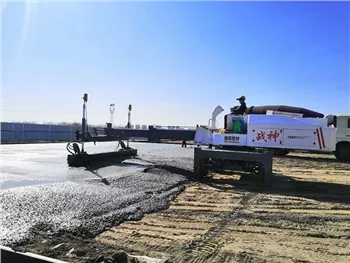
When it comes to flooring, there are different types for different spaces. Indoor flooring and outdoor flooring differ in many ways, including their design, materials, functionality and style. Each space has its unique qualities and purposes, and these factors play a crucial role in determining the flooring type that best suits that space.
▶Appearance
The first obvious difference between indoor and outdoor flooring options is their appearance. Residential indoor floors include tiles, hardwood, laminates, carpets and vinyl, and they are designed to match the interior décor of your home. On the other hand, outdoor flooring options aim to enhance your home’s exterior appeal. For instance, natural stones like limestone, granite, and sandstone are commonly used for outdoor flooring as they create a unique aesthetic that complements the outdoor environment’s natural elements.
▶Durability
Outdoor floors are exposed to harsh natural elements, including moisture, heat, and heavy foot traffic, while indoor floors are primarily exposed to foot traffic and temperature changes. Therefore, outdoor flooring materials need to be more durable and long-lasting than indoor flooring. Materials such as ceramic tiles, natural stones, and concrete are commonly used for outdoor flooring due to their strength and resilience. Wood, on the other hand, can be used for outdoor floors but only if it is appropriately treated to prevent rotting, degradation and pests.
▶Maintenance
Maintaining outdoor flooring requires much more effort and time than indoor flooring. Since outdoor flooring is exposed to natural elements, it tends to accumulate dirt, leaves, and debris that requires regular cleaning. Additionally, outdoor floors require regular sealing to prevent moisture and water damage. Indoor floors also need maintenance, but it is usually less intense, and they only require regular vacuuming and sweeping to keep them clean.
▶Installation
The installation process for indoor and outdoor flooring also differs. Indoor floors, such as carpet, laminate, and engineered wood floors, require an underlayment that serves as a sound barrier and moisture barrier. Some outdoor flooring options, like natural stones, need to be installed on a sub-base foundation to ensure stability and prevent shifting. Additionally, outdoor floors need proper drainage systems to prevent water damage as excess water can cause structural damage and lead to slippery surfaces that can be hazardous to pedestrians.
▶Cost
Indoor flooring is usually less expensive than outdoor flooring options. For example, hardwood floors cost between $8 to $15 per square foot, while outdoor stone flooring can cost around $20 to $40 per square foot, depending on the type and quality of the stones. It's worth noting that the installation costs for outdoor flooring materials would also be higher since they require much more preparatory work and labor than indoor flooring.
▶Functionality
Indoor flooring serves mainly as a design element that enhances the aesthetics of the home. On the other hand, outdoor flooring serves a more practical purpose as it provides safety by preventing slips, falls, and injuries, especially if the surface gets wet. Safety considerations, such as slip-resistant features, are of utmost importance when choosing outdoor flooring materials.
▶Conclusion
In summary, indoor and outdoor flooring options have several distinguishing factors, including appearance, durability, maintenance, installation cost and functionality. It is vital to consider all these factors when choosing flooring materials for your home. Aesthetics, durability, and functionality are essential considerations when selecting any flooring type but are more important when it comes to outdoors. Ultimately, choosing the right flooring helps to create an inviting and comfortable living space that suits your unique taste and needs.
Thanks to All the Friends Who Support and Trust Shandong Vanse Machinery Technology Co., Ltd.
If you want to know more about Shandong Vanse Machinery Technology Co., Ltd. or have any questions, please feel free to contact us:
Our Factory
Shandong Vanse Machinery Technology Co., Ltd.








Share this article

About the Author: Shandong Vanse Machinery Technology Co., Ltd.
Shandong Vanse Machinery Technology Co., Ltd. is a high-tech manufacturer specializing in concrete construction machinery, including laser screeds and related equipment. The company integrates R&D, production, and global sales, with products exported to over 60 countries and widely used in infrastructure projects worldwide.
Previous Post
Next Post
Related Articles
You Might Also Like
Vanse The advantages of the world laser leveling machine
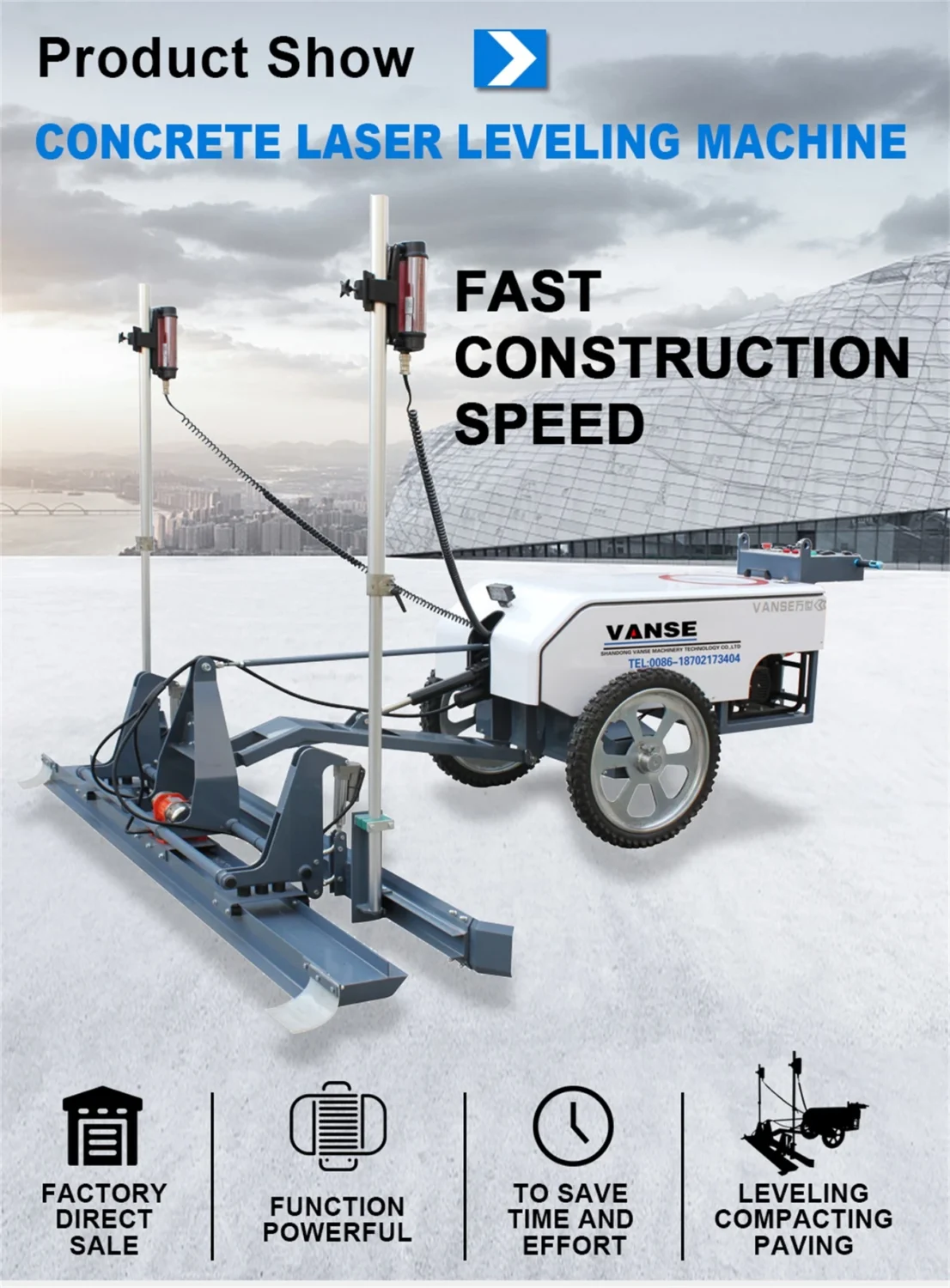
YZ40-4 large-scale telescopic boom laser leveling machine is equipped with laser system and full hydraulic control system, which makes the concrete construction ground level more accurate, and at the same time of high-efficiency construction, it can meet high-standard construction requirements. YZ40-4 large-scale telescopic arm laser leveling machine controls the leveling head in real time through the laser receiver on the laser leveling machine, so as to realize the equipment for high-precision and fast leveling of concrete. 1. High construction quality: The ground construction of laser leveling machine can significantly improve the flatness of the ground, the average flatness can reach 2mm, and the flatness quality is more than 3 times higher than the traditional method. It can also realize large area construction, reduce a large number of construction gaps, the required concrete collapse can be reduced, the concrete strength is guaranteed, so that the ground integrity is good, not easy to crack. 2. Fast construction speed: more than 3 times the work efficiency than the traditional beam vibrator, scraper, manual paving and so on, the average daily can complete 3,000 square meters of ground pouring, especially suitable for the simple shape, large working surface of the floor layer construction. 3. Reduce the amount of template support: with 20000 square meters of concrete pavement statistics, the traditional method needs to support 6300m side of the template, and the use of laser leveling machine construction, support only 2400m, template consumption is only 38%. 4. High degree of automation, small labor intensity: the heavy manual labor into mechanical spreading, vibrating, leveling, pulping, so that the operator reduces 30%, while reducing labor intensity. 5. High economic benefits: compared with the traditional process, the cost per square meter is reduced by 30%, and the ground maintenance cost is reduced in the later stage, thus significantly improving the economic benefits.What is the difference between indoor and outdoor flooring?
What is the difference between indoor and outdoor terraces Floors are the most common thing in our daily lives. Nowadays, people like to use them to decorate the ground. Floors are not only beautiful, but their low prices can also save us a lot of money. Floors are also durable and can withstand the test of time. Generally, in civil engineering, the flooring can be divided into two types: indoor flooring and outdoor flooring. Outdoor flooring generally refers to the construction layer of the original foundation after leveling (excavation or filling). The construction layer is divided into original soil layer, base layer, intermediate layer, surface layer, etc. The outdoor design floor elevation is the outdoor elevation of the building after delivery, which is determined by the designer based on the original terrain elevation and the functional needs of the building. It is generally represented by a solid triangle and a number. The construction process of indoor flooring is generally similar to that of outdoor flooring, but due to the influence of usage functions, there are certain differences in strength, thickness, and materials between indoor flooring and outdoor flooring, which is why they are separately referred to as outdoor flooring and indoor flooring. Some customers may sometimes complain about the poor performance of certain epoxy flooring, but sometimes the various problems with the flooring are not related to the quality of the flooring itself. Part of the reason may be due to environmental factors leading to improper selection and design of the flooring paint system. For example, if many indoor floors are used outdoors, their service life will be greatly reduced. There are differences in the selection of indoor and outdoor flooring. Generally speaking, outdoor flooring needs to have good weather resistance, while some flooring products may have good wear resistance, high cleanliness requirements, or good anti-corrosion performance. However, their weather resistance is poor, and after prolonged exposure to sunlight, they may experience discoloration, peeling, and cracking, greatly shortening their service life. So when choosing outdoor flooring, it is important to pay attention to its weather resistance, and then choose different flooring products according to different needs. For example, UV resistant and weather resistant flooring has excellent weather resistance, while permeable flooring not only has good weather resistance, but also has good water permeability, and so on. On the other hand, indoor flooring does not need to consider weather resistance, but only needs to choose suitable flooring according to different needs. If you need ground anti-corrosion, choose anti-corrosion floor paint. If you need an anti-static environment, consider epoxy anti-static flooring, etc. When choosing flooring, including floor paint, we need to choose the corresponding product according to our own needs to achieve the desired effect. Determination of outdoor ground elevation and indoor ± 0.000 elevation (1) Coordinate with external transportation and municipal facilities, and facilitate production and usage connections internally. Connect with the surrounding road traffic, with a reasonable slope, maintain smooth traffic, and timely divert traffic when encountering traffic problems (2) Meet drainage and flood control requirements 1) Flood control and drainage: It should be ensured that the designed ground elevation of the site is 0.5m higher than the designed frequency flood level. Generally, there is a clear minimum site elevation and indoor soil elevation of 0.000 in urban flood control planning. When the site is temporarily connected to urban roads, the elevation at the red line of the land should be 0.20~0.40 higher than the elevation of the urban road centerline. Coordination between design elevations: Generally, the road design elevation should be lower than the outdoor floor elevation of the building to meet the requirement of no water accumulation on the site. 2) Elevation of municipal sewage pipeline access point: The drainage slope of ground and underground pipelines meets the requirements of drainage specifications. The starting point of underground pipelines should also meet the minimum soil cover depth requirements. (3) Consider the impact of groundwater level, earthwork volume, foundation burial depth, and building settlement. Excavation is not suitable in areas with high groundwater levels to reduce the cost of waterproofing construction caused by dealing with groundwater levels. In areas with low groundwater levels, appropriate excavation can be considered to obtain higher endurance and reduce foundation burial depth. It is best to keep the building foundation, equipment foundation, and pipe trench above the groundwater level of 0.5 meters. Reduce the amount of earth and rock filling, excavation, and foundation engineering. (4) Environmental landscape requirements, determination of indoor and outdoor floor design elevations, should have a forward-looking perspective that is harmonious with adjacent buildings while considering urban development and changes, and create a beautiful landscape. (5) Determination of indoor elevation of 0.000 The height difference between indoor and outdoor levels of buildings: Generally, it should be determined based on factors such as the nature of use, population requirements, site topography, and geological conditions of various buildings, and the minimum height difference between indoor and outdoor levels should meet relevant regulatory requirements. For buildings with basements, the indoor floor elevation should generally be 0.3, 0.4, 0.6, and 1.00 higher than the outdoor floor to avoid rainwater backflow. It is necessary to consider the convenience of building use.Best equipment for VNA warehouse flooring
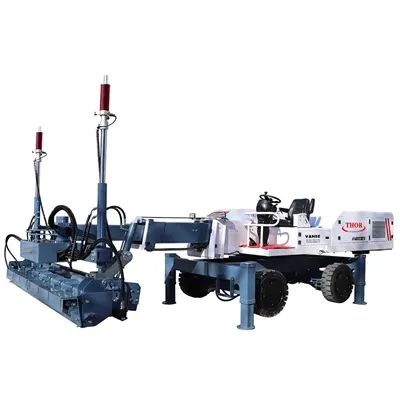
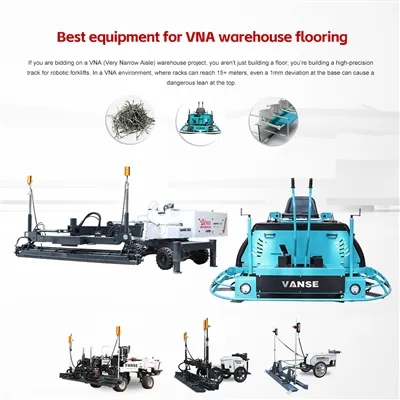
If you are bidding on a VNA (Very Narrow Aisle) warehouse project, you aren't just building a floor; you're building a high-precision track for robotic forklifts. In a VNA environment, where racks can reach 15+ meters, even a 1mm deviation at the base can cause a dangerous lean at the top. To hit the Superflat (FM1/FM2) standards required for these projects, you need a synchronized fleet of equipment. Here is the ultimate professional gear list for VNA flooring, featuring the specialized lineup from Vanse Machinery. For VNA floors, the traditional "strip pour" method is often used to maintain extreme levelness (FL). Why it matters: You need a machine that reacts to laser signals in milliseconds. The Vanse Choice: The Vanse YZ30-4E Telescopic Boomed Laser leveling is the heavyweight champion here. Its 6-meter telescopic boom allows the leveling head to reach out and leveling without the machine moving its wheels on the wet concrete. This eliminates the "tire track effect," which is the #1 enemy of Superflat FL numbers. For smaller areas, the WS940/WS940C/YZ28-4S/YZ25-4 offers incredible agility without sacrificing precision. Before you level, you have to get the concrete into the "strips" without disturbing your reinforcement or localized subgrade. The Workflow: Using a Vanse Concrete Distributor allows for an even, controlled discharge of the mix, preventing "mounds" that are hard to level later. For tight spots or multi-level projects, the Vanse Mini Dumper (available in electric and gasoline versions) is the perfect "last-mile" transport tool, moving material quickly without the heavy footprint of a full-size truck. VNA floors experience intense, repetitive traffic in the exact same wheel paths. They must be wear-resistant. Why it matters: Manual spreading of dry-shake hardener is too uneven for VNA specs. The Vanse Choice: The Vanse Automatic Topping Spreader ensures an exact grams-per-square-meter application. By spreading the hardener evenly behind the laser leveling, you ensure a uniform surface density that won't delaminate or "dust" under heavy forklift loads. Once the concrete begins to set, the "magic" happens. You need to densify the surface until it's hard as iron and smooth as glass. Why it matters: VNA floors require a high FF (Flatness) score. The Vanse Choice: Transition from your walk-behind units to a Vanse VS1046 Ride-on Power Trowel. With its dual 46-inch rotors and high-torque BRIGGS & STRATTON engine, it provides the heavy compaction needed to "burnish" the floor. Its precision pitch control allows the operator to flatten the surface to a mirror finish without creating "waves." Finally, even the best floor will fail if it cracks in the wrong place. The Strategy: In VNA lanes, joint placement is critical. The Vanse Choice: Use a Vanse Concrete Cutting Machine (Floor Saw) for early-entry or standard contraction joints. Its stable chassis and high-speed blade ensure clean, straight cuts that won't "spall" or break at the edges when the forklifts start running. When you visit www.vansemac.com, you aren't just buying individual tools; you are investing in a Superflat Ecosystem. Here is why it works for the international market: Integrated Tech: Vanse machines are designed to work together. The vibration frequency of the laser leveling matches the compaction needs of the power trowels. ROI Focus: In the UK, US, or Middle East, labor is expensive. A full Vanse fleet can reduce your crew size by 40% while doubling your daily output. Standard Compliance: Whether you're aiming for ACI 117 or TR34 (FM1), this equipment is engineered to hit those high FF/FL numbers consistently. VNA warehouse flooring is the "Formula 1" of the concrete world. You wouldn't take a family sedan to the race track-so don't take "standard" equipment to a VNA job site. Equip your team with the precision of Vanse (www.vansemac.com) and turn those high-spec requirements into a competitive advantage. Ready to upgrade your fleet? Check out the full technical specs on the Vanse website and see how we can help you hit those FM1 numbers on your next pour. Note: The parameters provided in this document are for reference only and are not mandatory. Due to differences in technical characteristics between different brands and models of laser levelers, please consult the manufacturer for a suitable solution before actual operation. This reference document assumes no responsibility for any issues arising from failure to follow the manufacturer's instructions.