Technical Knowledge
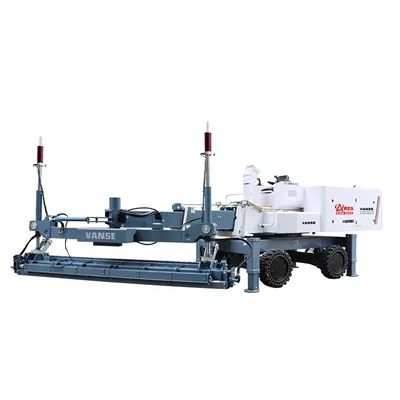
During the construction process, how to effectively prevent and deal with possible failures of the laser leveling machine?

During the construction process, the following aspects can be referred to for effective prevention and treatment of possible failures of the laser leveling machine:
1. Regular inspection and maintenance:
– The laser transmitter and receiver of the laser leveling machine need to be kept clean to ensure the stability of the laser beam.
– Check the power cord and cable to ensure that the connection is firm and not damaged.
– Clean the lens, reflector and other optical components to maintain high construction accuracy.
– Make sure the reference surface is flat and the equipment is placed firmly.
– Replace worn parts such as tools or sensors to ensure the normal operation of the equipment.
2. Fault diagnosis:
– If the laser beam is unstable, the construction accuracy will be affected. Check the laser transmitter and receiver to ensure that they are clean and correctly aligned.
– If the equipment cannot be calibrated horizontally, it may be because the reference surface is uneven or the reference point is set incorrectly. Make sure the equipment is placed on a flat ground and the reference point is set correctly.
– If the equipment does not start at all, first check the power and cable connection. Make sure the power supply is normal and check whether the cable is damaged.
3. Abnormal vibration or noise handling:
– Abnormal vibration or noise may indicate that parts of the equipment are loose or damaged. Turn off the equipment and check the parts, tighten the screws, or replace the damaged parts.
4. Treatment of construction accuracy decline:
– If the accuracy of the laser leveling machine declines, it may be caused by lens or sensor dirt. Clean and maintain these parts regularly to ensure high-precision construction.
5. Electrical system maintenance:
– Start the laser leveling machine engine every two months, charge the battery, and run all hydraulic actuators such as rotary hydraulic motors, telescopic cylinders, etc. Do not remove the battery from the machine to prevent long-term parking of the equipment to control the internal software program. Loss.
6. Hydraulic system maintenance:
– Start the laser leveling machine regularly and turn on all hydraulic functions on the machine to make the hydraulic drive components work regularly to prevent related seals from being damaged due to long-term parking, and metal parts such as cylinder rods from rusting. Retract all cylinder rods into the hydraulic cylinder oil chamber as much as possible to better protect the surface of the cylinder rod.
7. Safety operating regulations:
– Comply with the safety operating regulations of the laser leveling machine to ensure the safety of each construction worker under the premise of ensuring construction efficiency.
Through the above measures, possible failures of the laser leveling machine during the construction process can be effectively prevented and handled, ensuring the smooth progress of the construction and the quality of the project.
Thanks to All the Friends Who Support and Trust Shandong Vanse Machinery Technology Co., Ltd.
If you want to know more about Shandong Vanse Machinery Technology Co., Ltd. or have any questions, please feel free to contact us:
Our Factory
Shandong Vanse Machinery Technology Co., Ltd.








Share this article

About the Author: Shandong Vanse Machinery Technology Co., Ltd.
Shandong Vanse Machinery Technology Co., Ltd. is a high-tech manufacturer specializing in concrete construction machinery, including laser screeds and related equipment. The company integrates R&D, production, and global sales, with products exported to over 60 countries and widely used in infrastructure projects worldwide.
Previous Post
Next Post
Related Articles
You Might Also Like
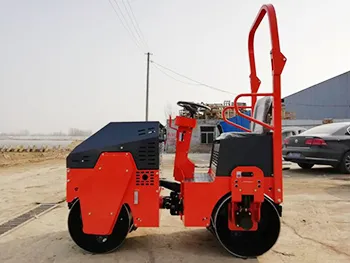
Teach you a small roller machine maintenance car paint tips
The surface of a small roller often rusts, and we may say that it is the consequence of the surface paint being cut. In fact, in addition to the common collision, scratches, the car when the tires hit the small stones hit the paint, but also make the paint a peeling off a small point, a long time will produce small rust. And these small scars because most of the inconspicuous, easy to be ignored. Small road transport on the way, encountered rain and snow or passing muddy water pavement is inevitable, the bottom of the car and some other space and the car floor, etc. are easy to accumulate sludge, if not timely cleaning, which will make moisture To hide. To always check, and to keep the door and the body parts of the drainage holes open, check the car cover the humidity, to prevent the rusty parts of the floor. There are some small paint a small road roller, high-speed running in the process of sand particles hit the body may also cause small scratches. For this type of car, you can seal the body glaze, it can form a solid mesh protective film to improve the hardness of the paint, the effect can be maintained for about a year. In addition, for the bottom of the vehicle can be chassis armor or plastic, so you can protect the chassis acid rain, anti-corrosion, so that the original protective layer is not easy to dry, off, but also to prevent the impact of small stones on the chassis. For the small roller body has appeared some minor scratches or rust, if you are placed regardless of easy to rust, but not worth the money to the beauty shop. You can do it yourself with some easy way to handle it. Here to teach you a simple and effective way: found a new small scars, the toothpaste gently wipe the circle painted on the scratch. This can generally reduce the mark imprint, you can simply play a role in isolation, to prevent rust, no problem in the short term. The above is Xiangjiang Xiao Bian for your finishing on the surface of the maintenance of the road, you learn it?How to avoid excessive wear and damage to equipment when dealing with uneven floors?
When dealing with uneven floors, in order to avoid excessive wear or damage to the equipment, the following measures can be taken: 1. Understand the ground conditions: Before dealing with uneven floors, you should fully understand the ground conditions, including the hardness of the ground, the size and distribution of particles, and whether the ground is wet. This information helps select appropriate equipment and operating parameters to ensure that the equipment can withstand uneven ground conditions. 2. Choose appropriate equipment: According to the ground conditions and construction requirements, choose equipment that can handle uneven ground. For very uneven floors, you can choose more sturdy and durable equipment, or use some specially designed equipment to reduce the risk of equipment wear and damage. 3. Adjust working parameters: When using equipment to deal with uneven ground, the working parameters, such as pressure, speed and working time, should be adjusted in a timely manner. Appropriate parameters can reduce the friction and impact between the equipment and the ground, thereby reducing equipment wear and damage. 4. Control the operating speed of the equipment: When dealing with uneven ground, the operating speed of the equipment should be controlled. A slower speed can reduce the relative movement speed of the equipment and the ground, reducing the impact and wear on the equipment. At the same time, avoid running the equipment continuously for a long time to avoid overheating or excessive wear of the equipment. 5. Regular maintenance: In order to ensure the normal operation of the equipment and extend its service life, the equipment should be maintained regularly. This includes checking the worn parts of the equipment, lubricating key parts, replacing wearing parts, etc. Regular maintenance can detect and solve potential problems in time and avoid serious wear or damage to equipment when dealing with uneven floors. 6. Operator training: Operators should undergo professional training and be familiar with the operating procedures and usage techniques of the equipment. Operators should have basic equipment maintenance knowledge and safety awareness, be able to correctly respond to equipment problems, and take appropriate measures to avoid excessive wear or damage to equipment. 7. Pay attention to safety: When dealing with uneven floors, special attention should be paid to safety issues. The equipment may become unbalanced or tip over when walking on uneven ground, causing equipment damage or personal injury. Therefore, operators should always remain alert and take necessary safety measures to ensure the safety of the construction process. By understanding the ground conditions, selecting appropriate equipment, adjusting working parameters, controlling equipment operating speed, performing regular maintenance, training operators, and paying attention to safety measures, excessive wear or damage to equipment can be effectively avoided when dealing with uneven ground.What details should be paid attention to during the debugging and calibration of the concrete laser leveling machine?
The commissioning and calibration of a concrete laser leveling machine is crucial for ensuring high-quality flooring (high flatness and levelness). This process requires meticulousness and patience. The following are key details to consider, divided into several key phases: Before beginning any commissioning, thorough preparation is the foundation for safety and success. Mechanical part: Check the leveler's structural parts, hydraulic cylinders, scrapers, and vibrators for damage, looseness, or oil leakage. Ensure that the tracks and tires are intact and free of damage. Hydraulic system: Check that the hydraulic oil level is within the standard range and that the oil is clean. After starting the engine, listen for any abnormal noises coming from the hydraulic pump and motor. Power system: Check whether the fuel, oil, and coolant are sufficient. Ensure that the battery is fully charged and the wiring connections are secure. Stability: Mount the laser transmitter on a solid, stable, vibration-free tripod. Avoid placing it on soft ground or in a location where it may be hit by people or equipment. Position and height: The installation position should cover the entire construction area and be as close to the center as possible to reduce the slight error caused by distance. The height should be raised so that the laser beam is higher than the working range of the receiver on the leveling machine. Leveling: This is the most critical step! Use the laser transmitter's built-in bubble or electronic level to accurately adjust it to a horizontal state (usually in 360° rotation scanning mode). Even a slight tilt will cause the entire working surface to have a slope error. Accuracy selection: Select the appropriate accuracy level according to the construction requirements (for example, ±10mm/@30m or ±3mm/@30m). The higher the accuracy, the higher the debugging requirements. Elevation benchmarks: Verify the on-site elevation benchmarks (usually provided by a surveyor) with the construction crew and double-check them at multiple locations using a handheld laser receiver. Base treatment: Ensure that the flatness and density of the base (usually crushed stone or compacted soil) basically meet the standards, without obvious bumps. This is the core link, the purpose of which is to enable the machine to accurately respond to laser signals. Securely mount the laser receiver on the mast of the leveling machine to prevent it from shaking. Check the receiver's battery level to ensure it is functioning properly. Verify that the indicator lights or display on the receiver are functioning properly. Drive the leveler to the area covered by the laser transmitter signal, preferably close to the transmitter and where the ground elevation is close to the design elevation. Manual mode: Operate the machine to raise or lower the scraper bottom until it is exactly at the designed elevation (which can be verified by measurement). Calibrating the Receiver: At this correct height, adjust the receiver up and down on the mast so that its center point (usually the green light or display "0") is aligned with the laser beam. Locking the reference: Execute "Set reference point", "Reset to zero" or similar operations on the control panel. The control system will remember this height as the "0" position of the laser signal (i.e. the designed elevation). Sensitivity: Sets the hydraulic system's response sensitivity. A setting that's too high will cause the scraper to frequently adjust up and down, creating a "chasing wave" phenomenon that affects smoothness. A setting that's too low will result in a sluggish response and poor accuracy. Usually, start with a mid-range value. Deadband: Set a small allowable error range (such as ±1-2mm). Within this range, the system will not operate to avoid excessive fine-tuning of the hydraulic system and improve construction fluency. After setting the benchmark, do not start pouring immediately. Instead, drive the machine forward, backward, left, and right within the signal range while observing the height display on the control panel. Observe whether the scraper can rise and fall smoothly and accurately according to the instructions. Stop the machine at different points with known elevations, use a ruler or level to actually measure the height of the scraper bottom, and compare it with the designed elevation to verify the height accuracy of the control system. Commissioning and calibration are not a one-time thing and require continuous monitoring during construction. Every 1-2 hours, or when a collision is suspected, the laser transmitter must be rechecked to ensure it is still in an absolutely horizontal state. Vibrations, wind or accidental contact can cause it to deviate. Regularly use a ruler to spot-check the surface elevation of leveled but not initially set concrete, and cross-verify it with the machine display value. The slump (dryness or thinness) of concrete significantly impacts leveling results. If the material is too dry, the machine will experience significant resistance and may "climb a slope"; if the material is too thin, the machine will easily "get stuck." Maintaining consistent concrete supply quality is crucial. Plan the movement path of the leveler to ensure it is always within the effective coverage of the laser signal and avoid signal blind spots. Lost signal: Once the receiver alarm indicates that the laser signal is lost, construction should be stopped immediately, the cause should be found out (blocked, transmitter power off, out of range, etc.), and the signal should be restored and recalibrated before continuing. Accuracy deviation: If a systematic deviation (overall high or low) is found during spot checks, the machine should be stopped immediately and the laser transmitter level and the leveling machine's reference settings should be rechecked. Personnel safety: When debugging and running the machine, make sure there is no one around, especially pay attention to the height of the laser beam to avoid direct exposure to human eyes. Equipment safety: When moving the leveler, be careful to avoid obstacles such as steel mesh and elevation piles to prevent damage to the tracks and hydraulic cylinders. Stage Core details Purpose Prepare Laser transmitter is installed absolutely horizontally Establishing an accurate horizontal reference plane Check site elevation benchmarks Ensure consistency between design and site Calibration Benchmark the machine at a known correct elevation Let the machine "learn" what the design elevation is Trial operation and actual test verification Cross-check to ensure system accuracy Construction Regularly review laser leveling and machine accuracy Prevent errors caused by vibration and collision Monitor concrete material properties and signal status Ensure a stable and reliable construction process Only by following the above details, strictly following the equipment manual, and working closely with on-site surveyors can the technical advantages of the laser leveling machine be fully utilized to cast ultra-high-precision high-quality floors.