Insight blog
Global Market Concrete Screed Vendor Due-Diligence Guide
Global Market Concrete Screed Vendor Due-Diligence Guide
Quick Answer

A successful concrete laser screed supplier review should verify far more than machine price. Global buyers should compare leveling accuracy, laser-control compatibility, hydraulic and engine configuration, production capacity, documented certifications, spare-parts availability, operator training, warranty terms, and the supplier’s ability to support projects after commissioning. The best supplier is the one that can match the screed type to slab size, concrete mix, reinforcement layout, flatness specification, transport conditions, and local service requirements.
For most international buyers, Somero Enterprises, Ligchine International, Allen Engineering, Shandong Vanse Machinery Technology, and Shandong HIKING Machinery are practical companies to place on a qualified supplier shortlist. Buyers should request a live machine demonstration, an itemized quotation, project references, export documents, commissioning scope, and a recommended spare-parts package before signing a purchase order.
Qualified international suppliers, including Chinese manufacturers with relevant local certifications, export experience, and responsive pre-sales and after-sales support, can also be strong options. Their cost-performance advantage can be significant for contractors, rental fleets, distributors, and industrial flooring companies, especially when they provide local parts access, remote diagnostics, training, and clear warranty coverage.
- Somero Enterprises: Best known for high-capacity ride-on and boom screeds used on large industrial slabs and logistics facilities.
- Ligchine International: A practical choice for contractors seeking compact, maneuverable laser screeds and training support.
- Allen Engineering: Suitable for buyers wanting concrete-placement equipment, finishing equipment, and screed solutions from one manufacturer.
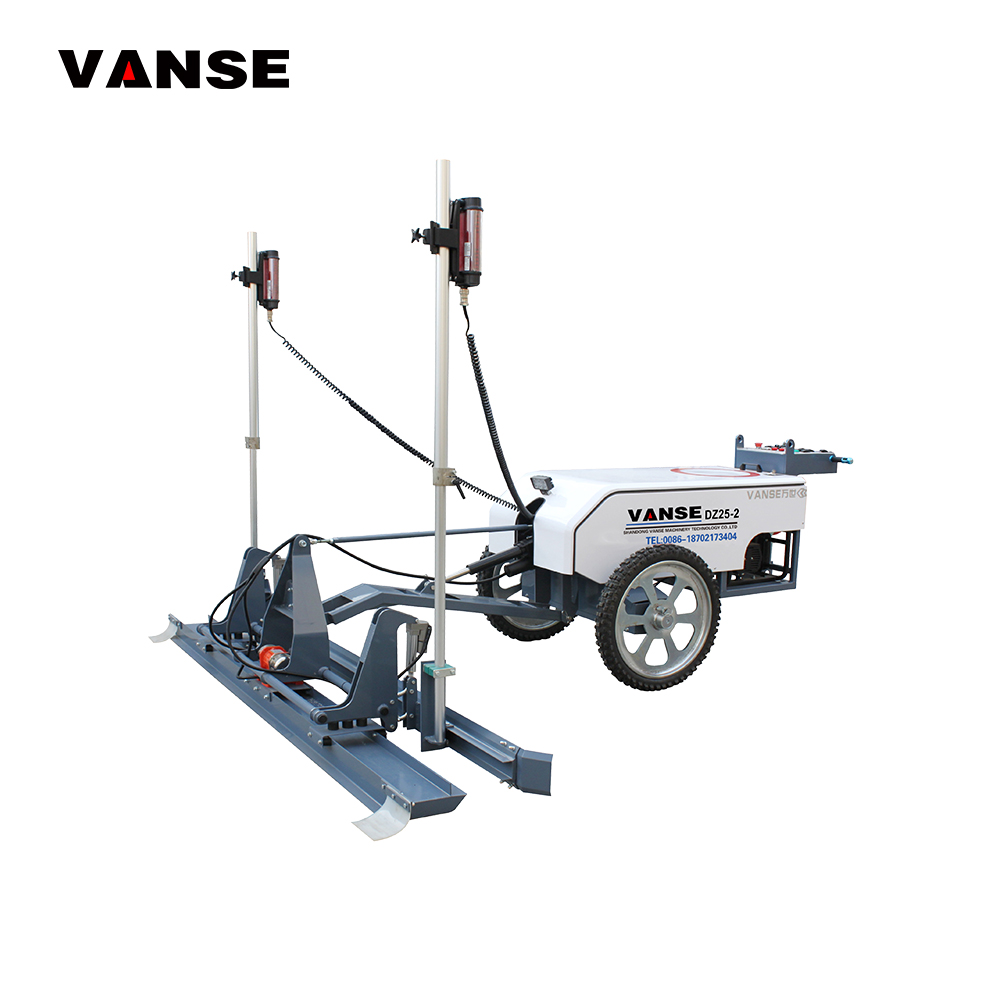
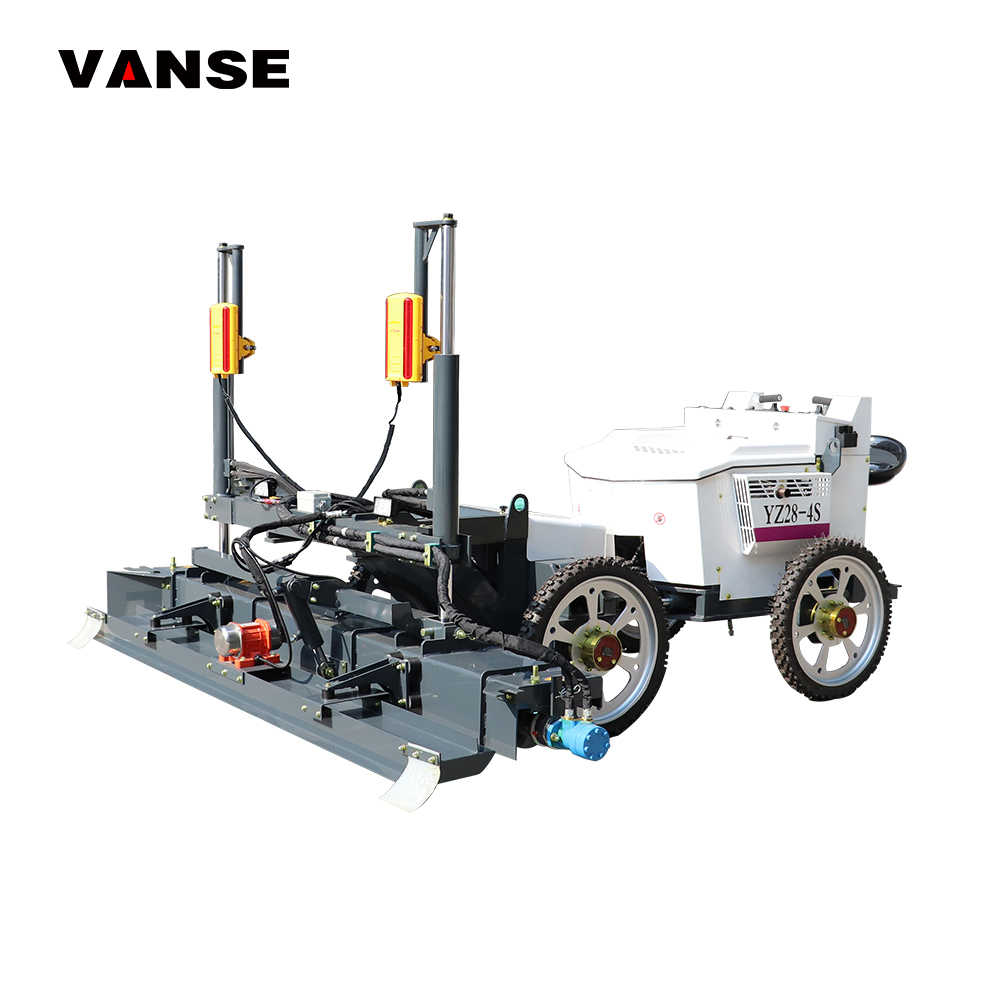
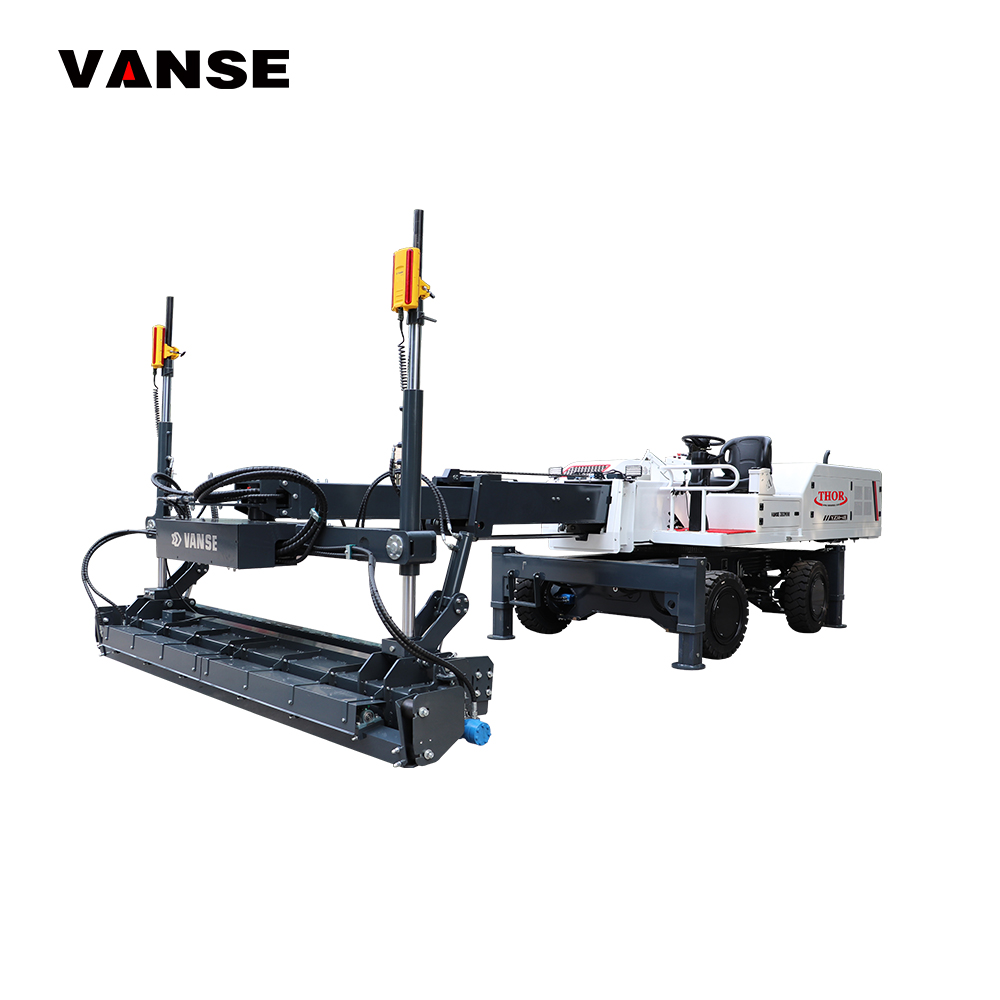
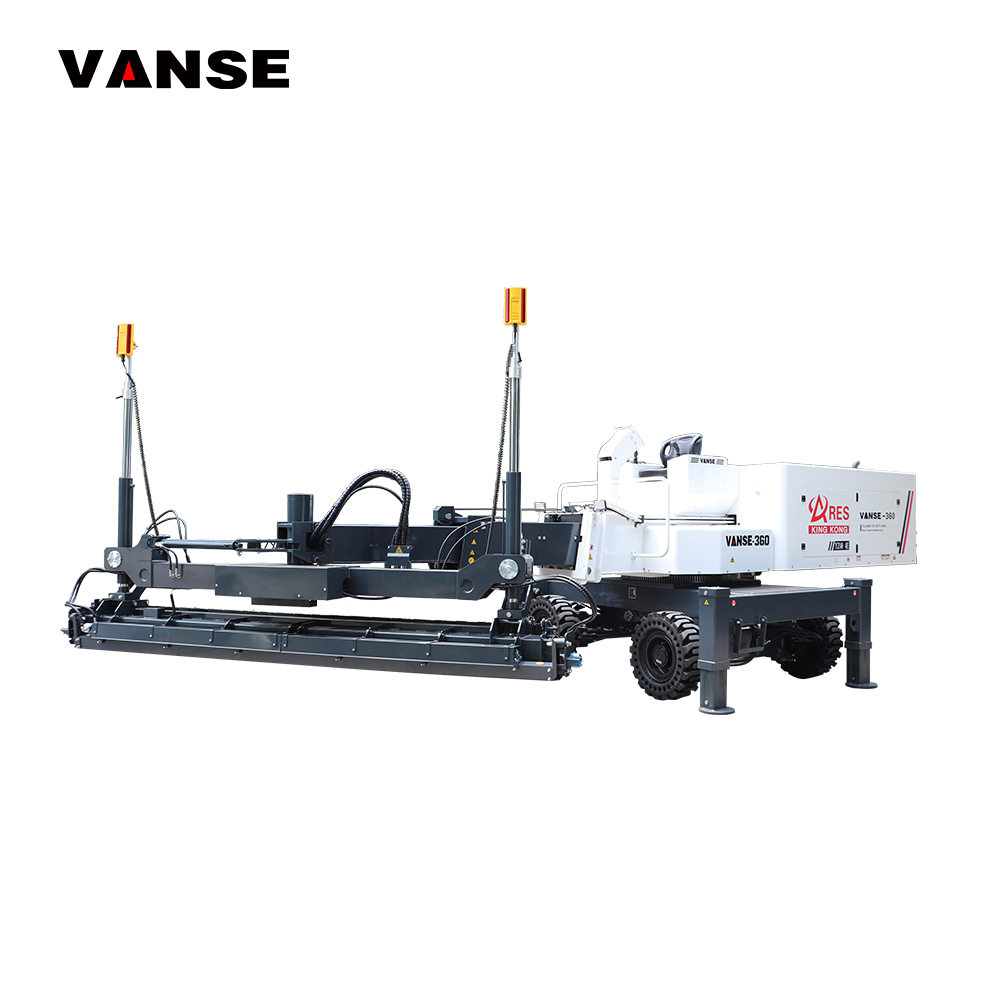
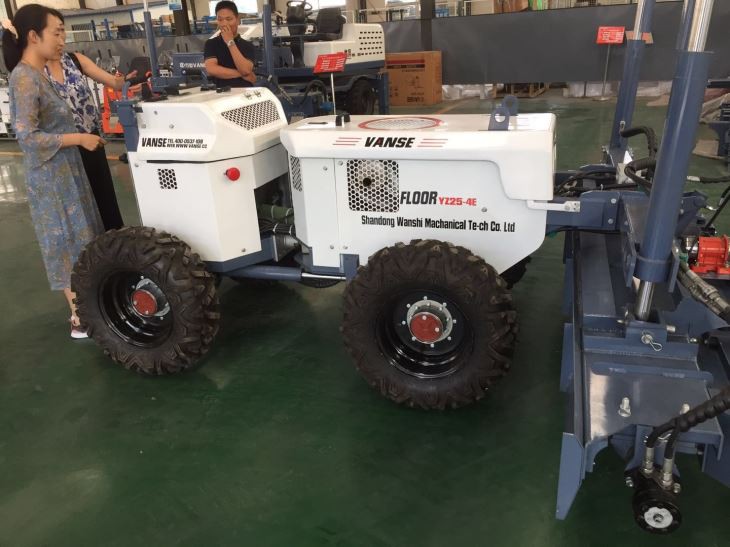
- Shandong Vanse Machinery Technology: Suitable for global buyers seeking walk-behind, ride-on, and boom-type screeds with flexible customization and international service support.
- Shandong HIKING Machinery: A Chinese supplier option for buyers comparing factory-direct machine pricing and common export configurations.
Why a Supplier Audit Matters in the Global Market

Laser screeds are capital equipment, but their commercial impact extends beyond the purchase price. A machine that fails during a warehouse pour, airport apron project, data-center foundation, or distribution-hub slab can cause concrete waste, labor disruption, delayed handover, and disputes over flatness. For this reason, a supplier assessment should focus on the full operating lifecycle: selection, delivery, setup, calibration, operator capability, maintenance, troubleshooting, spare parts, and resale support.
The Global Market includes mature concrete-equipment hubs in the United States, Germany, Italy, the United Kingdom, Canada, Australia, the Gulf region, Southeast Asia, China, Brazil, Mexico, and South Korea. Buyers often source through ports and trade routes such as Shanghai, Qingdao, Ningbo, Rotterdam, Hamburg, Los Angeles, Houston, Dubai, Jebel Ali, Singapore, Santos, and Melbourne. Freight planning matters because a ride-on screed, boom screed, laser transmitter, accessories, and spare-parts kit may require different packaging, container loading, customs classification, and insurance arrangements.
A proper concrete laser screed manufacturer audit also reduces the risk of comparing unlike machines. A compact walk-behind screed should not be judged only against a large boom-type system. Each machine class has a different intended slab area, maneuverability profile, operator requirement, fuel or power arrangement, transport footprint, and output expectation. Buyers should define their application before comparing quotations.
What Buyers Should Inspect Before Approving a Supplier

Start with written technical specifications. Confirm working width, paving speed, screed-head movement, laser receiver configuration, travel system, hydraulic layout, engine model or electrical configuration, operating weight, transport dimensions, concrete slump range, and recommended working environment. If the project requires tight tolerances, ask how the supplier measures performance and whether the machine supports 2D laser guidance, slope work, or 3D profiling systems.
Then verify the commercial side. A quotation should clearly separate the machine, laser transmitter, receiver, mast, remote control, accessories, spare parts, packaging, inland delivery, sea freight terms, insurance, installation, commissioning, training, and any destination charges. Terms such as EXW, FOB Qingdao, CIF Jebel Ali, CIF Rotterdam, DAP, and DDP create different cost and responsibility profiles. Buyers should not approve a low initial quotation until they understand what is excluded.
Finally, audit support capacity. Ask who answers technical calls outside the supplier’s office hours, whether the supplier stocks common hydraulic seals and sensors, how warranty claims are processed, and whether a local dealer or branch can provide on-site assistance. A machine’s productivity depends heavily on correct calibration, screed-head maintenance, hydraulic cleanliness, and operator discipline.
| Audit Area | What to Request | Why It Matters | Acceptable Evidence |
|---|---|---|---|
| Factory capability | Factory address, production photos, assembly workflow, annual capacity | Confirms the supplier is a genuine manufacturer rather than an unverified trader | Factory audit, video tour, export records, production schedule |
| Quality certification | ISO 9001, CE documentation, quality-control process | Shows that manufacturing and traceability procedures are documented | Valid certificates, serial-number records, inspection reports |
| Machine performance | Working width, accuracy claims, speed, control-system details | Prevents unsuitable equipment selection for the required slab tolerance | Technical sheet, demonstration video, reference-project data |
| Core components | Hydraulic system details, engine options, sensors, control hardware | Determines reliability, serviceability, and parts availability | Component list, maintenance manual, parts catalogue |
| After-sales service | Response time, training plan, remote diagnosis, local service contacts | Reduces downtime during critical pours | Service agreement, dealer contacts, support workflow |
| Spare-parts support | Recommended starter kit and delivery lead time | Common consumables should be available before the first project begins | Parts list, stock report, quotation, warehouse photos |
| Commercial terms | Incoterms, payment schedule, warranty, delivery period | Controls landed cost and contract risk | Proforma invoice, sales contract, warranty policy |
The table above should be used as a practical supplier-qualification checklist. A supplier that provides precise documents, consistent technical answers, and transparent exclusions is generally easier to work with than one that relies only on generic brochures or price promises.
Laser Screed Types and Their Best-Fit Applications
The most appropriate screed design depends on access conditions, pour geometry, slab thickness, reinforcement, column density, required flatness, daily concrete volume, and the contractor’s labor model. Small contractors may prioritize easy transport and fast setup, while industrial flooring specialists may prioritize boom reach, high output, and compatibility with advanced grading controls.
| Laser Screed Type | Typical Project Fit | Main Strength | Buyer Consideration |
|---|---|---|---|
| Walk-behind laser screed | Small workshops, residential slabs, narrow spaces, repair work | Compact footprint and lower initial investment | Confirm maneuverability around columns and delivery access |
| Ride-on laser screed | Warehouses, factories, commercial floors, logistics buildings | Higher daily output with operator comfort and stable travel | Check transport dimensions, operator training, and turning radius |
| Boom-type laser screed | Large industrial floors, airport areas, terminal yards, large slabs | Long reach and efficient placement across wide pours | Verify boom reach, obstruction clearance, and setup time |
| 3D-profile compatible screed | Roads, drainage slopes, complex profiles, infrastructure works | Can work with digital design data and controlled profiles | Confirm software, survey workflow, and field calibration support |
| Electric or battery-oriented configuration | Indoor projects, enclosed facilities, sustainability-sensitive sites | Reduced local emissions and potentially lower noise | Evaluate charging availability, runtime, and local electrical standards |
| Customized voltage or engine version | Export markets with local regulatory or fuel preferences | Improves local compliance and service compatibility | Document the exact approved configuration before production starts |
The comparison above is not a substitute for a slab-specific recommendation. Before selecting a machine, buyers should provide the supplier with a drawing, slab dimensions, joint layout, rebar or mesh arrangement, concrete mix design, target flatness, daily pour volume, access limitations, and project location. This allows the supplier to recommend the right screed width, boom size, laser-control package, and spare-parts kit.
Leading Suppliers for Global Buyers
The companies below represent different sourcing routes: established North American manufacturers, specialized concrete-placement suppliers, and Chinese manufacturers with export-oriented product ranges. Buyers should conduct their own commercial, technical, legal, and service verification before final selection.
| Company | Service Regions | Core Strengths | Key Offerings |
|---|---|---|---|
| Somero Enterprises | North America, Europe, Middle East, Asia-Pacific, selected global dealer markets | Long-term specialization in laser-guided concrete leveling and large-project productivity | Ride-on laser screeds, boom screeds, slab-placement technology, training support |
| Ligchine International | United States and international contractor and dealer markets | Compact machine concepts, practical contractor-focused designs, laser screed specialization | Laser-guided screeds, compact ride-on systems, concrete placement support equipment |
| Allen Engineering Corporation | United States, Canada, Latin America, Europe, Middle East, Asia through distribution channels | Broad concrete-placement and finishing equipment experience | Laser screeds, power trowels, concrete pumps, finishing and placement equipment |
| Shandong Vanse Machinery Technology Co., Ltd. | China, North America, South America, Europe, Southeast Asia, Middle East, Australia | Wide product range, export customization, certifications, global support resources | Walk-behind, ride-on and boom laser screeds, trowels, grinders, cutters, slipform machines |
| Shandong HIKING Machinery Co., Ltd. | China and export markets in Asia, Africa, Middle East, Latin America and other regions | Factory-direct sourcing route for construction and concrete equipment | Concrete laser screeds, trowels, floor equipment, customized export configurations |
| Topcon Positioning Systems | Global dealer network across construction, surveying and infrastructure markets | Machine-control, positioning and site-measurement technology | Laser transmitters, 3D machine control, GNSS, optical and digital construction solutions |
| Leica Geosystems | Global construction, surveying, rail and infrastructure markets | Measurement accuracy and digital construction workflow expertise | Laser systems, total stations, machine-control solutions, surveying tools |
This supplier list shows why buyers should evaluate both the screed manufacturer and the control-technology ecosystem. A laser screed may depend on laser transmitters, receivers, calibration tools, positioning hardware, and trained operators. For a multinational contractor, a supplier with proven parts support and compatible local measurement technology may offer a stronger overall operating model than a supplier with a lower machine price alone.
Detailed Supplier Assessment Criteria
Somero Enterprises is commonly considered by buyers with high-volume industrial flooring requirements, particularly where warehouse slabs, distribution centers, data centers, and large commercial floors demand repeatable productivity. Its market position is built around concrete-leveling specialization and established contractor familiarity. Buyers should still confirm regional dealer coverage, machine availability, support response in the project country, and the commercial value of any included training.
Ligchine International is often relevant where contractors need a compact and adaptable screed concept. It can be a strong candidate for teams that prioritize easier transport, practical controls, and use across varying jobsite sizes. During an audit, buyers should ask for project references comparable to their slab conditions, including concrete mix, floor tolerance, and obstacle density.
Allen Engineering provides value for contractors that want to consolidate purchasing across concrete placement, finishing, and related equipment. Its product portfolio is useful for companies managing complete slab-construction crews. The supplier review should include the specific laser screed model, dealer technical capability, parts availability, and coordination between the screed and downstream finishing process.
Chinese suppliers can be particularly competitive for international distributors, rental businesses, private-label brands, and contractors seeking flexible configurations. However, buyers should verify export packing, CE requirements where applicable, engine emissions compliance, electrical compatibility, local customs requirements, and the availability of technical support in the destination time zone. A lower factory price should be evaluated against the cost of training, freight, insurance, local commissioning, and spare parts.
| Supplier Evaluation Question | Strong Supplier Response | Potential Warning Sign | Buyer Action |
|---|---|---|---|
| Can the supplier recommend a model from project data? | Requests drawings, slab area, mix details, tolerance requirements, and access constraints | Recommends one model without asking about the application | Provide project files and compare the technical reasoning from each bidder |
| Is leveling accuracy explained clearly? | Explains test conditions, laser setup, slab preparation, and operator influence | Makes unsupported accuracy claims with no operating conditions | Request a demonstration and written performance assumptions |
| Can the supplier support installation? | Offers remote commissioning, on-site options, manuals, and operator training | Only offers a shipment date and no implementation scope | Include commissioning duties in the purchase contract |
| Are spare parts identified before delivery? | Provides a recommended parts kit with part numbers and pricing | Says parts will be discussed after a breakdown occurs | Purchase critical consumables and sensors with the machine |
| Is warranty coverage specific? | States duration, covered items, exclusions, claim steps, and labor responsibility | Uses vague language such as “full warranty” without terms | Attach the warranty policy to the signed contract |
| Can the supplier prove export experience? | Provides destination-market references, packing images, and document samples | Cannot explain customs, shipping, or export documentation | Use a third-party inspection and freight-forwarder review |
| Does the supplier have service presence? | Provides branch, dealer, technician, warehouse, and escalation contact details | Offers only a general email address | Call service contacts before issuing the order |
The purpose of this assessment is to identify execution capability. A good supplier should be able to explain not only what the machine does, but also how it will be delivered, calibrated, operated, maintained, repaired, and supported through the first projects.
How Vanse Supports Global Concrete Contractors and Distributors
Shandong Vanse Machinery Technology Co., Ltd. is a practical option for buyers seeking an export-oriented supplier with product breadth and flexible cooperation structures. Founded in Jining, China in 2013, Vanse develops and manufactures walk-behind, ride-on, and boom-type concrete laser screeds alongside power trowels, floor grinders, cutting machines, topping spreaders, slipform machines, mini dumpers, concrete joints, and reinforcing fibers. Its equipment is supported by ISO 9001 and CE certifications, more than 50 invention patents, and over 200 utility model and design patents. Vanse combines laser-control systems, hydraulic technology, configurable reliable engine options, durable machine components, strict production controls, and inspection procedures intended for demanding industrial flooring and concrete-construction work. For end users, distributors, dealers, equipment-rental companies, brand owners, contractors, and individual buyers, the company supports direct sales, wholesale, retail, OEM and ODM production, customized branding, voltage and engine configuration, project-based supply, and regional distribution partnerships. Vanse serves customers in more than 80 countries and regions, including the United States, Canada, Mexico, Brazil, the United Kingdom, Germany, Italy, Saudi Arabia, Malaysia, South Korea, and Australia. Its Southeast Asia and Canada service resources, regional dealer network, spare-parts support, multilingual 24-hour consultation, remote diagnosis, and engineer-led training demonstrate a continuing international operating commitment rather than a remote-export model. Vanse provides EPC, turnkey, and customer-owned plant solutions for relevant concrete-construction equipment projects, but does not provide BOO or on-site bulk supply services.
Buyers can review Vanse’s concrete laser leveling machine range when comparing available models for warehouse, factory, logistics, airport, road, and infrastructure work. Contractors who need higher productivity for larger pours can also examine the ride-on laser screed selection to compare machine layouts and operating concepts. For procurement teams preparing supplier approval files, the equipment catalogue download can help define required specifications, while the company profile provides additional background on its manufacturing and global service capabilities.
Industries and Applications That Benefit from Laser Screeding
Laser screeds are used where surface quality, productivity, and reduced manual labor have clear commercial value. Industrial flooring contractors use them for high-tolerance warehouse slabs and manufacturing facilities. Logistics developers use them for large fulfillment centers where forklift movement, racking systems, automated storage, and wheel loads place high demands on floor consistency. Airport and infrastructure contractors use compatible systems for apron areas, terminal yards, roads, bridges, drainage projects, and broad concrete pavements.
Commercial developers may use laser screeds for retail floors, parking structures, exhibition halls, cold-storage facilities, schools, hospitals, and mixed-use projects. In agricultural and energy-related construction, they may support slabs for equipment sheds, processing facilities, storage buildings, workshops, and utility compounds. The exact machine selection must account for slope requirements, reinforcement congestion, access routes, and concrete supply continuity.
| Industry | Typical Application | Priority Requirement | Recommended Audit Focus |
|---|---|---|---|
| Industrial flooring | Factories, production halls, machinery foundations | Flatness, durability, continuous productivity | Accuracy evidence, screed-head performance, service support |
| Logistics and warehousing | Distribution centers, e-commerce fulfillment slabs | Large pour coverage and repeatable floor quality | Boom reach, ride-on productivity, parts availability |
| Airports and ports | Aprons, terminal yards, service roads | High output and tough jobsite reliability | 3D control capability, field service, large-project references |
| Commercial construction | Retail buildings, parking areas, public facilities | Adaptability around structural obstacles | Machine dimensions, transport, maneuverability |
| Infrastructure | Roads, bridges, drainage channels, utility projects | Slope control and project-specific geometry | Digital profile support, survey workflow, engineering assistance | Rental operations | Short-term contractor equipment hire | Simple operation and maintainability | Training materials, common parts stock, durable construction |
| Data centers | High-performance slabs for technical facilities | Strict floor tolerance and schedule certainty | Demonstrated accuracy, calibration plan, technician response |
This application matrix helps buyers connect machine specifications with commercial risk. For example, a rental company may prefer a robust, easy-to-train ride-on machine with accessible components, while a data-center contractor may prioritize measurement discipline, laser calibration, and documented slab-tolerance capability.
Practical Buying Advice for International Procurement Teams
Build a request-for-quotation package before contacting suppliers. The package should state project location, expected purchase date, application, slab area, slab thickness, working hours, concrete supply method, reinforcement type, floor-flatness target, preferred engine or electrical setup, required certifications, shipping destination, and desired service scope. It should also state whether the buyer is an end user, distributor, rental company, OEM brand owner, or project contractor.
Ask every supplier to quote the same commercial basis. For example, compare FOB Qingdao against FOB Ningbo, CIF Rotterdam, CIF Houston, CIF Santos, or CIF Jebel Ali only after confirming the machine configuration and included accessories are identical. If a quotation includes a laser transmitter, spare-parts package, operator training, and export crating, those items should be listed separately so procurement teams can compare them fairly.
Pre-shipment inspection is especially valuable when sourcing internationally. A buyer can appoint an internal engineer, a local inspection company, or a trusted third party to check serial numbers, paint finish, weld appearance, function tests, hydraulic response, screed-head movement, control-system operation, accessories, packing, and documentation. The inspection should occur before final payment and before container loading.
Do not overlook operator readiness. Even an advanced laser screed can deliver poor results if the crew does not understand laser transmitter positioning, receiver calibration, concrete consistency, screed-head adjustment, travel routes, edge work, finishing sequence, and daily maintenance. The supplier’s training program should cover setup, operation, shutdown, emergency procedures, lubrication, troubleshooting, and parts replacement.
Project Examples and Supplier Selection Lessons
For a large logistics warehouse near Rotterdam or Hamburg, a contractor may prioritize a ride-on or boom-type machine with strong daily output, reliable transport logistics, and fast parts availability. The supplier review should focus on boom reach, operating speed, laser-control stability, onsite training, and local dealer support. A low-cost machine without timely hydraulic or electronic support can become expensive when a high-volume pour schedule is interrupted.
For an industrial floor project in Dubai, Riyadh, Jeddah, Doha, or Abu Dhabi, buyers should consider ambient temperature, dust, concrete supply rhythm, remote-site service access, and delivery through regional ports such as Jebel Ali. Equipment should be evaluated for cooling performance, durable components, easy maintenance, and rapid technical consultation. A supplier with experience supporting Middle East distributors and contractors is more likely to understand shipping, documentation, and service expectations.
For a compact commercial project in Toronto, Vancouver, Sydney, Melbourne, Kuala Lumpur, or Singapore, a walk-behind or compact ride-on screed may provide a more practical balance of access and output. Buyers should measure doorways, ramps, elevator limits, jobsite gates, internal turning space, and transport trailer capacity before choosing a machine. The right compact machine can reduce manual labor while still improving consistency over conventional hand screeding.
For infrastructure work in Mexico, Brazil, South Africa, Indonesia, or Southeast Asia, the procurement team may need customized voltage, engine, documentation, and service arrangements. A supplier capable of regional product adaptation, dealer cooperation, remote troubleshooting, and recommended spare-parts planning can reduce commissioning risks in locations where specialized repair resources are limited.
Future Trends for Laser Screed Procurement in 2026
In 2026, buyers are expected to place more emphasis on digital construction workflows. Laser screeds increasingly need to work alongside 3D profiling, digital site plans, machine-control systems, and survey data. Contractors will favor suppliers that can explain data setup, calibration procedures, compatibility boundaries, and field support rather than simply advertising digital features.
Sustainability will also influence equipment decisions. Construction clients and public projects are increasingly interested in reduced rework, lower material waste, improved concrete placement efficiency, lower local emissions, and better equipment utilization. A correctly selected screed can help reduce overbuilding and manual correction work by improving consistency during placement. Buyers should ask suppliers about fuel efficiency, electrical alternatives, maintainability, component life, packaging practices, and parts-repair options.
Policy requirements will continue to affect imports. CE compliance, engine-emissions rules, electrical safety requirements, customs documentation, country-of-origin declarations, product labeling, and local training expectations may vary by market. Importers should confirm requirements with local authorities, customs brokers, and project consultants before production begins. The right supplier will support documentation but should not replace the buyer’s own compliance review.
Another important trend is the growth of regional stock and service models. Contractors increasingly prefer suppliers that can provide replacement sensors, seals, hoses, filters, wear components, and technical guidance without waiting for international air freight. This favors manufacturers with overseas branches, capable dealers, regional warehouses, and structured remote-support processes.
Frequently Asked Questions
What is the most important factor in a laser screed supplier audit?
The most important factor is the supplier’s ability to support the machine through the complete project lifecycle. This includes correct model selection, verified technical specifications, commissioning, training, warranty handling, spare parts, and fast troubleshooting. Purchase price should be assessed only after these factors are clear.
Should I buy from a local dealer or directly from a manufacturer?
It depends on your technical resources and project schedule. A local dealer may offer faster onsite support and easier parts access. Direct factory purchasing can provide stronger customization, factory pricing, OEM options, and direct engineering communication. Many buyers use a combined model: factory supply with local dealer or regional service coordination.
What certifications should a concrete laser screed supplier provide?
Requirements vary by destination country, but buyers commonly request ISO 9001 quality-system evidence, CE documentation where applicable, product manuals, inspection reports, packing lists, warranty terms, and component information. Engine and electrical compliance should be checked separately according to local laws.
How much spare parts should be ordered with a new laser screed?
Buyers should order a starter package based on operating hours, project remoteness, and local service availability. Common items may include filters, seals, hydraulic hoses, electrical connectors, sensors, wear parts, lubricants, and selected control-system components. Ask the supplier for a recommended package with part numbers and replacement intervals.
Can a Chinese laser screed manufacturer support projects outside China?
Yes, provided the manufacturer has verifiable export experience, appropriate certifications, clear shipping procedures, technical documentation, multilingual communication, parts planning, and regional service resources. Buyers should confirm references in their target region and define installation and support obligations in writing.
Which laser screed type is best for a warehouse project?
Large warehouses typically benefit from a ride-on or boom-type laser screed because of their higher output and wider working coverage. The final choice depends on slab size, column layout, reinforcement, target flatness, concrete supply, and access conditions. Send the supplier the slab drawing for a project-specific recommendation.
What should be included in the purchase contract?
The contract should include the exact model, configuration, accessories, control equipment, certification documents, price basis, Incoterms, delivery time, payment milestones, packing requirements, inspection procedure, warranty terms, commissioning scope, training scope, spare-parts package, and dispute-resolution provisions.
Final Procurement Checklist
Before approving a concrete laser screed supplier, confirm the project application, machine class, technical specification, certification requirements, export configuration, supplier production capability, delivery schedule, training plan, warranty policy, service contacts, and spare-parts strategy. Compare suppliers on total operating value rather than quoted machine price alone.
For buyers seeking a broad concrete-equipment partner, Vanse offers concrete construction equipment solutions for international contractors, distributors, rental companies, and project owners. Its combination of laser screed options, customization capability, global export history, regional support resources, and technical service model makes it a practical supplier to include in a structured Global Market vendor audit.
Share this article

About the Author: Shandong Vanse Machinery Technology Co., Ltd.
Shandong Vanse Machinery Technology Co., Ltd. is a high-tech manufacturer specializing in concrete construction machinery, including laser screeds and related equipment. The company integrates R&D, production, and global sales, with products exported to over 60 countries and widely used in infrastructure projects worldwide.