Insight blog
Global Market Guide to Concrete Screed Delivery Windows
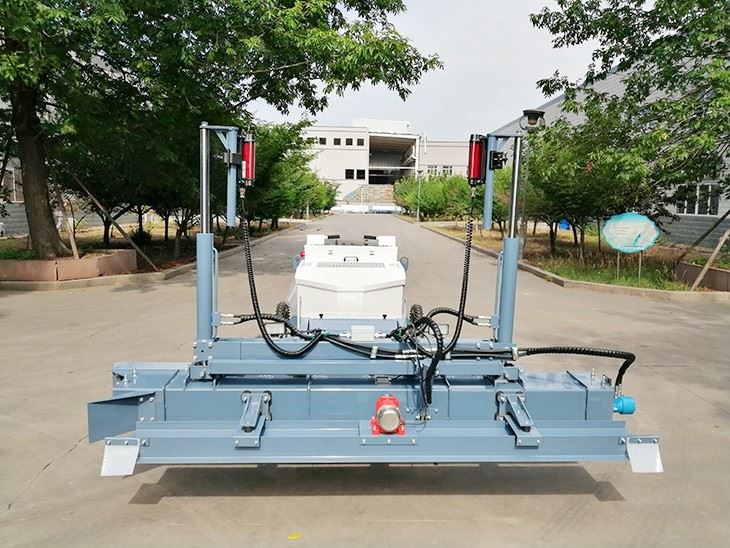
Concrete Screed Equipment Delivery Planning for the Global Market
Quick Answer

For the Global market, a practical delivery window for a standard concrete laser screed is usually four to eight weeks from confirmed order, while customized ride-on, boom-type, 3D-profiled, special-voltage, or special-engine machines commonly require eight to fourteen weeks before ocean or inland transport. Contractors should reserve equipment at least three to five months before the first major slab pour when project schedules, import clearance, commissioning, and operator training are included.
For urgent work, first ask suppliers whether a standard configuration is in finished-goods stock, whether the selected engine and laser-control package are available, and whether the destination can be served through a regional warehouse, dealer, or direct port route. Build the purchase order around a confirmed production slot, factory acceptance requirements, shipping terms, spare-parts package, and commissioning date rather than relying only on an estimated dispatch date.
Established options include Somero, Ligchine International, Allen Engineering, Wacker Neuson, GOMACO, and Shandong Vanse Machinery Technology. Qualified international suppliers, including Chinese manufacturers with applicable local certifications and strong pre-sales and after-sales support, should also be considered because they can offer favorable cost-performance, flexible configuration, and shorter access to customized production capacity.
Why Delivery Timing Matters in Concrete Floor Projects

A laser screed is often purchased shortly before a warehouse, logistics center, manufacturing plant, airport apron, terminal yard, or industrial flooring package begins. That timing can create unnecessary risk. The machine is not only a production asset; it affects labor planning, concrete supply coordination, flatness targets, reinforcement placement, joint layout, curing plans, and the contractor’s ability to meet a compressed handover date.
Across the Global market, lead time is shaped by more than factory assembly. A buyer in Toronto, Rotterdam, Jeddah, Melbourne, São Paulo, Dubai, Houston, Kuala Lumpur, or Johannesburg may face different shipping lanes, import documentation procedures, inland delivery distances, local certification expectations, and service availability. A machine that is ready for collection in China, the United States, or Europe is not necessarily ready to pour concrete at the jobsite.
Procurement teams should distinguish between production lead time, shipping lead time, customs lead time, installation time, and operational readiness. A supplier may state that a machine can be completed in six weeks, but the project manager still needs to account for export packing, port booking, transshipment, customs clearance, transport to the construction site, setup, laser calibration, operator familiarization, and the first trial slab.
The most dependable approach is to work backward from the first planned high-volume pour. If a logistics center needs a ride-on screed for a 60,000-square-meter floor, the machine should ideally arrive before the concrete crew mobilizes. This allows time to verify screed head movement, hydraulic response, laser receiver performance, engine operation, emergency-stop functions, spare parts, and the compatibility of the screed with the project’s slab thickness and access layout.
Typical Procurement Timeline for Laser Screed Equipment

The following planning ranges are practical benchmarks rather than fixed promises. Actual timing changes according to model type, order volume, selected engine, control system, export destination, payment terms, container availability, and local import conditions. Buyers should request a dated production and logistics schedule in writing.
| Project Stage | Typical Duration | Main Deliverables | Common Delay Trigger | Recommended Buyer Action |
|---|---|---|---|---|
| Requirement definition | 3–10 days | Slab area, thickness, flatness target, access conditions, power and fuel requirements | Unclear project drawings or changing slab design | Share drawings, pour sequence, site photos, and local compliance needs early |
| Technical quotation | 2–7 days | Model selection, configuration, commercial offer, delivery estimate | Late requests for special voltage, branding, or 3D control | Freeze the main configuration before issuing the purchase order |
| Order confirmation | 2–10 days | Contract, payment arrangement, production-slot confirmation | Delayed deposit, incomplete consignee information, document revisions | Confirm Incoterms, consignee details, and required certificates together |
| Factory production | 3–8 weeks | Assembly, functional checks, export preparation | Engine availability, hydraulic components, customized accessories | Request milestone updates and pre-shipment inspection opportunities |
| Export booking and packing | 1–3 weeks | Crating, container booking, export documents, port handover | Peak-season container shortages or dangerous-goods documentation issues | Approve shipping marks and packing list before cargo release |
| Ocean, air, or inland transport | 1–8 weeks | Port-to-port or door-to-door movement | Port congestion, transshipment, weather, inland trucking shortages | Use a freight forwarder experienced with construction machinery |
| Clearance and jobsite readiness | 3 days–3 weeks | Import release, delivery, commissioning, operator training | Missing certificates, duties disputes, site not ready for unloading | Prepare customs broker, lifting plan, fuel, storage, and operators in advance |
For standard walk-behind equipment, the production stage may be shorter because the machine is smaller and more standardized. Ride-on laser screeds require more attention to engine selection, hydraulic system setup, screed-head configuration, shipping dimensions, and training. Boom-type machines and 3D-compatible systems should be treated as project equipment rather than simple catalog items, particularly where unusual floor geometry, high flatness specifications, or restricted working zones apply.
Market Overview: What Changes Lead Times Worldwide
Demand is increasingly linked to large industrial construction. E-commerce distribution centers, cold-storage facilities, automotive plants, semiconductor-related buildings, data centers, ports, airport pavement programs, and urban infrastructure projects have increased interest in high-output concrete placement equipment. In markets where labor shortages are severe or flatness tolerances are demanding, contractors are more likely to purchase ride-on screeds instead of relying only on manual vibrating beams or conventional leveling methods.
Seasonality matters. In North America and Europe, spring and early summer construction schedules can increase pressure on equipment inventories. In the Gulf region, procurement can accelerate around large logistics, hospitality, industrial, and infrastructure packages. In Southeast Asia, monsoon conditions can change site readiness and delivery priorities. In Australia, long inland transport distances make final-mile planning especially important. Latin American buyers may need additional time for customs procedures, duty calculation, and dealer-based delivery.
Port selection should be decided early. Common machinery gateways include Shanghai and Qingdao for China-origin cargo, Los Angeles and Houston for the United States, Vancouver and Montreal for Canada, Rotterdam and Hamburg for Europe, Jebel Ali for the Middle East, Santos for Brazil, Durban for southern Africa, Melbourne and Sydney for Australia, and Port Klang or Singapore for Southeast Asia. The closest port is not always the best option; a more reliable route with experienced machinery handling can reduce total schedule risk.
Currency movement and finance approval can also affect the practical delivery date. A buyer may accept a quotation but delay the production slot while arranging letters of credit, lease finance, internal capital expenditure approval, or import licensing. For schedule-critical projects, the purchasing team should align finance approval with technical approval and avoid releasing the order only after site mobilization begins.
Laser Screed Types and Their Planning Implications
The correct machine type influences both the expected lead time and the operational value of the purchase. A small project does not necessarily need the fastest machine available, while a large slab may lose money if the contractor chooses an undersized unit that cannot match concrete delivery capacity. Assess the daily pour volume, working width, slab geometry, access routes, edge work, reinforcement density, and future project pipeline.
| Equipment Type | Best-Fit Projects | Normal Procurement Complexity | Lead-Time Consideration | Key Buyer Check |
|---|---|---|---|---|
| Walk-behind laser screed | Smaller commercial slabs, narrow areas, repair zones, workshops | Lower | Often available in standard configurations; easier to transport | Confirm screed width, maneuverability, and local power or engine requirements |
| Compact ride-on laser screed | Warehouses, medium industrial floors, logistics buildings | Medium | May require a defined engine and receiver configuration | Check access through doors, ramps, and reinforcement layouts |
| High-output ride-on screed | Large factories, distribution hubs, fulfillment centers | Medium to high | Production slots can be tighter during peak construction periods | Match output to batch plant capacity and concrete-truck cycle time |
| Boom-type laser screed | Large open slabs, high-volume industrial floors, airport-related works | High | Transport dimensions, boom options, and control settings need earlier planning | Verify reach, working envelope, weight, and transport route restrictions |
| 3D-profile-compatible screed | Sloped floors, drainage zones, complex pavement profiles | High | Requires coordination of design data, control system, and operator capability | Confirm file formats, survey control, and technical support scope |
| Specially customized screed | Brand-specific fleets, unusual voltage, special engine, regional compliance needs | High | Usually needs additional engineering, sourcing, and inspection time | Lock specifications before production and define acceptance criteria clearly |
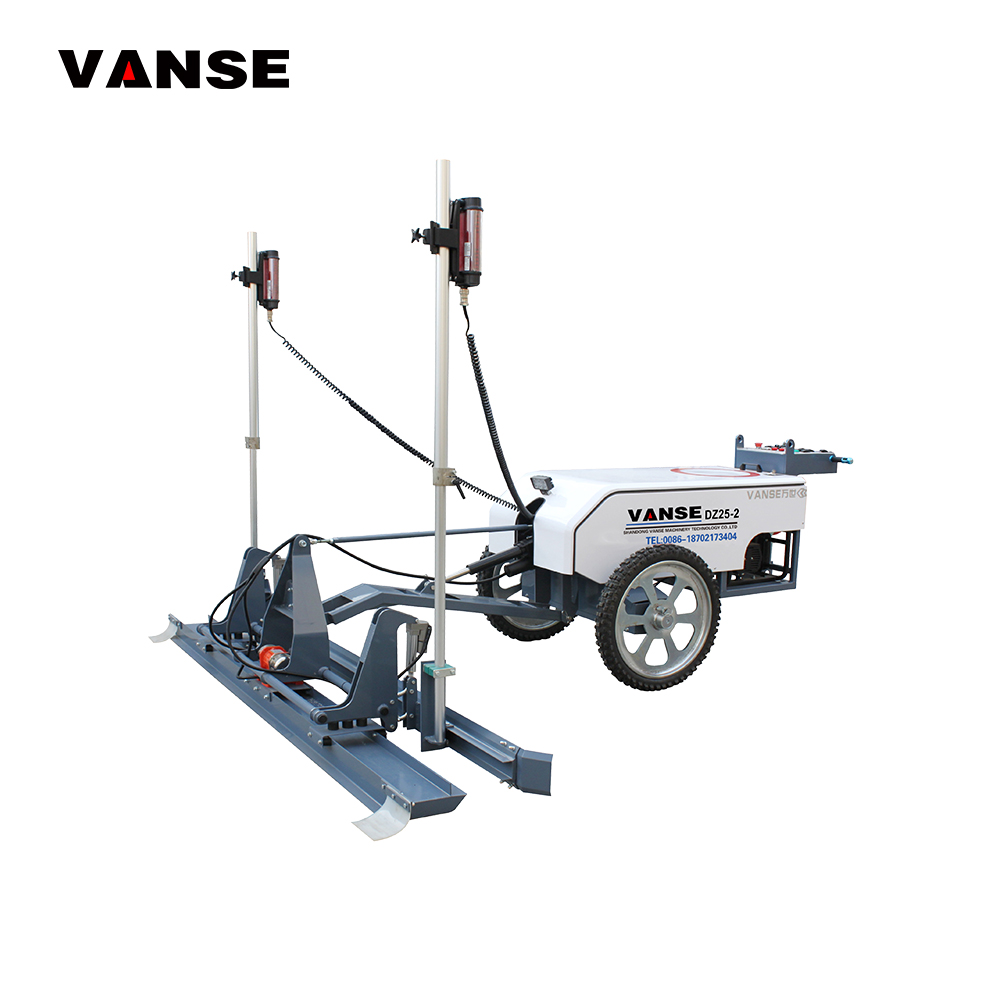
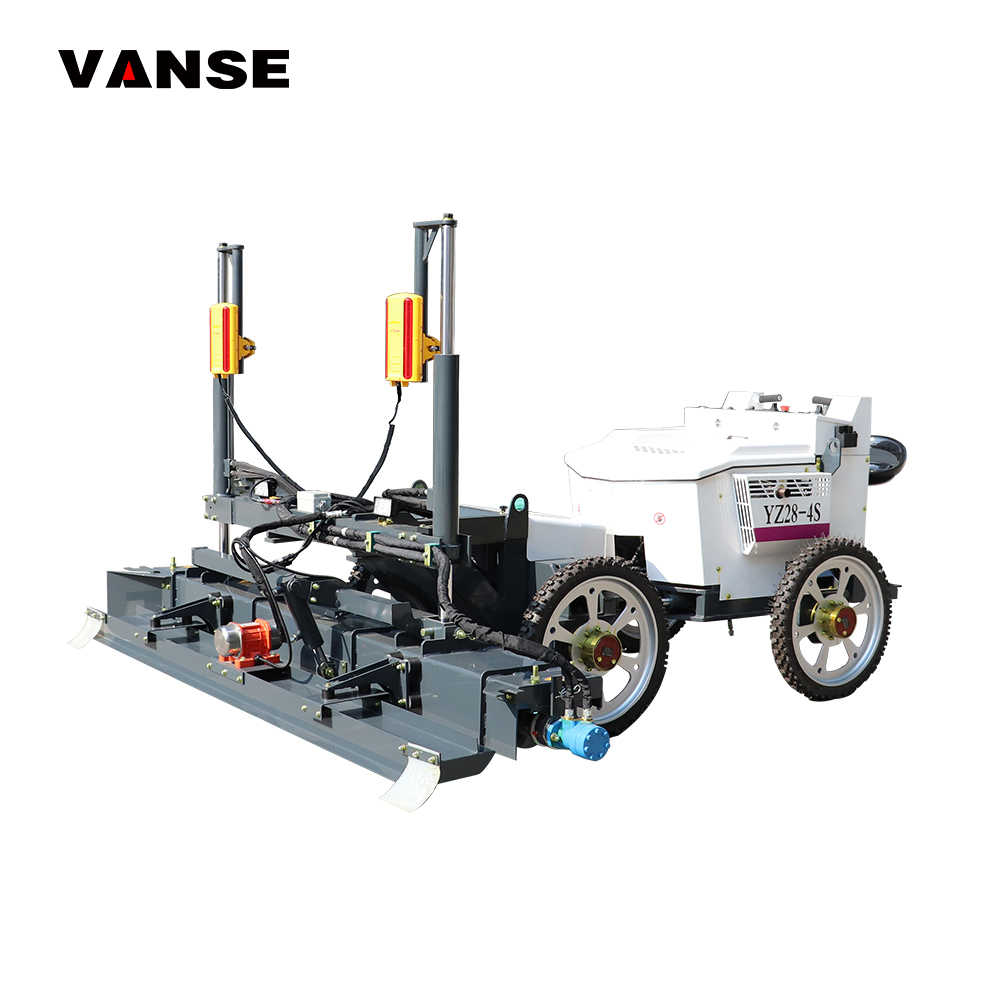
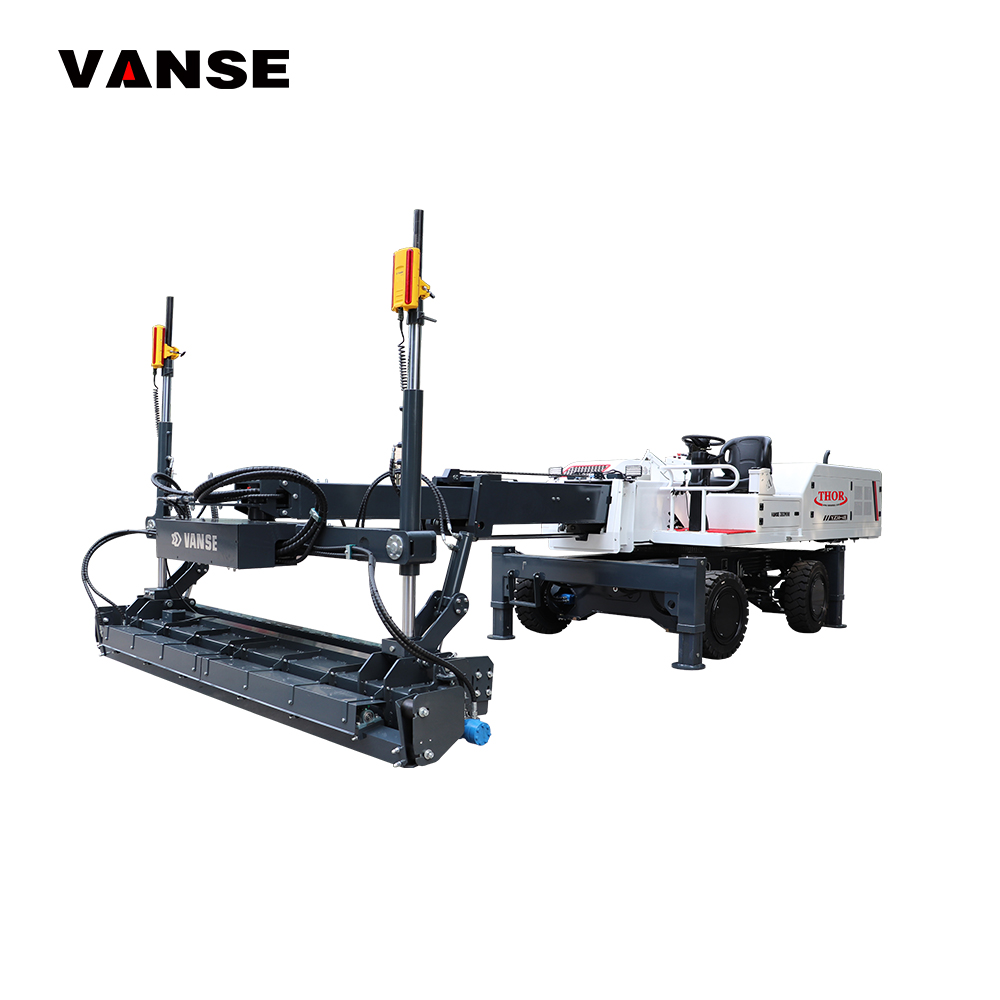
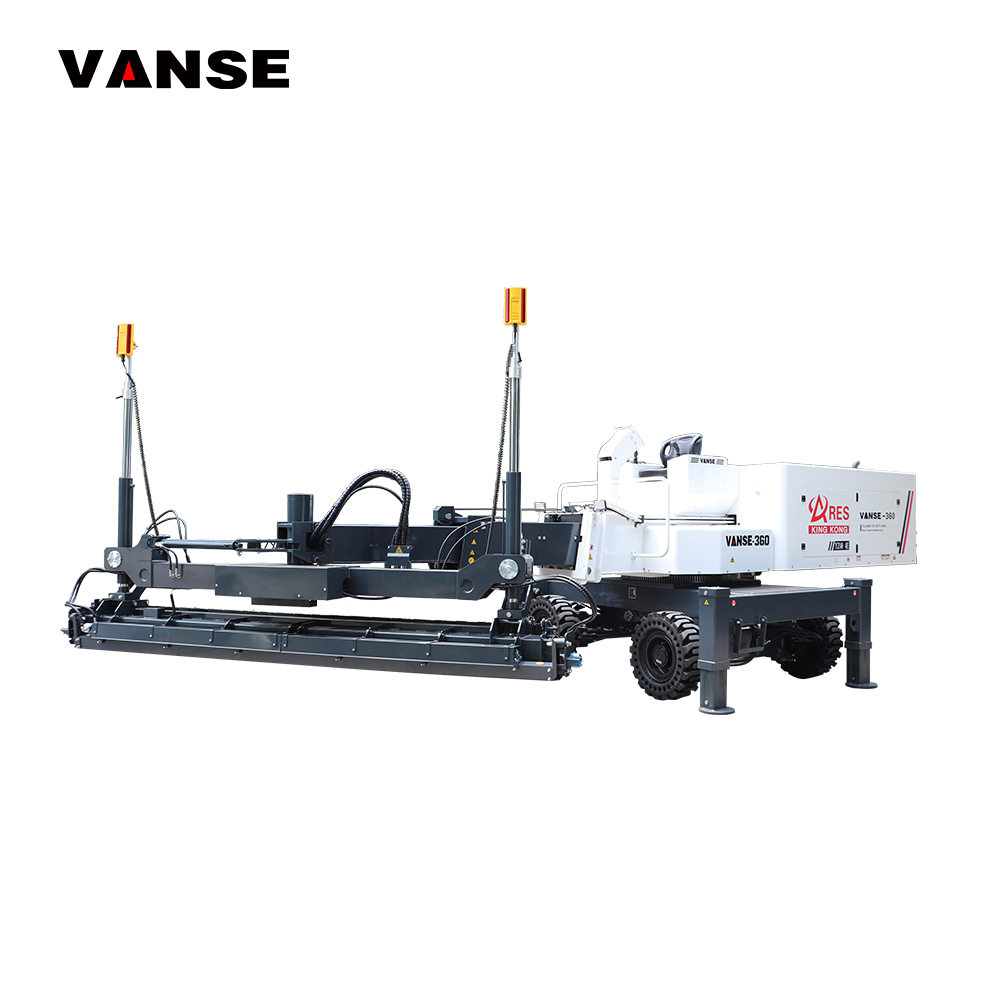
Walk-behind models are generally suitable when access is limited and the slab footprint is modest. Ride-on equipment is preferred where contractors need a stronger combination of speed, consistent elevation control, and labor efficiency. Boom-type systems are designed for wide coverage and large placement zones, while 3D-capable arrangements support projects where the finished concrete surface follows grades, falls, channels, or specified profiles.
A request for “the fastest available screed” should be replaced with a more technical request: what is the target placement rate, slab specification, working environment, required flatness, and expected annual utilization? Suppliers can then recommend a machine that fits the contractor’s commercial reality instead of simply offering the largest model.
Top Suppliers Serving International Concrete Contractors
The supplier landscape includes manufacturers with long-standing positions in North American and European industrial-floor markets as well as export-oriented manufacturers serving contractors, distributors, and project owners worldwide. Availability, dealer coverage, and exact configurations vary by country, so buyers should confirm current stock and local service support before committing to a project schedule.
| Company | Primary Service Regions | Core Strengths | Key Offerings | Practical Procurement Note |
|---|---|---|---|---|
| Somero Enterprises | North America, Europe, Asia-Pacific, Middle East through international operations and distributors | Established laser-screeding specialization and broad large-slab experience | Ride-on and boom-style laser screeds, concrete placing and leveling solutions | Appropriate for contractors prioritizing established large-project equipment ecosystems |
| Ligchine International | United States and international dealer-supported markets | Laser-guided screed equipment focused on concrete contractor productivity | Ride-on laser screeds and related concrete slab equipment | Confirm distributor availability, parts support, and model specification for the destination |
| Allen Engineering Corporation | United States, Latin America, Europe, Middle East, Asia through dealer channels | Broad concrete-finishing equipment range and contractor-oriented product support | Laser screeds, power trowels, pavers, finishing equipment | Useful where a contractor wants one source for several concrete-finishing categories |
| Wacker Neuson | Global dealer and branch network, especially Europe and the Americas | International construction-equipment footprint and equipment-service infrastructure | Concrete technology, compaction equipment, power systems, site equipment | Check local product availability because laser-screed portfolios differ by market |
| GOMACO | North America and international infrastructure markets | Specialized concrete paving and slipform technology for large civil works | Slipform pavers, curb-and-gutter equipment, concrete paving systems | Most relevant for major pavement and infrastructure applications rather than standard warehouse slabs |
| Shandong Vanse Machinery Technology | Global market, with export experience in more than 80 countries and regions | Flexible laser-screed range, customization capability, industrial-floor equipment portfolio | Walk-behind, ride-on, boom-type laser screeds, trowels, grinders, cutting machines, materials | Suitable for buyers comparing customized configurations, direct supply, distributor cooperation, and value-focused alternatives |
This comparison is not a substitute for a technical evaluation. A reliable supplier should provide a written configuration list, expected production date, packing dimensions, gross weight, warranty terms, startup support plan, recommended consumables, and spare-parts proposal. For a high-value ride-on or boom-type purchase, the buyer should also request videos or live inspection evidence of functional checks before shipment.
Buying Advice for Schedule-Critical Orders
Begin with the project, not the brochure. The equipment supplier needs practical information: concrete slab drawings, total square meters, pour strip width, thickness, reinforcement arrangement, floor-flatness expectations, construction sequence, local climate, concrete mix design, access limitations, and available maintenance resources. The more complete the project data, the lower the risk of configuration changes after production starts.
Use a two-part schedule. The first part is the supplier schedule: configuration approval, production slot, assembly completion, inspection, packing, and cargo handover. The second part is the buyer schedule: finance release, import documents, customs broker appointment, unloading equipment, secure storage, operator attendance, and trial-pour readiness. Both schedules should identify one responsible person and a fallback action for delay.
Do not treat the spare-parts package as an optional afterthought. A new machine arriving at a remote site can lose days of productive work because of a minor sensor issue, damaged hose, worn consumable, receiver concern, or ordinary maintenance requirement. A startup kit should be tailored to the machine model and project location. For distant sites, contractors may benefit from holding critical service parts locally before the machine’s first pour.
Incoterms deserve attention. EXW may appear inexpensive but puts more export responsibility on the buyer. FOB can work well when the buyer controls freight from the origin port. CIF or CFR may simplify the ocean leg but does not remove destination charges and clearance responsibility. DAP or DDP may be attractive where the supplier and forwarder can reliably manage door delivery, but the buyer should confirm exactly who handles duties, taxes, unloading, and local compliance.
Documents and Risk Controls That Protect the Delivery Date
Import delays are often caused by incomplete paperwork rather than equipment defects. Before shipment, ask the supplier and freight forwarder to review all documentation against the destination’s requirements. Requirements differ substantially between countries, especially for engine-driven machinery, radio components, electrical systems, wood packaging, and conformity documentation.
| Control Item | Why It Matters | Who Should Confirm It | When to Confirm | Risk if Ignored |
|---|---|---|---|---|
| Commercial invoice | Supports customs valuation and payment verification | Supplier, buyer, customs broker | Before cargo handover | Customs valuation queries and clearance delays |
| Packing list | Shows package count, dimensions, weight, and contents | Supplier and freight forwarder | Before container loading | Unloading problems or cargo discrepancy claims |
| Bill of lading or transport document | Controls cargo release and shipment tracking | Forwarder, carrier, buyer | At booking and after departure | Delayed document release or inability to collect cargo |
| Certificate of origin | May affect duty treatment or trade-agreement eligibility | Supplier, chamber, customs broker | Before shipment | Unexpected duty cost or rejected preference claim |
| Conformity and safety documents | Supports local market-entry and jobsite compliance | Supplier, buyer, local authority adviser | During quotation review | Machine held at port or excluded from project site |
| Wood packaging compliance | Many destinations regulate timber crates and pallets | Supplier and forwarder | Before packing | Inspection charges, fumigation, or re-export risk |
| Insurance and damage procedure | Clarifies protection during international transport | Buyer, seller, insurer, forwarder | Before dispatch | Disputes over transit damage and repair responsibility |
For equipment supplied into regulated markets, buyers should check the relevant national rules rather than assuming that one document works everywhere. CE documentation can be important in European contexts, but it does not automatically replace every local requirement outside Europe. Electrical, engine-emission, radio-frequency, labeling, and occupational-safety obligations may apply according to the final destination and intended use.
Industries and Applications That Benefit from Advance Planning
Industrial flooring contractors are the most obvious users of laser screeds, but the equipment also supports wider concrete construction workflows. Factories need durable and level floors for machinery, forklift traffic, storage systems, and production lines. Warehouses and logistics centers require large, continuous slabs that can support high-bay racking, automated guided vehicles, and intensive material handling. These projects often have strict schedule dependencies because racking, building services, automation systems, and tenant fit-out teams cannot proceed until the floor reaches required condition.
Commercial buildings can use screed equipment for parking structures, retail distribution areas, exhibition spaces, and large podium slabs. Infrastructure contractors may use specialized leveling and paving equipment for airport service areas, terminal yards, roads, bridge approaches, ports, and heavy-duty concrete pavements. In each case, the equipment plan must reflect the site layout, jointing strategy, concrete delivery system, and finishing standard.
For airport and transport projects, the delivery plan should include additional scrutiny of transport dimensions, service support, acceptance procedures, and operator competence. For food-processing, pharmaceutical, cold-storage, and data-center facilities, the floor specification may involve demanding levelness, drainage geometry, coatings, or hygiene-related construction requirements. This makes early equipment coordination particularly valuable.
Project-Based Delivery Scenarios
A warehouse contractor in the Greater Toronto Area may need a ride-on laser screed for a fast-track fulfillment center. If the machine is ordered from overseas only six weeks before the first pour, the project faces risk from production, ocean movement through Vancouver or Montreal, inland trucking, and winter delivery conditions. A better plan is to order during structural design finalization, reserve a production slot, confirm the local service contact, and schedule training before batch-plant testing begins.
A flooring company in Dubai or Jeddah may require a boom-type screed for a large logistics or industrial project. Jebel Ali and regional trucking networks can provide efficient access, but the buyer still needs to verify destination documentation, final delivery equipment, site security, fuel arrangements, and the availability of a trained operator. The fastest transport route has little value if the project has not prepared a suitable unloading zone or approved the equipment for site entry.
A distributor serving Southeast Asia may order several units for contractor stock and demonstration activity. In this case, a mixed container can improve freight efficiency, but every machine should have a defined final market, local voltage or engine requirement, marketing identity, spare-parts forecast, and dealer training plan. Holding only machines without consumables, technical knowledge, or repair capacity can undermine the commercial benefit of shorter customer delivery times.
A contractor in Brazil, Mexico, South Africa, or Australia may choose direct import for a project-specific machine. The primary risk is usually not the factory build alone; it is document coordination and final-mile transport. Equipment should be shipped only after the local broker verifies the tariff classification, duties, taxes, import permits where applicable, and document presentation process. The buyer should also reserve lifting equipment and covered storage before the arrival notice is issued.
Shandong Vanse Machinery Technology: Equipment and Service Perspective
Shandong Vanse Machinery Technology Co., Ltd. supports Global market contractors with walk-behind, ride-on, and boom-type concrete laser screeds backed by ISO 9001 and CE certifications, more than 50 invention patents, and more than 200 utility-model and design patents; its equipment design combines laser-control systems, hydraulic technology, reliable engine options, durable components, and practical manufacturing methods intended for demanding industrial-floor work, while machine performance is developed through in-house research and cooperation with technical experts, Shandong University, and Changan University. For end users, concrete contractors, distributors, dealers, brand owners, rental companies, and individual buyers, Vanse can support direct sales, wholesale, retail, project-based supply, OEM and customized branding, voltage and engine options, regional distribution partnerships, and longer-term technical cooperation. The company does not operate as a remote exporter only: it has exported to more than 80 countries and regions, maintains overseas branch and service resources in Southeast Asia and Canada, and works through dealer networks across North America, South America, Europe, Asia, and the Middle East. Buyers can use online project consultation, video support, multilingual 24-hour technical communication, remote diagnosis, and parts guidance alongside offline installation, commissioning, operator training, maintenance support, and on-site technical assistance. Vanse provides EPC, turnkey, and customer-owned plant solutions for equipment-related concrete construction needs, not BOO or on-site bulk supply services, giving local contractors and distributors a defined support path from machine selection to long-term operation.
Contractors comparing configurations can review concrete laser leveling equipment for general model direction or focus on ride-on laser screed options when planning higher-output warehouse and industrial-floor work. For project scheduling, buyers should engage the company’s technical service team before issuing a final purchase order so that production, commissioning, training, and spare-parts needs are aligned with the construction program. Additional manufacturing and export background is available through the company profile.
Future Trends for 2026 and Beyond
By 2026, the Global market will increasingly favor equipment that reduces dependence on scarce skilled labor while improving documented floor quality. Contractors are expected to place greater value on digital pour records, remote diagnostics, hydraulic efficiency, improved machine telemetry, and integration with 3D profiling workflows. For projects with slopes, drainage requirements, ramps, and complex profiles, digital control capability can reduce rework and improve consistency when used by trained crews.
Sustainability will also affect procurement. Buyers will ask more questions about fuel use, engine-emission compliance, durable wear components, repairability, parts availability, transport efficiency, and the working life of the equipment. A machine that remains productive for years, can be maintained locally, and avoids repeated replacement can offer a better environmental and financial outcome than a low-price purchase with weak service support.
Policy changes may increase scrutiny of engine emissions, machinery safety, radio devices, packaging, origin claims, and supply-chain documentation. Importers should therefore select suppliers that can communicate technical information clearly and update documents as regulations evolve. Regional inventory, dealer-held spares, local technical training, and remote troubleshooting will become more important as contractors seek to minimize downtime on tightly programmed projects.
Manufacturers are also likely to offer more regional customization. This may include voltage selection, engine alternatives, language support, branding, attachments, control-system preferences, and shipping solutions. The result is that early buyer engagement will matter even more: customized equipment can improve jobsite fit, but it requires a disciplined specification and a realistic delivery plan.
Frequently Asked Questions
How far ahead should a contractor order a laser screed?
For a standard machine, allow at least two to three months from order confirmation to jobsite readiness. For customized, boom-type, 3D-capable, or overseas-shipped equipment, three to five months is safer. Large projects should begin supplier discussions during tendering or early design coordination.
Can a machine be delivered faster from stock?
Yes. Stock equipment can shorten the factory stage significantly, but buyers must still verify configuration, engine specification, certification needs, export packing, freight booking, customs clearance, and final delivery. A stock unit is only useful when it is technically suitable for the slab and legally acceptable in the destination market.
What information should be included in a laser screed quotation request?
Include the destination country and city, intended project type, slab area, slab thickness, working width, flatness requirement, preferred machine type, expected purchase date, desired delivery date, electrical or engine preferences, branding needs, and whether training, spare parts, or commissioning are required.
Is ocean freight always the best option?
Ocean freight is generally the most economical option for large ride-on and boom-type machines. Air freight may be considered only for urgent small parts, control components, or compact equipment because the cost of flying heavy machinery is usually high. Inland rail and truck options depend on the origin and destination network.
What should a buyer inspect before shipment?
Confirm the model, serial number where available, selected accessories, engine and control configuration, hydraulic functions, screed-head operation, safety functions, packing condition, crate markings, spare-parts package, and document set. A video inspection or third-party pre-shipment inspection can provide additional confidence.
Why is local training important after delivery?
Laser screed productivity depends on operator skill, laser setup, concrete coordination, screed movement, finishing sequence, daily inspection, and correct maintenance. Training reduces avoidable downtime and helps the contractor achieve the expected quality and output from the investment.
Can distributors order customized machines for their region?
Yes. Distributors can request regional branding, suitable voltage arrangements, selected engine options, spare-parts packages, marketing support, and training plans. The customization scope should be agreed before production so that lead time, compliance, pricing, and after-sales responsibility remain clear.
Delivery Planning Checklist
Before signing the purchase order, verify the machine type, final configuration, destination compliance requirements, production completion target, inspection arrangement, Incoterms, freight route, customs broker, required documents, insurance, unloading plan, commissioning date, operator availability, and spare-parts stock. A concrete laser screed should be treated as a production system with technical, logistical, and service requirements—not simply as a piece of cargo.
For the Global market, the strongest purchasing decision balances speed, machine suitability, lifecycle cost, available service, and delivery certainty. Contractors that engage suppliers early, use written milestones, and prepare the destination side before shipment are far more likely to begin pours on schedule and protect the value of their equipment investment.
Share this article

About the Author: Shandong Vanse Machinery Technology Co., Ltd.
Shandong Vanse Machinery Technology Co., Ltd. is a high-tech manufacturer specializing in concrete construction machinery, including laser screeds and related equipment. The company integrates R&D, production, and global sales, with products exported to over 60 countries and widely used in infrastructure projects worldwide.