Insight blog
Global Market Daily Laser Screed Inspection Checklist Guide
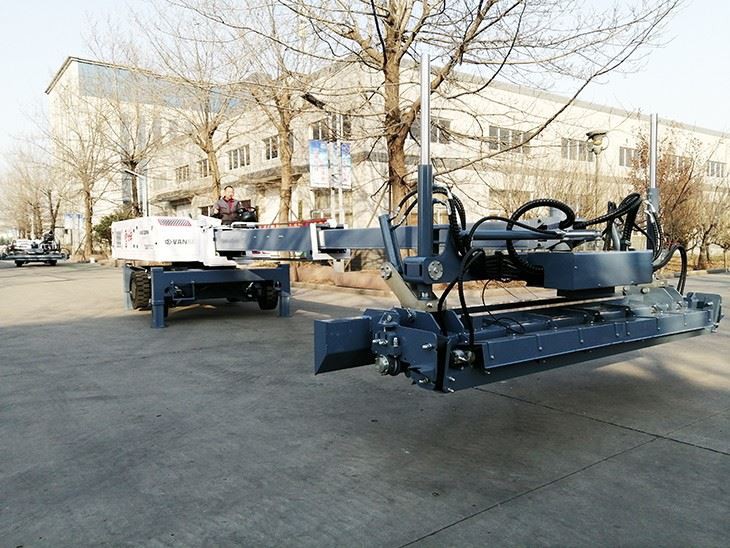
Daily Laser Screed Inspection for Global Market Concrete Projects
Quick Answer

A daily laser screed inspection should be completed before every concrete placement shift, after machine transport, and whenever the machine contacts an obstruction. Check the laser transmitter, receiver mast, screed head, hydraulic hoses, engine or battery system, steering, emergency stop, guards, fasteners, fluid levels, and calibration accuracy. Record findings, isolate unsafe equipment, and correct faults before placing concrete.
For Global market contractors, the most effective routine is a pre-start visual inspection, functional test on dry ground, elevation verification against a benchmark, and post-shift cleaning and service log. This protects slab flatness, reduces unexpected downtime, and supports safer operations on warehouse floors, factory slabs, airport aprons, logistics hubs, ports, and infrastructure projects.
Leading suppliers commonly considered by contractors include Somero, Ligchine, Allen Engineering, Wacker Neuson, Husqvarna Construction, and Shandong Vanse Machinery Technology. Qualified international suppliers, including Chinese manufacturers with applicable local certifications, responsive pre-sales planning, spare-parts support, and after-sales training, can also be practical choices where cost-performance and service coverage are strong.
Why Daily Inspection Matters for Laser Screed Operations

A laser screed is a precision concrete placement machine, not simply a mechanical finishing tool. Its performance depends on the interaction of hydraulic motion, laser-guided elevation control, screed-head geometry, wheel or track stability, and operator input. A minor defect in any of these areas can create an uneven slab, delayed placement, excessive manual correction, or a safety incident.
For large Global market projects, concrete placement windows are often narrow. Ready-mix trucks may be queued at industrial sites near Rotterdam, Dubai, Singapore, Los Angeles, São Paulo, Hamburg, Melbourne, Toronto, or Jeddah. Once concrete arrives, the contractor must maintain a controlled sequence of discharge, spreading, laser screeding, bull floating, joint installation, curing, and saw cutting. If the laser screed stops unexpectedly, the entire concrete crew can lose productivity and slab quality may suffer.
Daily inspection helps identify early warning signs before they become expensive failures. A hydraulic hose showing abrasion may still function in the morning but rupture under pressure during placement. A receiver mast with a loose connector can cause intermittent elevation readings. A worn screed blade can leave ridges that require manual rework. A dirty radiator or low hydraulic oil level can cause overheating on a long shift in hot climates.
Inspection also supports consistency. On high-tolerance industrial flooring projects, slab flatness and levelness requirements can be strict. Distribution centers, automated warehouses, high-bay storage facilities, cold-storage floors, manufacturing plants, and robotics facilities frequently require controlled elevation and smoother travel surfaces. Daily verification of laser screed control systems gives the contractor a practical opportunity to detect drift before a full pour is affected.
Daily Laser Screed Inspection Checklist

The following checklist is designed for ride-on, walk-behind, and boom-type laser screeds. The exact points may vary according to the manufacturer’s manual, power source, control configuration, and local safety rules. The operator should always follow the equipment-specific maintenance instructions and project safety plan.
| Inspection Area | Daily Check | Acceptable Condition | Risk if Ignored | Corrective Action |
|---|---|---|---|---|
| Laser transmitter | Confirm level, battery condition, clean lens, stable tripod, and unobstructed line of sight. | Transmitter self-levels correctly and maintains a stable reference plane. | Incorrect slab elevation, inconsistent levels, repeated alarms. | Replace batteries, clean lens, reposition tripod, or recalibrate the unit. |
| Laser receiver and mast | Inspect receiver window, cable connections, clamps, mast straightness, and response signal. | Receiver is secure, clean, responsive, and vertically aligned. | False elevation readings and loss of automatic control. | Clean sensor, tighten clamps, repair wiring, and test against a benchmark. |
| Hydraulic system | Check oil level, hose abrasion, leaks, fittings, cylinder rods, and abnormal pump noise. | No visible leaks, correct oil level, smooth cylinder movement. | Pressure loss, screed-head failure, fire risk, environmental contamination. | Stop the machine, replace damaged parts, and replenish approved hydraulic fluid. |
| Screed head | Inspect blade wear, frame cracks, auger condition, vibrator operation, bolts, and guards. | Blade is straight, fasteners are tight, vibration is even, and guards are fitted. | Ridges, poor consolidation, reduced flatness, moving-part injuries. | Adjust or replace blade, tighten hardware, and repair damaged components. |
| Engine or electric drive | Check fuel, oil, coolant, battery terminals, filters, belts, charging status, and warning lights. | Normal starting, stable operating temperature, no warning indicators. | Unexpected shutdown, overheating, reduced hydraulic output. | Service the power unit before the pour begins. |
| Travel and steering system | Test steering response, drive direction, brakes, tires or tracks, wheel nuts, and travel speed. | Machine tracks smoothly and responds immediately to controls. | Collision, inaccurate pass alignment, inability to exit fresh concrete safely. | Repair steering, brakes, wheels, tracks, or control linkages. |
| Safety controls | Test emergency stop, horn, beacon, seat switch, reverse alarm, and operator presence controls. | All safety devices operate as intended. | Serious injury, machine run-away, non-compliance with site rules. | Tag out the machine until the safety device is repaired. |
| Calibration benchmark | Compare screed-head elevation with an established project benchmark before the first pass. | Reading matches the approved project elevation tolerance. | Entire slab placed above or below design level. | Recalibrate laser and machine controls; repeat the verification test. |
This table should be treated as a working inspection document rather than a substitute for the manufacturer’s operation manual. The operator should sign the report, note defects, and confirm whether the machine is cleared for use. On major pours, a supervisor or quality manager should verify the initial calibration independently.
Pre-Start Checks Before Concrete Arrives
The best time to detect a laser screed problem is before concrete trucks reach the site. Begin with a walk-around inspection while the machine is cold and parked on stable ground. Look underneath for oil, coolant, fuel, or hydraulic leaks. Examine the hydraulic lines where they pass near the boom, frame joints, screed head, and wheel assemblies. Abrasion marks, bubbling hose covers, loose fittings, and wet surfaces should be treated as service issues.
Next, inspect the screed head. Remove hardened concrete from the blade, auger, vibrator assemblies, and guards. Dried concrete changes the working profile of the head and can create visible ridges in fresh material. Check that bolts are tightened and that the blade is not bent. A straight edge can be used to identify distortion. For high-flatness floors, even a small blade defect can increase hand-finishing labor.
Check all fluid levels using the manufacturer’s recommended procedure. Hydraulic oil should be at the correct level and free from obvious contamination. Engine oil, coolant, fuel, and battery condition should also be confirmed. On battery-powered equipment, inspect charging cables, connectors, enclosure seals, and state-of-charge indicators. In humid, coastal, or dusty job environments, electrical terminals require additional attention.
Before moving near fresh concrete, test steering, propulsion, emergency stop, reverse alarm, horn, lights, and screed-head lifting functions on dry ground. Verify that the machine stops reliably when the emergency stop is activated. If a ride-on model uses a seat switch or operator-presence function, test it before the shift. Never bypass a safety switch simply to keep the pour moving.
Laser Control Accuracy and Calibration Verification
The laser system is central to laser screed performance. It establishes the elevation reference used by the automatic control system to raise or lower the screed head. A stable reference does not guarantee a correct finished elevation unless the machine is also checked against the project benchmark.
Set the laser transmitter on a firm tripod away from traffic, vibration, and areas where workers may block the beam. On large slabs, position it to maintain reliable coverage across the planned placement zone. Avoid placing the transmitter adjacent to active pumps, vibrating equipment, crane travel routes, or truck lanes. In exterior projects, protect it from wind, rain, direct impact, and unauthorized adjustment.
Use a known benchmark to verify the system before the pour. The benchmark should be established by the project survey team or responsible quality personnel. Move the screed head to a test location, allow the laser system to settle, and compare actual elevation with the approved reference. If the reading is outside project tolerance, identify whether the issue comes from the transmitter, receiver, mast position, control settings, or mechanical screed-head adjustment.
For projects with slopes, drainage falls, ramps, or complex profiles, verify the correct machine mode before placement begins. A flat-slab setting is not appropriate for a designed slope. Where 3D profiling systems are used, confirm file version, coordinate control, base-station setup, sensor status, and survey reference points. A wrong project file can create a technically consistent but completely incorrect slab profile.
Common Defects Found During Daily Inspections
| Observed Defect | Likely Cause | Effect on Concrete Work | Immediate Decision | Preventive Practice |
|---|---|---|---|---|
| Uneven finishing ridges | Worn or bent screed blade, hardened concrete buildup, loose head bolts. | Extra hand work, poor surface regularity, reduced productivity. | Clean, tighten, align, or replace the affected screed components. | Wash and inspect the screed head after every shift. |
| Machine does not hold level | Receiver fault, damaged cable, unstable transmitter, incorrect calibration. | Slab elevation variation and potential rejection of work. | Stop automatic placement and recalibrate before continuing. | Perform a benchmark test at the start of each shift. |
| Slow or jerky boom movement | Low hydraulic oil, blocked filter, air in system, worn pump or valve issue. | Irregular passes, slow cycle times, potential stoppage. | Inspect hydraulic system and repair before a major pour. | Follow scheduled oil and filter replacement intervals. |
| Overheating warning | Dirty radiator, low coolant, fan fault, high ambient temperature. | Engine shutdown and missed placement window. | Stop safely, cool down, clean radiator, and investigate cause. | Clean cooling surfaces daily in dusty conditions. |
| Laser signal loss | Blocked beam, low battery, dirty receiver lens, excessive range. | Automatic control interruption and inconsistent levels. | Restore line of sight and test the signal before resuming. | Use fresh batteries and protect laser equipment from impact. |
| Hydraulic oil leak | Damaged hose, loose fitting, seal failure, impact damage. | Loss of control, contamination, fire and slip hazard. | Tag out machine and repair the leak immediately. | Inspect hose routing and abrasion points before every shift. |
| Unresponsive steering | Mechanical linkage wear, electrical connection failure, hydraulic steering issue. | Collision risk and inability to maintain planned travel path. | Do not operate near concrete until fault is corrected. | Test all movement controls on dry ground daily. |
| Excessive vibration or noise | Loose fasteners, bearing wear, damaged vibrator, foreign material. | Reduced consolidation and possible mechanical damage. | Stop, inspect, and repair before extended operation. | Use post-shift cleaning and weekly torque checks. |
The practical rule is simple: if a defect can affect elevation, movement, hydraulic integrity, or operator safety, it should be corrected before concrete placement. Temporary fixes may appear convenient during a busy pour, but they often create a larger cost through slab repair, schedule disruption, warranty claims, or machine damage.
Laser Screed Types and Their Inspection Priorities
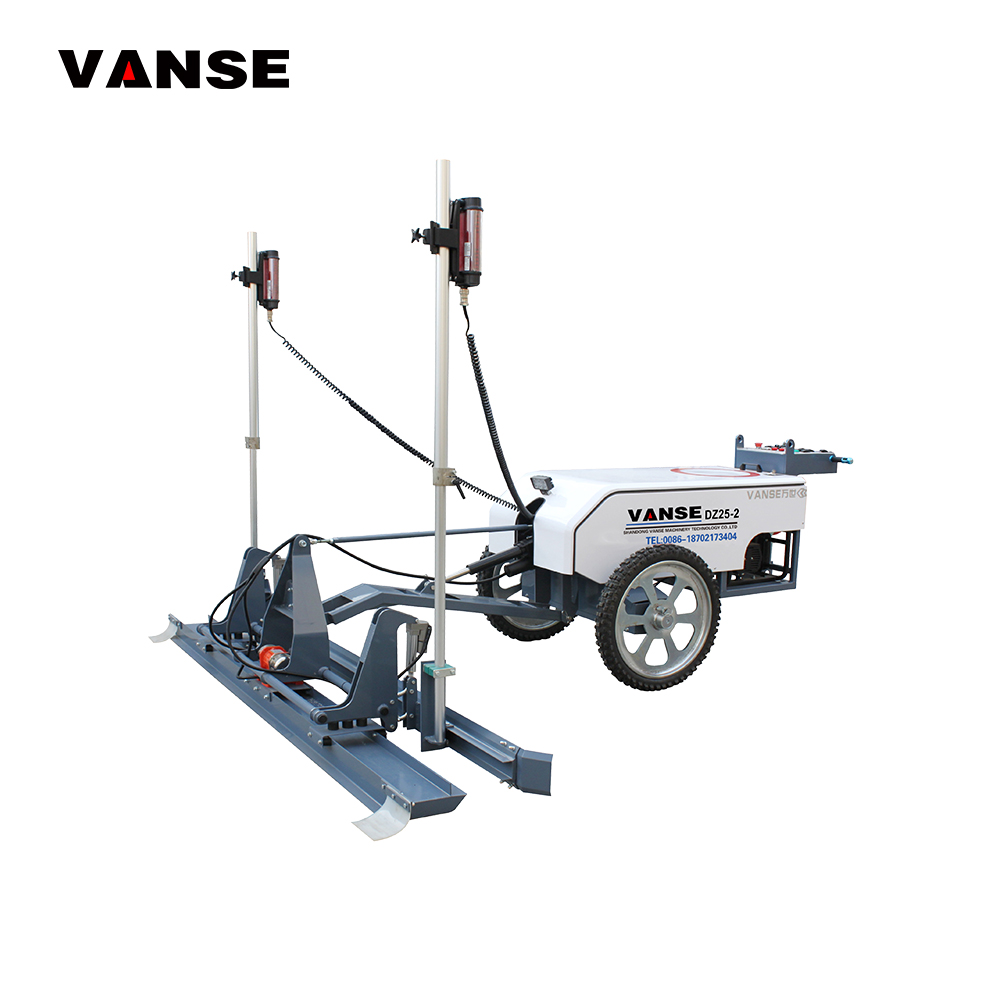
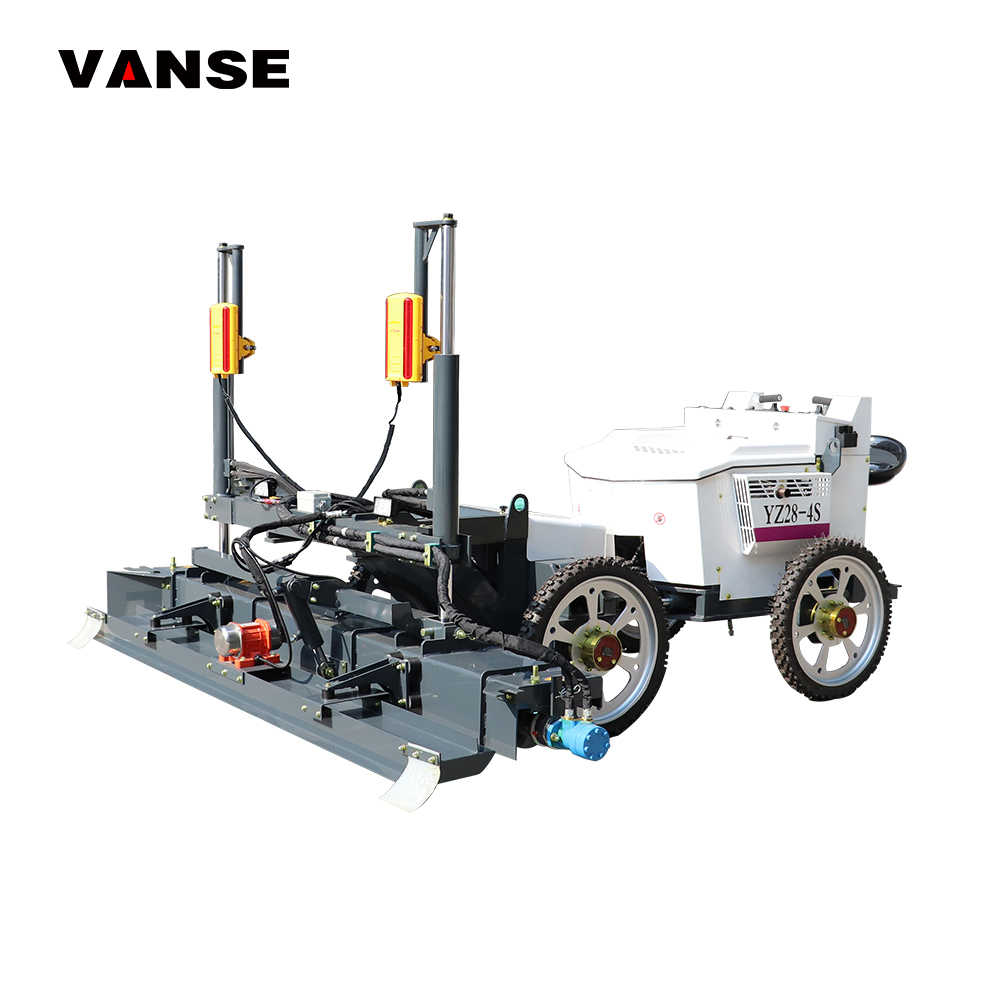
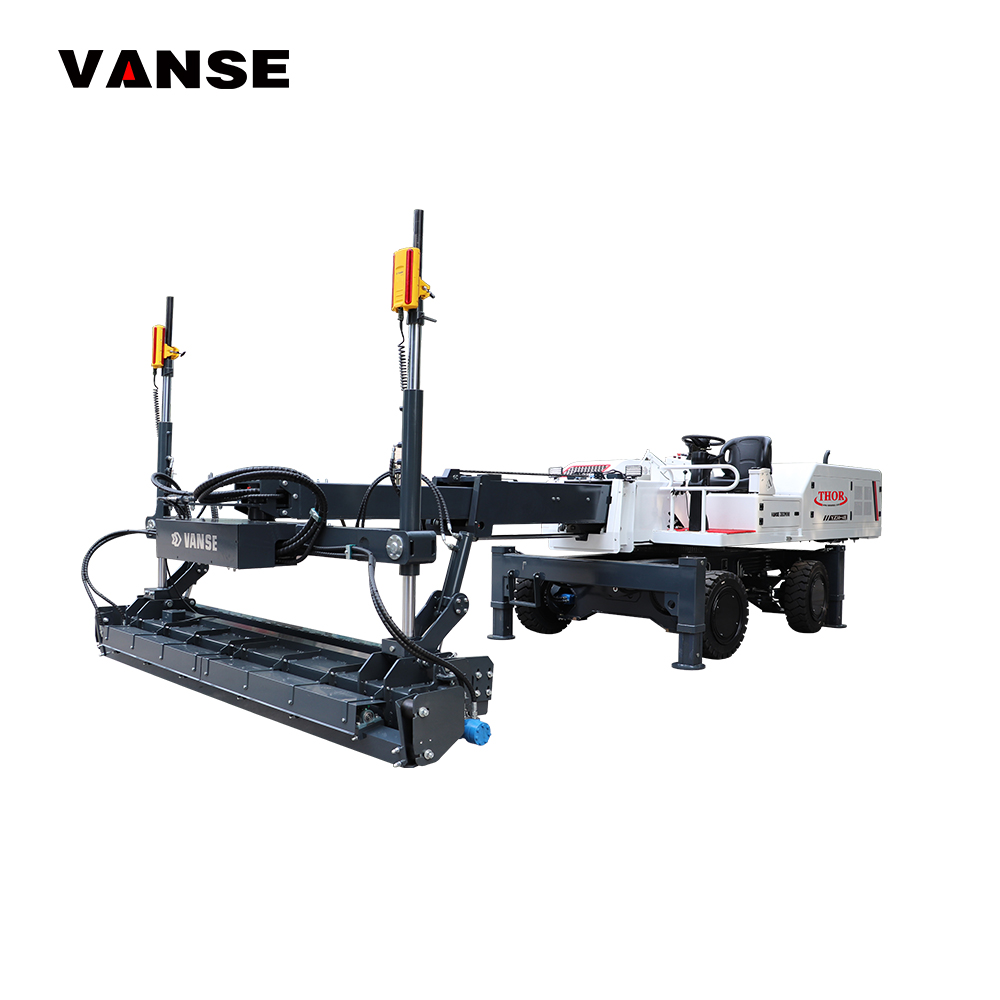
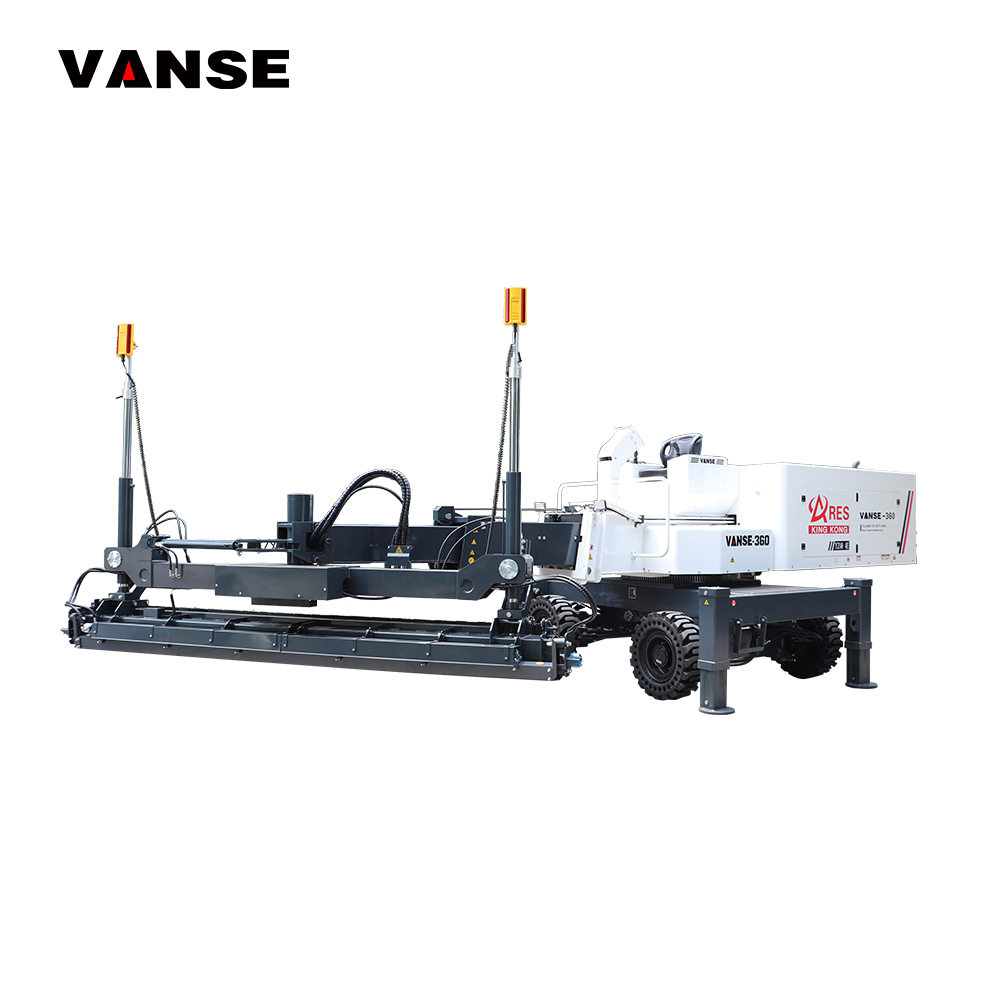
Different laser screed designs serve different project scales. Walk-behind machines are common on smaller slabs, tight building interiors, and locations with limited access. Ride-on laser screeds are widely used for warehouse floors, manufacturing plants, retail distribution facilities, and medium-to-large industrial slabs. Boom-type systems provide extended working reach and can cover large areas with fewer machine movements.
| Laser Screed Type | Typical Project Scale | Primary Daily Inspection Focus | Best-Fit Applications | Operational Note |
|---|---|---|---|---|
| Walk-behind laser screed | Small to medium placements | Handle controls, receiver mast, blade condition, power supply, travel wheels. | Small warehouses, workshops, rooms, access-restricted interiors. | Confirm operator controls respond smoothly before entering fresh concrete. |
| Ride-on laser screed | Medium to large floor pours | Seat switch, steering, propulsion, hydraulic circuits, mast and screed-head controls. | Factories, logistics centers, commercial floors, parking structures. | Use a dry-ground driving test before placement starts. |
| Boom-type laser screed | Large industrial pours | Boom pins, hoses, slew function, outreach clearance, structural fasteners. | Distribution hubs, airport buildings, high-bay warehouses. | Check boom movement throughout its working range. |
| Four-wheel drive laser screed | Large and demanding sites | Drive motors, tires, traction, steering response, wheel fasteners. | Outdoor slabs, terminal yards, large logistics platforms. | Inspect tires closely after transport or rough-ground travel. |
| Electric laser screed | Indoor or low-emission projects | Battery state, chargers, wiring, connectors, isolation protection. | Food facilities, enclosed buildings, green construction sites. | Plan charging so the shift is not interrupted. |
| 3D-profile compatible screed | Sloped or complex geometry | Digital file, sensors, site coordinates, control display, survey reference. | Ramps, drainage floors, infrastructure slabs, specialty pavements. | Confirm the correct design file before every production shift. |
The inspection emphasis should match the machine’s working design. A boom-type unit requires closer attention to reach mechanisms and boom hydraulics, while an electric model requires disciplined battery and charging inspection. In all cases, the laser reference, screed-head condition, and safety system remain non-negotiable checks.
Buying Advice for Contractors and Equipment Owners
When buying a laser screed for Global market operations, evaluate the machine beyond its advertised leveling accuracy. The best choice depends on typical pour size, access conditions, concrete mix design, staffing level, transport method, expected flatness requirements, and local service capability. A technically advanced machine is only valuable if the crew can operate, maintain, and repair it reliably.
Ask suppliers to demonstrate the machine’s laser control, hydraulic response, screed-head adjustment, and safety systems. Request a documented pre-delivery inspection process and training plan. Buyers should also confirm the availability of wear parts, hydraulic fittings, sensors, receivers, filters, batteries, screed blades, and electrical components in the intended operating region.
For contractors serving multiple markets, transport dimensions and container loading should be considered. Equipment moving through major trade hubs such as Shanghai, Singapore, Antwerp, Rotterdam, Dubai, Houston, Vancouver, Santos, and Sydney may require specific shipping preparation, export documentation, and local import support. A supplier with practical export experience can reduce delays and help the buyer receive the correct voltage, engine configuration, documentation, and spare-parts package.
Do not compare only the purchase price. Include training, commissioning, warranty terms, local parts availability, remote diagnostics, expected maintenance cost, resale value, and the likely cost of downtime during a major pour. A lower-cost machine without service support can become more expensive than a higher-priced machine with reliable technical coverage.
Leading Laser Screed Suppliers Serving the Global Market
| Company | Service Regions | Core Strengths | Key Offerings | Suitable Buyers |
|---|---|---|---|---|
| Somero Enterprises | North America, Europe, Asia-Pacific, Middle East, global distributor markets | Established laser screed specialization, broad project experience, advanced slab-placement systems. | Ride-on laser screeds, boom screeds, large-format concrete leveling equipment. | Industrial flooring contractors and high-volume concrete placement specialists. |
| Ligchine International | North America and selected international dealer markets | Laser-guided concrete placement equipment with contractor-oriented machine designs. | Laser screeds, concrete placing and leveling equipment, support for flatwork applications. | Concrete contractors seeking compact or mid-size laser screed solutions. |
| Allen Engineering Corporation | United States, global distributor network, export markets | Long-standing concrete equipment portfolio and contractor familiarity. | Concrete pavers, finishing equipment, ride-on trowels, selected laser screed solutions. | Contractors wanting a broad concrete equipment fleet from one supplier group. |
| Wacker Neuson | Europe, Americas, Asia-Pacific, Middle East and Africa | Global construction-equipment presence, dealer support, compact equipment expertise. | Concrete vibrators, trowels, compaction equipment, power systems, jobsite equipment. | General contractors requiring an integrated jobsite equipment supplier. |
| Husqvarna Construction | Global markets through regional sales and dealer channels | Concrete surface preparation, cutting, dust management, and floor treatment expertise. | Floor grinders, saws, surface preparation tools, dust-control systems. | Flooring contractors combining slab construction with renovation or polishing work. |
| Shandong Vanse Machinery Technology | More than 80 countries and regions, with Southeast Asia and Canada service resources | Laser screed range, flexible configuration, international certification, global export experience. | Walk-behind, ride-on, and boom-type laser screeds, trowels, grinders, saws, fibers, joints. | Contractors, dealers, rental fleets, project owners, and private-label equipment buyers. |
This supplier comparison is intended to help buyers structure discussions with manufacturers and dealers. The right supplier should be selected according to machine suitability, local regulatory requirements, parts lead times, training quality, and the supplier’s ability to support the buyer after commissioning.
Industries That Benefit from Reliable Laser Screed Inspection
Laser screed inspection is especially important in industries where floor geometry affects operations. Logistics and e-commerce facilities rely on smooth, level floors for forklifts, automated guided vehicles, pallet jacks, and high-rack storage systems. Manufacturing facilities need durable slabs that can support machinery, production lines, and heavy internal traffic. Cold-storage buildings require controlled surfaces before insulation and specialist floor systems are installed.
Airports, terminal yards, container-handling areas, ports, bridges, roads, and infrastructure projects can also benefit from accurate concrete placement. Outdoor projects introduce additional inspection factors, including wind stability for laser transmitters, rough travel surfaces, dust, rain protection, and machine transport between work zones. In hot climates, cooling-system condition becomes particularly important; in cold climates, battery performance, hydraulic viscosity, and preheating procedures may need added attention.
Commercial buildings, data centers, vehicle workshops, retail distribution centers, exhibition halls, parking facilities, and agricultural processing plants all present different operational conditions. The daily inspection checklist should therefore be combined with a project-specific method statement covering access, exclusion zones, concrete delivery routes, reinforcement layout, embedded items, pour sequence, and emergency procedures.
Practical Project Examples
On a large warehouse slab in a logistics corridor, a contractor may schedule multiple ready-mix trucks and use a ride-on or boom-type laser screed for continuous placement. A pre-start calibration check protects the slab elevation before the first truck discharges. During the shift, the operator watches for receiver alarms, hydraulic temperature changes, and buildup on the screed head. At the end of the pour, the crew cleans the machine before concrete hardens and records operating hours for scheduled maintenance.
For a manufacturing floor with strict flatness requirements, the site team may establish several independent benchmarks and conduct verification checks at the beginning of each pour zone. The quality manager reviews the daily machine inspection form together with concrete batch records and finishing observations. If the screed blade shows damage, it is replaced before the next placement rather than relying on manual patching after the concrete sets.
On an airport or terminal yard project, the equipment may travel on uneven ground and operate in open weather. The daily checklist should include tires or tracks, frame condition, laser tripod stability, wind exposure, lighting, and visibility. The machine should be positioned so it does not conflict with trucks, pumps, reinforcement crews, or haul routes.
For a smaller commercial building interior, a compact walk-behind laser screed can be useful where access is limited. The operator should pay particular attention to cable routing, battery or power condition, receiver mast security, and clearance around columns, walls, embedded conduits, and door openings. Small spaces do not reduce the need for calibration; they simply change the operating risks.
Vanse Support for Global Market Laser Screed Buyers
Shandong Vanse Machinery Technology supports concrete contractors, industrial flooring companies, distributors, rental businesses, project owners, and private-label buyers with laser screed equipment designed for practical jobsite use. Its product range includes walk-behind, ride-on, and boom-type concrete laser screeds, complemented by power trowels, floor grinders, cutting machines, topping spreaders, concrete slipform equipment, mini dumpers, armor joints, and concrete fibers. Vanse manufactures under ISO 9001 and CE quality systems, holds more than 50 invention patents and more than 200 utility model and design patents, and applies production and testing processes intended to support international operating requirements. Laser control systems, hydraulic technology, reliable engine configurations, durable structural materials, and serviceable component layouts are selected to support stable operation and millimeter-level leveling capability on suitable models. Buyers can explore the available concrete laser leveling machine range and review specialized ride-on laser screed options for industrial flooring projects.
For Global market customers, Vanse provides flexible cooperation routes including direct sales, wholesale supply, retail purchases, regional dealer arrangements, distribution partnerships, OEM production, customized branding, voltage selection, engine configuration, and project-based equipment supply. This allows end users, distributors, dealers, equipment rental companies, brand owners, contractors, and individual buyers to select a model that matches their commercial plan. Vanse supports EPC, turnkey, and customer-owned plant solutions where project equipment planning is required; it does not operate BOO models or on-site bulk supply services. Its export history covers more than 80 countries and regions, including markets in North America, South America, Europe, Asia, the Middle East, and Australia.
Vanse is not positioned only as a remote exporter. It has overseas service resources in Southeast Asia and Canada, dealer networks across North America, South America, Europe, Asia, and the Middle East, and a technical team of more than 100 engineers and after-sales specialists. Customers can receive project consultation, machine selection, installation, commissioning, operator training, maintenance guidance, remote diagnosis, spare-parts coordination, and on-site technical support where available. This physical and service commitment helps protect buyers from downtime after delivery. Contractors can request assistance through Vanse technical service, visit the Vanse machinery website for product information, or use the global contact channel to discuss local configuration, training, dealer opportunities, or parts support.
Maintenance Records and Operator Accountability
A daily inspection has greater value when it is documented. The record should include the machine model, serial number, date, operator name, working hours, project location, inspection points, defects found, corrective action, and release decision. Photos of damaged hoses, worn blades, error codes, or fluid leaks can help the maintenance team prepare the correct parts before the next shift.
Operators should be trained to distinguish between normal operating characteristics and abnormal symptoms. For example, a slight change in hydraulic sound may be an early indication of aeration, restriction, or pump wear. A recurring laser signal interruption may point to receiver wiring damage rather than a temporary line-of-sight issue. Encouraging prompt reporting is more effective than blaming operators for raising concerns.
Supervisors should review repeat defects. If the same hydraulic hose repeatedly suffers abrasion, the solution may require revised routing, additional protection, or a design modification rather than repeated hose replacement. If blade damage occurs frequently, the work sequence may need to change to prevent contact with reinforcement, forms, embedded items, or hardened concrete.
Future Trends for Laser Screed Inspection in 2026
In 2026, laser screed inspections are expected to become more data-driven. Contractors increasingly want machine condition, utilization, maintenance intervals, elevation data, and operator logs available through digital dashboards. Remote diagnostics can help service teams identify recurring control alarms, temperature issues, charging faults, and hydraulic performance trends before a major failure occurs.
3D machine control and digital project coordination will continue expanding, especially for slabs with drainage, ramps, complex contours, and infrastructure geometry. As these systems become more common, daily inspection will include software file verification, digital survey control, GNSS or local positioning checks where relevant, and confirmation that field data matches the latest approved design.
Sustainability is also influencing equipment selection. Contractors are considering lower-emission engines, electric drives, improved fuel efficiency, longer component life, cleaner hydraulic practices, and reduced concrete waste. Accurate laser screeding can reduce over-placement, unnecessary grinding, patching, and material consumption. Routine inspection helps preserve these benefits by preventing machine drift and reducing avoidable rework.
Policy and jobsite safety expectations are also becoming stricter in many markets. Buyers should expect greater attention to operator training records, emergency-stop tests, noise and emissions controls, battery safety, maintenance documentation, and safe transport procedures. Companies that treat daily inspection as part of quality management will be better prepared for client audits, insurance reviews, and demanding project specifications.
Frequently Asked Questions
How often should a laser screed be inspected?
A laser screed should receive a visual and functional inspection before every shift. It should also be checked after transport, impact, unusual alarms, hydraulic leaks, laser-control interruptions, or any event that may affect calibration or safety.
What is the most important laser screed inspection item?
There is no single item that replaces the others, but laser calibration against an approved benchmark is essential because it directly affects finished slab elevation. Safety controls and hydraulic integrity are equally critical because they protect personnel and prevent unplanned stoppage.
Can a laser screed operate if the laser receiver has intermittent signals?
No. Intermittent receiver signals can create inconsistent automatic elevation control. Stop the machine, inspect the transmitter position, receiver lens, battery, cables, mast clamps, and control settings before continuing placement.
Why should the screed head be cleaned every day?
Hardened concrete buildup can change blade geometry, interfere with vibration or auger performance, add unwanted weight, and create ridges in fresh concrete. Cleaning immediately after use is faster and more effective than removing cured concrete later.
What records should be kept for laser screed maintenance?
Keep daily inspection forms, operating hours, calibration checks, repair reports, parts replacements, hydraulic service records, training records, and any error-code or diagnostic reports. These records support planned maintenance and help demonstrate quality control.
Are international laser screed suppliers suitable for local projects?
Yes, provided they offer appropriate certifications, clear technical documentation, suitable electrical or engine options, accessible spare parts, commissioning support, and responsive after-sales service. A supplier’s regional warehouse, dealer network, and training capability should be evaluated before purchase.
Final Daily Inspection Recommendation
For every laser screed shift, inspect the machine before concrete arrives, verify the laser reference against a benchmark, test all safety and travel functions, clean the screed head, monitor operating behavior during placement, and document findings after the shift. This disciplined routine supports accurate slabs, safer crews, lower repair costs, and more dependable project delivery across the Global market.
Share this article

About the Author: Shandong Vanse Machinery Technology Co., Ltd.
Shandong Vanse Machinery Technology Co., Ltd. is a high-tech manufacturer specializing in concrete construction machinery, including laser screeds and related equipment. The company integrates R&D, production, and global sales, with products exported to over 60 countries and widely used in infrastructure projects worldwide.
Previous Post
Next Post