Technical Knowledge
What are the main components of a concrete trowel?
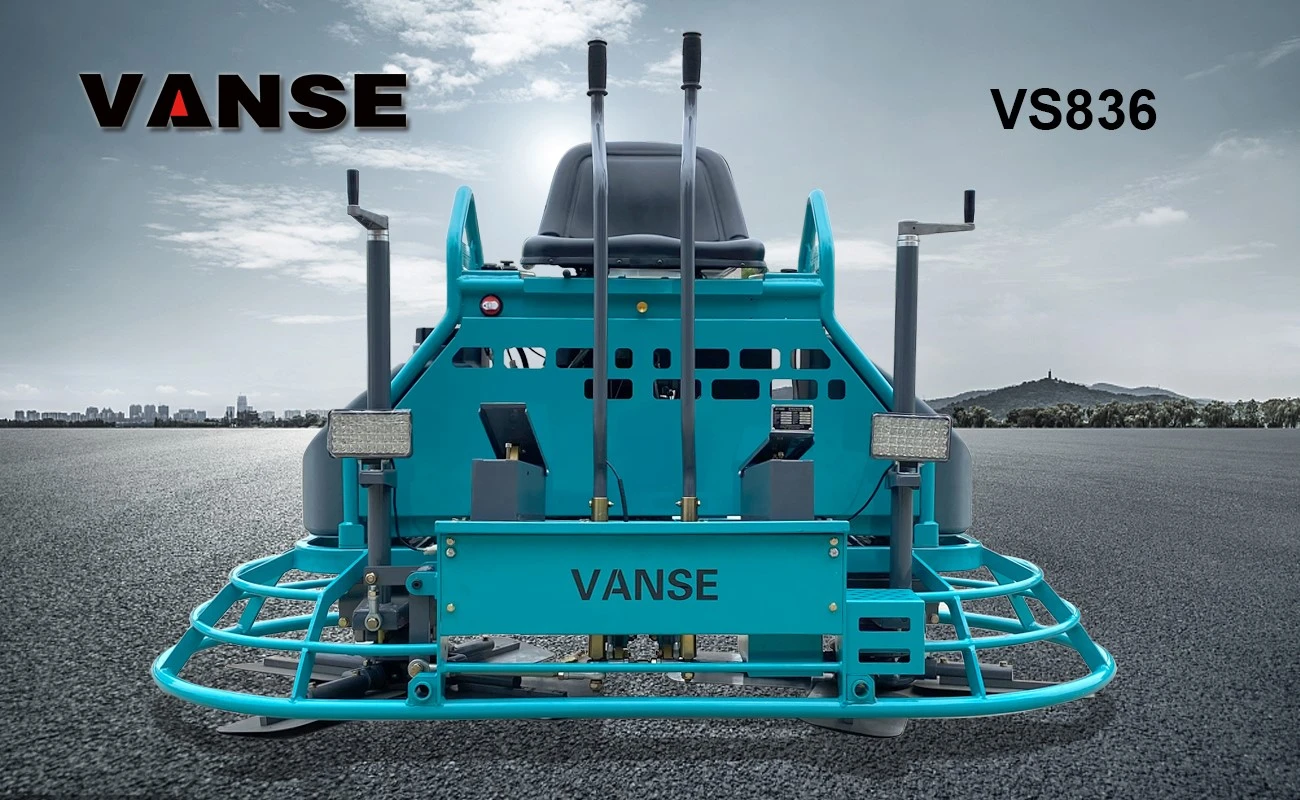
Concrete trowels are mainly composed of the following parts:
1. Power unit
– This is the power source of the trowel. There are two common types: electric and fuel-powered. Electric trowels are powered by electric motors. Their advantages are quiet operation, no pollution, and easy operation. They only need to be connected to the power supply. For example, the power of electric trowels used in small indoor construction sites is generally around 1-2 kilowatts. Fuel-powered trowels are powered by gasoline or diesel engines. This power unit is powerful and suitable for large outdoor concrete construction sites, especially when there is no power supply. Its engine power can reach 3-5 kilowatts, which can meet the needs of large-scale, high-intensity troweling operations.
2. Transmission components
– Mainly include belts, chains and gears. The function of the transmission components is to transmit the power generated by the power unit to the trowel working parts. For example, the belt drive is relatively stable and can effectively reduce vibration. It is widely used in some trowel machines with high precision requirements; chain drive has high transmission efficiency, can withstand large loads, and is suitable for trowel machines with high power; gear drive can accurately control the speed ratio, so that the trowel working parts can obtain a stable speed.
3. Trouble working parts (trowel disc and trowel blade)
– The trowel disc is the part that directly contacts the concrete surface. It is generally a round metal disc, and its material requires high strength and wear resistance. The trowel blade is installed on the trowel disc, which is usually a blade made of wear-resistant alloy steel or special plastic. The number and shape of the trowel blades will vary depending on the model and purpose of the trowel machine. For example, in the rough trowel stage, thicker and larger angle trowel blades are used to quickly level the concrete surface; in the fine trowel stage, thinner and smaller angle trowel blades are used to make the concrete surface smoother.
4. Operating handle and control device
– The operating handle is convenient for the operator to hold and control the movement direction of the trowel machine. Its design conforms to the principles of ergonomics, allowing the operator to operate comfortably for a long time. The control device is usually installed near the operating handle, including the start and stop buttons, and the speed adjustment knob. The operator can easily turn on or off the trowel through the control device, and adjust the working speed of the trowel according to the state of the concrete and the construction requirements.
5. Body and chassis
– The body is the main frame of the entire trowel, which supports and connects other parts. It is usually made of solid metal materials such as steel or aluminum alloy to ensure the overall stability of the trowel. The chassis is located at the bottom of the trowel and is used to install the trowel working parts and power devices, etc. The design of the chassis also takes into account the balance and stability of the machine to prevent the trowel from shaking or tipping over during operation.
Thanks to All the Friends Who Support and Trust Shandong Vanse Machinery Technology Co., Ltd.
If you want to know more about Shandong Vanse Machinery Technology Co., Ltd. or have any questions, please feel free to contact us:
Our Factory
Shandong Vanse Machinery Technology Co., Ltd.








Share this article

About the Author: Shandong Vanse Machinery Technology Co., Ltd.
Shandong Vanse Machinery Technology Co., Ltd. is a high-tech manufacturer specializing in concrete construction machinery, including laser screeds and related equipment. The company integrates R&D, production, and global sales, with products exported to over 60 countries and widely used in infrastructure projects worldwide.
Previous Post
Next Post
Related Articles
You Might Also Like
How to upgrade and improve the supporting facilities and technical support of concrete laser leveling machines?
As the core equipment of modern floor construction, the upgrade and improvement of supporting facilities and technical support of concrete laser leveling machine directly affects the construction efficiency, project quality and equipment service life. The following elaborates on the specific path from the two dimensions of supporting facilities upgrade and technical support improvement: The supporting facilities need to be carried out around the three goals of "maximizing equipment efficiency", "full coverage of construction scenarios" and "improving operation safety", including: Laser system upgrade: The accuracy of traditional laser transmitters is mostly ±3mm/10m, which can be upgraded to high-precision green laser system (accuracy up to ±1.5mm/10m), and add "anti-interference module" (such as filtering technology) to reduce the impact of strong light and electromagnetic environment on the signal; at the same time, it integrates multi-region laser control technology to support multi-machine collaboration during large-area construction to avoid laser signal conflicts. Drive and leveling mechanism optimization: The drive wheel adopts wear-resistant rubber composite material (such as adding ceramic particles) to improve the grip and wear resistance on rough ground; the leveling scraper is upgraded to adjustable alloy material, which supports 0-5° angle fine-tuning to meet the leveling needs of concrete with different slumps (such as dry hard and fluid concrete). Power system adaptation: For indoor scenes with high environmental protection requirements, electric laser leveling machine is developed, equipped with high-capacity lithium battery (8-10 hours of battery life) and fast charging pile (full in 2 hours); large-scale outdoor projects can be upgraded to hybrid power system (diesel + motor), realizing low-speed leveling electricity and high-speed mobile oil, reducing fuel consumption by more than 30%. Material conveying matching: With automatic concrete spreader (such as telescopic spiral spreader), through the linkage of sensors and leveling machine, the integrated process of "concrete conveying-paving-leveling" is realized to reduce the time loss of manual spreading; for narrow spaces (such as around elevator shafts), small auxiliary leveling accessories (such as foldable leveling heads) are developed to adapt to the main equipment to complete the corner construction. Environmental monitoring and adaptation equipment: Add temperature and humidity sensors and concrete initial setting time detector to monitor the construction environment in real time (such as high temperature in summer and low temperature in winter), and automatically adjust the leveling speed through the equipment control system (such as 20% faster at high temperature to avoid premature solidification of concrete); matching dust and noise reduction devices (such as silent engine + high-efficiency filter) to meet the environmental protection standards of indoor construction (noise ≤70dB). Intelligent safety protection: 360° millimeter wave radar and infrared human body sensing device are installed. When the operator or obstacle enters the 1.5-meter range, the equipment automatically slows down and issues an audible and visual alarm; the cab is upgraded to a rollover protection (ROPS) structure, equipped with a suspended seat and seat belt warning system to reduce the risk of injury in the event of an accidental collision. Lightweight and modular design: The fuselage adopts a high-strength aluminum alloy frame (20% lighter than traditional steel structure), with quick-detachable components (such as laser receivers, scrapers), which are easy to transport and repair; for small construction teams, a portable laser leveling machine (weight ≤500kg) is developed, equipped with a small trailer to improve transfer flexibility. Technical support needs to shift from "passive response" to "active service" and build a "full life cycle service chain", including: Remote monitoring and fault warning: Install Internet of Things (IoT) module on the equipment to collect operation data (such as engine speed, laser system status, battery power, etc.) in real time, analyze the health of the equipment through the cloud platform (such as management system based on Alibaba Cloud/Huawei Cloud), warn of potential faults in advance (such as motor overheating, laser calibration deviation), and push maintenance solutions to the user's mobile phone to reduce downtime. Digital construction guidance: Develop a construction parameter database, and preset the "optimal leveling parameters" (such as walking speed 2-5m/min, vibration frequency 3000-5000 times/minute) based on the project type (such as workshop floor, parking lot), concrete grade (C20-C50), and thickness (50-300mm). Novices can call parameters through the device touch screen to reduce the difficulty of operation; supporting AR real-scene guidance system, scan the construction area through the camera, superimpose the virtual image of the laser reference line and leveling trajectory, and assist operators in precise control. Hierarchical training system: For operators, carry out "theory + practice" training (such as laser principle, troubleshooting), and issue operation certificates after passing the assessment; for maintenance personnel, provide "core component maintenance certification courses" (such as laser transmitter calibration, motor maintenance), and regularly organize manufacturer technical exchange meetings to share maintenance skills for new models of equipment. Construction of localized service outlets: Set up regional service centers in key areas (such as the Yangtze River Delta and the Pearl River Delta), equipped with special maintenance vehicles and spare parts warehouses (reserving vulnerable parts such as laser heads and sensors), and promise "2-hour response within 200 kilometers, 4-hour on-site maintenance"; for remote areas, through the "remote video guidance + spare parts express" mode, ensure that basic faults are resolved within 48 hours. Special scenario adaptation technology: For sloped floors (such as parking lot ramps), develop a "slope adaptive system" to adjust the leveling benchmark in real time through the inclination sensor to ensure that the slope error is ≤0.5%; for ultra-large floor areas (such as storage and logistics parks), provide a "multi-machine collaborative management system" to support 1 main control device to monitor the construction progress of 5-8 leveling machines, and achieve an overall flatness error of ≤2mm/2m. Second-hand equipment remanufacturing support: Provide "refurbishment and upgrade services" for old equipment (such as replacing laser systems, upgrading control systems), and issue performance test reports to extend the service life of equipment (usually 3-5 years), and reduce the cost of replacement for users. 1. Industry-university-research cooperation: Cooperate with universities (such as construction machinery majors) and scientific research institutions to develop new materials (such as wear-resistant scraper alloys) and intelligent algorithms (such as multi-machine collaborative control) to maintain technological leadership. 2. User feedback mechanism: Collect user usage data through the equipment Internet of Things system, regularly investigate construction pain points (such as long maintenance cycles and complex operations), and optimize products and services in a targeted manner. 3. Policy and standard adaptation: Pay attention to industry standards (such as "Technical Conditions for Concrete Laser Leveling Machines") and environmental protection policies, and develop equipment that meets new regulations in advance (such as power systems that meet the National IV emission standards) to avoid policy risks. Through the above measures, the supporting facilities of the concrete laser leveling machine can achieve "higher precision, stronger adaptability, greater safety and durability", and the technical support can achieve "fewer faults, quick start-up and timely service", ultimately helping users improve construction efficiency by more than 30%, and the floor flatness qualification rate will be increased from 85% to more than 95%. Click the below to jump immediately!!! ARMOUR JOINT CONCRETE LEVELING MACHINE LIGHT TOWER POWER TROWEL SLIPFORM MACHINE STEEL FIBER TOPPING SPREADER TRACKED MINI DUMPERIn addition to the angle, what other factors will affect the performance of the power trowel?
Slump: Slump reflects the fluidity of concrete. If the slump is too large, the concrete is too thin and soft, and it is easy to seep water and slurry when troweling, making it difficult to form a solid surface, and cracks are easy to appear on the surface after troweling; if the slump is too small, the concrete is too dry and hard, and it is difficult for the trowel blade to effectively trowel it, which will cause uneven surface and increase the workload of the trowel. Setting time: The setting time of concrete is crucial for troweling. If troweling is performed before the initial setting of concrete, the concrete is still in a plastic state and can be easily smoothed by the trowel, but troweling too early may damage the internal structure of the concrete and affect its strength; if troweling is performed after the final setting, the concrete has hardened, and it is difficult for the trowel to operate it effectively, leaving trowel marks on the surface, and it is impossible to achieve the ideal flatness and finish. Speed: The speed of the trowel directly affects the troweling effect. If the speed is too low, the blade will not be able to vibrate and smooth the concrete surface enough, and the cement slurry on the concrete surface cannot be evenly distributed, resulting in poor surface finish; if the speed is too high, the concrete surface will be subjected to excessive centrifugal force, which may cause cement slurry splashing, and will also increase the wear and energy consumption of the machine. Power: The power determines the working capacity of the trowel. If the power is insufficient, when encountering large concrete resistance during the troweling process, the trowel may be underpowered, resulting in unsmooth rotation of the blade, affecting the troweling effect; if the power is too high, it may cause energy waste, and it is easy to cause excessive vibration and damage to the concrete surface if the operation is improper. Operation technique: The operator's operation technique has a great impact on the troweling effect. Skilled operators can reasonably control the travel speed, direction and troweling time of the trowel according to the state of the concrete and the performance of the trowel, so that the concrete surface can achieve a flat and smooth effect; while unskilled operators may encounter problems such as uneven travel speed, overlapping or missing troweling areas, resulting in poor troweling quality. Judgment ability: Experienced operators can accurately judge the setting time and state of concrete and choose the right time to perform the troweling operation. They can also adjust the parameters and operation methods of the troweling machine in time according to the problems that occur during the troweling process, such as bubbles and trowel marks on the surface; while inexperienced operators may not be able to accurately judge these situations, thus affecting the troweling effect. Temperature: The ambient temperature has a significant impact on the setting time and troweling effect of concrete. In a high temperature environment, the moisture of concrete evaporates quickly, the setting time is shortened, the troweling operation time window becomes smaller, and surface shrinkage cracks are prone to occur; in a low temperature environment, the setting time of concrete is prolonged, and the troweling quality may be affected by the freezing of the internal moisture of the concrete during troweling, and it will also increase the difficulty of starting the troweling machine and energy consumption. Humidity: If the ambient humidity is too high, the moisture on the concrete surface is not easy to evaporate, which will delay the setting time of the concrete, resulting in water seepage on the surface after troweling; if the humidity is too low, the moisture on the concrete surface evaporates too quickly, and problems such as surface dryness and peeling are prone to occur, affecting the troweling effect. Wind speed: Higher wind speed will accelerate the evaporation of moisture on the concrete surface, causing uneven drying of the concrete surface, increasing the difficulty of polishing, and may also cause cracks on the polished surface.Repair And Maintenance Methods Of Concrete Laser Leveling Machine (1)
As an important equipment for modern floor construction, the stability and service life of concrete laser leveling machine are crucial to construction efficiency and quality. In order to ensure the normal operation of the concrete laser leveling and extend its service life, regular repair and maintenance are essential. This article will introduce in detail the repair and maintenance methods of the concrete laser leveling, including daily equipment inspection, laser system calibration, blade and scraper maintenance, hydraulic system maintenance, electrical system inspection, filter and oil replacement, machine body cleaning and protection and storage and transportation precautions. ☆♦☆ Daily inspection of equipment ☆♦☆ Daily inspection of equipment is the basic work for the repair and maintenance of concrete laser leveling. Its purpose is to discover and deal with potential problems in time to ensure the normal operation of the equipment. Daily inspections mainly include the following: 1. Check the appearance of the equipment to ensure there is no obvious damage, deformation or corrosion. 2. Check whether the connecting bolts of each component of the equipment are tight and not loose. 3. Check the hydraulic oil tank, fuel tank and lubricating oil level to ensure that the oil level is within the normal range. 4. Check the wear of wearing parts such as blades and scrapers. If there is any wear, replace it in time: 5. Check the working status of key components such as the laser system and electrical system to ensure their normal operation. ☆♦☆ Laser system calibration ☆♦☆ The laser system is the core component of the concrete laser leveling machine, and its accuracy is directly related to the flatness of the floor. Therefore, regular calibration of the laser system is very necessary. The main steps for laser system calibration are as follows: 1. Use professional laser calibration instruments to calibrate the laser transmitter and receiver to ensure accurate propagation of the laser beam. 2. Check whether the laser reflector is clean and unobstructed to ensure it is working properly. 3. Adjust the height and angle of the laser leveler according to the actual situation to ensure that the laser beam is parallel to the ground. ☆♦☆ Blade and scraper maintenance ☆♦☆ Blades and scrapers are important wearing parts of concrete laser levelings, and their performance directly affects the construction quality of the floor. In order to extend the service life of blades and scrapers and improve construction efficiency, they need to be maintained regularly. Maintenance measures mainly include: 1. Check the wear of the blade and scraper. If there is any wear, replace it in time. 2. Clean the blades and scrapers regularly to remove concrete residue and dirt on the surface. 3. Apply an appropriate amount of grease on the surface of the blade and scraper to reduce friction and wear. ☆♦☆ Hydraulic system maintenance ☆♦☆ The hydraulic system is the power transmission system of the concrete laser leveling. Its stability and reliability are crucial to the normal operation of the equipment. The main contents of hydraulic system maintenance include: 1. Regularly check the oil level and quality of the hydraulic oil tank, and promptly replenish or replace the hydraulic oil if necessary. 2. Clean the filter and radiator of the hydraulic system to prevent clogging and overheating. 3. Check whether the connections of the hydraulic pipelines are tight and there is no leakage. 4. Regularly inspect and maintain hydraulic pumps, motors and valves to ensure their normal operation. ☆♦☆ Electrical system inspection ☆♦☆ The electrical system is the control system of the concrete laser leveling, and its stability and safety are crucial to the normal operation of the equipment. The main contents of electrical system inspection include: 1. Check whether the connection between cables and connectors is tight and free of damage or looseness. 2. Check the working status of electrical components such as sensors, switches and relays to ensure their normal operation, 3. Dust and clean the electrical system regularly to prevent dust and moisture from affecting electrical components. ☆♦☆ Filter and oil replacement ☆♦☆ The cleanliness and performance of the filter and oil directly affect the operating efficiency and service life of the concrete laser leveling. Therefore, regular replacement of filters and oil is very necessary. Please pay attention to the following points when replacing: 1. Select the appropriate filter and oil model according to the requirements of the equipment manual. 2. When replacing the filter, make sure that the new filter is of the same model as the old filter and is installed correctly. 3. When replacing oil, ensure the cleanliness of the fuel tank and oil circuit to prevent impurities and moisture from entering the fuel tank. 4. When replacing filters and oil, pay attention to safe operations to avoid oil splashing and fire accidents. ☆♦☆ Body cleaning and protection ☆♦☆ Body cleaning and protection are important measures to keep the appearance of the concrete laser leveling machine clean and extend its service life. Main tasks include: 1. Regularly clean the soil and dirt on the outer surface of the equipment to keep the equipment clean. 2. Carry out anti-rust treatment on the surface of the equipment to prevent rust and corrosion. 3. Perform periodic inspections and repairs on the paint and coating of the equipment to maintain its beauty and durability. 4. When parking the equipment, choose a dry and ventilated place to avoid the impact of moisture and high temperature on the equipment. ☆♦☆ Storage and transportation precautions ☆♦☆ Storage and transportation are inevitable links in the use of concrete laser leveling machines. Correct storage and transportation methods are of great significance to protect the equipment from damage and increase its service life. The following points need to be noted when storing and transporting: 1. When storing the equipment, ensure that the equipment is in a horizontal state to avoid tilting or collapse. 2. For equipment stored for a long time, it should be started and operated regularly to keep the moving parts of the equipment in good condition. 3. When transporting equipment, use professional transportation tools and fixtures to ensure the stability and safety of the equipment during transportation. 4. Avoid transporting equipment under harsh road conditions and climate conditions to reduce the impact and vibration of the equipment during transportation. To sum up, the repair and maintenance of concrete laser leveling machines involves many aspects, and factors such as the equipment's use environment, workload, and maintenance cycle need to be comprehensively considered. By implementing the above repair and maintenance methods, you can ensure the normal operation of the concrete laser leveling and extend its service life, thereby improving construction efficiency and quality. At the same time, these measures will also help reduce equipment failure rates and maintenance costs, creating greater economic benefits for enterprises.