Technical Knowledge
What is the working efficiency of the concrete laser leveling machine in construction?

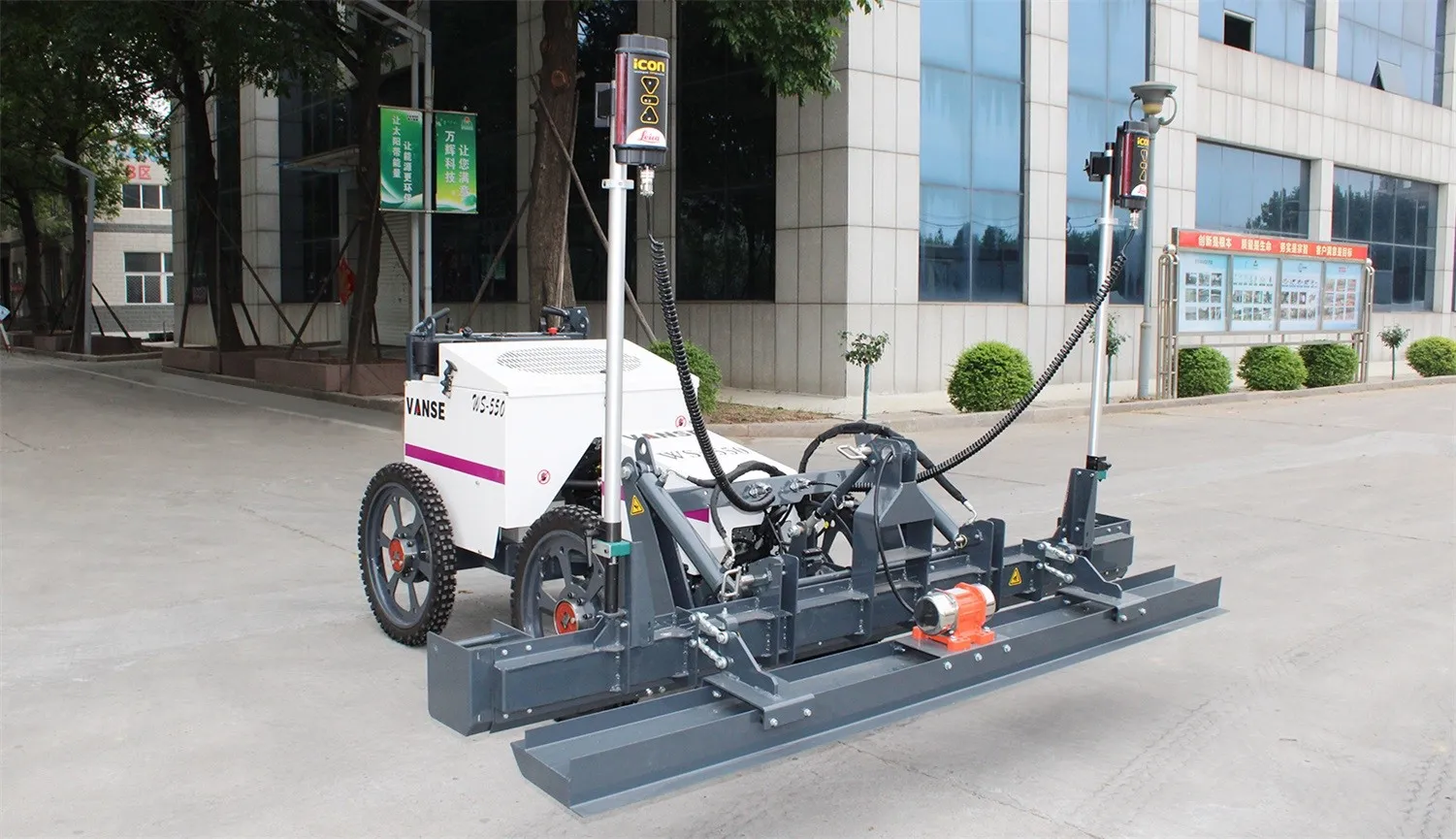
The working efficiency of the concrete laser leveler is affected by many factors such as equipment model, construction conditions, concrete properties, etc., and varies greatly in different scenarios. The following is an explanation from three aspects: core influencing factors, typical efficiency data and improvement strategies:
1. Key factors affecting work efficiency
Equipment performance parameters
Leveling width:
The leveling width of common models is 2.5-6 meters. Wide-width equipment (such as 6 meters) covers a larger area in a single operation, and the efficiency is increased by about 30%.
Travel speed:
The conventional construction speed is 1-3 meters/minute, and the high-frequency vibrating model (such as 100 times/minute) can appropriately increase the speed to 2-4 meters/minute.
Automation degree:
The fully automatic hydraulic drive model is 20%-50% more efficient than the semi-automatic model, and no frequent manual adjustment is required.
Construction conditions
Site scale:
When a large area is continuously constructed (such as more than 5000㎡), the equipment does not need to be frequently transferred, and the efficiency can reach 1.5-2 times that of a small area (<1000㎡).
Terrain complexity:
Complex terrain with high flatness requirements (such as slopes and arc angles) requires multiple round trips, and the efficiency is 30%-40% lower than that of a flat site.
Concrete performance
Slump:
Concrete with a slump of 180-220mm has good fluidity and its leveling efficiency is about 25% higher than that of concrete with a low slump (<150mm).
Initial setting time:
Concrete with an initial setting time of 4-6 hours can be constructed continuously. If the initial setting is too fast (<3 hours), it needs to be worked in blocks, and the efficiency drops by about 40%.
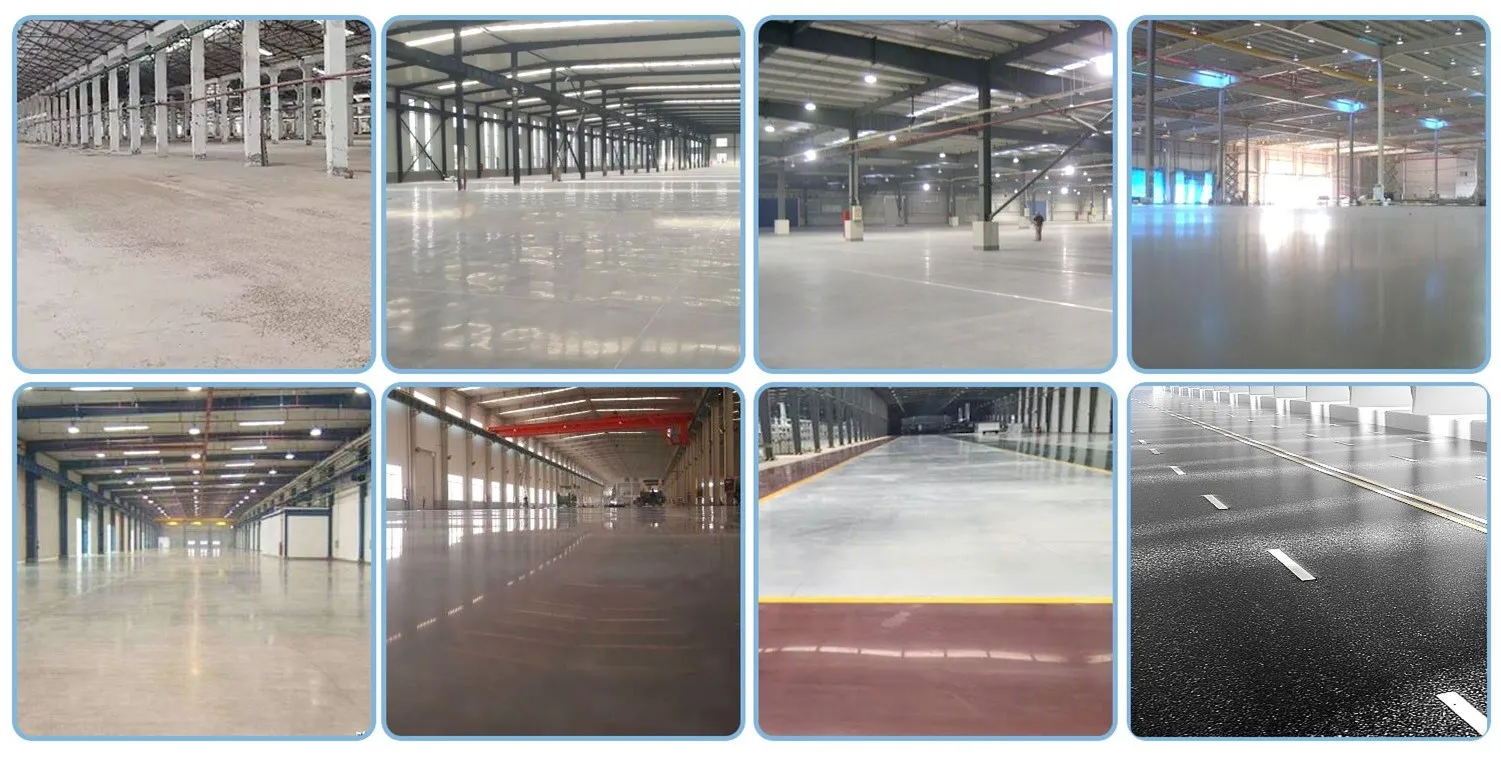
2. Efficiency comparison: laser leveling machine vs traditional manual leveling
| Indicators | Laser leveling machine | Traditional manual labor + ordinary machinery | Efficiency improvement ratio |
| Daily operation area | 1500-3500㎡ | 500-800㎡ | 3-4.5 times |
| Staffing | 3-5 people (including operation and assistance) | 8-12 people | 50%-60% manpower saving |
| Smoothness error | ±3-5mm/2m | ±8-15mm/2m | Precision improvement of more than 50% |
| Construction period | 10,000㎡ site about 5-7 days | 10-15 days | Shortening of construction period by 50% |
3. Practical strategies to improve work efficiency
Equipment optimization
Choose the machine model according to the size of the site:
choose a wide model (5-6 meters) for more than 5000㎡, and a narrow model (2.5-3 meters) for narrow areas.
Maintain equipment regularly:
keep the hydraulic system pressure stable (standard pressure 16-20MPa), replace worn scrapers (when the wear amount is >2mm), and avoid downtime due to equipment failure.
Construction process optimization
Block construction planning:
divide the construction blocks according to the principle of "from inside to outside, zone flow", and control the area of each block to 1000-1500㎡ to reduce the transfer time.
Multi-machine collaborative operation:
Large-scale projects can use the combination of "1 laser leveling machine + 1 concrete pump truck + 2 concrete placing machines" to improve the efficiency of placing and leveling.
Concrete performance control
Strictly control the slump:
the slump of pumped concrete should be 180-220mm, and the slump of non-pumped concrete should be 150-180mm, to avoid the leveling speed being affected by over-dry or over-thin concrete.
Reasonably arrange the pouring time:
avoid high temperature (>35℃) or low temperature (<5℃) periods. When the temperature is high, a retarder can be added to extend the initial setting time to 6-8 hours.
Staff skill improvement
Operators need to master the "rough leveling first and then fine leveling" process:
the rough leveling speed is 3-4 meters/minute, and the fine leveling speed is 1-2 meters/minute to avoid excessive vibration at one time.
Assistants need to handle the corner areas in time:
Edges that cannot be covered by the laser leveling machine (such as corners and column roots) need to be leveled by a dedicated person with a small vibrator to avoid secondary rework.

4. Efficiency reduction scenarios and countermeasures
| Attenuation scenarios | Efficiency reduction ratio | Countermeasures |
| Construction in rainy season (flooding on the ground) | 30%-50% | Drain water in advance and lay steel roadbed to reduce the risk of equipment getting stuck |
| Construction at night (lack of lighting) | 20%-30% | Install high-brightness LED light sets, and operators wear night vision assistance equipment |
| Multi-task cross-operation | 25%-40% | Define construction restricted areas and coordinate process connections (e.g., prohibit people from entering within 4 hours after leveling) |
| Concrete supply interruption | Calculated by interruption time | Put aside 2 concrete mixer trucks to ensure supply continuity |
Summary
The average working efficiency of the concrete laser leveling machine is about 1500-3500㎡/day (single machine), which is 3-4.5 times that of traditional manual leveling. Its efficiency depends on the coordination of equipment selection and construction management. By optimizing machine configuration, controlling concrete performance and standardizing construction processes, the equipment efficiency can be maximized to achieve dual optimization of construction period and cost. In actual application, it is necessary to flexibly adjust the strategy according to the characteristics of the project to achieve the best construction efficiency.
Thanks to All the Friends Who Support and Trust Shandong Vanse Machinery Technology Co., Ltd.
If you want to know more about Shandong Vanse Machinery Technology Co., Ltd. or have any questions, please feel free to contact us:
Our Factory
Shandong Vanse Machinery Technology Co., Ltd.








Share this article

About the Author: Shandong Vanse Machinery Technology Co., Ltd.
Shandong Vanse Machinery Technology Co., Ltd. is a high-tech manufacturer specializing in concrete construction machinery, including laser screeds and related equipment. The company integrates R&D, production, and global sales, with products exported to over 60 countries and widely used in infrastructure projects worldwide.
Previous Post
Next Post
Related Articles
You Might Also Like
How to effectively prevent and solve the problem of cracks in diamond wear-resistant floor?
How to effectively prevent and solve the problem of cracks in diamond wear-resistant floor Abstract: Diamond wear-resistant floor is widely used in the construction industry due to its high strength and good wear resistance. However, the problem of floor cracks has always been a key factor affecting its service life and aesthetics. This article will focus on how to effectively prevent and solve the problem of diamond wear-resistant floor cracks, and put forward specific and practical methods and suggestions from the aspects of cause analysis, material selection, construction technology, preventive measures, treatment and repair, and maintenance. 1. Analysis of the causes of floor cracks The causes of diamond wear-resistant floor cracks are varied, mainly including the following points: ☑ Improper foundation treatment: The ground foundation treatment is not thorough, and there are impurities such as oil, dust, etc., which leads to the weak bonding between the floor and the base layer, and cracks are easy to occur. ☑ Material quality problem: The quality of diamond wear-resistant materials does not meet the standards, such as excessive mud content and uneven particles, which will reduce the strength and wear resistance of the floor, and then cause cracks. ☑ Irregular construction process: If the construction process is not strictly carried out in accordance with the operating procedures, such as uneven pouring and insufficient vibration, cracks may occur in the floor. ☑ Changes in temperature and humidity: Changes in ambient temperature and humidity will cause thermal expansion and contraction of the floor material, resulting in cracks. 2. Material selection and quality control In order to prevent cracks in corundum wear-resistant floor, the material selection and quality control links should be strictly controlled: ☑ Select high-quality corundum wear-resistant materials: Ensure that the materials meet national standards and industry specifications and have good strength and wear resistance ☑ Strictly control the quality of raw materials: Inspect the incoming raw materials to ensure that indicators such as mud content and particle uniformity meet the requirements. ☑ Control the concrete mix ratio: According to the design requirements and actual conditions, reasonably adjust the concrete mix ratio to ensure the strength and durability of the floor. 3. Construction process optimization Optimizing the construction process is a key measure to prevent floor cracks: ☑ Strengthen foundation treatment: Thoroughly clean the ground foundation to ensure that there are no impurities such as oil and dust, and improve the adhesion between the floor and the base. ☑ Pouring and vibrating: Use layered pouring and uniform vibration to ensure that the concrete is dense inside and avoid hollowing and cracks. ☑ Smoothing and finishing: Smoothing is performed before the initial setting of the concrete to ensure the surface is flat; finishing is performed before the final setting to improve the gloss and wear resistance of the floor. ☑ Maintenance and cutting: After the floor construction is completed, timely maintenance is carried out to maintain appropriate temperature and humidity; at the same time, according to the design requirements and actual conditions, the cutting seams are reasonably set to reduce the impact of temperature stress on the floor. 4. Crack prevention measures In order to effectively prevent the occurrence of cracks in diamond wear-resistant floor, the following measures can be taken: ☑ Strengthen construction supervision: Establish a strict construction supervision system to ensure that construction personnel perform operations in accordance with operating procedures to avoid cracks caused by human factors. ☑ Control the construction environment: Try to carry out construction in an environment with suitable temperature and humidity to avoid the impact of extreme weather on the quality of the floor. ☑ Add anti-cracking measures: Add anti-cracking agent to concrete to improve the anti-cracking performance of the floor; at the same time, set anti-slip and anti-cracking textures on the floor surface to enhance the safety of the floor. 5. Crack treatment and repair When cracks appear on the floor, they should be treated and repaired in time: ☑ Clean the cracks: First remove the debris and oil in the cracks to ensure that the cracks are dry and clean. ☑ Fill and repair materials: Select suitable repair materials (such as epoxy mortar, polymer repair agent, etc.) to fill and repair the cracks. The repair material should have good adhesion, wear resistance and crack resistance. ☑ Polishing and finishing: After the repair is completed, polish and finish the repaired part to keep it consistent with the surrounding floor surface to ensure the overall aesthetics. 6. Maintenance recommendations In order to extend the service life of diamond wear-resistant floor and reduce the possibility of cracks, it is recommended to strengthen daily maintenance work: ☑ Regular cleaning: Clean the floor regularly to remove impurities such as oil and dust to keep the floor surface clean and tidy. ☑ Avoid heavy objects rolling: Avoid placing heavy objects on the floor or performing high-intensity rolling operations to avoid damage to the floor. ☑ Repair damaged parts in time: When the floor is damaged or cracked, it should be treated and repaired in time to prevent the problem from expanding. 7. Case analysis and experience summary Through the analysis of actual cases, we can summarize some experiences and lessons in preventing and solving the problem of cracks in diamond wear-resistant floors: ☑ In a certain project, due to the excessive humidity in the construction environment, many cracks appeared after the floor construction. In response to this problem, we strengthened the control of the construction environment in subsequent projects, and ensured the appropriate humidity of the construction environment by building temporary rainproof facilities and using hygrometers for monitoring, which effectively reduced the occurrence of cracks. ☑ In another project, we used high-quality diamond wear-resistant materials and advanced construction technology, and at the same time conducted professional training for construction personnel to ensure standardized construction operations. Through the implementation of these measures, the floor quality of the project has been significantly improved, and the crack problem has been effectively controlled. In summary, effective prevention and solution of cracks in diamond wear-resistant flooring needs to start from multiple aspects. By optimizing material selection, strengthening quality control, improving construction technology, taking preventive measures, and timely handling and repairing cracks, we can improve the quality and durability of the floor and reduce the occurrence of cracks. At the same time, maintenance is also an important step to maintain floor performance and extend service life. Regular cleaning and inspection, and timely handling of possible problems can effectively prevent the expansion of cracks and further damage to the floor. In the case analysis, it is not difficult to find that the specific conditions of each project are different, so the prevention and solution of floor cracks needs to be flexibly responded to according to the actual situation. Summarizing experience and lessons, and constantly improving and optimizing prevention and repair measures are the key to improving floor quality. In addition, with the advancement of science and technology and the continuous emergence of new materials, the construction technology and materials of diamond wear-resistant flooring are also constantly updated. We should actively pay attention to industry development and the latest research results, introduce advanced construction technology and materials, and improve the quality and performance of the floor. In the design and construction stage of diamond wear-resistant flooring, it is also necessary to fully consider the use environment and use requirements. For example, in places with heavy loads and high frequency of use, higher strength and more wear-resistant materials should be selected, and more stringent construction processes and quality control measures should be adopted. In addition, environmental protection and sustainable development are also important issues in the current construction industry. When selecting floor materials and construction processes, materials and processes with excellent environmental performance and low energy consumption should be selected as much as possible to reduce the impact on the environment. In short, the effective prevention and solution of the problem of cracks in diamond wear-resistant floors requires comprehensive measures from multiple aspects such as material selection, construction process, preventive measures, treatment and repair, and maintenance. By constantly summarizing experience, introducing new technologies and new materials, paying attention to environmental protection and sustainable development, we can continuously improve the quality and performance of the floor, meet the needs of customers, and contribute to the sustainable development of the construction industry. Looking to the future, with the continuous development of the construction industry and the advancement of technology, the application scope of diamond wear-resistant floors will be wider, and its performance and quality will be further improved. We have reason to believe that through continuous efforts and innovation, the problem of cracks in diamond wear-resistant floors will be better solved, providing a safer, more comfortable and beautiful environment for people's lives and work. Before concluding this article, it should be emphasized that the prevention and solution of cracks in diamond wear-resistant floor is not a one-shot process, but requires long-term efforts and continuous improvement. Therefore, we should keep an open mind and continue to learn and explore new methods and technologies to cope with various challenges and problems that may arise. Finally, it should be pointed out that although this article has made a relatively comprehensive discussion on the prevention and solution of cracks in diamond wear-resistant floor, due to the complexity and diversity of actual projects, there may still be some situations that have not been involved or fully considered. Therefore, in actual projects, we should flexibly apply the measures and suggestions mentioned in this article according to the specific situation, and carry out targeted treatment and improvement in combination with the actual situation. In summary, the prevention and solution of cracks in diamond wear-resistant floor is a systematic project, which requires us to start from multiple aspects, take comprehensive measures, and continuously improve and innovate. Only in this way can we ensure that the quality and performance of the floor are effectively improved and create a better environment for people's life and work. The above is an in-depth discussion on how to effectively prevent and solve the problem of cracks in diamond abrasive wear-resistant flooring. We hope that it can provide certain reference and reference value to relevant practitioners and readers. At the same time, we also look forward to more research and innovative results in the field of diamond abrasive wear-resistant flooring in the future to promote the sustainable development and progress of the industry.How can maintenance of a concrete laser leveling machine extend its service life?
As high-precision, high-load engineering equipment, the core goal of maintenance for concrete laser leveling is to reduce component wear, prevent potential failures, and maintain stable performance, thereby fundamentally extending the equipment's service life. The following details key maintenance measures and their mechanisms for extending service life from four perspectives: daily, regular, specialized, and long-term. Daily maintenance is the first line of defense for equipment life and must be rigorously performed before, during, and after each operation. Focusing on inspecting components prone to wear and high-frequency operation, this ensures that operating with defects exacerbates component degradation. Maintenance phase Core inspection items Specific operations Effect on life extension Before the working 1. Powertrain (Engine/Motor) 1. Check the engine oil level (must be within the dipstick range), coolant/antifreeze level, and motor wiring for security and damage. 1. Prevents engine seizure due to lack of oil or coolant, and motor burnout due to wiring problems. 2. Hydraulic System 2. Check the hydraulic oil tank level (must meet the "operating fluid level" indicated on the equipment), hydraulic pipe joints for leaks, and hydraulic oil for emulsification/discoloration. 2. Prevents insufficient pressure in the hydraulic system due to lack of oil or leakage, which can cause stalling in the travel or leveling motion and increase wear on the hydraulic pump. 3. Laser System 3. Clean the laser transmitter/receiver lens (use a soft cloth to avoid scratches) and test the laser signal for stability (no flickering or disconnection). 3. Ensures laser accuracy, avoids leveling errors caused by signal anomalies, and prevents lens scratches that could affect subsequent use. 4. Travel/leveling mechanism 4. Check the scraper blades and blades for deformation/wear (wear exceeding 3mm requires prompt repair), and check whether the tire pressure/track tension of the travel wheels are normal. 4. Reduce the additional load on the scraper/blade due to deformation and avoid bearing wear on the traveling mechanism due to abnormal tire pressure/tension. Working 1. Equipment operating sound 1. Listen for any unusual noises from the engine/motor (such as "tapping" or "buzzing" due to overload), and any "hissing" or leaks from the hydraulic system. 1. Promptly detect abnormal component friction (such as bearing wear) to prevent component "stuck" and resulting in scrapping. 2. Temperature monitoring 2. Touch the outer wall of the hydraulic oil tank (temperature not exceeding 60°C) and the motor housing (temperature not exceeding 70°C). If the temperature exceeds the threshold, immediately shut down the machine. 2. Prevent hydraulic oil from oxidizing and deteriorating due to high temperatures (which can corrode hydraulic components) and motor winding burnout due to overheating. 3. Laser signal stability 3. Monitor the laser receiver indicator light in real time. If it flashes frequently, pause and inspect (this may indicate lens contamination or a transmitter malfunction). 3. Avoid repeated operations due to laser signal issues, reducing unnecessary equipment wear. After the working 1. Equipment cleaning 1. Use a high-pressure water jet (avoiding electrical connections) to flush any remaining concrete from the machine body (especially around the leveling scraper and wheel gaps, as hardened concrete can cause components to seize). Dry the laser lens. 1. Prevent wear on component surfaces (such as scraper blades) caused by hardened concrete, preventing component "stuck" from overloading the drive motor. 2. Component repositioning and tightening 2. Check the scraper and blade mounting bolts for looseness (tighten with a torque wrench according to the manufacturer's instructions). Store the laser transmitter and place it in a dedicated protective case. 2. Prevent loose bolts from causing component vibration and friction (such as blades colliding with the frame), protecting the laser components from external damage. 3. Storage environment 3. Park the machine on a dry, flat surface to avoid water accumulation that could corrode the chassis or uneven ground that could cause frame deformation. If the machine is not in use for an extended period, use outriggers to prop it up off the ground. 3. Reduce chassis rust and frame deformation (frame deformation will lead to a decrease in leveling accuracy and indirectly increase equipment load). Regular maintenance should be scheduled based on the equipment's usage (or workload) (refer to the equipment manual; typically, it is divided into four levels: 50 hours, 200 hours, 500 hours, and 1000 hours). The core goal is to replace aging components, repair worn parts, and optimize system performance to avoid cascading failures caused by overuse of components. Key components: Air filter, fuel filter (diesel engine), and leveling scraper. Operation: Remove the air filter element and blow out any dust from the inside out with compressed air (0.2-0.3 MPa). (If the filter element is damaged or contains excessive dust, it should be replaced to prevent dust from entering the engine cylinder and increasing piston wear.) Replace the fuel filter (to filter impurities from the diesel fuel, preventing them from clogging the injectors and causing reduced engine power and increased fuel consumption). Inspect the leveling scraper blade for wear and sharpen it with an angle grinder. (Keep it sharp to reduce leveling resistance and prevent the scraper from overloading the motor due to a blunt edge.) Key components: Hydraulic oil, engine oil, oil filter, and travel wheel bearings. Operation: Replace the hydraulic oil (use the type specified in the equipment manual, such as 46# anti-wear hydraulic oil; do not mix different types). Clean the hydraulic oil tank filter (to remove impurities and prevent clogging of the hydraulic valves). Replace the engine oil (according to the type specified in the manual, such as 15W-40 diesel oil) and the oil filter (to filter out metal debris in the oil to prevent scratches on the engine cylinder walls). Remove the travel wheels, inspect the bearings for any unusual noise or looseness, and apply high-temperature grease (such as lithium-based grease to reduce bearing friction and wear and prevent burnout). Key components: Laser system, hydraulic pump/motor, and leveling mechanism gearbox. Operation: Have the laser transmitter calibrated by a professional (the accuracy error must be within ±0.5mm/10m to avoid overcorrection of the leveling mechanism due to accuracy deviation, which may increase component wear). Check the operating pressure of the hydraulic pump/motor (use a pressure gauge and ensure it complies with the specifications in the manual. Abnormal pressure may indicate seal deterioration and should be replaced promptly to prevent internal leakage in the hydraulic components, which can lead to reduced efficiency and increased temperatures). Replace the gearbox lubricant (such as 85W-90 gear oil) and inspect the gears for wear. (If pitting/flaking is observed on the tooth surfaces, repair or replace them promptly to prevent gear breakage and machine downtime.) Key components: Engine piston rings, motor windings, and frame structure. Operation: Disassemble the engine cylinder head and inspect the piston rings for wear (if the gap exceeds 0.5mm, replace them to prevent "burning" of the engine oil, which can lead to reduced power and increased carbon deposits). Use an insulation resistance meter to check the motor winding insulation resistance (must be ≥ 0.5MΩ. If it falls below the standard, dry or replace the windings to prevent leakage or burnout). Inspect the frame welds for cracks (especially at the connection between the leveling mechanism and the frame. Use a flaw detector to inspect. Cracks should be repaired promptly to prevent frame breakage and potential safety hazards). Concrete laser leveling often face special operating conditions such as high dust levels, high humidity, and long-term continuous operation. These conditions require targeted maintenance to prevent accelerated wear and tear. Increase the frequency of air filter changes (check every 20 hours and replace every 50 hours) to prevent dust from entering the engine. Install a dust cover on the laser receiver housing (provided it does not affect signal reception). Clean the receiver interface with compressed air after daily operation to prevent dust from causing poor contact. Install a dust filter on the hydraulic oil tank vent to prevent dust from entering the hydraulic oil and increasing wear on hydraulic components. After work, use dry compressed air to dry the interior of the electrical box (such as the controller and wiring terminals) and apply insulating paste to prevent rust on the terminals, which can cause circuit failure. Spray anti-rust paint on chassis welds and bolted joints every three months to prevent rust from loosening components. Place desiccant in the laser transmitter battery compartment to prevent moisture and leakage, which could damage the transmitter motherboard. Stop the machine every 4 hours to check the hydraulic oil temperature (if above 60°C, stop the machine to cool down) and refill coolant. Check the tightness of the leveling scraper bolts between operations (high-frequency vibration can easily loosen bolts). At the end of each day's operation, re-grease the travel wheel bearings (high-frequency rotation accelerates grease consumption). Equipment Cleaning: Clean any remaining concrete from the equipment, inspect all components for damage or looseness, and refill lubrication points to prepare for the next use. Site Cleanup: Arrange tools, remove warning signs, and ensure the construction site is clear of safety hazards before leaving. If equipment needs to be idle for more than three months (e.g., during project breaks), "static wear" (such as rust, grease solidification, and battery depletion) can seriously affect its lifespan. The following maintenance is necessary: Thorough Cleaning: Rinse the machine body of any concrete residue, wipe dry, and spray rust-proof oil (on metal parts such as the frame and leveling blades). Fluid Treatment: Replace the engine and hydraulic oil with fresh oil (old oil contains impurities and oxidation products, which can corrode components if left idle for a long time). Run the hydraulic system at no load for 10 minutes to ensure the new oil is fully in the lines. Electrical Protection: Remove batteries (such as the laser transmitter battery and the starting battery), fully charge them, and store them separately. (Recharge them monthly to prevent battery plate sulfation due to low power, which is irreversible.) Place desiccant in the electrical compartment. Parking Protection: Prop the machine with outriggers to keep the wheels/tracks off the ground to prevent tire deformation and track aging due to prolonged pressure. Cover with rain and dust covers to protect rubber components from direct sunlight, which can degrade them. Periodic Activation: Start the machine once a month and run it at no load for 30 minutes (to activate all components and prevent grease solidification and bearing seizure). At the same time, test the laser system and travel/leveling functions for proper operation. Equipment lifespan is essentially a trade-off between component wear and repair speed. Scientific maintenance extends lifespan through the following three key points: Reduce sources of wear: Clean, dustproof, and waterproof components to prevent abrasive wear and chemical corrosion caused by impurities and moisture. Reduce the wear rate: Regularly lubricate and replace the oil to create an oil film and reduce dry friction between components. Repair wear promptly: Regularly inspect and replace wearing parts to prevent minor wear from escalating into component failure, thus preventing a chain reaction of failures (e.g., a stuck bearing causing a motor to burn out). Concrete laser leveling maintenance should adhere to the principle of "do not miss routine tasks, do not exceed scheduled tasks, do not neglect special tasks, and do not neglect tasks during idle time." This integration of maintenance into the entire lifecycle of the equipment should be practiced. Through consistent and precise maintenance, the service life of core components (such as the engine, hydraulic pump, and laser system) can be extended by over 50%, increasing the overall service life of the equipment from the typical 3-5 years to 6-8 years. This ensures that the equipment always operates with high precision and efficiency, reducing overall operating costs. Note: The parameters provided in this document are for reference only and are not mandatory. Due to differences in technical characteristics between different brands and models of laser levelers, please consult the manufacturer for a suitable solution before actual operation. This reference document assumes no responsibility for any issues arising from failure to follow the manufacturer's instructions.What is the importance of concrete laser leveling machine in construction?
The importance of concrete laser leveling machine in construction is mainly reflected in the following aspects: 1. Improve construction quality: The concrete laser leveling machine can quickly and accurately complete the leveling work of the concrete surface, improve the flatness and levelness of the ground, and meet construction specifications and design requirements. 2. Improve construction efficiency: The concrete laser leveler can work continuously, improving construction efficiency and shortening the construction period. 3. Save labor costs: The concrete laser leveling machine can replace the traditional manual leveling method, reduce manual operations and reduce labor costs. 4. Ensure construction safety: Concrete laser leveling machines can reduce manual operations on the construction site, reduce safety risks, and ensure construction safety. 5. Meet environmental protection requirements: The concrete laser leveling machine can reduce construction noise and dust, reduce environmental pollution, and meet environmental protection requirements. In summary, the concrete laser leveling machine has the importance of improving construction quality, efficiency, saving labor costs, ensuring construction safety and complying with environmental protection requirements during construction. Therefore, the concrete laser leveler should be used correctly during the construction process to give full play to its advantages and improve the construction effect.