Technical Knowledge
How can the operation of concrete laser leveling be incorporated into the project’s comprehensive quality management system to achieve full-process quality control?
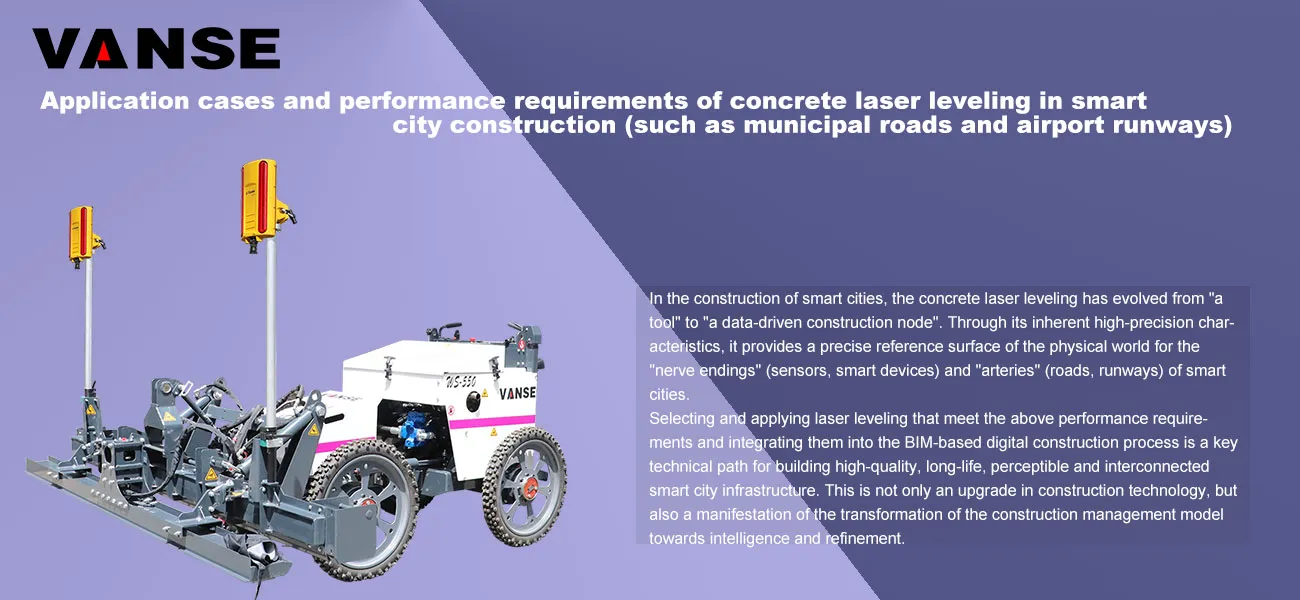
To incorporate the operation of concrete laser leveling into the project's comprehensive quality management system and achieve full-process quality control, a systematic approach is required. This is not merely about operating the machine itself, but rather managing it as a core link in the entire construction process.
The following is a detailed framework and implementation plan on how to integrate it into the total quality management system in stages and at different levels:
Ⅰ. Core Concept: From "Post-event Remediation" to "Pre-event Prevention and Process Control"
Traditional quality management relies on manual inspection and repair after pouring, while total quality management requires us to bring quality control forward and incorporate it throughout the entire process before, during and after the event. The laser leveling is an excellent tool for realizing this concept because it combines "measurement" and "leveling" into one, providing a data foundation for process control.
Ⅱ. Implementation Framework for the Entire Process Quality Control
The entire process can be divided into three main stages:
Phase One: Pre-Control – Planning & Prevention
This is the most crucial stage, which determines the success or failure of the subsequent assignments.
Technical Preparation and briefing
Specialized plan compilation: Prepare the "Specialized Construction Plan for laser leveling Machines", clearly defining key processes such as equipment selection, reference point layout rules, personnel division of labor, walking routes, pouring sequence, and joint treatment.
Deepening design: Communicate with the design unit to clearly define the positions of the floor's partition joints and expansion joints on the drawings, as well as the operation zones of the laser leveling machine, to ensure that the leveling plan matches the structural design.
Three-level technical briefing: Conduct layer-by-layer briefings for the company's management, project management, and work teams to ensure that all relevant personnel understand the quality objectives, operational key points, and acceptance criteria.
Personnel training and qualification certification
Operator certification: The operator of the laser leveling machine must undergo strict training by the equipment manufacturer or internal certification and hold a certificate to work. They not only need to understand machines, but also the characteristics of concrete.
Team collaboration training: Conduct collaborative operation training for auxiliary workers (such as those responsible for loading materials, leveling, and handling edges and corners) to form an efficient operation team.
Equipment and system verification
Calibration of laser leveling: Before each operation, the laser emitter, receiver and elevation control system of the equipment must be calibrated and reset to zero. Establish the "Daily Inspection Form for Equipment".
Reference system review: The surveyor independently reviews the laser reference network (or GPS reference) set up within the field to ensure that its absolute elevation and levelness meet the design requirements. This is the "origin" of quality and must be foolproof.
Acceptance of grassroots and formwork:
Base treatment: Strictly inspect the compactness, elevation and slope of the base (usually compacted crushed stone or concrete cushion). The quality of the base layer directly determines the final quality of the surface layer.
Formwork erection: The top elevation of the formwork must be precise and firm and stable. The stiffness and stability of the template are the keys to preventing edge collapse and elevation loss of control.
Phase Two: In-process Control – Process Monitoring & Adjustment
This is the execution stage, with the core being "real-time monitoring and immediate correction".
Concrete incoming material control
Slump management: Randomly check the slump of concrete at fixed points on the pouring site. The most suitable slump for a laser leveling is usually between 120mm and 150mm (adjusted according to specific equipment and process). If it is too high, it is prone to cracking; if it is too low, it will be difficult to level. Establish an exit mechanism for those with unqualified slump.
Continuous supply guarantee: Coordinate with the mixing plant to ensure the continuity of concrete supply and avoid cold joints.
Process control of laser leveling operation
Guide system: Assign a dedicated person (usually a foreman or quality inspector) to check in front of the leveling whether the thickness of the loose concrete is appropriate and promptly direct adjustments.
Real-time data recording: Utilize the built-in data output function of the leveling machine (if any), or have the quality inspector conduct a quick spot check on the just-leveled area using traditional tools (such as a straightedge or feeler gauge), and record the flatness data. Establish a "Laser Leveling Operation Process Record Form".
Abnormal situation handling process: Clearly define the emergency response plan for abnormal situations such as equipment failure, laser signal loss, and sudden change in concrete quality (e.g., immediately suspend, switch to backup equipment, mark the problem area, etc.).
Collaborative Work Management
Follow-up operation: After the leveling machine is completed, personnel should be promptly arranged to handle the edge and corner treatment and bleeding treatment. The film coating or curing agent operation should be initiated during the initial setting stage to prevent surface water loss and cracking.
Phase Three: Post-Event Control – Verification & Improvement
This stage aims to confirm the achievements and form a closed loop.
Digital Acceptance and Data Analysis
High-precision acceptance: After the concrete reaches a certain strength, professional equipment (such as floor flatness testers, 3D laser scanners) is used for full coverage digital acceptance, generating flatness, elevation cloud maps and analysis reports.
Comparison with the target: Compare the measured data with the quality targets set in the QMS (such as FF/FL values), and conduct statistics on the pass rate.
Defect Analysis and traceability
Conduct a root cause analysis of any areas that exceed the standard. Is it a grassroots issue? Template issue? Concrete problems? Is it still a problem with the operation of the leveling machine? Trace back using the process record sheet.
Establish a quality defect database: Input typical cases, cause analysis and corrective measures into the company's knowledge base for training and improvement in subsequent projects.
Outcome Feedback and System Optimization
Project summary meeting: Organize a special summary to assess the quality, efficiency and cost of this laser leveling operation.
Optimize standard documents: Based on the experiences and lessons learned from this practice, update the "Special Construction Plan for laser leveling Machines", "Operation Instruction Manual" and "Quality Control Point List" to achieve continuous improvement of the quality management system (PDCA cycle).
Ⅲ. How to "institutionalize" it into the total quality management system
To truly achieve "inclusion", it is necessary to clearly define in the system documents and organizational structure:
Clarify the quality responsibility subject
Project Manager: Fully responsible for the quality of the floor.
Production Manager/Foreman: Responsible for the execution of operation plans and resource coordination.
Quality Engineer/Quality Inspector: Responsible for independent quality supervision, inspection and record-keeping.
laser leveling machine operator: Directly responsible for the quality of the leveling process.
Update the quality management system documents
In the company's "Quality Manual" and "Procedure Documents", add relevant chapters on "Quality Control of Mechanized Construction of Floor Engineering".
Compile and improve the various operation instructions, quality standards and record forms mentioned above, making them standardized tools for the operation of the system.
Utilizing information technology means (QMS software /BIM)
Upload the process data and final acceptance data of the laser leveling machine to the project quality management platform to achieve data visualization.
Compare the BIM model of the floor with the measured data to visually display the deviation between the construction quality and the design goals.
Through the information system, the automatic push, rectification and closure process of quality issues is realized.
Summary
Incorporating the operation of concrete laser leveling into the total quality management system essentially transforms an efficient construction machine into a controllable quality process that integrates personnel, methods, materials, measurements and the environment.
Through the full-process management of "meticulous planning in advance, strict monitoring during the process, and scientific verification after the event", supplemented by clear responsibility systems, standardized documents and a complete information feedback mechanism, a true leap from "relying on experience" to "relying on data and processes" can be achieved, and ultimately high-quality concrete floors can be produced stably and efficiently.
Note: The parameters provided in this document are for reference only and are not mandatory. Due to differences in technical characteristics between different brands and models of laser levelers, please consult the manufacturer for a suitable solution before actual operation. This reference document assumes no responsibility for any issues arising from failure to follow the manufacturer's instructions.
Thanks to All the Friends Who Support and Trust Shandong Vanse Machinery Technology Co., Ltd.
If you want to know more about Shandong Vanse Machinery Technology Co., Ltd. or have any questions, please feel free to contact us:
Our Factory
Shandong Vanse Machinery Technology Co., Ltd.








Share this article

About the Author: Shandong Vanse Machinery Technology Co., Ltd.
Shandong Vanse Machinery Technology Co., Ltd. is a high-tech manufacturer specializing in concrete construction machinery, including laser screeds and related equipment. The company integrates R&D, production, and global sales, with products exported to over 60 countries and widely used in infrastructure projects worldwide.
Previous Post
Next Post
Related Articles
You Might Also Like
How to distinct laser leveling machine’s purchasability
Vanse concrete laser leveling for sale is developed for concrete floor of industrial factory building, large supermarket, freight house and other large area projects, and designed for higher requirements for strength, flatness and levelness of concrete floor. We have a series of laser leveling machine for sale: our equipment adopt advanced laser technology to execute leveling to concrete floor, it is a high-accurate and small error leveling machine. Vibrating frequency is 4000 times per minute, which ensures compactness and one-step molding. Operation is simple and flexible, high degree of automation, construction efficiency is greatly increased, it especially applied to large area floor construction, an area of 3000 sq work can be accomplished only by 8 workers per day, 300 sq area can be accomplished per hour, labor cost and intensity are greatly decreased. laser leveling Which factors should be considered when choosing concrete laser leveling machine? Purchase factors of laser leveling: brand, quality, construction effects and after-sales service. * Brand: prudently to choose green-hand brand, for laser leveling machine a high technology product, quality influence factor is not only manifested by technology innovation but also experience. How to define different size and specification? How to treat floor flatness? How to locate laser leveling? All those questions requires years to master. If customers curtly purchase laser leveling machine from green-hand brand, they might become mouse for experiments,troubles will come to them. Therefore, it's important to chose an experienced brand. * Quality: for users, quality shall be valued when choosing laser leveling machine, if the machine is in bad quality, floor process will occur troubles, the whole construction period will be delayed, the enterprise will face to big lose, so low price shouldn't be the only reason to buy laser leveling, quality is the most important, low price generally makes a mess in market compete, no profit no quality. * After-sales service:another factor customers specially concerns is after-sales service, regular and professional factory should be chosen, only regular factory will provide reliable service, a concrete laser leveling machine is usually used for many years, a long-brand factory will provide persistent after-sales service. After purchase of a satisfying laser leveling check should be executed to laser leveling before paving and leveling, now let Hiking tell you how to do it.Check equipment before installation is to check if the engine oil and gasoline of the equipment are enough.Check if power supply of laser receiver and emitter are enough. Check if accessories(tripod, tool cabinet, rod piece, bolt) of laser leveling machine are taken with integrity. Welcome for asking if you had any needs in the machine.Selection of lubricating oil for the lubrication and maintenance of the power trowel machine
The lubrication and maintenance of the power trowel machine (concrete power trowel) is directly related to the equipment's lifespan, construction efficiency and operational safety. The correct selection of lubricating oil is the core of maintenance. The following is a guide for selecting lubricating oils and maintenance points for each key component of the power trowel machine: Select by part function: The requirements for lubricating oil (viscosity, pressure resistance, adhesion) in different parts are completely different. Give priority to using the oil recommended by the manufacturer: The instruction manual is the first choice. Quality first: Use qualified products from reputable brands. Inferior oil products can lead to accelerated wear and malfunctions. Function: It can withstand high torque and high load, and requires good anti-wear and heat dissipation performance. Recommended oil products API GL-4 or GL-5 grade vehicle gear oil. This is the most commonly used and universal choice. Viscosity grade: Selected based on climate and load. Normal temperature/general use: 85W-90 or 80W-90 gear oil. Cold regions/winter: 75W-90 (Better fluidity at low temperatures). High temperature and heavy load: 85W-140 can be considered, but the manual should be referred to. Inspection and replacement First replacement: After the new machine has been in operation for 50 hours. Regular replacement: Every 300 to 500 hours of operation or at least once a year. Check the oil level: Before and after each use, check through the oil sight glass or dipstick to keep it within the specified range. Function: High-speed rotation requires grease to seal the bearings to prevent cement slurry from entering and causing wear. Recommended oil products Lithium-based grease: The most commonly used, such as No. 2 or No. 3 lithium-based grease. It has excellent water resistance, mechanical stability and rust prevention. Better choices: Extreme pressure lithium-based grease or polyurea grease. They have higher heat resistance, extreme pressure resistance and a longer service life, making them suitable for high-intensity continuous operations. Filling method: Use a grease gun to fill through the oiling nozzle until the old grease is squeezed out, and then remove the old grease. Make sure that each oiling point is lubricated. Maintenance cycle: It must be refilled once every 8 to 10 hours of work or at the end of daily construction. In harsh environments with a lot of dust and cement slurry, it needs to be done more frequently. Function: Threaded transmission, which requires reducing friction and preventing rust. Recommended oil products General-purpose grease (such as lithium-based grease) or thread anti-seizing paste. Spray type: PTFE (Teflon) dry film lubricant or penetrating anti-rust lubricant can be used (such as WD-40 for cleaning and anti-rust, but special grease is required for long-term lubrication). Maintenance: Manually apply or spray before and after each adjustment to keep it clean and free of cement lumps. Gasoline engine Engine oil: Four-stroke gasoline engine oil is used. The viscosity is commonly SAE 10W-30 or SAE 30 (depending on the temperature and the manual). Quality grade SJ or above. Replacement cycle: First 25 hours, then every 50 to 100 hours or by season. Diesel engine Engine oil: Use diesel engine oil of CF-4 or above grade. The viscosity should be selected according to the climate, such as 15W-40. Air filters and mechanical filters: Regularly clean or replace them, especially on construction sites with a lot of dust. Recommended oil: For the same blade spindle, use lithium-based grease. Maintenance cycle: Check and add every 50 hours of operation or weekly. Check the oil level in the gearbox. Check whether there are any missing or clogged fuel injectors at each oiling point. Clean the surface of the machine, especially the mud and sand around the oiling nozzle. Avoid soaking the machine in water or cement slurry for a long time. Pay attention to abnormal noises and overheating of the machine, which may indicate poor lubrication. Thorough rinse: Use clean water to rinse off all cement slurry and dirt on the machine, with a focus on cleaning the blades, chassis and oil injectors. Apply grease: Use a grease gun to add new grease to all grease injectors until the old grease is squeezed out. Inspection: Check if the screws are loose and if any parts are damaged. Change the gear oil periodically. Conduct a comprehensive inspection of the wear conditions of bearings and gears. Before long-term storage, all exposed metal parts should be coated with anti-rust oil and stored in a dry place. Error 1: Using regular butter instead of extreme pressure grease. This leads to the thinning and loss of grease at high temperatures and the wear of bearings. Error 2: Only adding oil without removing old fat. The abrasive particles in the old grease will accelerate wear and must be extruded. Error 3: Mixing gear oil with engine oil. The performance is completely different and irreplaceable. Error 4: Neglecting cleaning and directly applying oil. It will inject mud and sand into the interior of the bearing and turn them into "grinding paste". Taboo: It is strictly prohibited to apply any lubricating oil to friction parts such as brake pads and clutch plates! For a typical power trowel, you can prepare the following oils: One bucket of 85W-90 gear oil (for gearboxes). 1 can of No. 2 or No. 3 extreme pressure lithium-based grease (for all bearings and moving joints). One bottle of 10W-30 four-stroke gasoline engine oil (if the engine is gasoline-based). One high-quality butter gun. Regular, thorough lubrication and maintenance with the correct oil is the most economical and effective way to ensure the reliable, efficient and long-term service of the power trowel machine. Note: The parameters provided in this document are for reference only and are not mandatory. Due to differences in technical characteristics between different brands and models of laser levelers, please consult the manufacturer for a suitable solution before actual operation. This reference document assumes no responsibility for any issues arising from failure to follow the manufacturer's instructions.How should the bearings of the power trowel be checked during operation?
– Normal sound characteristics: When the concrete trowel is running, the normal sound of the bearing is a smooth and slight "buzzing" sound. This sound should be continuous and uniform, without sharp noises, knocks or irregular changes. For example, when the trowel is running at normal speed on a flat concrete surface, the sound of the bearing should be clearly distinguishable above the background noise, but not too harsh. – Abnormal sound judgment: If you hear a "squeaking", "clicking" or sharp "hissing" sound from the bearing, it usually means that there is a problem with the bearing. The "squeaking" sound may be caused by the wear of the balls or raceways inside the bearing, resulting in an uneven surface, friction and collision during operation; the "clicking" sound may be caused by foreign matter entering the bearing, hindering the normal rolling of the balls; the sharp "hissing" sound may be caused by poor bearing lubrication and increased friction between the balls and raceways. – Normal temperature range: After the trowel has been running normally for a period of time (for example, 30-60 minutes of continuous operation), touch the area near the bearing seat with your hand (be careful to avoid touching moving parts), and it should feel warm but not hot. Generally speaking, the normal operating temperature of the bearing is usually around 40℃-70℃, and the specific temperature may vary slightly depending on factors such as the bearing specifications, load and operating environment. – Abnormal temperature: If the bearing seat feels very hot when touched, which is significantly higher than the normal temperature range, this may be a sign of bearing failure. Excessive temperature may be due to excessive friction inside the bearing, caused by insufficient lubrication, too tight bearing assembly or excessive load. For example, when the trowel blade of the trowel machine is subject to greater resistance (such as uneven concrete surface or hard lumps), the load on the bearing increases. If the lubrication is poor at this time, it is easy to cause the bearing temperature to rise sharply. – Normal vibration level: When the trowel machine is running, the normal vibration of the bearing is very small and almost imperceptible. You can gently place your hand on the body of the trowel (near the bearing) to feel the vibration. Under normal circumstances, only slight and uniform vibrations will be felt, which are normal vibrations caused by the operation of the trowel itself and the contact with the ground. – Abnormal vibration judgment: If you feel obvious and irregular vibrations, especially sudden changes in vibration frequency and amplitude, this may be a sign of bearing damage. For example, when the ball of the bearing is damaged or the outer ring of the bearing is cracked, it will cause the rotating parts to lose balance, causing the trowel to vibrate more. This vibration will not only affect the troweling effect, but may also further damage other parts. – Observe the grease status: When checking the bearing, pay attention to the grease of the bearing. Under normal circumstances, the grease should be evenly distributed inside and around the bearing, and the color and texture remain relatively stable. If the grease is found to be black, dry, or there are obvious impurities mixed in, this may affect the lubrication effect of the bearing. For example, when the grease turns black, it may be because the wear particles generated during the operation of the bearing are mixed in, resulting in a decrease in lubrication performance. – Grease leak check: Also check for grease leaks. If you see grease seeping around the bearing seat, this could be due to a damaged seal or too much grease. Grease leaks are not only wasteful, but can also contaminate the concrete surface and cause the bearing to fail due to insufficient lubrication.