Technical Knowledge
How to strengthen the concrete soil floorto to control the cracking
Reinforced rebar and welding mesh control the crack width on non-structural soil flooring.
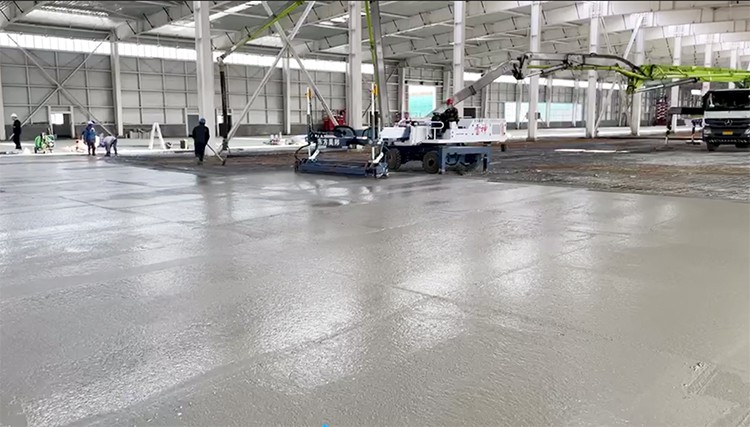
Most of the earthen floors do not do enhanced treatment, or simply do nominal enhancement measures to control the width of the cracks. When reinforced rebar is placed in the upper or top position of the floor thickness, it can limit the width of random cracks caused by concrete shrinkage, temperature stress, foundation subsidence, external loads, and other problems.
This type of enhancement is often referred to as a shrinkage and temperature enhancement device.
Most soil layers do not be reinforced, or simply do nominal enhancement measures to control the width of the cracks.
When the rebar is placed in the upper or top position of the floor thickness, the width of random cracks caused by concrete shrinkage, temperature stress, foundation subsidence, external loads, and other problems can be limited. This type of enhancement is often referred to as a shrinkage and temperature enhancement device.
Basic principle
Since there are many optional enhancements to non-structural soil flooring, this article will focus on controlling the crack width through reinforcement and mesh enhancement.
Reinforced rebar and welding mesh do not prevent cracking. Before the concrete cracking, the function of the enhancement device is basically dormant.
Once cracking occurs, the function is activated and its width is controlled by limiting the development of the crack. If the concrete slab is paved on a high-quality base and ensures good support, while using low-shrink concrete material, seam spacing is set at 4.5 meters or less and installed correctly, there is generally no need to take enhancement measures. In general, there is little random or non-seam cracking. If random cracks do occur, the crack width should also be kept smaller due to the relationship between smaller seam spacing and low shrink ingress to concrete materials, thus avoiding the problem of subsequent repairs or maintenance.
Once this happens, the edge of the crack is exposed and the edge is likely to burst, especially when the concrete slab is crushed by wheels, especially high-level forklifts with hard wheels.
Once the phenomenon of bursting occurs, the crack width of the surface will increase and the damage of the concrete slab along the crack site will deteriorate rapidly. Shrinking and temperature enhancement methods are required when shrink seams are not allowed in the field and are not installed. Sometimes this method is also known as continuously enhanced or seamless flooring, which allows for a large number of tightly distributed (90 to 180 cm) small cracks.
Methods of crack control

In general, there are 2 ways to control cracks:
(1) to control the position of the crack by installing a shrink seam (no control over the width of the crack), or
(2) to control the crack width by installing an enhancement device (uncontrollable of the crack position). Method 1, we can control the cracking position of the concrete slab, the width of the shrink seam or the cracking in the seam is largely controlled by seam spacing and concrete shrinkage. As seam spacing and concrete shrinkage increase, so does the seam width. Similar to cracks, if the seam width is close to about 0.9 mm, the efficiency of locking and conducting loads between the aggregates and avoiding vertical displacement between seams is greatly reduced.
With this in mind, many designers use load conduction designs such as force levers, force transfer sheets, or continuity reinforcements in the shrink seam position to ensure good load transfer and limit vertical displacement between seams. Method 2, we allow the concrete slab to crack randomly, but use reinforced steel or welded mesh to control the crack width. In general, this method is not used when setting the shrink seam. Cracking occurs randomly, forming numerous small, interlaced cracks. Due to appearance considerations, this type of crack control method needs to be communicated with the owner in advance.
Thanks to All the Friends Who Support and Trust Shandong Vanse Machinery Technology Co., Ltd.
If you want to know more about Shandong Vanse Machinery Technology Co., Ltd. or have any questions, please feel free to contact us:
Our Factory
Shandong Vanse Machinery Technology Co., Ltd.








Share this article

About the Author: Shandong Vanse Machinery Technology Co., Ltd.
Shandong Vanse Machinery Technology Co., Ltd. is a high-tech manufacturer specializing in concrete construction machinery, including laser screeds and related equipment. The company integrates R&D, production, and global sales, with products exported to over 60 countries and widely used in infrastructure projects worldwide.
Previous Post
Next Post
Related Articles
You Might Also Like
Industry Standards And Specification Requirements For Concrete Laser Leveling Machines
Industry standards and specification requirements for concrete laser leveling machines 1. Introduction With the rapid development of the construction industry and the continuous progress of technological innovation, the importance and role of concrete laser leveling machines as key equipment in modern building construction have become increasingly prominent. In order to ensure the stable performance, safe operation and convenient maintenance of concrete laser leveling machines, the industry has formulated a series of industry standards and regulatory requirements. This article aims to deeply discuss the industry standards and specification requirements for concrete laser leveling machines and provide clear guidance and reference for relevant practitioners. 2. Industry background and current situation As a high-precision and high-efficiency ground leveling equipment, concrete laser leveling machine is widely used in infrastructure construction fields such as roads, bridges, airports, and squares. With the continuous innovation of technology and the continuous expansion of application fields, the concrete laser leveling machine industry shows the following characteristics: ※Equipment technology continues to be upgraded, making performance more stable and reliable. ※Application fields continue to expand and market demand continues to grow. ※Competition in the industry is becoming increasingly fierce, and the requirements for product quality and service are constantly increasing. In this context, it is particularly important to formulate and implement industry standards and regulatory requirements. They not only help improve the overall quality of concrete laser leveling machines and ensure construction safety, but also promote the healthy development of the industry and enhance international competitiveness. 3. Overview of industry standards The industry standards for concrete laser levelings mainly include the following aspects: ※Technical performance standards: Specifies the technical performance indicators of concrete laser levelings, such as flatness, accuracy, efficiency, etc., to ensure that the equipment can meet the needs of different projects. ※Safety standards: stipulate the safety performance of equipment, including electrical safety, mechanical safety, operational safety, etc., to ensure the life safety of construction personnel and the stable operation of equipment. ※Environmental standards: Limit environmental indicators such as noise, vibration, and exhaust emissions of equipment to reduce environmental pollution. ※Repair and maintenance standards: Specify maintenance requirements and troubleshooting methods for equipment to ensure long-term stable operation of the equipment. 4. Analysis of specification requirements The specification requirements for concrete laser levelinging machines mainly include the following aspects: ※Design and manufacturing requirements: The equipment is required to be reasonably designed, well manufactured, and comply with relevant technical specifications and standards. At the same time, the equipment is required to be easy to maintain and operate, and can meet the needs of different projects. ※Performance requirements: Clearly define the performance of the equipment, such as flatness, accuracy, efficiency, etc. The equipment is required to complete the leveling task within the specified time and achieve the specified leveling effect. ※Safety requirements: Equipment is required to strictly abide by safety regulations during design, manufacturing, and use to ensure the safety of operators. At the same time, the equi pment is required to have complete safety protection measures and fault alarm functions. ※Environmental protection requir ements: Environmental protection indicators such as noise, vibration, and exhaust emissions of equipment are required to comply with relevant standards and regulations to reduce the impact on the environment. 5. Design and manufacturing requirements The design and manufacture of concrete laser leveling machines should comply with the following requirements: ※Structural rationality: The equip ment structure should be reasonably designed, with uniform stress, to reduce stress concentration, so as to improve the stability and durability of the equipment. ※Material selection: High-quality materials that meet standards should be selected to ensure the strength and stiffness of the equipment. At the same time, the corrosion resistance and wear resistance of the material should be considered to adapt to different construction environments. ※Processing technology: Adopt advanced processing technology and equipment to ensure the manufacturing accuracy and surface quality of the equipment. Special treatment is performed on key components, such as heat treatment, spraying, etc., to improve their service life and performance. ※Inspection and testing: Strict inspection and testing should be carried out during the equipment manufacturing process to ensure that various performance indicators of the equipment meet standard requirements. At the same time, long-term durability tests are conducted on the equipment to evaluate its performance in actual use. 6. Performance testing and evaluation The performance testing and evaluation of concrete laser leveling machines is a key link to ensure stable and reliable performance of the equipment. During the test process, the performance indicators such as flatness, accuracy, efficiency and so on of the equipment should be comprehensively tested. At the same time, the actual construction environment is simulated and long-term continuous operation tests are conducted on the equipment to evaluate its stability and reliability in actual use. In addition, the ease of operation and subsequent maintenance of the equipment should also be evaluated to meet the user's needs. 7. Operation and maintenance specifications In order to ensure the safe use and long-term stable operation of the concrete laser leveling, detailed operation and maintenance specifications should be formulated. The operating specifications should include operating steps and precautions such as starting, stopping, running, and adjusting the equipment. At the same time, clear requirements are placed on the quality and skills of operators to ensure that they can operate the equipment skillfully and accurately. Maintenance specifications should include daily inspection, maintenance, and repair of equipment. Operators are required to perform regular maintenance on the equipment, discover and deal with hidden faults in a timely manner, and ensure the long-term stable operation of the equipment. 8. Safe use and warnings The safe use of warm concrete laser levelings is a top priority. During use, safety regulations should be strictly followed to ensure the safety of operators. The equipment should be equipped with complete safety protection measures, such as emergency stop buttons, protective devices, etc. At the same time, warning signs and operating procedures instructions are set up in conspicuous locations on the equipment to remind operators to pay attention to safety matters and operating procedures. In addition, regular safety training and education are provided to operators to improve their safety awareness and operating skills and ensure the safe use of equipment. 9. Training and Certification To ensure the safe and efficient use of concrete laser levelings, operator training and certification are crucial. Manufacturers or relevant industry associations should provide specialized training courses, covering the basic principles of equipment, operating procedures, safety regulations, maintenance and other aspects. After the training, the sample operators should pass theoretical examinations and practical assessments. Conduct a comprehensive assessment. Only certified operators can work to ensure the safe and efficient operation of the equipment. 10. Market Supervision and Regulation In order to ensure the healthy development of the concrete laser leveling machine industry, government departments should strengthen market supervision and supervision. Develop strict industry standards and regulations and impose penalties on products and companies that do not meet the standards. At the same time, we will strengthen the random inspection and evaluation of equipment quality to ensure that the concrete laser leveling machines sold on the market meet relevant standards and requirements. In addition, enterprises should be encouraged to increase investment in research and development, promote technological innovation and industrial upgrading, and improve the competitiveness and international influence of the entire industry. 11. Future Outlook With the continuous advancement of science and technology and the continuous expansion of application fields, the concrete laser leveling machine industry will face more development opportunities and challenges. In the future, the industry will develop in the direction of intelligence, efficiency, and environmental protection. The application of intelligent technology will improve the automation and ease of operation of the equipment; efficient design will further improve the leveling efficiency and quality of the equipment; environmental protection requirements will prompt the equipment to pay more attention to environmental protection and sustainability during the manufacturing and use processes. develop. At the same time, with the continuous advancement of global infrastructure construction and the increasingly frequent international trade, the concrete laser leveling machine industry will face a broader market space and a more intense competitive environment. Therefore, relevant enterprises should continuously improve their own strength and innovation capabilities to adapt to market changes and demand development. Summarize Through a comprehensive discussion of the industry standards and regulatory requirements for mixed soil laser leveling machines, we can see that the industry has achieved remarkable results in technological innovation, market expansion, and safe use. However, in the face of future development opportunities and challenges, it is still necessary to strengthen industry supervision and market supervision, promote technological innovation and industrial upgrading, and improve the competitiveness and international influence of the entire industry. At the same time, relevant practitioners should continue to improve their own quality and capabilities to adapt to market changes and demand development. Only in this way can the concrete laser leveling machine industry usher in a better future.During concrete pavement construction, what is the effect of slump on pavement strength?
🎈Changes in water-cement ratio: Slump mainly affects pavement strength by affecting the water-cement ratio of concrete. Generally speaking, the larger the slump, the more water is used in concrete. According to the theory of concrete strength, under the condition of certain cement type and dosage, the larger the water-cement ratio, the lower the strength of concrete after hardening. This is because excessive water will form more pores and channels during the hardening process of concrete, and the pores left after the evaporation of water will reduce the density of concrete, thereby reducing the strength of concrete. For example, when the slump increases by 20-30mm from the appropriate value, the water-cement ratio may increase by 0.05-0.1, and the 28-day compressive strength of the pavement may decrease by 10%-20%. 🎈Cement slurry distribution: The appropriate slump can make the cement slurry evenly distributed in the concrete, wrapped on the surface of the aggregate, play a good bonding role, make the internal structure of the concrete dense, and thus ensure the strength of the pavement. If the slump is too small, the concrete is too dry and hard, and the cement paste is difficult to evenly wrap the aggregate, which will lead to more uncemented aggregate particles in the concrete, forming a weak link and reducing the overall strength of the road surface. On the contrary, if the slump is too large, the cement paste will sink due to its own weight, resulting in uneven distribution inside the concrete, resulting in relatively less cement paste in the upper part of the concrete and lower strength, while the lower part may be segregated due to excessive cement paste, which also affects the strength of the road surface. 🎈Aggregate interface bonding: The interfacial bonding strength between aggregate and cement paste in concrete is crucial to the overall strength of concrete. When the slump is appropriate, the cement paste can fully contact and bond well with the aggregate surface. When the slump is not appropriate, such as too large, the cement paste layer around the aggregate will be too thick. During the hardening process of concrete, due to the large shrinkage of the cement paste, micro cracks are easily generated at the interface between the aggregate and the cement paste, weakening the interfacial bonding strength, thereby reducing the strength of the road surface; and if the slump is too small, the cement paste cannot wet the aggregate surface well, which will also lead to poor interfacial bonding and affect the strength of the road surface. In concrete pavement construction, the slump should be strictly controlled, and concrete with appropriate slump should be selected according to construction conditions and design requirements to ensure that the pavement strength meets the design standards.Key points for routine inspection, fault early warning and maintenance of the hydraulic system of concrete laser leveling
The routine inspection, fault early warning and maintenance points of the hydraulic system of the concrete laser leveling are a crucial topic, as the health condition of the hydraulic system directly determines the construction efficiency, leveling accuracy and equipment service life of the leveling. The following is a detailed and systematic guide. Objective: To prevent problems before they occur and promptly identify potential issues through daily observation. Oil level check: When the equipment is parked on a level ground and the hydraulic system is not started (or the cylinder has been retracted), check the oil level gauge in the hydraulic oil tank. The oil level should be between the marked upper and lower scale lines. Low oil level can cause the pump to run dry, the system to overheat and get damaged. If the oil level is too high, it may cause excessive pressure or oil leakage from the breather valve when the oil temperature rises. Leak inspection: Carefully inspect the entire hydraulic system, including: Pipe joints: Check for oil stains or dripping oil. Cylinder piston rod: Check for any scratches, bends or continuous leakage. Hydraulic pump, valve block, motor: Check if there is any leakage at the mating surface. Fuel tank surface: Whether it is clean and free of oil stains. Oil color: Observe the color of the hydraulic oil through the oil level gauge. New hydraulic oil is usually transparent amber in color. If it is found to be turbid and opaque (possibly water ingress), darker and blackened in color (possibly oxidation and deterioration), or milky white (definitely water ingress and emulsification), further treatment is required. Abnormal noise: Start the engine and operate various hydraulic actions (lifting, walking, vibration, etc.). Listen carefully for any sharp "click-click" sounds (cavitation sounds) or continuous dull abnormal noises from the hydraulic pump (possibly due to internal wear of the pump or motor). Vibration and Pulse: Touch the hydraulic pipeline with your hand to feel if there is any abnormally intense vibration or pulse sensation. This may be a sign of oil circuit blockage or pump/motor failure. Temperature: After working for a period of time, touch the outer shell of the hydraulic oil tank with your hand. If it feels hot to the touch (the temperature may exceed 60-70°C), it indicates that the system is overheated and needs to be shut down for inspection. Slow movement: Test the movement of all cylinders and motors to see if there is any slowdown in speed, weakness or jamming. Pressure maintenance: For the lifting cylinder, observe whether there is obvious "sinking" (i.e., internal leakage) after it is lifted. Objective: Identify early symptoms of faults to prevent minor issues from evolving into major ones. Warning signal Analysis of Possible causes Potential risk Slow and weak movements 1. Insufficient hydraulic oil or incorrect viscosity of the oil. The leveling accuracy has declined, making it impossible to work normally and resulting in low efficiency. 2. The main pump is worn out and internal leakage occurs, resulting in insufficient pressure/flow. 3. The set pressure of the relief valve (safety valve) is too low or the valve core is stuck. 4. Severe internal leakage of the actuator (cylinder/motor). Abnormal noise from the system (pump 1. The oil suction pipeline is clogged or the filter element is dirty. The hydraulic pump will be severely damaged in the short term and must be shut down immediately. 2. When the oil level is too low, the pump sucks air, causing cavitation. 3. Air mixed into the hydraulic oil (due to poor sealing of the pipelines). 4. The bearings or internal components of the pump itself are damaged. The system is severely overheating. 1. The hydraulic oil cooler is clogged (air-cooled or water-cooled). Accelerate the oxidation and deterioration of the oil, the aging of seals, and the wear of all hydraulic components. 2. The relief valve is frequently opened or the set pressure is too high. 3. Improper viscosity or deterioration of the hydraulic oil. 4. Severe leakage inside the pump or valve causes energy loss, which is converted into heat energy. The cylinder is crawling and shaking 1. There is air in the cylinder. It affects the stability of the leveling operation, causing waves to appear on the ground. 2. The wear of the piston seal in the oil cylinder leads to unstable pressure. 3. Oil contamination leads to the valve core of the control valve getting stuck and discontinuous movement. The hydraulic oil deteriorates rapidly 1. The oil temperature has been too high for a long time, leading to oxidation. Cause abrasive wear and corrosion of all hydraulic components. 2. Water enters the oil (such as leakage from the water cooler). 3. Contaminants (dust, metal shavings) invade the system. External leakage Aging of seals, damage to oil seals, loose joints, and wear and rupture of pipelines. Waste of oil, environmental pollution, insufficient system pressure, and even fire. Objective: Establish a scientific maintenance system to maximize the system's lifespan. Regularly change the hydraulic oil and filter elements: Strictly follow the oil change cycle specified by the equipment manufacturer (usually 500-1000 working hours). In harsh and dusty environments, the cycle should be shortened. When changing the oil, all hydraulic filter elements (suction oil filter, return oil filter, pressure oil filter) must be replaced simultaneously. Refueling must be filtered: When adding or replacing new oil, it is essential to use a dedicated fuel pump and filtering device. It is strictly forbidden to directly pour the oil drum into the fuel tank. Keep the fuel tank clean: Clean the area around the fuel tank cap before refueling to prevent debris from falling in. Regularly clean the magnetic plugs inside the fuel tank. Regularly clean the fins of the hydraulic oil radiator to ensure good ventilation and no blockage from concrete, dust, etc. Avoid the equipment operating under extremely high load for a long time. If the ambient temperature is high, an auxiliary cooler can be considered for installation. Ensure the sealing of all suction pipelines to prevent the pump from being sucked empty. Regularly check whether the fuel tank breathing valve is unobstructed. After the machine stops, regularly check the water outlet at the bottom of the fuel tank for any water. For key equipment, samples can be taken regularly and sent to professional laboratories for testing. The analysis report can inform you of the contamination degree of the oil, the composition of worn metals, water content and physical and chemical indicators, thereby accurately predicting faults, achieving oil replacement based on quality and saving costs. Avoid operating the hydraulic cylinder piston rod only when it reaches the end of its stroke. Instead, release the operating rod before approaching the end to take advantage of inertia to reach the position and reduce the impact. When starting up in winter, it should first run at low speed without load for a period of time to allow the oil temperature to rise and the viscosity to decrease before commencing operations. Maintain the project Daily/ Per shift Weekly/ 50 hours Month/ 250 hours Every six months / 1,000 hours Check the hydraulic oil level ✓ Check for leakage, abnormal noise and temperature ✓ Clean the surface of the fuel tank and radiator ✓ ✓ Check the tightness of the pipelines and joints ✓ Replace the hydraulic return oil filter element ✓ Take oil samples for testing (suggested) ✓ Completely replace the hydraulic oil and all filter elements ✓ (As per the manufacturer's regulations When it comes to the hydraulic system of the concrete laser leveling, the principle that "cleanliness is fundamental and prevention is key" must be adhered to. Only by conducting rigorous daily inspections to identify early warning signals and combining them with regular systematic maintenance can the stability and reliability of the equipment during the construction period be ensured, ultimately achieving high-precision and high-efficiency floor construction and significantly reducing the operating costs throughout the entire life cycle. Note: The parameters provided in this document are for reference only and are not mandatory. Due to differences in technical characteristics between different brands and models of laser levelers, please consult the manufacturer for a suitable solution before actual operation. This reference document assumes no responsibility for any issues arising from failure to follow the manufacturer's instructions.