Technical Knowledge
Introduction to the basics of slipform machine construction
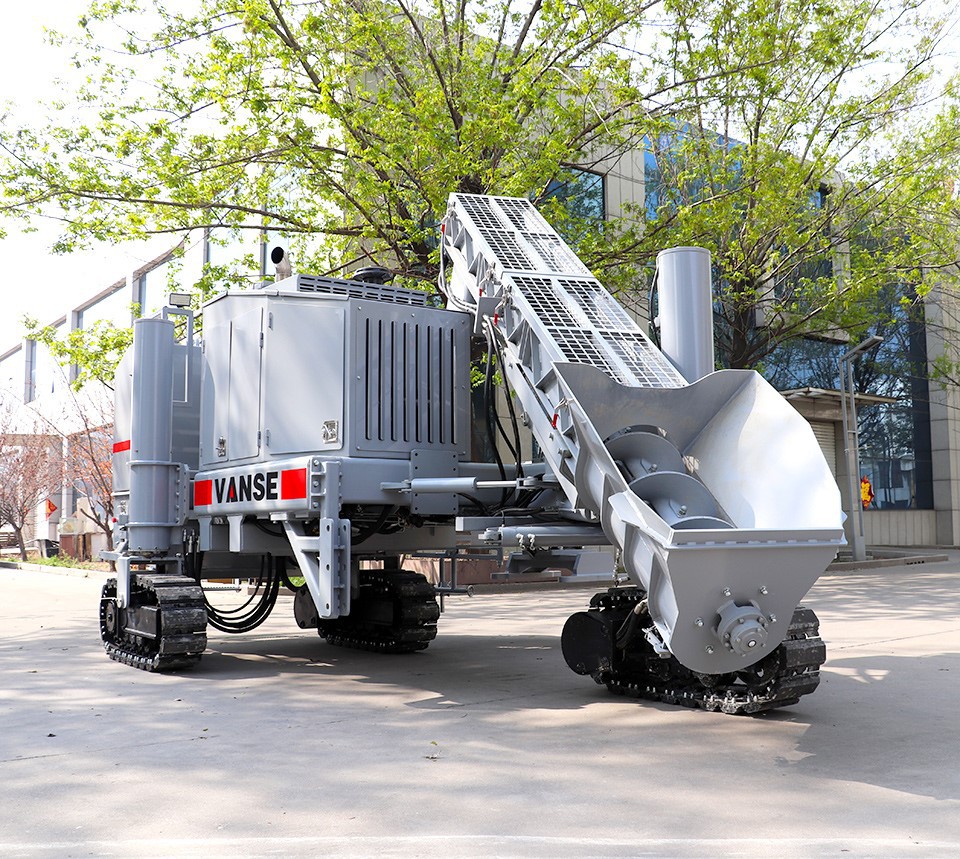
After the concrete is faced with the fixed mold, the sliding mold makes the concrete form.
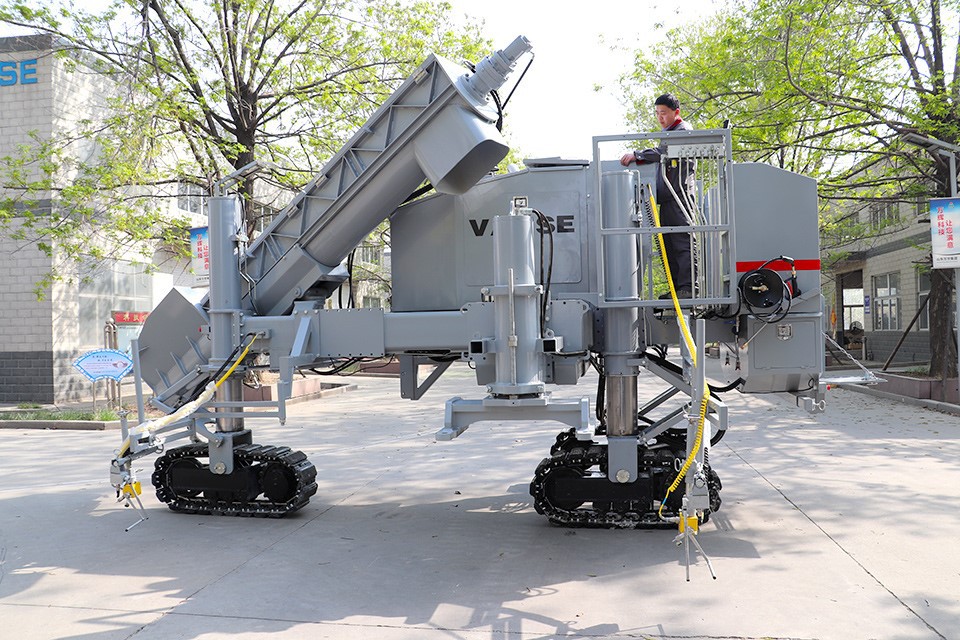
Used for road shoulder synovial film operation, drainage ditch synovial film operation, curb forming operation, etc.
This type of machine is based on the carrier that meets the engineering standards,
including asphalt products and cement concrete road construction on both sides of the curb and drainage ditches and other facilities
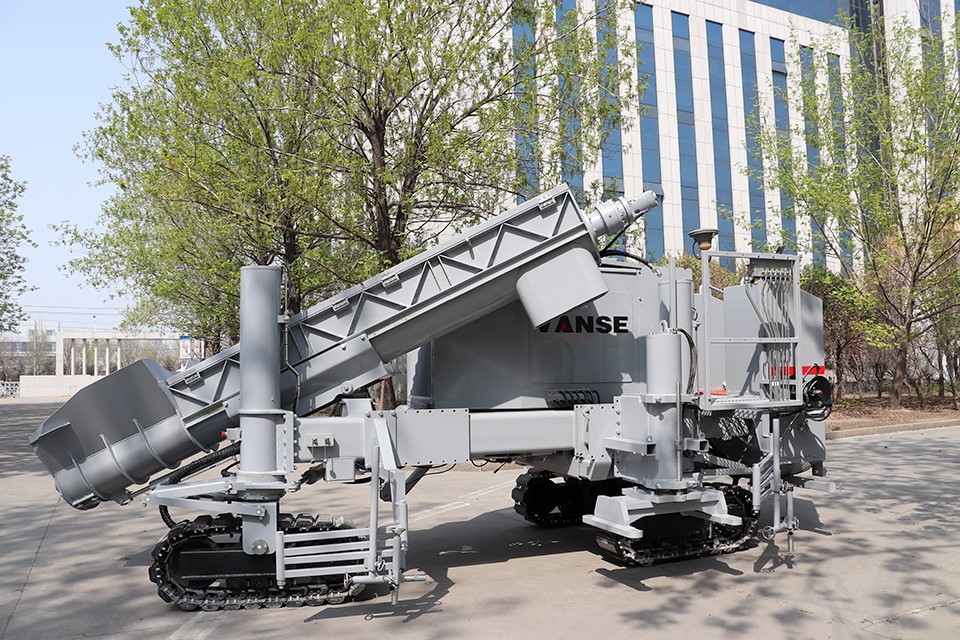
The special industry equipment consists of walking mechanism, vibration mechanism, forming mechanism, generator and power distribution, etc.
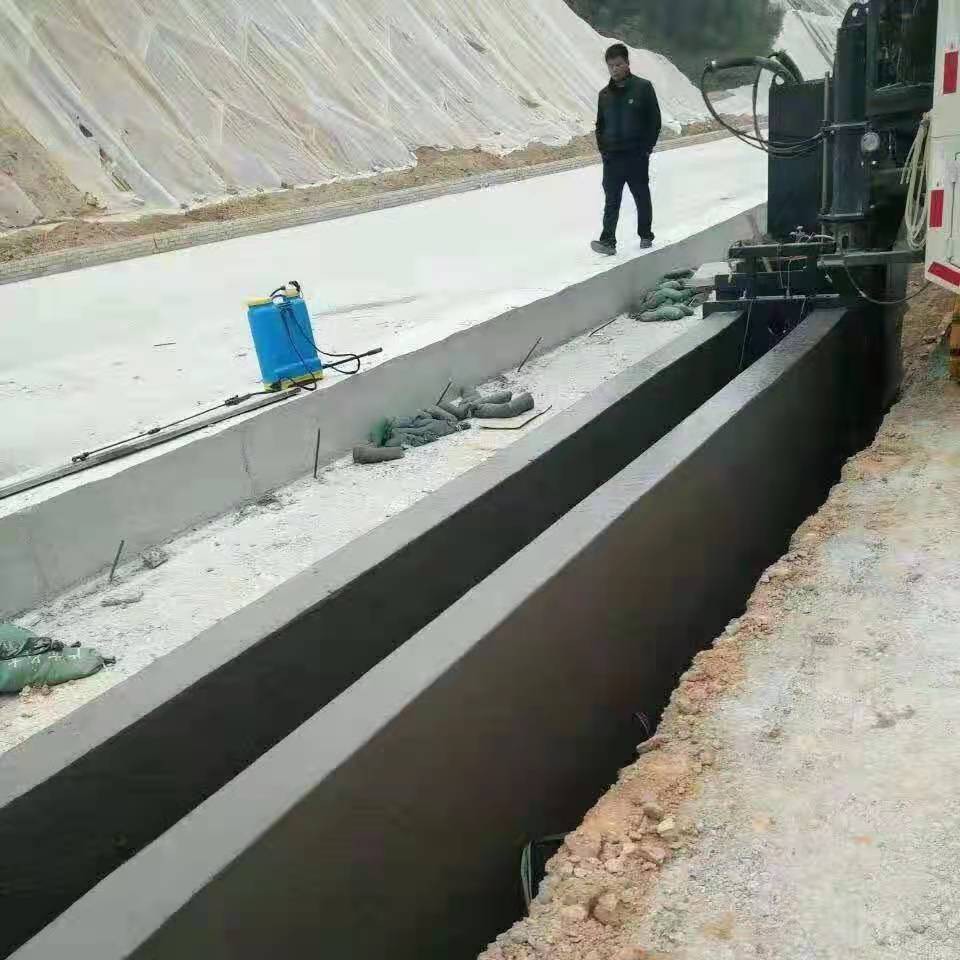
The operation process of the sliding form machine is that the concrete is vibrated and compacted by the vibrating rod,
and then formed by the sliding form of the mold, and the continuous operation is carried out while walking.
The shaped curb has high impact strength and stability.
It can be widely used in: highways, highways, airports and other places.
It is fully mechanically operated, saving a lot of labor costs, and is a new type of sliding membrane construction standard.
Thanks to All the Friends Who Support and Trust Shandong Vanse Machinery Technology Co., Ltd.
If you want to know more about Shandong Vanse Machinery Technology Co., Ltd. or have any questions, please feel free to contact us:
Our Factory
Shandong Vanse Machinery Technology Co., Ltd.








Share this article

About the Author: Shandong Vanse Machinery Technology Co., Ltd.
Shandong Vanse Machinery Technology Co., Ltd. is a high-tech manufacturer specializing in concrete construction machinery, including laser screeds and related equipment. The company integrates R&D, production, and global sales, with products exported to over 60 countries and widely used in infrastructure projects worldwide.
Previous Post
Next Post
Related Articles
You Might Also Like
How to Develop a Maintenance Plan for a Concrete Laser Leveling Machine
Concrete laser leveling machine is a high-precision and high-efficiency construction equipment. In order to ensure that it always maintains a good working condition, prolongs its service life and reduces the occurrence rate of failures, this maintenance plan is specially formulated. Corresponding maintenance is required before, during and after daily operations. This is the basis for ensuring the normal operation of the equipment. Before operation: Check whether the fuel, lubricating oil and hydraulic oil of the equipment are sufficient. If insufficient, add them in time to ensure that all systems can operate normally. At the same time, check whether key components such as laser transmitters and receivers are clean and intact, and whether there are loose or damaged phenomena to ensure the accuracy of the laser system. In addition, check whether the tire pressure is normal, whether there are damages or foreign objects on the tire surface, and ensure the safety of the equipment. During operation: Pay close attention to the operating status of the equipment, listen for abnormal sounds from the engine, hydraulic system, etc., and observe whether the indications of each instrument are normal. If an abnormality is found, the machine should be stopped for inspection immediately. Only after the fault is eliminated can the operation be continued to avoid the expansion of small faults. After operation: Clean up concrete residues, dust and other debris on the surface of the equipment in time to prevent the concrete from being difficult to remove after solidification, which will affect the heat dissipation and appearance of the equipment. When cleaning optical components such as laser transmitters and receivers, use special cleaning tools and detergents to avoid scratching the lens. Check whether the bolts and nuts at each connection are loose, and tighten them in time if they are. On the basis of daily maintenance, a more comprehensive inspection and maintenance is carried out once a week. Check the engine's air filter. If there is a lot of dust on the surface of the filter element, it should be cleaned or replaced to ensure smooth engine air intake and improve combustion efficiency. Check the oil tank of the hydraulic system, observe the oil level and oil quality of the hydraulic oil. If the oil quality deteriorates (such as emulsification, blackening, etc.), the hydraulic oil and filter element should be replaced in time. At the same time, check whether there is leakage at the connection of the hydraulic pipeline, and if there is leakage, it should be handled in time. Check the braking system of the equipment, including the wear of the brake pads and the level of the brake fluid, to ensure good braking performance and ensure the safety of the equipment and operators. Lubricate each lubrication point of the equipment, select appropriate lubricants according to the requirements of the equipment manual, ensure that all moving parts are well lubricated and reduce wear. Carry out in-depth inspection and maintenance every month to detect and eliminate potential faults in time. Check the engine's fuel filter. If the filter element is blocked, it should be replaced in time to prevent impurities from entering the engine and causing engine wear. Check the electrical system of the equipment, including the connection of the wires, the power and voltage of the battery, etc., to ensure that the electrical system works properly. If the battery power is insufficient, it should be charged in time; if the wire is damaged or aged, it should be replaced in time. Check the calibration of the laser system. If the accuracy deviation of the laser transmitter and receiver is found, it should be calibrated in time to ensure the construction accuracy of the equipment. Check the structural components of the equipment, such as the frame, scraper, etc., for deformation, cracks and other damage. If there is any damage, it should be repaired or replaced in time. Establish an equipment maintenance record ledger to record in detail the time, content, maintenance personnel and other information of each maintenance, so as to trace the maintenance of the equipment and provide a basis for the repair and maintenance of the equipment. Formulate emergency measures, formulate corresponding emergency treatment plans for common equipment failures (such as engine failure to start, hydraulic system failure, etc.), and equip with necessary maintenance tools and spare parts so that timely repairs can be carried out when equipment fails to reduce downtime. By strictly implementing this maintenance plan, the reliability and service life of the concrete laser leveling machine can be effectively improved to ensure the smooth progress of construction work. Click the below to jump immediately!!! ARMOUR JOINT CONCRETE LASER LEVELING MACHINE LIGHT TOWER POWER TROWEL SLIPFORM MACHINE STEEL FIBER TOPPING SPREADER TRACKED MINI DUMPERWhat is the standard maintenance procedure for laser leveling machine?
No matter what kind of mechanical equipment, if you want to effectively extend its service life, you need to do regular maintenance and maintenance of the equipment, and this is no exception for laser leveling machines. In view of the fact that there is no detailed analysis of the maintenance standards for laser leveling machines in the relevant technical materials, our company will combine years of work experience to make a simple summary of the correct maintenance methods for each component of the laser leveling machine. I hope that the majority of users and friends We must follow this standard scientific operation. ►Engine maintenance: Choose an antifreeze solution suitable for the local temperature and replace it every 1 year. Before winter, the winter fuel should be replaced with a laser leveler in advance to avoid waxing of ordinary diesel in the filter and pipeline due to low temperature. As a result, the engine does not start properly, the anti-icing device of the compressed air system is turned on, and the ether level is checked regularly. Many engines require some additive in the coolant, known as SCA (Supply Coolant Additive), which usually acts on aluminum. More effective protection against metal corrosion, mineral deposits, air pockets and blistering of the cylinder liner during fitting contact with coolant. ►Parts maintenance: Before the laser leveling machine is parked for a long time in winter, the bearings should be mechanically hinged, lubricated and maintained. Check the integrity of the dust cover of the concrete laser leveling machine, and replace the damaged sealing ring in time. The metal contact surfaces exposed to the air should be rust-proof, the engine should be started regularly, and all reduction gearboxes should be operated to prevent shaft seals in the gearbox, rubber seals from being damaged by parking and gear oil for a long time. ►Hydraulic system maintenance: Regularly start the laser leveling machine and turn on all hydraulic functions on the machine, so that the hydraulic drive parts work regularly to prevent the related seals from being damaged due to long-term parking, and the metal parts such as cylinder rods from rusting, as much as possible. Retract all cylinder rods into the hydraulic cylinder housing to better protect the surface of the cylinder rods. ►Electrical system maintenance: Please start the laser leveling machine engine every two months, charge the battery, and run all hydraulic actuators, such as rotary hydraulic motors, telescopic cylinders, etc., do not remove the battery from the machine to prevent long-term parking equipment to control internal software Program failure is lost. Special reminder: Once the laser leveling machine is improperly operated, maintained, and managed, it will affect the efficiency and life of the equipment, and may even cause equipment failure and shutdown. Therefore, only the daily maintenance and management of each system and the whole machine should be done well. , can effectively reduce the probability of equipment failure, ensure the normal operation of equipment, and improve production efficiency.How to ensure the working efficiency of the concrete laser leveling machine while reducing the possibility of spatter?
– Reasonable scraper speed: The scraper speed of the concrete laser leveler has an important influence on the flow and splash of concrete. Too fast speed will cause the concrete to generate a large inertial force under the push of the scraper, which is easy to cause splashing. In general, the scraper speed should be controlled within a suitable range according to the slump of the concrete and the actual situation of the construction site. For example, when the slump is 12-18cm, the forward speed of the scraper can be set at 0.5-1m/s. This speed enables the concrete to move forward smoothly under the action of the scraper and reduce the splashing caused by too fast speed. – Appropriate scraper angle: The scraper angle will also affect the movement state of the concrete. If the scraper angle is too large, the concrete will be lifted excessively, increasing the risk of splashing. Usually, the scraper angle can be fine-tuned according to the thickness and fluidity of the concrete, generally kept between 10-30 degrees. Such an angle can make the concrete evenly spread under the action of the scraper and avoid the concrete being thrown up unnecessarily. – Vibration frequency and amplitude adjustment: The vibration system of the laser leveler is used to make the concrete more compact, but if the vibration frequency is too high or the amplitude is too large, it will cause the particles inside the concrete to move violently, resulting in splashing. For ordinary concrete construction, the vibration frequency can be set between 50-100Hz and the amplitude between 3-8mm. By appropriately reducing the vibration frequency and amplitude, the splashing phenomenon can be reduced while ensuring the density of the concrete. – Vibration depth control: The vibration depth should be adjusted according to the thickness of the concrete. If the vibration depth is too deep, the concrete near the bottom may surge upward under the action of the vibration force, causing splashing. Generally, the vibration depth is about 2/3 of the concrete thickness. For example, when the concrete thickness is 20cm, the vibration depth can be controlled at about 13-14cm. – Suitable slump range: The slump of concrete is one of the key factors affecting splashing. If the slump is too large, the concrete will be too fluid and easy to splash under the action of the leveler. Generally, in the construction of laser levelers, the slump should be controlled between 12 and 18 cm. Concrete within this range has good fluidity, which is convenient for leveler operation and can effectively reduce the possibility of splashing. During the concrete mixing process, the amount of water should be strictly controlled according to the mix ratio to ensure that the slump meets the requirements. – On-site slump detection and adjustment: At the construction site, slump detection tools such as slump cones should be equipped. During the concrete pouring process, the slump should be tested regularly, and each truck of concrete should be tested at least once. If the slump is found to be unsatisfactory, it should be adjusted in time. For example, if the slump is too large, some dry materials (such as a mixture of cement and sand) can be added appropriately for adjustment; if the slump is too small, an appropriate amount of water reducer or water can be added for adjustment. – Selection of suitable admixtures: Adding admixtures to concrete can improve its performance. For reducing splashing, admixtures with thickening effects can be selected. Thickening admixtures can increase the cohesiveness of concrete, making it difficult for concrete to disperse under the operation of the leveling machine, thereby reducing the possibility of splashing. At the same time, pay attention to the dosage of admixtures and add them according to the product instructions and test results to avoid abnormal concrete performance due to excessive admixtures. – Compatibility of admixtures with other materials: Ensure that the admixtures have good compatibility with other concrete materials such as cement, sand, and stone. If the compatibility is not good, it may cause segregation and bleeding of concrete, increasing the risk of splashing. Before using new admixtures, a trial mix test should be carried out to observe the working performance and stability of the concrete. – Layered pouring: For thicker concrete layers, layered pouring can be used. The thickness of each layer of concrete should not exceed 30-40cm. After each layer of concrete is poured, it is first vibrated with a vibrating rod, and then leveled with a laser leveling machine. This layered construction method can make the concrete better compacted in each layer and reduce splashing caused by the excessive overall thickness of the concrete during the leveling process. – Partition pouring: For large-scale concrete construction sites, they can be divided into several small areas for pouring. Reasonable construction joints are set between each area. This can avoid splashing of concrete under the long-distance push of the leveling machine during large-scale construction. At the same time, partition pouring also facilitates the control of concrete supply and construction progress. – Construction from edge to center: In terms of construction sequence, you can start from the edge of the construction site and gradually move toward the center. In this way, when the leveling machine is working, the concrete has a relatively stable boundary, which can reduce the splashing of concrete to the surrounding area. For example, when constructing the floor of a factory building, first pour and level the concrete along the wall of the factory building, and then construct to the middle area of the factory building. – Avoid repeated leveling: Try to minimize repeated leveling operations on the same area of concrete. Repeated leveling will cause the concrete to be stirred multiple times, increasing the possibility of splashing. During the leveling process, the operator should be proficient in the operation of the leveling machine to ensure that the leveling requirements can be met in one leveling.